
Your LinkedIn Profile Is Not a Profile. It Is a Landing Page.
Everyone is talking about an "AI-First" content strategy, but it's the wrong mentality, and it's killing your founder authority. In a world drowning in noise, you don't need to be everywhere; you need to be "undeniable where it counts." This interview with Ethan Monkhouse, founder of Naviro, bre...


Guest
Ethan Monkhouse
founder, Naviro
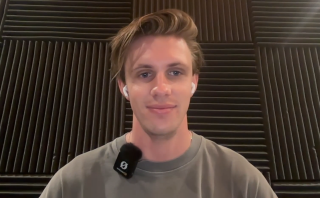
Ethan Monkhouse is the founder of Naviro. He argues that the "AI-First" content strategy is the wrong mentality and is killing your founder authority, explaining that in a world drowning in noise, you do not need to be everywhere, you need to be "undeniable where it counts" with quality over quantity in the age of AI.
Chapters


Build Executive Visibility
Press placements on CNBC, Bloomberg, and MSN.com,
guaranteed, from one 30-minute interview.
Extracted into a month of content: press, LinkedIn posts, and video, so investors and buyers find real credibility before the first conversation.
Distribution through a channel with 2M+ real views
Full Transcript
Sean Weisbrot: With so much content being created every day around the world, why is it so important for founders to create that content even though it feels like they're drowning in a sea of just nonsense?
Ethan Monkhouse: I guess the one line I could say is that you don't, as a founder, you don't need to be everywhere, but you need to be undeniable where it counts and what I mean that by that, as you said, see a noi, sea of content and a lot of noise out there. I guess knowledge is like the leverage that a lot of founders have, but the authority they build with that knowledge is where they can actually, I guess, cash it in. Um, and we're just seeing like I'd say over the next 12 months, it's moving from, yeah, authority is being a nice to have to authority is a requirement, especially online.
Sean Weisbrot: Hey, business leaders and marketers. What if your brand could be featured right here? This ad spot could be yours. This channel is watched by a dedicated audience of ambitious founders, executives, and professionals who are actively looking for tools and services to help their business grow. If you wanna put your brand in front of this highly dedicated audience, that's difficult to reach. I'm currently looking for a few strategic partners for the channel. To learn more about sponsorship opportunities, click the link in the description. Let's go together. I know a lot of people are talking about using AI to make content or to make it easier to create more content. What do you think is more important in authority building the quality of your content or the quantity of your content?
Ethan Monkhouse: Quality a hundred fold. And I think we're seeing that from a technical side, but also from a how we consume content. So technical side, we're seeing a massive drop off in AI generated content doing well. And then from a actual ingestion, like how we're, um, consuming that content. It's just a do short term dopamine hit. And I think a lot of people, I hear the words AI first everywhere. That is the wrong mentality. Do not go AI first. Uh, it needs to be ai. Second, AI is the copilot. And I think that's the approach that a lot of people are getting wrong, especially a lot of tech out there. It's like, okay, we want you to generate all this content. And a lot of it isn't great. Whilst by having AI as the copilot and having it do the heavy lifting, but not necessarily replace the human creative input, that's the sweet spot. So figuring that out, figuring out where their balances is, where we're going over the next six months, but is also gonna be critical as to, okay, how do we get the maximum quality while still doing the heavy lifting?
Sean Weisbrot: So something that I do myself, I'm not sure what you think of it is. Well, obviously the interview is the core of the content that I create. There are some other pieces of content that I create outside of that, but generally the interview is my focus. I then go to like Opus and I let Opus tell me what I should clip. So I do horizontal clips. I'm starting to to publish those now, as well as the vertical shorts, which I've done for a while. So I'm basically letting an AI tell me what is, you know, valuable, but then I'm actually going into every suggestion. And I'm cutting out 90% of what's in there because let's say Opus gives me 60 seconds of content. If I actually look at what's valuable in there, it's like 10 or 12 seconds. Yeah. And I cut out the rest and I go, this is what I'm gonna publish. And I used to do music and and B roll and all this stuff, and I just stopped. I said, screw it. Like people are probably gonna watch this because they wanna see what the person's saying. So I got rid of all of that and I just have the captions and all of that. So I don't know what actually performs well. 'cause like I don't see my clips going viral, but I also think podcasts are maybe not the most viral content out there.
Ethan Monkhouse: Well it's, it's interesting like when it comes to say, clips and podcast clips, like the value's conveying is the critical thing about them. Um, what whatever value is contained within that clip. And I think how we define value is. Inherently, the way AI approaches it is wrong in the sense where value for online is generally gonna be telling people something they don't know. Whilst tools like Opus, they score based on their perception of value. Well, it's gonna be things they do know. So the AI needs to know about it to perceive it as valuable. It's not gonna be able to perceive it as valuable if it doesn't know what value that is in terms of value. So when it's categorizing, hey, okay, that's somewhat useful. That might be useful. The reason it's doing is that, is because it knows what that is. It already knows about it. It's not information that's unknown. And I think that is the tricky thing about AI at the moment, is like these tools, they, they can only value what they know and that's where you need, we need to kind of find a different approach there because we need to convey things that. The majority of people won't know it's gonna be a interest, a completely different take on something. It's gonna be some imperfect information that a lot of people don't know, and necessarily the AI that's being trained won't know that either. So, as you said, going in and cutting out a lot of that content that the AI thought was valuable is a mandatory step right now. Whilst we kind of figure out how to get an ai, AI to that stage where it can actually. Extract the correct value.
Sean Weisbrot: So in terms of creating content, which, what is, what is more valuable for this authority building? Is it long form or is it short form? What do you think?
Ethan Monkhouse: It all depends on your framework. So I'm like a big advocate for, before you create like one piece of content, you wanna outline your framework on how you want users to be attracted to your brand, how you want them to engage, and what is that funnel. So if your end goal is to book them on. I don't know. For what, what would be that end goal for you? Would it be like, book them on the podcast? Would it be to get them to purchase some sort of like purchase something, a product, a service, whatever that end of goal thing is? You work backwards there. So like we know top of funnel long form's, great for like middle, uh, middle of funnel, but then you need to hook people in. So you're gonna need, use your short form that is long form. Chopped up, use it to direct it to your long form video, probably monetize your long form video so you're actually breaking even on the ads there. Then that long form video should have snippets of, I wouldn't say upsells, but indications of what that end product is. Um, and that's when you can, you're moving them into that warm lead. And I think that's a really important thing to do because a lot of people approach content as if, uh, oh, we need to do content because we need to do content. They don't necessarily put out on paper, okay, this is why we need to do it.
Sean Weisbrot: Right. So when I originally started the podcast, my goal was to build a waiting list for my startup software. Okay, and this was five years ago. So the people that I was interviewing were the ICP for the software.
Ethan Monkhouse: Okay.
Sean Weisbrot: So during the intro call they would say, oh, what are you doing outside of the podcast? Oh, well actually I'm running this company. Oh, that sounds really interesting. Can I try it? Well, it's not ready yet, but, and so then like, uh, after the interview, I might take a few minutes and go, Hey, do you mind if I just show you some, like, screenshots or show you the app in action? I'd love to get your feedback. Um, and so I, that's what I used it for. I wasn't trying to build an audience. I wasn't trying to sell anything to anybody. I was just trying to get feedback. I was, I was doing product discovery, you know, uh, wait, list building, things like that. Yeah.
Ethan Monkhouse: And that's a great kind of like CTA, and I think that's the issue that you're gonna find there is it's quite time consuming because you can't, the reusability of that content is quite well restricted at the time, but you could definitely use it to attract more VICV. I think the thing with content is you want it to be something that runs on. Independently of you in that sense. Um, a lot of people think you have to be churning out quite a bit of content and it needs to be recent, that sort of stuff. That's not the case because a lot of feeds nowadays, they're not feeds, they're discovery engines. You can post something four months ago and it might show up on your feed. So that's how you wanna think about content is okay. Is it applicable right now? Okay, cool. But is it gonna be applicable in four months time? The case is yes, then yeah, that will make a good piece of content. Um, taking long form, putting it into short form. That's a perfect example of like, you've got your ICP on a call there, you've format that into a piece of content, which is gonna attract more of that ICP, and then have the content direct them to the wait list. That's something that can show up a year from now and still be relevant.
Sean Weisbrot: Hmm. So I, I don't actually record those things. Um, I mean, uh, the interviews I was doing are exactly like I'm doing with you, right? Mm-hmm. The interviews haven't changed. Um, it's just that the, the conversations, some of the conversations with them were during the intro call, which I don't record. Some of the conversations were after the interview, which also is not recorded. Um, so, so the, the interview was the way for me to get. A call with them so that I could learn from them. Um. And while doing the interview, sometimes, like now, I was talking to 'em about my real situation and kind of getting advice for them. And then the, so the cont the core of the content for the interview was, you know, okay, well I'm dealing with this right now. You know, so let, let's say the person was focused on sales. We, oh, you know, okay, so yeah, we're working on building our sales team and this is what we're dealing with. What have you dealt with? Like, what are things you've learned from your experience? So it was kind of like free mentorship for me.
Ethan Monkhouse: Yeah.
Sean Weisbrot: And, and that, that's always been great. But now I'm more focused. 'cause that startup, you know, we had to shut it down a few years ago. So now my focus is in being able to build a network with these CEOs and redirect them to other people in my network that provide services that could benefit them because I don't specifically have something that I'm selling. So I, I've invested in automation agency. I may have told you about that before. And I know that some of the people that I interview could be clients for them or they might serve those clients so they could be refers to the agency. Um, but I'm also, you know, built relationships with a few other providers that I like and trust. So I'm promoting their services, but I'm, you know, I'm not promoting everything to everyone. It's only if. They're, you know, valuable. So there's, uh, one guy I interviewed I've been working with recently who does VC funding or he does, uh, fundraising for VCs and startups. And so when a startup founder comes to me and I do an interview with them and they go, I'm raising, oh, fantastic. Let me introduce this guy.
Ethan Monkhouse: Yeah.
Sean Weisbrot: So, uh, these are ways to, to do business that's quite valuable where I don't need to sell the audience anything. It's more about the relationships with the CEOs. So the content I'm building is not really about the audience, although it would be nice to have a more engaged audience and an audience that's growing in a certain way. Because I also do get sponsors coming to me wanting me to create, you know, to run ads inside the interviews or to create dedicated video about their company's AI tools. 'cause I do a lot of work around ai. So. I do have that side of the business, but right now, the larger side of the business is on serving the CEOs and, and not really funneling them, but introducing them to people that can serve them well.
Ethan Monkhouse: Yeah, and I mean that's, that's a fantastic state to be in as well, because it means that you can just provide value rather than. Angle it to try sell something to the audience. And I think that's something that a lot of people fall into the trap of. You don't want to be marked as a supplier because as soon as you're marked as a supplier, you're gone. Um, especially nowadays where there's a constant decline in, um, trust for any sort of online presence. And I think it's very, very important to, yeah, make sure that if you are in a, say, say for my industry, I'm in. Tech, um, anything that I am voicing online that it's not trying to sell some tech that I've got, because as soon as you do that, once you are then a supplier and there's, it's very difficult to come up, come back from that. The only exception is if you are like the Alex Hormozi level where you have built this phenomenal brand. But also around selling. Um, so it's, it's an interesting Yeah, caveat there when you have that scale. But for like the majority, like 95% of business owners, especially nowadays, it's like, don't get marked as a supplier and just. Provide as much value through your content and let your funnel do the selling. Um, because the right people like the thing about your content, it's gonna attract the right people. So if you're pushing out content relevant to CEOs and you push it out, it's going to reach CEOs, it's gonna reach more of them. That's just the nature of how an engine, a discovery engine works. And. When that happens, provided you've got the funnel in place that if someone's like, oh, that could be of interest. How do I get in contact with them? Provided that jump from, how do I get in contact with them to getting in contact is really low lift, it's fine. Then you'll, you'll, they'll come into your pipeline and that's how you can nurture them. But I think it's, that's the shift that people need to have where it's like, okay, the content is not going to sell. The content is gonna attract, um, funnel does the selling.
Sean Weisbrot: I don't even have a funnel. I, I do, I, I do very little work honestly, for, for that because, because I've been doing this for five years. I have dozens and dozens of podcast booking agents and PR firms and marketing firms that reach out to me and just pitch me their clients.
Ethan Monkhouse: Yeah,
Sean Weisbrot: and sometimes I'll go to help a reporter and I'll publish a question and I'll get 15 or 20 people reaching out to me that are a fit that wanna be interviewed. And so sometimes I can, if, if I feel like I want to introduce more people to the agency, I can be like, Hey, on help reporter, I can ask a certain question that'll get me someone that's more likely to be a referrer of their ICP and I can build relation. Them. Um, or, you know, if I want, if I feel like I'm, I'm not getting enough AI heavy content, I can, uh, write a question on help a reporter that's specifically focused on finding founders that are, uh, really strongly focused on AI in their business. Or maybe they've raised money for their AI company, or maybe they're an AI investor and I can get different perspectives. And so some of the guests, there's nothing I can, you know, help them to, to do some of them. There are, so it kind of. I decide who I interview, but, uh, at the end of the day, I don't really do that much work to get people to come to me. And like, there's, there's days where I'll get 10 emails from people I don't even know. I didn't publish anything. So, you know, the CEOs found me directly or their executive assistants found me, or their marketing director found me. I, I don't really do anything to get these people, and they're all really interesting.
Ethan Monkhouse: I think the interesting one there is if you're optimizing for. People coming on the podcast, perfect setup. If it's getting, growing that newsletter with your ICP, then you wanna be as hands off as possible in the sense where you've got, say a piece of content goes out or you have loads of people, loads of inbound coming into book podcasts. You then go on a podcast with them and then they, you have them as a kind of warm lead in the, in your newsletter. Um. The difference with pulling yourself out of that process is like you want to create some content from those podcasts that are attracting your ICP that you don't really need to worry about it. Just, it's there. It's out there. When people see it, they're like, oh, that's relevant to me. Let me sign up to the newsletter. And then you, you are growing that newsletter with your ICP completely. Um, on autopilot without having to do podcasts in the sense where it's, you can then do the podcast on your own time in the sense where if you want to do five podcasts, then it doesn't correlate to getting five of your ICP in through the door. So it's, it's detaching that relationship.
Sean Weisbrot: Yeah, I am. What I realized recently was that. Pretty much all of my content had no SEO, and I've spent this month really focused on use, again, using AI tools to make the content that I already have more searchable and specifically searchable by LLMs as well. So I'm redoing the titles, the descriptions, the tags. I was doing tags wrong on YouTube. I was doing all of it wrong. And I've, I've fixed almost all of that now, and then I've gotta do the audio side as well. But the, the big thing is I used to make a page on my website for every interview and around two number 200 I stopped. 'cause it was just, it was too much work to do. Every time an interview came out and I killed my WordPress website, it was an old website and it had all this, all this information and, and back links and everything. I built a new one from scratch using an ai, and so I was able to create a script that all I have to do is type into the ai, the URL of the YouTube video, and a few quick instructions, and it'll generate a brand new page with all of the details for me. And all I have to do is then paste in the transcript and it'll, the transcript has all the SEO and everything in it. So I'm rebuilding all of that value. And once I have that done, I'm gonna automate it so that when a new video gets published, it'll automatically create the post for me. The, the post page? Yeah. Then I want to create a LinkedIn newsletter, but I, I wanna automate the creation of a LinkedIn newsletter based on the content from the YouTube so that automatically when a video goes live, it schedules something that's not the transcript. 'cause the transcript is on the website. So it has to be different. But something that's like the learnings from that, and that is what I can use to, to create that inbound interest from the ICP inside of LinkedIn. So that's what I wanna work on and I'm hoping that when I'm in Japan, I can, I can work on that at like late at night when my brother's sleeping.
Ethan Monkhouse: That, that, that's the value creation there is phenomenal. Um, and I think it's also just so relevant to like a, some people just don't have the time to listen to. The podcast, um, and you were just taking the value there. So irrespective of how much time they have, if they wanna listen to the podcast at some point, but then they just wanna do the quick, kind of like weekly learning learnings, that's unreal. Like you're tackling so diff so many difference of those. The, your ICP, you've got your ICP, but then you've got segments within your ICP in terms of their time availability or like what, wherever the, those different factors. But you're tackling all of that. So no,
Sean Weisbrot: jump on that. Do that. So I, I was talking to a guy that that's created a LinkedIn newsletter and he, he has like 130,000 followers on LinkedIn and he has about 12,000 people that are subscribed to his newsletter. But I don't know what the actual like open rate is and, 'cause we didn't get into it, but he said the first, what, what really matters is that you have as many followers as you possibly can before you launch your first. One, because when you send that out, LinkedIn will message all of the people in your network, all of your first, uh, first level connections. And if you don't have any connections and you do this and you get no subscribers, you're less likely to get people to wanna subscribe because they see there's nobody else subscribed.
Ethan Monkhouse: Hmm.
Sean Weisbrot: And when you make new connections, it'll, it should automatically invite them as well. And so if they open it and they see their subscribers, they're more likely to wanna actually do it. So. Uh, this is another process of like, you know, messaging or like automating the connection request system, which I think you have to pay for. I don't know.
Ethan Monkhouse: LinkedIn's an interesting one because your, having your ICP in that or as your audience is so critical there, like what's worse than not having connections is having the wrong connections.
Sean Weisbrot: I, I did actually talk about this, about LinkedIn. I, I've been, I've been making a series of videos about how to use AI for specific functions, especially if you're starting out. 'cause a lot of the people watching the interviews are actually really early in their journey. And so I've been making a series of videos where I use Gemini 2.5 Pro. One of them is like, okay, let's make a LinkedIn content strategy. One is, let's make a marketing strategy. Let's, one is let's make a product development, uh, roadmap, right? Let's have the AI interview me about how, you know what I wanna build, blah, blah. So I've been doing these and they're really fun for me and. One of them that I, I did that is not published yet, uh, is about LinkedIn. And with that I was saying when you're putting together your LinkedIn content strategy, you have to be careful because so many times I've seen people make content and when you look at who's liking and, and commenting, it's not their ICP and they don. No, they're not aware that they're doing it wrong. If, for example, if you're a lawyer and you're writing about legal stuff, chances are you're gonna attract other lawyers, not people that need to hire a lawyer. So when you're a software development guy, if you want to get clients, don't talk about software development practices because the CEO doesn't care. Yeah. So I, I was pretty heavy on, on that because I know a lot of people screw up their content.
Ethan Monkhouse: It's the wrong, yeah. A lot of people think of LinkedIn slightly in the wrong direction, in the sense where your headline is your hook, your profile is your landing page.
Sean Weisbrot: Hmm.
Ethan Monkhouse: If you have that approach with your LinkedIn account, then it just makes things a lot clearer in the sense where, like you'll notice on my LinkedIn, my headline is straight away. It's like helping founders and professionals become the authority in the industry. And it's like that pops up whenever my name pops up on anything I've liked. That's the first line. And people will see that and they're like, oh, that's, that's relevant to me. They click in and then my bout thing isn't to do with, oh, I studied this, I did this, I worked for this. It's like you already know your visibility. Yeah. It's like straightaway into like, I know this is what I'm trying to do. I'm trying to like figure out are they relevant to me and then. Let them know, Hey, I'm, I'm relevant to you. Uh, and then they, then they follow, um, then they engage. They can go straight away. And I think that's a, a shift that once people have, it's such an easy shift to make, but don't see it as a profile. See it as a landing page.
Sean Weisbrot: I, I learned this. I, I paid this guy, uh, he is a, a British, uh, agency owner. He does LinkedIn strategy for businesses. And, uh, I didn't know any of this stuff, so I, I paid him, joined his, uh, course in community. And after I saw that, I was like, oh, I've been doing LinkedIn wrong. Interesting. I mean, I, I knew that I needed help, but, um, I didn't realize just how bad it was. So, what's the most important thing that you've learned so far in your life? In my life? Whoa. Yeah.
Ethan Monkhouse: From a, from a, I guess from a general life perspective, the importance of time. I've had so many instances where. That could have been my, my book closed, just like that. And so a lot of people ask me that, Ethan, how, why, why do you have so much Dr. Like insane amount of drive? And I'm like, well, there's, there's been multiple instances where that drive could have just stopped. And so I'm, everything I do is a lot of it's built off that from a business perspective, definitely. There is always gonna be someone who's gonna be able to build it for you, bef faster than you, better than you. Um, and knowing how to leverage that is critical in the period of like where we are with technology. And what I mean by that is we don't plan, we plan for people to build things in our roadmap. We have tech that we dunno how to build. We dunno who's gonna build it and it doesn't exist right now, but we know in eight weeks time someone's gonna build it. We dunno who's gonna build it and we know it's gonna be live, we're gonna be able to use it. And so. That mentality has completely shifted how fast we iterate because we're not spending ages putting a lot of capacity and resources into building out a technology that we know is just gonna be released. Um, and I think that's, a lot of startups need to kind of realize that because. There's big players, there's open ai, there's anthropic, there's all these huge companies that have a lot of resources and are able to build the things that are inherently very difficult to do. Um, and to be able to know how to leverage that is so important because you're just not wasting time then. And it ties back to the personal aspect where like time is so bloody important.
Sean Weisbrot: Thanks for watching. If you liked this insight, I've handpicked another video for you right here on the screen. For more actionable strategies that get you real results, hit subscribe.
Build Executive Visibility
Press placements on CNBC, Bloomberg, and MSN.com,
guaranteed, from one 30-minute interview.
Extracted into a month of content: press, LinkedIn posts, and video, so investors and buyers find real credibility before the first conversation.
Distribution through a channel with 2M+ real views
