
AI Is a Block of Clay and Most Founders Never Sculpt It
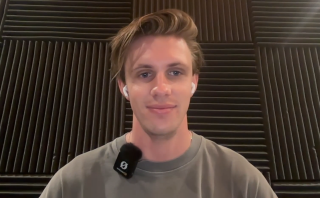
What if the biggest mistake you're making with AI isn't using it too much, but using it without intention? In this episode, Sean sits down with Todd Anthony, an agency founder and AI-forward creative strategist, to explore why most founders treat AI like a vending machine instead of a medium they can actually shape. Todd breaks down how staying attuned to market patterns, rather than reacting to
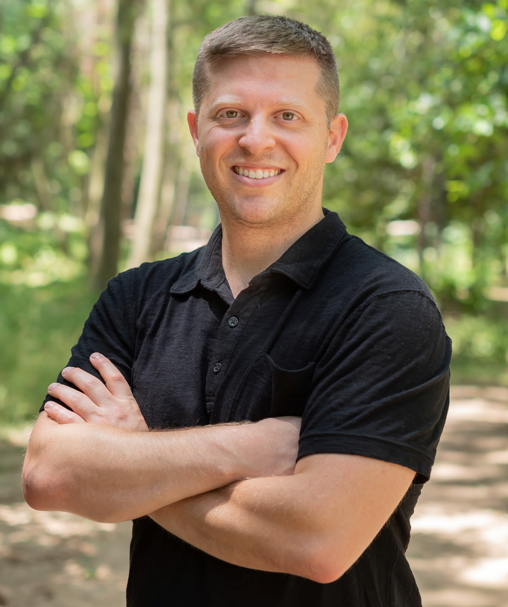

Guest
Todd Anthony
Founder, Pinwheel Content, Inc.
Todd Anthony is an agency founder and AI-forward creative strategist who runs a $3 million agency navigating the rapidly evolving digital landscape. He specializes in integrating AI into creative and content workflows while maintaining a focus on human authenticity, positioning his agency as AI-forward while staying attuned to broader market patterns and disruptions. Todd is known for his strategic approach to agency operations, including innovative staffing models and a critical perspective on the hollow, AI-generated content flooding today's digital ecosystem.
Chapters


Just raised, acquired, or launched?
Guaranteed CNBC, Bloomberg, and MSN.com coverage from one 30-minute interview,
timed to your milestone while it's still news.
Raises, acquisitions, product launches, and major hires create a narrow window where third-party press stops being optional. We turn that moment into a month of content.
Distribution through a channel with 2M+ real views
Full Transcript
Sean Weisbrot: What's the most challenging thing about running an agency in 2026?
Todd Anthony: Yeah. I mean, I think about the story, and I'm gonna butcher it, but there's there's three men on a ship, And the ship is in a storm, and they're looking at the conditions. And one of them just thinks I'm gonna do better off on my own just swimming in this than I am gonna be, on the ship. And so he jumps, and he drowns. And then there's an another man who I can't remember the second man. What he does I'm butchering the story. Sorry. But, but he also makes a decision and drowns. And the third man stays on the ship, and he starts to notice the patterns in the waves. And he starts to notice what's around him. And he starts to notice that there's, there's a mattress floating, you know, in the in the water, and he jumps off the ship that eventually capsizes and holds on to the mattress and survives. In other words, that's a long way of saying that I am keeping my eyes on the patterns and trying to notice the surroundings, trying to have a situational awareness around, what is happening, but it is, don't get me wrong, stormy as hell. And for an agency owner that is, doing work time and materials and, trying to maintain a, you know, a $3,000,000 business, It's it's challenging, and so we're doing a lot of different experimentation. We are exploring different angles. We are leaning into AI to the degree that we can, and we can talk about that a little bit more about where where AI's role is as far as I see it in the creation of things like content or creative or, things like that. But, you know, we consider ourselves an AI, forward agency, and we are embracing it as much as we can. But there are other forces at work too. Lots of other things that are creating volatility in the marketplace. Clients are clients are fickle. People decide to pull everything in house or, you know, sometimes they they have to downsize. There's been a lot of, a lot of turmoil within the clients, just from a staffing standpoint. So it's hard to maintain relationships when that happens, because one day your your, you know, key client is there, and then the next day, they're not. But, but that's been, you know, that's been interesting. We've actually hired some of those people that have been laid off from our clients. And that has that has turned out to be an an incredibly smart move, if I do say so, and has really helped us, a lot. And we are also developing new models. We're talking to somebody right now about coming in as a sort of strategist in residence, and we're creating this whole role around it, and then creating some incentives around that person bringing in new business for us. And so and being able to work on the business. So let's say, Sean, you are, what's what's a role that you would have at a enterprise corporation?
Sean Weisbrot: For that?
Todd Anthony: No. Generally. Like, actually, what would be your role at a enterprise?
Sean Weisbrot: What what would my role be?
Todd Anthony: Yeah.
Sean Weisbrot: I'm a generalist. I don't think I have a role in an enterprise.
Todd Anthony: Okay.
Sean Weisbrot: That's why I'm starting my own companies.
Todd Anthony: Alright. Well, let's call you a chief product officer.
Sean Weisbrot: Okay.
Todd Anthony: So so let's say you decide to become a fractional chief product officer.
Sean Weisbrot: Uh-huh.
Todd Anthony: The agency, would be like a home base where you could bring in projects and work on those projects, but then the agency would be able to grow that client as well. And then you would get a percentage on top of what you're making, on the projects, essentially like a commission.
Sean Weisbrot: Okay.
Todd Anthony: So that's that's the role we're we're creating.
Sean Weisbrot: Interesting. So a lot of questions I definitely wanna get into. But before,
Todd Anthony: Yeah. Mhmm.
Sean Weisbrot: I think what a lot of people that are listening now care the most about is there's everybody trying to convince them to start agencies because every teenager wants to start an agency. It's the way that they can escape the matrix. From all of your years of experience running an agency, does it make sense to start an agency?
Todd Anthony: Mhmm. Yeah. I mean, that's a that's a pretty binary question. There's a lot of nuance to it, but, I would say, yes. It does, especially if you have a specialty that others don't or that is rare in the marketplace or that you're exceptional at. So I would say, okay. North America, there are now 50,000, maybe 60,000, agencies, small agencies in the marketplace. You you so you're competing with those people. You're also competing with large agencies, and you're also competing with in house agencies. So, it's there's it it makes sense if you look at it like, well, we can bootstrap it easily. It's time and materials. There's really no overhead. It's completely virtual, etcetera, and we started out that way. But it's also extremely difficult to actually land clients. And the the thing to know about that is that it is a it is in a relationship based business. And there's a high degree of trust that you have to have or that the, that the client needs to have in you in order for them to wanna bring you in. Because look, if they bring you in and things don't go amazingly, that's their reputation. That is their internal reputation and, they could lose their jobs. You know? That's a that's a worst case scenario, but it's, you know, it is definitely a scenario. So
Sean Weisbrot: Every guru out there is telling 18 year olds that they can make their first $10,000 a month in the first thirty days if they launch an agency, and it's just hilarious because I don't I don't believe
Todd Anthony: Yeah. No. I wouldn't believe it either. There are different kinds of of digital agencies, of course. There are you know, you could you could launch an agency that I had a buddy who did a small business websites.
Sean Weisbrot: it.
Todd Anthony: That was his thing. Like, very small business website. Like, the website for, let's say, your your new product and, you know, your first website effectively. And, you know, he had to keep getting new clients because those are project based and you don't have, like we have a a nine year relationship right now with Experian. You don't have those kinds of relationships. They're just like in and out, in and out, in and out. And so you have to be really good at, hunting and killing, your food, and you have to have a pipeline, a a nice healthy pipeline. And you have to get really good at, SEO, AEO, and, you know, showing up in the places that those people are gonna be looking for an agency to do that. So
Sean Weisbrot: So let's go towards the content. You were talking about AI's role in content. We've talked about this previously.
Todd Anthony: mhmm.
Sean Weisbrot: A lot of the problems that I see with content creation these days is that it all sounds like AI. Like, humans are losing their voice
Todd Anthony: Mhmm.
Sean Weisbrot: to AI,
Todd Anthony: Mhmm. Mhmm.
Sean Weisbrot: but everybody knows that they need to be visible in order for people to wanna do business with them. Because as you said, all of these businesses are trust based. A lot a lot of them are relationship based. Even if you're a self serve SaaS like I'm trying to build,
Todd Anthony: Mhmm. Mhmm.
Sean Weisbrot: it's I still have to make content. I still have to let people know that I'm out there or else nobody's gonna come to me unless I run ads.
Todd Anthony: Mhmm.
Sean Weisbrot: But if I don't have enough customers to know that I have the budget or
Todd Anthony: Mhmm.
Sean Weisbrot: the right angles or the right ICP, I can't run ads. So everybody that's smart goes towards organic growth first, you know, warm outreach, cold outreach, but that requires trust. And so if someone comes to your social media channel and they see garbage
Todd Anthony: Yep.
Sean Weisbrot: because it's all AI slop, how is that supposed to build trust? Right?
Todd Anthony: Mhmm. Yeah. It doesn't it doesn't build trust. You really need the the authentic I mean, people are crawling through the desert of AI generated content going, please give me some human authenticity, like, just just just a taste, please. You know? And so if you're if you're only generating AI AI slop, as you say, even if you think that you're taking the slop out of it, you're probably not all the way. Their authenticity still needs to be coming through, and that takes work. I mean, I do it every day. So I know it takes a lot of work. I see like, so sometimes when when I use AI to generate content, I am looking at it as, a block of clay. You know? It's sort of like, well, before I didn't have a block of clay, but now I have a block of clay. And maybe it's, like, kinda starting to be in a shape that might make sense. I don't know. And so I spent a lot of time, like, molding that clay, like, sculpting that, that shape until it looks like, something that I would put out into the world. And I have, I mean, I have pretty high standards for the authenticity portion of that. And it's not just in the writing either, Sean. It's it's in the it's in the IDs, in the ideas, and in the the humanity that we bring to it. It's not just about the the quality of the writing. It's it's about the human experience. And does the human experience come through? So you can go in and you can fiddle with the AI, writing until it feels a little bit more authentic, a little bit more human, a little more you. But,
Sean Weisbrot: I
Todd Anthony: is it actually projecting humanity, which a lot of human writing just naturally does. Right? Does it project
Sean Weisbrot: I hope so.
Todd Anthony: experience? Yeah. Yeah. I mean, it should. I mean, some people aren't that great at it, and that's just not their thing. Right?
Sean Weisbrot: Yeah.
Todd Anthony: So
Sean Weisbrot: That's why I've put so much focus into removing the AI from the content that I create.
Todd Anthony: mhmm.
Sean Weisbrot: And so, like, if I take a transcript and I you put it into SparkVox and I turn it into something, I may publish pretty close to what was already given to me rather than I know you were saying you wanted to edit it more before publishing.
Todd Anthony: Mhmm.
Sean Weisbrot: Because for me, the authenticity comes from the source of truth, which is the recording, right, the call, the interview, the sales, the the presentation, what have you. So I feel like if you start from something that's a lived experience,
Todd Anthony: Mhmm. Mhmm. Yeah.
Sean Weisbrot: if I can, if I can make the AI keep that
Todd Anthony: Mhmm.
Sean Weisbrot: while limiting its ability to alter it with its nonsense that it wants to put in, like the it's not x, it's y.
Todd Anthony: Mhmm.
Sean Weisbrot: That kind of crap. If if I can if I can keep the authenticity and the voice and limit the damage to the the content from the AI,
Todd Anthony: Yeah. Yeah.
Sean Weisbrot: then I feel like I've got something really good, which I'll I'll admit to anyone, like, it's a work in progress.
Todd Anthony: Mhmm.
Sean Weisbrot: But but I think that is the way forward for people because, like, what you're talking about is taking an idea and turning it into a post. What I'm talking about is taking
Todd Anthony: Mhmm. Mhmm.
Sean Weisbrot: content that's been made and repurposing it into a post
Todd Anthony: Mhmm.
Sean Weisbrot: because I think it's easier to start with something that exists than to start with nothing and then have to work from a block of clay.
Todd Anthony: Yeah. I would agree with you. I mean, I think what you have, in in that statement is something that that maybe, you know, OpenAI or Anthropic should should wanna buy, is the ability. And I'm I'm not saying that, like, to to flatter you. I'm saying, like, here is a way to actually capture the human experience as the seed without, you know, causing any more actual work and to be able to use that, and project that human experience just a little bit more, not a little bit more, but in a lot more polished of a way. Basically converting what is a conversation to, prose, which is a completely different format for for writing, of course. Like, if you were to publish the exact transcript, that's one thing, but it doesn't read as prose, and it's kinda laborious to to get through. And so if you're able to sort of reformat it while keeping the authenticity into prose, I think you've you've actually really got something interesting there. I think the trick is how do you cure AI of its just unending desire to want to, say the next logical thing based on the average of everything it's ever read. You know what I mean?
Sean Weisbrot: Yeah. It's
Todd Anthony: Instead of
Sean Weisbrot: a a very long prompt with a ton of bands a ton of band words and phrases and and things. And and really the I think the the focus for that for me is in that that voice profile that I've created, which is
Todd Anthony: yeah. Mhmm.
Sean Weisbrot: if you're forced to rely on the historical inputs over time, acting as your context as part of your context window
Todd Anthony: Mhmm. Mhmm.
Sean Weisbrot: prevents you from averaging towards the mean.
Todd Anthony: Mhmm. Yeah. I mean, that's in theory, sure. That that sounds awesome. If you and maybe it just gets better and better as you use it. I mean, that that could be. Like, I I would love to play around with it more and, and see what, see what happens, with the voice.
Sean Weisbrot: So how do you keep your customers engaged?
Todd Anthony: So what how do you do that through the written word, or how do we do that strategically or really anyway?
Sean Weisbrot: Strategically, how do you keep your customers engaged, especially at a time when the same thing for me. People ask me, why don't I just use Chat two p t? I was like, well, obviously, that's a bad idea, but they don't realize that.
Todd Anthony: Mhmm. So how do I keep the Pinwheel's customers engaged, or how do I keep their audiences engaged with them?
Sean Weisbrot: Yeah. Well, more so, how do you just keep them from churning?
Todd Anthony: Clients?
Sean Weisbrot: Yeah.
Todd Anthony: Well, we. So I I worked for a while as, an in house guy at, Yahoo. I was a creative lead there and back in the heyday, and I was, the you know, the creative director at the brand, brand side of CBS Interactive. And we had, like, twenty twenty online brands like c b s dot com and, chow.com and a whole bunch of other ones. And one of the things that that helped me do is understand how companies work. Like, working within a company as a creative solution, like, how do they work? How do we make how do we take the friction out of the experience of working with an agency, while bringing potentially more to the table than an in house, shop could, bring to the table? And so that is, that is what we focus on is the quality of that experience that our clients are having. Take like I said, taking friction out because, honestly, marketers are so busy. It's incredible. I see their calendars sometimes, and I'm like, oh my god. It's just like a train wreck on top of a train wreck. And so they they absolutely have no time or patience for for anything that's adding friction, for sure. And so if that happens, which it's rare, but if it happens, like, I know it's a big deal, and I know that I need to respond as the agency owner, and I need to make it right in some way. And so that's one of the ways that we do it. Another another way that we do it is we try to get the lay of the land internally, and we try to, you know, spread out a little bit, within the organization. So an example of that would be at Stripe. We were working with the, with, the the regular content team at Stripe, and he introduced us to the partner marketing team at Stripe. And so now we're working for two different teams. And then now we have access to the brand team, and we're helping them do things. And, and so we're sort of really integrating almost like an AOR, but I don't know if we could really say that we're AOR. That's agency of record, by the way, for for Stripe. And I don't even know if AOR is really a thing anymore. Most clients have an in house shop, and they also have, like, five or six agencies in the mix. And they may even have 10. I have no idea.
Sean Weisbrot: Why is it why is there so many teams?
Todd Anthony: So so many agencies.
Sean Weisbrot: Yeah.
Todd Anthony: There's a there's a lot of reasons for that. One of the one of the reasons is that companies are siloed a lot of times, and so different silos, you know, want service in a certain way. I mean, they may have, connections to agencies that they've worked with in the past, and they wanna bring them in. And I totally understand that. Another reason is that there are lots of different agency specialties. We say agency as, like, the sort of catchall or creative agency even as a catchall, but, ultimately, there are probably, well, 30, like, distinct kinds of agency. And within each of those distinct kinds, there are a there are agencies that are better at some things than others. And so you want people who are really good at the thing that you need them to do. And, and so we're really good at, at content. We're really good at building trust, for the for the client among their audience. We're really good at, pulling people into their funnel through search and, you know, AI search and things like that. That's where we're good at.
Sean Weisbrot: So then how do you build trust for them with their audience?
Todd Anthony: Well, there's we're actually you asked earlier, like, how are we weathering the storm or, you know, what's it like being having an agency at this time? One of the things that we're doing is developing an entire, trust engine, is is a concept whereby we go in and instead of treating it as, like, we're gonna create a bunch of case studies or we're gonna mine your, your results for data points that we can pull into your marketing or, you know, things like that is we're gonna actually create an entire ecosystem of proof that your product works or that your services work. And we're going to we're gonna atomize all of that, and we're gonna put it in all different areas of your marketing. We're basically going to, broadcast it everywhere. And that is one of the ways that that we generate trust. Another way that we generate trust is through storytelling, because storytelling naturally creates a bond, or a connection between the, the rator and the, and the listener. So that's just something in the human psychology.
Sean Weisbrot: How do you build and maintain that trust with the audience in a way that's not clearly, obnoxiously salesy?
Todd Anthony: That's a good question and a good instinct. You you infuse it into other things that you're doing in a way that is not like, it's not necessarily the whole point. And it is put forward as as, like, here we're making an assertion, naturally, we're gonna follow that up with, and here's the proof. Not like we, you know, here's our our entire billboard. Sorry. Our entire billboard is, is just a data point of, like, we're awesome. You know? Like, we we did a 150,000 of that. And, therefore, we are the best in the marketplace. Like, that sounds really salesy. It sounds really boasty. Like, we need you need to do it in a way that it that endears you to the audience, not in a way that repels them. Because ultimately and I think your this is where your instinct is coming from, Sean, is that people are sick and tired of being sold to, which, you know, it they're very fatigued by it. One thing that does still work though is this developing, proof and trust through that proof. That still works because people wanna know that the thing that they're gonna buy works or doesn't work. They don't wanna hear your, you know, thirty minutes or thirty seconds, like, funny little pitch anymore. They're done. They're done with that.
Sean Weisbrot: So, obviously, you're helping companies that are large enough that they have they have this proof. But what if you're early in your journey and you're trying to establish credibility and trust, but you don't have anything
Todd Anthony: Mhmm.
Sean Weisbrot: to show for? How do you do that? How do you take what you do for these large companies and apply it to yourself?
Todd Anthony: Yeah. It's it's really I I think it would depend on the thing it is that you're selling and who you're selling it to. Like, there's ways to build trust that aren't necessarily about showing the results of what you do. Because, ultimately, if you're one month in on building a product, you don't have any results. Like, there's nothing to say, honestly. But you do have, tools at your disposal. Things like honesty, straightforwardness, having all your cards on the table, like, being, overtly trustworthy in how you're projecting yourself out into the marketplace, those things do work. And, also, they do make you stand out from your competition, because companies don't naturally do that, especially large companies. The one thing that you have as an advantage as a small company is that you don't have the bureaucracy that's making everybody and similar to AI sort of gravitate towards the mean. You have the ability to be different. And so use that, and do it in a way that builds trust among your audience, and you will you will grow, assuming you have, like, a good product. Yeah.
Sean Weisbrot: Have you heard of the term building in public?
Todd Anthony: I have it, but I like it.
Sean Weisbrot: Really? I figured you would have. So building in public is a a phrase I don't know who coined it, but it's something that, like, every SaaS owner has been taught, essentially. It's like, if you're building your product in public, if you're telling people, you know, I didn't don't have any revenue yet, or, we just added this new feature, but it took three weeks to put together.
Todd Anthony: Mhmm. Mhmm. Mhmm.
Sean Weisbrot: If you're you're telling people the struggles of what you're doing, then you'll build an audience that when you're ready to launch is, like, assuming you've done it right and you've attracted the right people,
Todd Anthony: Mhmm. Mhmm.
Sean Weisbrot: your customers are ready to go because you've been getting them wet, essentially.
Todd Anthony: Totally. Like, that's I I love the term. I hadn't heard the term, but I have obviously witnessed the the the expression of that. And, I think it's a great way to develop trust. It's a great way to bring people into your orbit and to, like essentially, it's storytelling. Like, here's my struggle. I'm trying to create this thing. Here is this, this roadblock that I ran into, and it really did make me stumble for a second. But I figured it out. Like, people are, like, suddenly tuning into that, and they're like, oh, this is exciting. Like, I get to follow this guy and his journey of developing this product. I wonder what happens next. You know?
Sean Weisbrot: Yeah.
Todd Anthony: They're involved.
Sean Weisbrot: I came across a a video in my feed on YouTube earlier today where a guy's like, watch me on my journey to go from 0 to 10,000 a month in revenue for my software company. And it's like day the thumbnail is like day 36, zero revenue. Because
Todd Anthony: Yeah. I think I saw something similar to that in my, substack feed, yesterday.
Sean Weisbrot: because, like I said earlier,
Todd Anthony: Yeah.
Sean Weisbrot: all these gurus are saying, oh, I I'm working one hour a week, and my business makes a million dollars a month. Right? You know, I make I have a trillion dollars in sales because of the the AI agent team that I put together.
Todd Anthony: No.
Sean Weisbrot: Comment x, and I'll give you access to it.
Todd Anthony: Mhmm. Mhmm. Yeah.
Sean Weisbrot: Right? It's like there's a million of these kinds of businesses,
Todd Anthony: Yeah.
Sean Weisbrot: and these people are making money selling to the people who want to make money.
Todd Anthony: Mhmm. Mhmm.
Sean Weisbrot: And it's it's sad because I could make millions of dollars if I wanted to do I mean, I I've I've been money in the past, but, like, I could do something like that if I wanted to. I'm like, no. I'd rather just actually build something that's useful that,
Todd Anthony: Yeah. Yeah.
Sean Weisbrot: you know, when the hype is gone, this thing is still valuable to people.
Todd Anthony: Mhmm. I think, ultimately, those guys, deep down on their heart of hearts, they know that they're, full of shit, and they know that they're just taking advantage of people who need guidance, and it's sad. I think that's what makes it sad. I think it's much better to to be be true to yourself and say, okay. Well, based on that, how how am I gonna make how am I gonna make money? You know? But, yeah, I've seen those people out there. But the point about going and building in public, I mean, I think is great. I mean, I remember being at Yahoo and we would launch a new product, and it's like, it's in beta. You know? That was kind of the my first exposure to that kind of thing. I was like, oh, interesting. Like, you don't see that in the grocery store. Nothing's in beta in the grocery store. Yeah.
Sean Weisbrot: You've been right. But there's there's nothing really in beta anymore because you could literally take an idea, and and it's ready to launch in a few days.
Todd Anthony: Yeah. You could. I mean, it it might be worth signaling that it's not necessarily fully baked, or it's not necessarily, you know, the full expression of what this needs to be. But, you know, people will still buy it if it helps them do something that they need to do.
Sean Weisbrot: Yeah.
Todd Anthony: Something like SparkFox, for example, it saves people a ton of time and can generate, like, a ton of a ton of, social media content really fast in your voice,
Sean Weisbrot: Exactly.
Todd Anthony: theoretically.
Sean Weisbrot: You wanna be my, my chief sales ops?
Todd Anthony: Yeah. Sure. Yeah.
Sean Weisbrot: What's the most important thing you've learned in your career so far?
Todd Anthony: You know, that the answer to that, Sean, is gonna change, like, on on a daily basis. But I think to my today's answer is that it's okay not to have all the answers. Like, just do stuff and just let it be okay and feel like it's okay to bring other people in and get their expertise or their opinion or their it doesn't mean that you don't know what you're doing even if you don't know what you're doing or maybe you don't know what you're doing. Like, it's okay to not know what you're doing, honestly. Like, you're doing something and it's pretty cool. So, maybe, you know, take some advice from other people. That's one of the things that that's fundamental to how I built the agency is that everybody that works at Pinwheel is on the same level, and we're all doing it together. Now if somebody disagrees with me and I disagree with them, I might, you know, I might overrule them. But, ultimately, as an old founder, that I worked for once used to say it's a benevolent dictatorship. No. It's a it's kind of a democracy, but with a little bit of hierarchy. A little bit. Teep it. So
Sean Weisbrot: Okay. Thank you.
Todd Anthony: yeah, yeah, thank you. Good to talk to you.
Just raised, acquired, or launched?
Guaranteed CNBC, Bloomberg, and MSN.com coverage from one 30-minute interview,
timed to your milestone while it's still news.
Raises, acquisitions, product launches, and major hires create a narrow window where third-party press stops being optional. We turn that moment into a month of content.
Distribution through a channel with 2M+ real views
