Getting Laid Off Led Him to Buy the Company That Hired Him
What if getting laid off was actually the best thing that could ever happen to your career? Clayton Pritchard joins Sean to share how an unexpected job loss set him on a path to eventually acquiring the very company that brought him back in, turning a moment of uncertainty into one of ownership. Along the way, you'll learn why product marketing is far more than a launch function, and why embeddin


Guest
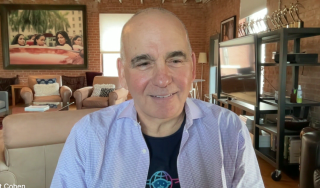
Clayton Pritchard
Product Marketing Consultant / Owner, Olivine
Clayton Pritchard is the owner of Olivine, a product marketing agency he acquired after an unexpected layoff led him on an entrepreneurial path. With experience at major companies including LinkedIn, Clayton brings deep expertise in product marketing strategy, positioning product marketers as essential business strategy partners rather than simply launch executors. He specializes in embedding marketing early in the product development process to drive stronger adoption and close costly go-to-market gaps.
Chapters


Just raised, acquired, or launched?
Guaranteed CNBC, Bloomberg, and MSN.com coverage from one 30-minute interview,
timed to your milestone while it's still news.
Raises, acquisitions, product launches, and major hires create a narrow window where third-party press stops being optional. We turn that moment into a month of content.

Distribution through a channel with 2M+ real views
Full Transcript
Sean Weisbrot: What's the hardest thing about what you do?
Clayton Pritchard: Hard thing about product marketing is, it depends on this type, but I would say in general, it is making sure that I have all the information that I need. So, a lot of the job for product marketing is information gathering, whether that's from the market. We need to know, who the competitors are in the space, what they're doing, what their good market motion looks like. We need to know what our customers want, so we can be sort of voice to the customer and and bring those insights in. I need to know what product is building, how they're designing it, how how it works, why it works that way. I need to know how sales conversations are going, where things are getting stuck, why people are churning, all these sort of things. It ends up being almost like a business strategy role. And so in order to do that, I need to know all these different pieces. And so it's a hard job to find that, and then it's sometimes there's blockers like product. I have a client that I'm working with right now where we're trying to get more embedded with the product team because they're bringing things to us, after they've made decisions. And if we had been a part of that process, we could have helped to find these things out earlier. But they don't wanna bring you in because they're worried about more chefs in the kitchen sort of being a blocker, slowing slowing things down. So there's constantly this fight of, like, I need to get more information so I can do my job better. Some teams are worried about bringing me in, making them, move slower at their job. So so I would say that's the hardest part.
Sean Weisbrot: Just a buy a buy in. So, like, the the executive team recognizes there might be a problem, and their product team doesn't want to show you that there may be a problem.
Clayton Pritchard: Not so much. It's more so that, the the product team sees product marketing as you're the team that takes this thing to market once I'm done with it, which, yes, to some extent. But in order for me to officially to to successfully take it to market, I'm probably gonna need some things along the way to be true. So for instance, when I was at LinkedIn, LinkedIn is a massive, app. And so if I was to run an email campaign to try to drive adoption for a new feature, and I just send a link to, like, linkedin.com and expect you to find this feature that's not in the feed, you're not gonna find it. So I need a, I need a deep link for the mobile app. And in order to build a deep link, which takes you to the specific part of the app, engineering actually has to build that. That's the thing they have to put into the spec of the product. Or something else is, as far product marketing, one of our roles is to get people to not just use the product once, but find out how to sort of push them down that funnel of being successful with it. So with most things, it is, okay, you did this one step, maybe you got stuck on the second step or the third step. How do we help you sort of move along that that process? A lot of times, engineering, again, to move quickly, they don't put in even the tracking that I need to know how many people did the first thing, but didn't do the second thing, or didn't do the third thing. And then not just the tracking, but now how do I target the people that did the first but didn't get to the end. So there's they're not thinking about the go to market when they're building the product. They they're thinking about sort of, like, the minimum requirements of, like, just to make the thing work, the MVP. And so that's usually why it's not necessarily something nefarious for people, like, trying to keep you out. It's more so that they don't realize that having marketing as part of that process, makes it actually more successful. Usually, they do after a couple of times where we're saying, okay. We're not gonna launch this because it doesn't have x y z thing or it's not as successful because of it because product teams, nobody wants to build something that nobody uses, and so they're incentivized to help marketing do our job better. It just tends to take a little bit of teaching about how why we need to be involved in that process earlier.
Sean Weisbrot: This is the exact thing that I'm going through right now. I had a a call earlier today. There's a platform called Growth Mentor, and I'm a mentor on the platform. But I also like, if you're signed up as a mentee, then you pay to access the mentors, and the mentors usually don't charge. But if you're a mentor and you do mentorship sessions with mentees, you can also access the other mentors without having to pay.
Clayton Pritchard: Okay. Okay.
Sean Weisbrot: So I'm currently, like, you can have three at a time that you're in queue for calls with. So I I have all three. I just did one this morning with a product guy. And as soon as I finished that, I booked, my next third. So I'm, like, trying to keep the queue full right now for myself because these people are really valuable. So today, I was having a call with someone
Clayton Pritchard: Nice.
Sean Weisbrot: about my onboarding. I was like, hey. You know, I'm thinking about this, thinking about this. And we went through the onboarding, and he gave me a bunch of suggestions, and it was really cool. And he he he said something that you said as well about DeepLINKS. And I was like he was like, so after they put their credit card in, what where do they go? And I was like, oh, they go to the dashboard. He's like, but the thing that triggered the paywall
Clayton Pritchard: Mhmm. Okay. Yep.
Sean Weisbrot: from the onboarding was to schedule a post.
Clayton Pritchard: Yeah. Yeah.
Sean Weisbrot: So, ideally, after so if they click on the schedule and then there's a model that says to connect to LinkedIn or to to pay, if they've connected to LinkedIn and then it takes them to the paywall, after they finish, like, putting their card details in because they don't get charged yet. He said you should deep link them right to the schedule model so that they can
Clayton Pritchard: Yeah.
Sean Weisbrot: have that success. Because if you don't and you just send them to the dashboard, they now have to go back to the project, open the post again, then click on schedule again, and then they schedule. And that won't feel as good, especially when you're asking them to put their card
Clayton Pritchard: Yeah. Yeah.
Sean Weisbrot: for a trial where you wanna charge them hundreds of dollars a month. And I'm like,
Clayton Pritchard: Yeah. Yeah.
Sean Weisbrot: yeah. That's not difficult. I've already got deep links. I can do that. So I've I didn't I didn't think about deep links in the beginning, but then the more I got into it, I was like, oh, like, how can we how can we do that? Because, like, this thing doesn't have a deep link, and this thing doesn't have a deep link, but, like, we should we should be making it easier for people to link to different parts of the application.
Clayton Pritchard: Yep.
Sean Weisbrot: But if we're sending an email to someone, like, for example, oh, here's a new, a new project is ready for you to review, You want them to not go to the dashboard when they click on the button. You want them to go to the project. So, like, I've been building deep links for everything,
Clayton Pritchard: Yep.
Sean Weisbrot: and and what's really cool is I have, plans. So I I use cursor. You get really close to the code. And so Claude inside of Cursor allows you to build plans for your feature sets,
Clayton Pritchard: Yeah.
Sean Weisbrot: and it won't put in deep links in the plan if you don't ask. It doesn't put in error handling and logging and documentation and making sure the design system works. And, like, it doesn't handle all of those extraneous things that you then have to go and find the problems and fix later. So I've gotten much more, much clearer when I'm building the plans about, hey. We should add the post hoc events, and they should connect to the admin dashboard, and we need to have this stippling. And so, like, I I'm doing that now. And I think it's easier as one person with AI because you don't have someone saying, oh, that's, like, extra work to do because I'm the one doing it. And I need to do it because I need to monitor because I'm the one doing the marketing. I'm the one doing the sales. I'm the one building the product. I'm the one doing the design and the user's journey and experience and all the features. So it's, like, I have to be on top of everything
Clayton Pritchard: Yeah. Yeah. Yeah.
Sean Weisbrot: because I don't have anyone else I can rely on to do that.
Clayton Pritchard: Yeah. Yeah. And that's so that even what you're talking about there, blah, you're doing the product, the engineering design, and the marketing. So they that's why it's a, like, a full team that needs to be built in order to do this. And, usually, to try to, like, speed things up, they're thinking about product engineering design. Like, those are the people I have to have in order to get the thing out, but it's not gonna be successful. If you don't have the marketing side too, this idea that, I share a lot with my clients this, product has an MVP, a minimally viable product. Marketing is an MMP, a minimally marketable product. And one of the re one of the sort of, pieces on that is, are they gonna are they able to find the product again? So you talked about, like, that experience. If I, sent them from an email into that part of the app, do they have to have the email again or they're actually able to find that somewhere within the experience on their own? Is it sort of easily findable? Is it generally bug free? Is the customer experience one where they're gonna be successful? It's sort of like what you talked about there as well. Like, if if you're driving them through a user flow and they're they're we know they're gonna get stuck somewhere, why would I start promoting people to go do that? They need we need to make sure that the user flow is one that is gonna be successful and a good experience. Now, of course, we don't have to wait till everything's perfect because we would never launch anything. But we we we wanna make sure that it's not a sort of, like, broken experience for somebody who's like, oh, I'm not gonna do that thing again because, because it was an awful experience. So that's the other idea that and I think that's the other piece for marketing that we can sort of hold is if we have these requirements, just like I mean, we viable product test this so they hit certain requirements. If we have our minimally marketable requirements, that allows us to be the owner of, you can you can roll something out, but in order for it to be launched, it has to hit this set.
Sean Weisbrot: So I because I'm also doing the marketing, I have two repositories
Clayton Pritchard: K.
Sean Weisbrot: that are both local folders and synced to GitHub. And so what I've done is I've built all of the technical documentation into the repository of my application, and then I have, I have a set of API like, I have a set of documentation on the website repository. And both of them are on my computer, and since I use Cursor for both, Claude is able to access both.
Clayton Pritchard: Yeah.
Sean Weisbrot: So I can say, before I'm ready to push the next thing to production, I can say update all of the documents based on the changes that have just been made. And then when I public when I publish that, I can
Clayton Pritchard: Yeah.
Sean Weisbrot: say, in the other repository, go look at the documents that have changed or go go look at all the documentation on the other repository and use that to tell me what we can do in the website to update it to to be together on the same thing. And then it does it for me. And so I can keep the website and the application in sync at all times, but, like,
Clayton Pritchard: Nice.
Sean Weisbrot: it it's, it requires going back and forth if, like, you're constantly producing new features and changes and things like that.
Clayton Pritchard: Yeah. Yeah.
Sean Weisbrot: And I remember
Clayton Pritchard: Yeah.
Sean Weisbrot: when, you know, years and years ago before AI and I had a marketing person and a marketing director, like, I would have to create the UI UX and the feature specifications and the user stories. I would pass it to the product manager who'd have a meeting with the QA who'd have a meeting with the QA team and the development team and the back end team, and they would have to agree on how everything was. I'd have to be a part of the call, and then they the product person would pass the information to the marketing person, and then they we'd have to have a designer work with the marketing director to create the new pages for the website. Like, everything was manual.
Clayton Pritchard: Mhmm.
Sean Weisbrot: And and they'd be like, we need to have the the next two months of development for the product known and, like, this cannot change. We need to have this information at least two months in advance so that we can do our job to prepare the website so that we can promote these things on time.
Clayton Pritchard: Yep.
Sean Weisbrot: And now it's like, why? You just have to snap your fingers, and it's all done. Like, I could possibly trigger an email to all of my subscribers when the website goes when the upstate when the website change goes live, it could just go, hey. This is the change log, right, and just turn it into a marketing message and automatically trigger it to everyone. Rather than me having to manually copy it and go into kit and send the the email. That that I I just, reminded myself I should do that.
Clayton Pritchard: Yeah.
Sean Weisbrot: Automation is so important. You know?
Clayton Pritchard: Yeah. Yeah. It definitely speeds up the process. I don't say, like, I need to know two months in advance. I do say, one of the things I think about is marketing should not be the ones that are setting the launch date
Sean Weisbrot: Yeah.
Clayton Pritchard: as much as possible. I say this, and I know that, I'm gonna do it again one day in my career, I'm sure as well, because we're gonna wanna launch it at a conference or some other sort of event, and, like, we're gonna set that as the date. It's nice in some ways because it is a forcing function for the team. I just know that engine product and design, like like, they almost always will miss the the headline they set. I've never had. We're like, oh, it's actually well, not never. Rarely have I had. It's actually early. It usually gets pushed because we find the plans are put together not expecting us to sort of find some hiccup. And we always find some sort of hiccup, some sort of bugs, some issue happens along the way. And so we end up pushing it. I actually had this as a learning, early in my career where we were, I was at a video conferencing startup called Highfive. We were moving to WebRTC. For those who don't know what it is, that's the reason that you can do your Google Meet, meetings in the browser. That's that technology that they're using. And in 2015, 2016, or whatever it was, that was a brand new tech. And so we were moving to that. And we announced, I and the working team announced that that it we had launched it, and it was this but it was only launched, like, in beta. It was sort of a coming soon. Well, we found some issues. And so it took six months, I think it was, before we at least four months before we ended up getting it out there. And so, the public didn't realize that, but all of our customers were kinda burned because they were sold on this idea that they were gonna be able to join meetings in their browser. Some people literally bought on that, like, sort of it's coming soon mentality. And so we changed going forward. Now it was we're gonna wait until product is live, and then we're gonna plan, obviously, accordingly. But we'll wait till the product is actually ready to go. Then we'll give ourselves, like, two to three weeks to put together the or to sort of finish the plan. And the reason for that actually is mostly on PR. So which is still something that we you'd have to do today. If you're gonna make a large announcement, unless you are Microsoft or Apple or Meta or something, you're not gonna get same day or next day coverage. You're gonna need to reach out to, reporters two to three weeks in advance to give them a heads up, to give it to them under embargo. And then, hopefully, Microsoft or Meta or somebody else doesn't want to announce something, and then you get kinda get kicked off of their list because they're obviously gonna go go follow that. So, anyways, that was the reason that we would say, okay. We need two to three weeks beforehand so that we can plus finishing touches on some things based on where ended, but, really, it was so that we can pitch, press, and actually get some coverage, but not giving this sort of, like, target date. We'll give it's actually ready today, and, we'll set the date after that. So sort of decoupling the rollout period. Product could still roll it out to current customers, but we weren't publicly launching it, until that sort of later date.
Sean Weisbrot: Why would a company show something to only some of the customers, but not all of the customers when it's ready?
Clayton Pritchard: So there's a couple of reasons. It depends on what the goal is. If you're trying to do some, testing, so it's ready, but we wanna see what the impact is. So that's something that, like, Meta, LinkedIn, etcetera, that they do often is the product is ready. It's we've we'd already run it through the beta, but we wanna gradually roll it out because we wanna see does this negative generally, negatively impact other metrics. Do we see, for instance, a decrease in people spending time in their feed on LinkedIn or or Facebook because this new feature sort of detrimentally impacted that or, like, the, they're less likely to upgrade to a paid, a verified Meta account or any of these sort of things that impacts, like, revenue or or big company goals. That's one reason that we'd slowly roll it out. The other, question maybe that you're asking as well is, like, we would roll what I was saying was actually rolling it out to all customers. We would just wait on rolling it out to, like, announcing it to the public. So the press doesn't know about it. If you're a small if you're a start up, you can roll stuff out and nobody's gonna find out unless you go and post it on your blog post or or whatnot whatnot. Even at Highfive, we were a 100 person company. We had hundreds of, cost of companies that were our customers and obviously thousands of users. They're not gonna all go and, like, post about it on social media. Now that being said, when I was at Meta on the WhatsApp side, we had that problem. The WhatsApp app for whatever reason is built in a way where you can I don't know? Maybe this is common. I don't know enough about mobile apps. But it's built in a way where you can break it down and know what the team is testing, even if it hasn't been rolled out to any users yet other than internally. And so there's a, a new site called oh my gosh. Anyway, he focuses on WhatsApp only. That's all he writes about, and he's a developer that will see the change and he'll go and write about it. And so we had to, know that we had to basically be ready to, like, announce when it would be pushed to that because we had to know that he was gonna probably find it, and we had to at least have reactive comms for that. So anyways, that most of the time, that's the case. If you're a large company, that you're marketing for, unfortunately, there's a ton of eyeballs. Your your news, even the smallest features is news, whereas that's one of the nice things. It's the pros and cons of being a small a smaller company is you have to work really hard to get your news, but at least when you fail or you or you're testing something, you can do it really quietly, because you don't have a thousand a million eyeballs looking at it every day.
Sean Weisbrot: I think it'd be nice because you don't have to worry about having to find people to cover you.
Clayton Pritchard: Yeah. Definitely pros and cons. I mean, the other piece though is they're also looking for negative things to cover you.
Sean Weisbrot: Yeah.
Clayton Pritchard: So,
Sean Weisbrot: Hey.
Clayton Pritchard: there's always a there's a spin there and stuff too.
Sean Weisbrot: All all press is press.
Clayton Pritchard: All press is press, not necessarily good press, but but yeah.
Sean Weisbrot: I mean,
Clayton Pritchard: So I think that was the piece that we have as well is we'd have to make sure that we know what the story is that we wanna tell, and that we we could see potential negative angles or whatnot so that we can maybe get ahead of something. So there's features that are maybe net positive for the platform. They're not, sort of detrimental in any way, but or not generally, but there's people that will think that they are. Right? And so, like, how do we make sure that we're covering that angle? There's always gonna be, I talk about it locally. They're they'll talk about, oh, a new a new park is being built in the city, and there's somebody that is complaining about that park being built, which is why would you be complaining about a park being built? Well, it's like, oh, well, I think it should be a restaurant or a store or something else instead. Like, I live in Jacksonville.
Sean Weisbrot: A golf course.
Clayton Pritchard: There's this thing called, Jacksonville Landing, which used to be like a complex with, like, restaurants and bars and shops, like, right on the on the river. It went into sort of disrepair years ago, and they they tore it down. Well, now everybody, they sort of nostalgia. They want it back, and they're mad that they built a pretty park on the river instead of that. So no matter what they're no matter what you're sort of posting, especially if you're doing it for a sort of mass audience, there will be somebody that has a negative slant to it. So we had to think through, what that was as well and and be ready for that. And that's that's the problem that you have when you've got a million eyeballs no matter what it is, is it starts to be, somebody will find a reason to hate it, basically.
Sean Weisbrot: So how is AI changing how companies market their products, and and how can they use it to their advantage?
Clayton Pritchard: Yeah. I think it's changing some of the sort of lower level work, I would say. Like, if I was a entry level marketer today, that's the the worry the job that I'd be worried about. And that's where I would say you need to go and learn AI so that you can be, you can be the one that's managing the AI, not learning how to do the work that AI is doing now, which is writing blog posts or social media posts. It's, going and doing research on the Internet, those those sort of activities. So for for us, the things that we are using it for, one of the things we're using for a lot is customer interviews or prospect interviews. Doing ten, twenty of those. AI is great at taking data and synthesizing it. And so I don't have to go and, I don't have to take detailed notes. I just record the call. Those are the notes. And then I'm obviously in the calls, so I can remember what was maybe the sort of themes that I've I heard throughout and make sure, obviously, that's fall, that's showing up in the AI, analysis as well. Nine times out of 10, it is. But it's gonna take those themes and find the commonalities across. One of the things I think is difficult sometimes is it doesn't know, like, it doesn't know how to, like, balance importance of things sometimes. Like, if you just gave it the recording of 10 customer calls, it might if somebody says something really passionately, it's gonna take that and make it more important even though it was one person versus the the nine others. Everything is the same. So that's one piece where there's still judgment calls that that need to come into it. It also may not have the context of the rest of the market and the company and and those sort of things. But that analysis would take at least hours, if not days. Now it is it's much faster. So that I think that's the big thing. Another one is, definitely writing social media content, is helpful. I think the best people still have a human as a big piece of that to make sure the voice and, and everything is is correct, that it's not sounding AI, that it still sounds it's, unique and diversified in the in the market. So that because everyone is maybe starting to sound a little starting to sound pretty the same. And then the cuss our competitive research. At least the first round of that is another place where AI can really help. If you're able especially, like, a perplexity, that's going out and looking for current information, one of the problems with cloud and chat gbt and and whatnot is they tend to be, using potentially outdated information. So it it can still be a good start, but to get the most up to date information, that's what we need with competitive research. So I'll start with that to give me a use, sort of broad sense and then go do, validation and see if there's anything else that was missed. But those are the areas in product marketing at least that I think have been have been pretty helpful.
Sean Weisbrot: What about these, like, trust platforms, like g two and Capterra and Trustpilot to name a few?
Clayton Pritchard: So, what do you mean what about them?
Sean Weisbrot: How valuable are they for companies to pay attention to?
Clayton Pritchard: So today, the use is AI. So for us in our space, the Capterra g two is Clutch. So Clutch is the review site for marketing agencies, and they are the fact that we are the number one sort of ranked on Clutch means that we show up a lot more in the searches when somebody's looking for, like, a AI agency or sorry, a product marketing agency on AI search. So I think that's where they help a lot is with that sort of third party validation. Obviously, anybody that's into the AI search optimization space knows getting listed in listicles. Like, if there's a podcast, best pod business podcast listicles, if there's a few of those that you're listed in, you're more likely to show up when somebody goes and and searches for that. But the source also matters. And so a review site, for instance, holds a lot more weight than just one person's blog post, about this. And so that's helped us a lot in our space. And I think as for people that are in the software space, that's the way that I would think a lot about g two and Capterra is how do I make sure that it's feeding the right information into AI for for searches. So one of the things, for instance, that I use is we've got, Ahrefs for SEO and AI tracking, and I've connected that to Claude. And I'll have Claude again, it's great at analyzing data. I'll have it go in there and analyze all of the tools. There's multiple different types of tools that Ahrefs has for me, and and then go out and find the sources that AIs are, AI is using and tell me where I need to show up. And a lot of times, that is those review sites that are are the places. But also the the other piece it's showing is we need to make sure that our information is consistent across the board. So Crunchbase, g two, Clutch, whatever that that messaging is consistent, but it's also the messaging that cert AI search is looking for. So it's looking for the sort of, like, call outs of the top for our in our space, the top companies that we've worked with. So I need to make sure that I'm mentioning that we've worked with LinkedIn, and we've worked with ServiceNow, and we've worked with Twilio. And I need to make sure that's consistent across the board because it ranks it as more trustworthy if it is more consistent. And so that's the other piece too, not just the reviews itself, but the the actual bio that you can control, making sure that that has the right information that it's easy to sort of pluck out and and put in a AI search result too.
Sean Weisbrot: How do you handle fake reviews on those sites?
Clayton Pritchard: I haven't really had them very much before, to be honest. Like, even in my career in other places, they generally do a pretty good job, I think, of verifying. But if there is a fake review that pops up, reaching out to the the platform and and sharing why, I have had that happen more in a, like, Yelp or Google, maps list. Those reviews tend to have more of that. And not even necessarily fake, but they found the wrong place. They they were reviewing one in a, from another city or whatever that has a similar name. Or even in the same city, it's got a similar name, and they they just didn't know, which one. Though they are harder to get off because, because Google just has so many people. The the b to b review sites, they've got better support, because you're actually they want you to pay them, and a lot of times you are for g two or or whatnot. And so they tend to have some better support than your Yelps and and Google.
Sean Weisbrot: What's the most important thing you've learned in your career so far?
Clayton Pritchard: In my career, it's been oh my gosh.
Sean Weisbrot: Is everything okay?
Clayton Pritchard: Sorry. Are you gonna be able to do you wanna ask it again so you can cut it in?
Sean Weisbrot: Sure. What's the most important thing you've learned in your career so far?
Clayton Pritchard: Most important thing in my career, I think, even outside of marketing, is that every step is part of the whole process. So there are parts of my career where I thought that, man, I made a mistake. I shouldn't have done that. Like, this this sort of step was not gonna be, wasn't the right move. But I think taking every piece as a learning opportunity, I'm there are definitely failure companies that I sort of joined. I was like, I should have stayed where I was at. That was not the right thing to do, but it helped me get to the next piece. So how do I take some some how do I make the most of each opportunity, learn from it, and get to the next piece? I think that's been the part that, like, I don't you don't necessarily realize in the moment, where it's gonna lead you. And so I think saying yes to more things, trying to be less risk averse, and then learning even in those bad situations when you've got the bad manager or or you chose the wrong company. What is the thing that I can take from that to help me in the next one? That's been, I think, a piece for me that, honestly, I didn't I I thought was true. I didn't fully realize until, like, all of mine. There's been a few steps along the way that I that if I didn't have sort of this mess up, then I wouldn't have gotten to where I am today. So the one that I'll maybe I'll talk about is, Momentum is a company that was acquired earlier this year by Salesforce. When I joined them in 2022, it was, they were expecting they were gonna do another round of funding. And so they hired the head of marketing, thinking, okay. We're gonna bring you in, and then we're gonna get our funding, and we're gonna sort of allow you to sort of go to the next thing. Well, it didn't happen because the in 2022, the goal post changed. It changed from growth at all costs to, like, more efficient growth. Like, they're they're more worried of instead of, like, logo growth, they were worried about what's your, net retention rate. And it was harder to get that round of funding. So then they're blaming me off. Well, the head, or one of the cofounders of Momentum, Ashley Wilson, she's actually also was one of the cofounders of Olivine. And so that's where I got connected with Olivine when I left, which, when she they ended up having to lay me off. I started working with Olivine as a consultant. So I met the rest of the team then and, got closer to them, started working, started consulting. And then now in earlier this year, I officially acquired the business. And so if I looked at the timing, like, well, crap. I shouldn't have joined momentum or what whatever. It was a failure because you ended up needing to be cut from the team. But without that happening, I wouldn't do where I am today, and I am excited. I really love what I'm doing so far with all of mine leading the business, working with our clients. And so that sort of, like, mess up or failure ended up being a success later on.
Just raised, acquired, or launched?
Guaranteed CNBC, Bloomberg, and MSN.com coverage from one 30-minute interview,
timed to your milestone while it's still news.
Raises, acquisitions, product launches, and major hires create a narrow window where third-party press stops being optional. We turn that moment into a month of content.
Distribution through a channel with 2M+ real views
