
Why the Best Feedback Sounds Like a Personal Attack
Could your team's desire to be "nice" be its biggest weakness? This interview explains How a 'Nice' Company Culture Leads to Bad Products. Design agency CEO Dennis Lenard breaks down how the fear of upsetting people creates groupthink, stifles critical feedback, and results in failure. Learn the strategies for building a culture of radical honesty that produces better work.


Guest
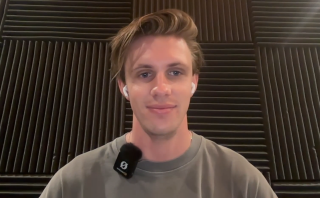
Dennis Lenard
CEO & Design Leader, Creative Navy
Dennis Lenard is the CEO and Design Leader of Creative Navy, a design consultancy. He specializes in product innovation and organizational psychology, helping companies understand how overly nice company cultures can lead to groupthink and ultimately result in inferior products due to lack of constructive conflict and honest feedback.
Chapters


Build Executive Visibility
Press placements on CNBC, Bloomberg, and MSN.com,
guaranteed, from one 30-minute interview.
Extracted into a month of content: press, LinkedIn posts, and video, so investors and buyers find real credibility before the first conversation.



Distribution through a channel with 2M+ real views
Full Transcript
Sean Weisbrot: Welcome back to another episode of the We Live To Build podcast. This is episode 101, and you may hear that my voice is not perfect. Because I have been sick. I'll explain that in a second. But first I wanted to share that after 11 months in America, I'm finally gone. I'm currently in Europe. I got here on May 11th. Today is June 4th. I spent three weeks in Greece with an old friend, who is Greek, who I met in China nine years ago. I hadn't seen him in four years, so it was amazing to see him again. And I know that me being there brought joy to him as well, and that felt really good. I also got to meet one of my team members. My marketing director, Nicholas, is also from Greece, so they happen to both be in Athens, and it was just great to be able to spend time with both of them. And now I'm currently in Slovenia, Luana, visiting another friend who I met in China nine years ago, who I also haven't seen in four years. His name is Stan. And, he's from Serbia and he's got a Slovenia wife and they've got a baby and a very beautiful family. Very sweet. so I got to see them a few days ago and it's been amazing. So why am I sick? Well, I'm sick because the pollen in Europe this year is really bad. And because I'm not from Europe and I haven't spent that much time here, this is my fourth time in Europe. But. I've never experienced pollen before. I've never had allergies like this, so this is quite bad for me. To the point that, there's times like last night where I woke up three times in the night 'cause my nose was so stuffed I couldn't breathe. I'm kind of sick. I had a fever of 101.5, which is 38.5 Celsius a few days ago. so I'm just like borderline sick all the time. Stuffy nose, runny nose, unable to breathe. feverish. I tested for COVID. I was negative, thankfully, but being sick nonetheless makes it difficult to record episodes, so I've had to put off a few interviews until a few weeks from now. When I get to Spain, I'm hoping that the pollen there is less, stronger than here. So I was sick in Greece and in Sylvania, so it's been almost a month that I've been sick, and it's just not fun at all. But I don't wanna detract from the fact that this is an amazing episode. And our guest today is Dennis Leonard, the managing partner of Creative Navy. They're a design agency. He's been running for 13 and a half years, which specializes in embedded GUI and Web and mobile ux. They focus on the medical, marine, industrial, and automotive sectors. So in this fantastic conversation, we focus on group think. We talk about why we need diversity. We talk about how to remove bias from a group, think how to recognize that you are experiencing groupthink, how to remain open-minded. About criticisms that people give you so that groupthink isn't accelerated and things like that. Why don't you tell everyone a little bit about yourself and what makes you the right person to talk about these things?
Dennis Lenard: So my name is Dennis, and I'm the CEO of Creative Navy, where what we do all day long is build digital products. So that means we help companies take an idea and actually bring it to life in the form of a usable interface for users. We've been doing that for more than 10 years now. So I've seen a lot of teams trying to, you know, grow, innovate, and achieve a lot of things. There's a lot of experience to go back on.
Sean Weisbrot: All right, great. Thank you for that. And before we go any further, I'd love to know what made you wanna create this kind of a company?
Dennis Lenard: It came about organically, I would say. So I tried building a product. And then I realized it's very difficult to find someone who can actually be on your side and to help you through the whole difficulty of making something come to life. So while trying to do that for myself, I became better at it. and, and that's where Creative Navy started. And
Sean Weisbrot: What kind of a time period was this from when you started to make products until you decided to build this company?
Dennis Lenard: That was about 15 years ago, give or take. I would say really the early days of. Digital products. Of course there were a lot of digital products out there, but the real boom was just about to form.
Sean Weisbrot: So what kind of problems did you encounter when making products? You said one of them was you felt like it was hard to have someone on your side. What do you mean by that?
Dennis Lenard: Whenever you try to innovate, the biggest challenge is that you're actually venturing into the unknown. So you have a sense of what you want to build, but you don't really know because. Figuring out exactly what you want to build and what needs to be there in the market is part of the whole process. So you can know beforehand, and that means that you encounter a lot of hurdles, a lot of challenges that you cannot foresee. That also means that you cannot really prepare for handling those. So whoever you work with must be prepared to face those challenges with you and to, to stick through it, and to try to find solutions even when it looks like there are absolutely no solutions out there, because this is very common, you know? It's one thing to have a challenge and to work on it and to figure it out, but it's another thing when, when it really seems like there is no solution and everything is just impossible and against you, that's also the point where innovation comes from because everything that is easy to solve has already been solved. The difficult things haven't been solved yet. So if you can figure out a new solution, then you have what's called innovation.
Sean Weisbrot: That's where we are with my company right now because we've built the MVP, but the way that we actually establish uniqueness. Is what comes next. And what comes next is something that no one else has done before. And so we have to literally think about how the hell we're gonna build it and we have to get it right the first time. Because if we don't, we're gonna have problems and we won't be able to fix them. Or it'll be very difficult to fix. So I can feel that pain for whoever is out there who's been through it or is about to go through it or is going through it now. It's definitely painful. And we haven't even started on that. We haven't started that innovation phase yet.
Dennis Lenard: I was just about to say that, that is in fact the challenge, specifically. Creating a robust foundation because you cannot scale out of an improvisation. You know, you can put together some features and some interfaces and some coding. That's sort of a partial solution. But if it's not robust, it cannot scale. And if it's not robust and it's not going to be a product, it's just going to be that improvisation. It has a user base, but it cannot go beyond the MVP phase.
Sean Weisbrot: We had to challenge a lot of assumptions that we had, and we built things and then we realized that we shouldn't have built those things. And so we had to get rid of them. And then we thought, how can we do this better? And, and that kind of got us to where we are now. I'm curious to know more about innovation and I'm afraid of group think. So why don't we talk about groupthink in particular? Give me some examples of times in which you experienced groupthink either. You found that you were the creator of the groupthink or where you had a client that you found had groupthink already? Like talk, talk in those kinds of details.
Dennis Lenard: I think first of all, I should explain what groupthink is. I. And specifically it is reaching a consensus without critical reasoning. That sounds like, why would anyone want to do that? Because everybody's critical thinking is the thing that we all love. That is true. But the number one factor that leads to groupthink is the desire not to upset people or to upset the balance or, you know, the positive feelings in the group and so on. That's also why it's not a particular individual that's causing it. Or you cannot avoid it just by hiring a particular type of person. Of course, there are people for whom the well-being of the group and, and the positive feeling while you're together is more important than for others, but nobody is immune. You can start out with a team that's highly critical, so it feels like they will never develop a loop thing, but then in time you realize that maybe it has happened. That's also the interesting thing that you get, is that people don't realize that they are trapped in this. It takes someone from the outside, and even for someone from the outside, it's difficult to just spot it. It takes a while to realize what happens when you build something or when you work together, at first everybody comes in with a. Particular set of emotions and an attitude and so on, and that's fine. They get put together and there are some clashes and everybody's aware of that, and that's fine. There is not much risk of grouping. But as you work together and you face challenges and everybody gets invested in certain solutions, or also in the fact that solutions have been tried. They haven't been found. that oftentimes leads to a compromise where people accept something that is not the best solution, but it seems like a reasonable one or as good as we can do. But if that keeps going on, going on, you can get into a situation where we have a lot of these compromises where you're actually just dancing around the actual solution or that robust foundation, something that is innovative from the core. Eventually, people start working towards confirming the bias that what you're building is good. Even though it's probably not good enough, that even means that you go in and collect feedback from users or potential customers or whoever, but you only hear what you want to hear or you interpret what you hear in such a way that it confirms or you know, say, okay, yeah, this is a critical, but this is a weak spot, but it's just this one and maybe it's not even that important. People have a lot of techniques for doing that, and they all do it without wanting to. So getting out of that is, is the big challenge. That's why I experience a lot of that because we often get hired because people got into this situation and they just can't figure out a solution, but they don't know why. So it's only they come talking to us and they say, please help us figure out a concept that is better than what we have because we just can't get a solution out of this.
Sean Weisbrot: I've spoken with another guest before about bias. We were talking about how to remove bias. From your user research. And so I like how you mentioned that people may get stuck seeing what they wanna see rather than what they need to see. And so we were talking about how to establish your user research, your surveys, and all that in a way that removes bias. From what you're doing, although it's impossible to remove bias because humans are biased, and if you ask an AI to create the questions, the AI will be biased based on what the human has trained them to do. So there's really no way around it. There will be bias. So how can you try to minimize it from this point of view so that you can remove groupthink from these kinds of questions?
Dennis Lenard: There will always be some bias if you have robust methodology, and that just means having processes following those processes and building those processes according to best practice. what you will get is that you can avoid a lot of bias or, or where you have huge blind spots and I think that's what you. Definitely wants to achieve in order to get around groupthink. One thing you should look out for is a spiral that leads to more and more bias about a certain thing. So this is where groupthink is dangerous because it's not a huge piece of bias, so to say. It's not one huge blind spot, but it's something that creeps up on you and you don't realize that you are biased. Especially because of that. So in order to avoid that, you need to have some processes to check that the decisions you make don't become a self-fulfilling prophecy. It helps a lot to develop a culture that encourages being critical. So that means that you might prefer having people who are too critical or maybe criticism being phrased too harshly in terms of how you communicate it rather than. A culture where you cannot tolerate any, any sort of tension in the group or anyone who speaks up in, in ways that don't feel nice. The other important thing is to set a very high standard for the solutions that you develop, though, you know, whenever you feel that you're making compromises, and I think you can tell that you make compromises. If you're honest with yourself, that's a bad sign. And whenever you feel that you have to. Find a workaround in order to make another workaround work, and that generates another workaround and so on in user experiences. And you might experience that as we keep adding icons in a place where we shouldn't add icons, we end up with 15 options in a navigation and so on. So those are signs that fundamentally the product is not conceptualized the way it should be. There's also an element that is very important at the product level because something like. User experience or even development is always subject to what you're trying to build. And if you dream up something that is very complex code and the user experience is going to be complex as well, you cannot just wish away complexity, you know, with icons or making something pretty. So here what is critical is the notion of. Causality really in terms of what features or which aspects of features actually determine value for the user. And the truth is it's very difficult to know that even with, say, classical business, it's difficult to know which things that you do in your business actually add value and which ones don't. This is where. When it comes to scaling, it's very interesting to look at franchises because the whole franchising model is based on the idea of figuring out only the valuable features of the business, stripping away all the rest, and then scaling that a lot. If you have a franchise model where I. 50% of what you scale is useful and 50% is wasteful or not relevant to, to adding value to the customer. Then you scale the good, but you also scale the bad and then it doesn't work. That's why these hugely popular franchises that really work are amazing from a business perspective. Of course. As a consumer, you might feel, you don't like them because they're everywhere and so on. But from a business perspective, they really figured it out and I think there's a lot to learn from them.
Sean Weisbrot: So I actually talked about minimalism before with one of the guests. His name is Pieter, episode 18, and he's a consultant. His entire business is about looking at all of the things you're doing that's wasteful and just getting rid of 'em all and having those difficult conversations with whoever the stakeholders are that make those decisions in the company to recognize that this is a problem and you have to get rid of it, and I think it's fantastic. One of the things that we've tried to do in my company is. How can we prepare ourselves to scale with what we have? And so we've been putting things in place that makes it so that we can repeat them more easily. You know, obviously we're, we're still wasteful. Everyone, every company has waste. It's very difficult to get around that as well, because this team thinks that they need this software. This team thinks that they need this person. And sometimes you can justify it and sometimes you can't. But even if you can't, like, you can't really do much about it. At times. So how do you recommend they look at what works and what doesn't? What will scale well and what won't scale well?
Dennis Lenard: Well, something that doesn't really scale well is something that's, it's too complex and it has a lot of things in it that don't add value or, or not enough value. And here the cure is really minimalism. And I would say minimalism is where you get to after you've done the job. Getting there is difficult, as you said. And, the big challenge is. How people get attached to certain things emotionally or also how they are afraid of losing things. The argument I would make is that if something relies on a lot of complexity, perhaps the product is a conglomerate of a ton of features, and for some reason we say that they all have to work together at the same time. Otherwise, users will not like it. These types of things are actually a way of masking the own insecurities that we have. People who build products or people who try to make products popular and to build a business around it, or even as, as people who try to build a team or a process internally that works. So the cure for this is trying to truly understand how something works and recognizing that bias where you have a vision of how you think it works and then you look for information to confirm that, you'd want to. A research method. and research doesn't have to be user research or anything that's complicated, but just a way of getting feedback from reality to see how it actually works. It means the mechanics of how it produces results, those, that causal relationship between something that happens and then the next thing that happens as a result of that. So you want to understand that because once you understand that, you can imagine it working in different ways. But also it'll resolve some of those insecurities around what if you lose this? Well, if you understand the mechanic, you know what happens if you lose X or how you can make it work in a different way if you get rid of x.
Sean Weisbrot: I saw a video recently with Elon Musk and in it he said, the most common error of a smart engineer is to optimize a thing that shouldn't exist.
Dennis Lenard: Exactly. That's what a lot of product teams do, and that's exactly what you see a team doing within a group thing. They'll try to get incremental change or produce workarounds or time solutions to solve small problems. Where the problem shouldn't exist in the first place. Any product is going to be somewhat complex, even the simplest ones. Therefore, you have to be very careful with what you allow into the product. And anything that you allow into the product is going to add a lot more complexity than you think. So it's very, very dangerous. You should treat it like it's radioactive. You need something in the product. but everything you put in is dangerous. And as a result of that, whenever you have something that. Gives you a headache because it poses new problems and new challenges that you're trying to solve. You should really think about whether the problem that you're trying to solve should exist in the first place, and chances are if your product is truly useful, it shouldn't throw up all those challenges. So you should remove complexity to reveal one powerful principle, I would say, or one powerful mechanic. You should strive towards that. It doesn't have to be exactly one. If you have, let's say, 25 things that add value, you should really think about whether it wouldn't be better to only have three, which add a lot of value because they're very powerful. This is also where you can take an honest look at your product and think about whether it is innovative, because if your product is one thing so well that everybody wants it. It's probably something innovative. If your product has 25 things that other products do, but it has just combined them into one. It's probably not that innovative. It's just a mix of everything that's out there with a new brand, with a new logo, and it's probably not where it should be in terms of the potential.
Sean Weisbrot: What I see in my industry is there's a lot of companies. That position themselves. Exactly. In the same way they all say, oh, we're an all-in-one. We do this, this, this, and this. But none of them actually do it in a way that's of value, I think. And so what we decided to do was turn that on its head and, and do it the way that none of them are doing it.
Dennis Lenard: that sounds a lot like that conglomerate of stuff that I mentioned before. You take stuff that's already out there, you change the color. You put it together into one thing. Of course the chat is maybe not going to be as good as something that does the only chat, or the files are not as good as another system that does only files and so on. And so what happens in this probably is that you get a little bit of the usefulness of any one of these systems. But you also get a lot of the junk that's not useful. That is annoying. And, and that might actually be sort of the unpleasantness of using any of these systems, let's say for files or for emails. That is just at the end of. Using files. Files are not perfect. You know, if reality were perfect, we wouldn't have files. We would just think of things and communicate telepathically because we can't. We have these files and you have to find them. You cannot just wish away the issue of finding files and everything that's unpleasant about them. So if you take a lot of systems, it's very likely that you will also, if you try to replicate them, you'll probably also import a lot of the unpleasantness. It's very unlikely that you will be able to get at the core. On the other hand, if you take one principle or or one aspect of this entire ecosystem, perhaps it could be the aspect of integrating all of these in some way, and if you really figure out how they can be integrated or at one principle how it could be made excellent. Then you have innovation and most importantly, you have added value to the users.
Sean Weisbrot: Oh, it's definitely innovative. I mean, I've spoken to 200 CEOs and they're all like, holy shit, when can I use it? You know, I think it's there. We just have to get started on customer acquisition, stuff like that. But yeah, I'm excited about it and the team's excited about it and the potential customers are excited and investors are excited. So hopefully it ends up being something of value and hopefully group think doesn't enter the company. if we can be aware of it. One of the things I do in that regard in order to remove groupthink is that, so my COO is American. He's lived in Asia for half his life. My CTO is from the Philippines. And he's worked with a French company and some Americans and all that. My marketing director is from Greece and he's worked with people in Dubai and the Netherlands. And then my product manager is from Kazakhstan. She's been living in Turkey and she started a hardware company before. So we all have a very unique way of looking at things and everyone has a voice. More often than not. I will. Let them do it the way they want to do it. Sometimes I'll put my foot down and go, no, this is like, I wanna do it like this. But sometimes you know, they'll be like, oh, I think we should do it like this. Alright, fine, go for it. So sometimes, we will compromise about what to do. Like where they have an idea and I think it's okay, but like I think there's a better way to do it. Or maybe like I'll just default to asking them what they think because I don't want everyone to always need my approval to do something, but sometimes there's things I wanna have a say in where like, I really want it to be this certain way. Is that a good strategy for preventing groupthink or if you let people do things on their own, they do it on their own and there is no group? So, like, for example, if there's a question about marketing, my COO and myself and my, my marketing director will talk about it. If it's something about a product, my COO, myself and the product manager will talk about it. If it's something related to tech, my COO, myself and the CTO will talk about it. So there are groups, but they're just tinier groups based on what's relevant. And sometimes, you know, the marketing director and the product manager will talk if they're trying to figure out how to market a, a feature or, or the CTO and the product manager will talk about how to implement something and what are the feature specifications and things like that. So like we all talk to each other, but it's not common that we all five talk about one thing at the same time. So like if we're talking about a new feature, I might talk about it with my COO first, and then I might talk about the feasibility of it with the CTO, and then I may talk about it with the product manager for how, like what it looks like and feels like. And then I'll talk to the marketing director to see how to market it. But like we might, like, we tried having a conversation where all five of us were involved and it became a mess really fast. We found it's easier to discuss, like high level to low level basically.
Dennis Lenard: I think it, it definitely helps creating little silos where the product or, or any kind of change can be looked at from different perspectives is useful because obviously you, when there are fewer people around, there's less to worry about in terms of this is going to upset someone and you fear to speak your mind and even you feel a certain liberty to, to think in different ways and to challenge things because the essence of avoiding group thinking is. Critical reasoning and challenging things. A very powerful thing. But also the interesting, you know, it's a double-edged sword, is to have several experts in one field where they also feel that they can challenge each other. Because if you have a group where only one person is an expert for a particular aspect, the others would have a more difficult time challenging that person. That's not necessarily a given because sometimes. Not being an expert in something also means you have a simplistic look at things, but that might actually enable you to see those fundamental contradictions in an idea. Which are easily explained the way by adding more complexity and more explanation and and more fluff. But at the core, perhaps because you don't understand all those intricate dynamics, you can also just say, yeah, but it doesn't make sense because there's a contradiction, which is fundamental to the argument that you're making or the way that you envisage this. But that's not always a given. Just like when you put three experts together, they can perhaps quickly persuade each other to do something in the way that it's always been done, because they all know that this is how. This thing is done. So that again, means that critical thinking just goes away, and, thus you get into this spiral of just confirming each other's perspectives.
Sean Weisbrot: So, yeah, so thankfully my COO has a background in marketing and my, and he also understands tech some, but not like the CTO. The product manager also has like COO experience in her previous company. She was her COO, she decided not to be the CEO, so she understands processes. So there's, there is an overlap for us, but there is also a lot of, I don't know from a, from a deep point of view as you said. So. Like, what I've found is I, I learned a lot about tech from asking my CTO questions and he would be like, yeah, but like, we could do it, but you need to think about this thing or that thing, and be like, oh, okay. So he helped to shape my understanding of how things work technologically and fe feas and what's the feasibility of a lot of them. And that's helped me to get better at designing and, you know, the ui, ux and the feature specs and all of that. I don't like silos, so everyone is free to have conversations amongst themselves. We have a very flat structure, I think, in a lot of ways besides having the titles just for reporting for, for ease of reporting. But yeah, we find that it's not so much about silos, but rather like before we go to build something, we need to flesh it out at the highest level, and then we need to see if it makes sense to build or how it could be built. And then. The details of the building and then the marketability of it. So we, I don't like to think of those, those as silos. I like to think of it as part of a process of trying to determine if we're going to build something. Yeah, that makes sense. And so it may not make sense to have the CTO talk about it if we decide not to move forward with it. So there's no point having him on a call to discuss this thing if my COOL and I don't agree that it's worth pursuing if the CTO says, Hey, this is a cool idea, but it's. Very difficult to do. We don't have the resources to do it. If you get me $20 million, okay, fine, then there's no point to have the product manager involved because it's not gonna happen. And if the, you know, if we agree that it's feasible and then we go to talk about the details of it, of how to implement it, there's no point talking to the marketing director because we haven't figured out what it's gonna look like, what it's gonna feel like. We don't have designs, we don't have details, we don't have content prepared for him to be able to talk about it. So I think of it as a process, not a silo. So it's about making sure we. Minimize wasting people's time.
Dennis Lenard: Yeah. I think that's definitely a good approach and, and it is important. What I was just picturing while you were describing, this is a scenario where perhaps you agree that it's worth building something. It would be useful if it could be built, and perhaps then at the next level, when you flesh out the details, you realize. You can build it, but you have to fix it somehow because the way it's envisioned is difficult to build. Then you start working around the idea and it becomes something else, which is then a collection of point solutions of. Incremental fixes of workarounds for, for things. I mean, that can happen as, as you build things, it's actually quite common. what is very important at that point to avoid group thinking is having a culture where it's okay to realize that. You've made a huge mistake, actually, not just a small one. and that you have to go back to do it from scratch. You know, sometimes you pursue an idea and it all seems good, and then you, there's a challenge, but you, you figure it out and there's another, you figure it out and you keep going that way until you get to a point where actually it's all just changed and, and it's not cool anymore. If at that point you give off a vibe where people feel, oh, everybody's frustrated. This shouldn't have happened. Everybody's sad about it, and I dunno what. And the next time people will avoid accepting that it was a huge mistake and they will just confirm each other's bias. So this is where the way you relate to the situation where you have to go from scratch is so key to what's going to happen in the future. Because if you have a culture where everybody knows yes, when you build products, sometimes you work on something for four weeks and then you get to the point where you realize that you are in that situation where you're optimizing something that you shouldn't even have built. Then you say, that's okay. It happens. This is how it goes. Let's go back to the drawing board. Let's do something else. Nobody's upset. Because when you have that culture, then you're not going to. have that desire creep up of not wanting to upset the team's balance.
Sean Weisbrot: So I've definitely been there before where I started to work on something and wrote down the feature specifications. I designed the whole thing and then I presented it to the team and they're like, yeah, but this, this, this, this, and this. A few months later. We've now come back and we have a better idea of it. But this time I haven't done the specifications, I haven't done the designs. I just said, this is my vision for how I think it could work. Let's tear it apart and then once we think we figure out how to make it work, then we'll get into the designs and the future specifications. And so through doing it this way, it will hopefully save us a lot of time this time. But I learned from that process how I could do it faster and better the next time. So hopefully that will also help us to avoid groupthink, because instead of going, Hey, here's everything fleshed out, pick it apart. It is like, Hey, here's the idea. Pick it apart.
Dennis Lenard: Yeah, you'd want to question things in all the phases and to even do that in the very early phases because that's where the idea is like the foundation of everything. If that is not optimized, it's going to skew everything into one direction, and then maybe you get to that point where it falls apart because there is a threshold where you cannot cope with those imbalances anymore.
Sean Weisbrot: So do you have any examples of a client or clients where this happened, where you tried to help and in the end you're like, guys, I've tried, but like, no, there's just no way to save this idea or anything?
Dennis Lenard: oftentimes we see that from the beginning. So we, so we have people who write to us with an idea and they've put together something, but we can already see that it's not, it's not sufficiently innovative. It's just a few things stuck together with tape. and we don't think. That can scale. Of course, we, you know, we can design anything, but there's no point in designing something if you can already foresee that it's not going to work based on those assumptions that they have. So that's when we, when we tell people, some of them accept that, or, or I mean, that makes them curious to understand why others get upset that is then again, a sign of whether working on a product is realistic or not. Because if you cannot. Criticize things from the beginning, then, obviously you cannot improve things. It's also very common to see corporations or large teams who fall into the group think trap, because there, in large organizations there are a lot of them. Culture around not upsetting people and being nice to each other, which is of course great, in terms of getting on with everyone. but it can easily degenerate into group think. It's very difficult to convince people to demonstrate to them that the way they're trying to build something is not right, because there are a lot of defensive mechanisms that that's very important. I mean, we have an advantage because we are an independent advisor. But anyone who would try to do that from inside the team would be shut down immediately and, and there is a certain leap of faith when someone tells you what you're doing is fundamentally wrong. It has to be different. Now, hang on until I show you how it could be different. That could take a month or two or three of designing and building to demonstrate what that new vision could be. Because of course when you criticize something, you only know that it's not right, but you don't yet know what the alternative is, so that takes some time. So yeah, I think these are some cases where it happens very, very often too.
Sean Weisbrot: I think my team is lucky that I have a very tolerant threshold for them criticizing things because I recognize, and I think maybe I learned that patients from interviewing all of these guests, the way they're a common thread for them was like, yeah, you need to be able to trust your team. Or also, why are you hiring them? So I feel pretty secure in going, like, look, if I mess up, tell me to my face. That's it. I won't judge you if you say it in a mean way, if you're like a complete jerk about it. Okay. I'll be annoyed, but like, if I can sense that you're coming at it from sincerity, then okay, I'll take your judgment or your criticism and let's talk about it very openly. I just hope that I can hire people. That will be capable of telling me. I think that the larger fear is not can I take it, but rather can I find people who will give it.
Dennis Lenard: Yeah. And that's important and that's difficult to maintain, I mean that kind of culture. No, we have our own culture when we work as a team, which is different too. How we communicate with customers, let's say, and with customer teams, because obviously whenever we work with an external team, that's, that's a new team with a different culture. So you cannot walk in with the assumptions that you have inside. But for example, with us internally, we have certain principles that shape how we work together. And one of them is that whenever you feel heard by someone's feedback or what someone says about something you've done. It's your own problem. Even if it feels like they're being a jerk to you, it's your own problem. As long as what they say is sound conceptually. So if they say, this doesn't work, even if they say it in the worst way, if it doesn't work, it's your, the emotions that you experience at this company is your own problem. Of course, if you, I mean, you can imagine a lot of extreme scenarios of what could happen. Nobody in our team is, is, is a jerk on purpose. but just. In terms of the principle, it is very important because it means that feeling good or bad about something is irrelevant or you have to be able to, to ignore that in order to appraise whether it works or whether it doesn't work, whether it is sound from a technical perspective of the design. This is an important principle because when you don't have to be. Worried that what you say could upset someone. Obviously there's a lower likelihood of groupthink Now, again, we are nice to each other and so on, but it is important that everybody knows that, especially new people who joined the team. Because you have a lot of people who join teams with the assumption that the most important thing is not to upset others. So they have to be extremely nice, extra nice. And when they criticize something, it almost has to sound like praise. There is some merit to that, but it is dangerous because it can lead down this path. So, there has to be a balance, and that's why the fundamental principle for us is that arguments matter, the technicalities matter. Emotions have to be put aside at least as long as you make decisions.
Sean Weisbrot: Yeah. What I meant by them being rude, I meant like, you know, if they're cussing at me telling me I'm an idiot and. Like, obviously I'm, I'm not gonna tolerate that, but if they're like, yeah, you know, look, I was looking at this thing and I, I think there's some problems with it, I'd love to talk to you about it. Yeah, sure. Fine. Or like, oh, I noticed you had this button here, but like, I just don't think there's any value in having it. I think instead we could just have them click on the thing instead and then you don't need the button and it's simple. It's like, yeah, okay, fine. Go for it. So, I also try to tell the team members that. You should always assume that people are coming from a place of positivity, that they're, they're never saying something like for a bad reason. And so don't assume mal intent in their words, and everyone has problems in their life, so just be nice to them because you don't know what's going on in their personal life Sometimes. Part of encouraging criticism. And encouraging positive social interactions in the team in a way that doesn't allow a groupthink to creep up is nice to each other. But be honest, as long as you maintain that level of honesty, even if it hurts, like, okay, well then figure out how to say it in a way that doesn't hurt. But, just be honest. 'cause that's more important than anything else.
Dennis Lenard: So someone has put, let's say they've put, together a design for a whole flow. It has. Five steps. So that means five page designs, let's say. And within each of these. Page designs, they've put in a lot of effort and they found a lot of solutions that they think are great. There's a lot of awesome stuff in this thing, a lot of work, and just a lot of good ideas. There are two or three things that they are unsure about, but otherwise they feel that the concept is great. Plus it has a lot of awesome features and details in it. So let's imagine this scenario. Then they walk up to someone and that person sees that and they think, oh boy, this is not right in, in any shape or form. It shouldn't even be five steps because it should somehow be reduced. It should be something that's completely different. Now, if you can dress that up and tell that someone, say it nicely, but the message is basically what you've done is fundamentally wrong. That enthusiasm that you feel is completely misplaced because you haven't made a lot of progress. It was a waste, essentially. You can, you can think of it that way. Even the most experienced person in handling that kind of situation is going to feel incredibly frustrated and hurt and upset, and it's just human nature to immediately feel like that other person is hurting you. Even if they're not trying to, or even if they're trying to. Not to hurt you, so they want to be as nice as possible. That's where I would say those feelings of frustration and anger and whatever it might be, are the problem of the person who's created that, and you have to deal with that and so many methods to do that. But it shouldn't be that the person giving the feedback says, yeah, you know what? I see that you've done a lot of effort and perhaps it's not that bad if you would improve these things or take this something into consideration, but otherwise it's good. But if that happens, you're going down the path of groupthink you, you have to have, the courage to say no, it's fundamentally wrong.
Sean Weisbrot: Like Steve Jobs. That, that's the thing that gets me about Steve Jobs is everyone admits that he was one of the worst human beings they ever worked with, but he consistently got fantastic results out of his teams.
Dennis Lenard: I mean, I'm not sure what was going on while he was there and what it felt like working with him. But as long as the premise is that people have to do better, not because we're trying to hurt them, but because the standard of what we think is good enough is just so high. You know, if you want to do great things, unfortunately you have to conform to reality and not to your own emotion or to whatever you agree with everyone else. Life and reality are very harsh. We don't have to be harsh to each other. but as long as we're trying something that has to, like a bridge, no, it's not supposed to collapse in a hurricane, but then we have to build a bridge for the hurricane and not to make each other feel good. If you fail to do that, we are going to suffer. We are going to feel hurt. But either way, the bridge cannot be built in a way that we collapse in the hurricane.
Sean Weisbrot: So I was gonna ask if there was anything you wanted to say to close out this episode?
Dennis Lenard: I would come back to this element of emotions because the point is we have all these negative emotions and they're all part of life, frustration, anger, fear, and and all of that. And they are also part of working with others, building products, figuring out what could help us improve the reality around us. And all that revolves around not knowing what's going to happen. How it's going to unfold and so on, so, so this idea of uncertainty and the unknown is difficult to deal with, but as long as we deal with it in an honest way, even admitting that we have these emotions, I think we are going toget it. Results that are a lot better. So the point is that redoing something from scratch or just admitting to yourself or even to others that something that you've done and that you were so emotionally invested in was wrong, feels bad. But if you get over that, you go back to the drawing bone, you redo it. If you keep doing that and persevering, then you'll come up with something that is really great and it's going to make a lot of people happy and it's going to make their lives better in a meaningful way. And that then is going to be the reward. For sticking through this process, which oftentimes feels like it is impossible to tolerate and like you have no way out, and there simply are no right solutions. You just have to stick with it and, and trust that it's going to be fine. The fact that you don't feel good about it is not an indicator that it's not. The right thing to do. Oftentimes the right thing to do doesn't feel good at all.
Build Executive Visibility
Press placements on CNBC, Bloomberg, and MSN.com,
guaranteed, from one 30-minute interview.
Extracted into a month of content: press, LinkedIn posts, and video, so investors and buyers find real credibility before the first conversation.
Distribution through a channel with 2M+ real views
