
Why Raising $15M Made Him Want to Do Less, Not More
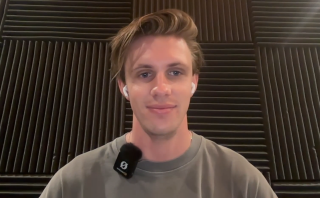
Why is aiming for 10x growth actually easier than aiming for 2x? Philipp Wehn, founder of an AI company for heavy industries, explains how raising $15 million shifted his mindset from survival to dominance. In this interview, he reveals why you need to stop doing 80% of your tasks to achieve exponential results. Philipp breaks down his unique business model, combining a high-touch service agency with a scalable AI software platform, and why he charges enterprise clients based on value created ($1M+) rather than seat licenses. He also shares his "athlete mindset" for leadership, why he forces his team to take time off to recharge, and the critical difference between "playing not to lose" and "playing to win."
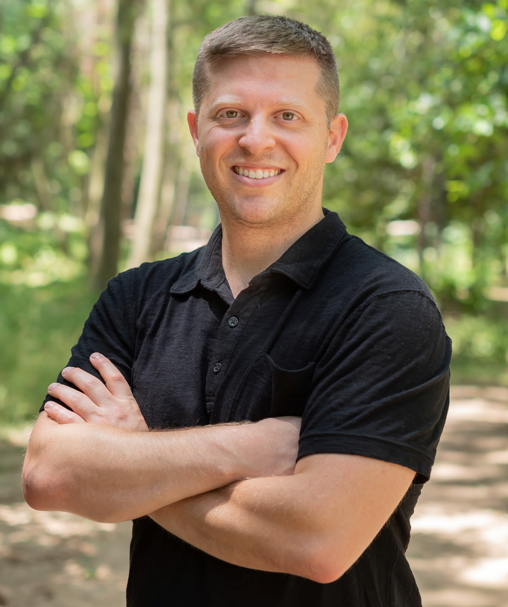

Guest
Philipp Wehn
Founder & CEO, Nexxa
Philipp Wehn is the Founder and CEO of Nexxa, an AI company for heavy industries. After raising $15 million, he explains why aiming for 10x growth is actually easier than aiming for 2x, revealing why you need to stop doing 80% of your tasks to achieve exponential results and the critical difference between "playing not to lose" and "playing to win."
Chapters


Just raised, acquired, or launched?
Guaranteed CNBC, Bloomberg, and MSN.com coverage from one 30-minute interview,
timed to your milestone while it's still news.
Raises, acquisitions, product launches, and major hires create a narrow window where third-party press stops being optional. We turn that moment into a month of content.
Distribution through a channel with 2M+ real views
Full Transcript
Sean Weisbrot: How has raising $15 million changed the way you think about your business and how you run it?
Philipp Wehn: I would say the core answer is 10 x is easier than two x. That's where my mind is. Ever since we were able to achieve our fundraising goals for the year, for the past quarters. For the past months, we have been operating on a deal by deal basis and try to grow as fast as possible, but. Now what I want to do is I want to go as big as possible, as fast as possible. So what my head is circling around is how can we go 10 x and what can we do in order to do it? And usually going two x means you do more of the same and it's exhausting. And doing 10 x means you stop doing 80% of the things you do, and you focus on the 20% that are actually getting you to a 10 x result. So that is the biggest change in the way I think and act.
Sean Weisbrot: Hey, business leaders and marketers. What if your brand could be featured right here? This ad spot could be yours. This channel is watched by a dedicated audience of ambitious founders, executives, and professionals who are actively looking for tools and services to help their business grow. If you wanna put your brand in front of this highly dedicated audience, that's difficult to reach. I'm currently looking for a few strategic partners for the channel. To learn more about sponsorship opportunities, click the link in the description. Let's go together. How do you identify what those blockers are?
Philipp Wehn: It's usually the stuff that, if you look at your calendar as a founder, and if you're being honest, like what are the things from Monday through Friday that you spend time on that actually create meaningful growth for the company? And I would assume almost every founder looks at that calendar. And if, if you're being honest. 80% of the stuff that is on there is not driving significant progress or growth. So if you look at a vertical, you're going after a certain contract size, you're trying to win, and it's just call after call after call, and you have internal conversations pulling in resources for a 20 k deal, that is not gonna get you to 10 million in a RR. 12 to 16 months, it's most likely gonna get you from one to two. But that's not what the venture venture game is for. So I'm very honest and I look at my calendar, I'm like, what are, what are the things that actually matter and, and make an impact for my company? And what are the things that are just noise?
Sean Weisbrot: So then when you look at pricing, did you think. Working in heavy industries would allow you to quickly scale because these companies typically are larger and have massive amounts of money, so you could charge them a lot.
Philipp Wehn: I think the common understanding is actually the exact opposite. So going into heavy industries means that you are going to scale a lot slower than if you go for growth state startups or high tech enterprise because the willingness to spend on software has historically been extremely low in those markets. For us, what we see is that the willingness to spend money on software has significantly changed because of ai. AI is not seen as a tool the way that any software application has been seen. AI is seen as value and return on invest because it can do work. So the way that these companies look at it is they don't ask you about a proceed or per year license. They ask, how much value is this system generating for me? And they're more than willing to share. A piece of the value that the system creates with their vendors, which is us.
Sean Weisbrot: How can you model what that value looks like when you're talking about like construction, manufacturing, whatnot?
Philipp Wehn: Yeah, so there's usually a very good opportunity to help the company slash the customer understand their business case. I come from that world. I'm a non-technical founder, and when we work with our customer, we sit down with them, we look at all of their workflows, processes, and, and, and we do an AI potential ana analysis which says, Hey, if we do these five things, we can save you X amount of hours. You can reallocate your industrial engineers to actually meaningful work. We can reduce your failure rates. Humans make mistakes. AI can be better in certain things than humans. Not in everything, but in certain things. Um, and then the other thing is, can we generate more revenue? Because the AI takes action on certain things where humans are the limiting factor. So these three things usually drive a potential value of the system. And if we say, Hey, we think that value is a million a year, our price tag is somewhere between 15 and 25% of that. As an annual license, so 150 K to 250 k to generate a million in annual value.
Sean Weisbrot: I like that because I've long looked at how much value I would be driving for someone and therefore what's it worth for my energy to help make that happen. Yeah, and I've had conversations with some of the startups that I work with as well, because a lot of them are stuck on that and not understanding what the true value is.
Philipp Wehn: Yep.
Sean Weisbrot: And I, I think if more companies in AI adopt that mentality, they could find themselves very quickly escaping the SaaS, the, the traditional SaaS pricing box, preventing them from being a massively scalable business.
Philipp Wehn: Yep. I totally agree with that. And I would add one thing, the other thing that we're doing different is. If you look at any market, there's always, it's always the mo, the most crowded at the bottom, like the low price segment of startups fighting for 10 K POCs. There is so many of those in any kind of market, and it's the same if you look at the fashion industry, for example. Look how many companies are offering bags for women for 50 bucks, and they're all fighting each other on the same level. Then there's Hermes where if you wanna buy a certain bag, you better come in for every single month for 12 months straight, and you spend a thousand dollars or more, and then you might be able to buy a bag. I feel like in tech, this hasn't been really done except Palantir, where they went out with an extremely high pricing model and they said, we are the company that is gonna build you a customized data pipeline and a customized data solution. Here's the price tag. Nobody else can do it as good as we do. That is another thing that we do different. We want to work with companies who take AI serious and who are willing to pay a PA premium price for our services.
Sean Weisbrot: So you were mentioning to me before we started to record this athlete mindset, is this something that you've been. Working with mentally for a long time or is this something that during the process of running this specific company that you've forced yourself to adopt or
Philipp Wehn: it, I've been operating on this for a very long time at this point. It started when I was about 20 years old. Um, during college I got obsessed with healthy nutrition and bodybuilding actually. Arnold Schwarzenegger, uh, I saw his book in the, in the library of the university, and I started to look into it. And the thing that I learned through this sport is you start as like a 20-year-old kid and you put in the work five times a week. It's, it's, it's a balance between work load and recovery. Plus the right actions every single day. Six meals, three shakes, everything on the scale. And after three weeks you see absolutely nothing. After three months, you see absolutely nothing, but you have to stick to the plan and trust the plan to get you to something big. And then suddenly, six years later, I look in the mirror, I'm like, oh, this thing actually worked. And. Bodybuilding taught me that the monotony in certain things that can lead to big outcomes and committing to those things and do them all over again every single day. That taught me the athlete mindset, and then I started to apply that to my time in college where I was like during exams, if I sit down every single day for six hours, I take a 10 minute break every 90 minutes, and I do that over the course of eight weeks. I'm gonna be the best in my class. So I applied it to this and then applied it to my work, and today we're applying it to the company. We're working extremely hard, but it's also super important for me that my team gets rest and takes a break. And then we focus on the things. We talked about this at the beginning with the 10 X is easier than two x. We focus on the things that we believe. If we keep doing this, it's gonna lead to the right outcome for us. If after three weeks we don't see the result, we still keep doing it because we believe that this is the right thing to do and we trust the process of doing the same thing all over again. 'cause there are other examples in companies out there that say or show you, um, this is gonna lead to, to tremendous success.
Sean Weisbrot: So are there specific things. That you do with your team? 'cause like when I had my last company, there were things that I did with my team, uh, especially 'cause we were remote to, and especially this was during COVID to. Keep the culture going to help people to relax things like, uh, virtual reality nights. Um, you know, the, there was a few of us that had VR headsets, some of us didn't, and we would get together in a virtual environment. Some would use like a, a app desktop application to, to log in and, and we would play games. We would watch movies. We would do different things. Within that, um, that was a way that we bonded and, and were able to relax and kind of, this is a moment where like, we're not allowed to talk about work. Um, so how, how do you use this athlete mindset to help them while also letting them rest so they don't burn out?
Philipp Wehn: So there are three, three and a half things. One of them is we have unlimited PTO, just like every other startup, but we also have a minimum amount of PTO you have to take. It's a very European mindset. It's not 30 days, it's 10 days. But I wanna make sure that at least these 10 days people are actually taking their time and recover. That's, that's one thing. Um, the second thing is Christmas is coming up. We're a seed stage startup. We're growing fast. We just raised a really good round. We're closing the company for 10 days. Our customers are all offline. We could go hard and grind and and go through this, but this is the time where the world stops even in the US and my team can actually recharge and recover. This has been an extremely busy, long and tough year. This is the time to take a break, and if you look at athletes and sports clubs. After they go through the playoffs, there's an off season to recover, to recharge. People, go to Europe, have a good time. Um, we cannot do over months, but it is something that, uh, we do. The other thing is I think about the growth of the company in seasons. So the pres precede the seed, the a, we consider that seasons like in, in like the NFL season and we pretty much have, have targets and games. Then the playoffs, that's when we go towards the next fundraise. That's where it gets the most intense usually. And we give the season's names. Like the first season was called um, do Not Die. After we raised an Angel round, we were like, okay, we gotta figure this shit out. We have a little bit of money and we want to get to a certain point. Then we got into Speed Run, and that season was very short and intense, but we called it whatever it takes. Now we're going into the next one and I'm still finalizing the name 'cause the season's gonna kick off 5th of January. Um, but we think about it in like seasons and we want to be at the top of our game and we wanna make it into the next season because the next fundraiser is gonna give us more ability to build a better stadium, to have better advisors, to have more fans in the stadium. Um, it's almost like, I don't know if you ever played fifa. I did. And you manage your. I'm, I'm a big fan of it. You manage your team, you have salaries that you spend on the players, and as you grow you can build a bigger stadium. You do renovations, you do marketing deals, um, and you can also hire better players. That is like more the executive position. I want all of my executives to think about the team, like a sports team. Is the person performing or do we have to bench the person? Is the perfor person performing, but could we actually have a better person in the position? That is a very, very honest question that. Great companies like Netflix for example, they have the keeper test where every executive has to look at their team and say, if this person is gonna leave, will I fight for my life to keep the person? If the answer is no, the person has to leave and another person has to come into the job. And I think that is like this, the high performance attitude of a team like Rayel Madrid, 11 players are on the field. Every one of them has to perform, and if you cannot perform, you're on the bench. If you're on the bench for a season, you get sold. I think companies can learn a lot from
Sean Weisbrot: that. It's interesting because it, it seems more like a traditional business mindset, like a low margin, cutthroat business mindset, not a tech startup that has to grow at all costs, where we could figure out how to solve our problems that we create later. Do you, do you think that has to do with
Philipp Wehn: your background? I think it has to do with the business. We do we're, if I look at a traditional tech startup, it is a lot of like front loaded engineering and then you bring it into the market and then you scale through selling the same product all over again. That is the SaaS playbook. The way we operate is, um, we have to be excellent and disciplined because. We work with our customers, we have four deployed engineers. Um, we have to deliver our projects on time. So I would say the nature of my business is it is a high tech AI company, but the business model we apply is much closer to a project management, a management consulting firm. And in those environments, um, there's no, no room for error. No. Like you can't, if an FD on the project doesn't perform. The project is still delayed by two months. That project is not generating any profit for me in year one, and therefore, I need to have the most disciplined and the best players on all positions to hit my targets that I have as a company. Maybe it's also a little bit of my background, like I'm super disciplined and I push that into the org, but yeah.
Sean Weisbrot: Do you need to raise so much money because you have no choice but to hire really great people and, and be able to offer them really high salaries?
Philipp Wehn: No, my, my business in itself, if you look at my forward deploy motion, um, with a little bit of funding, our, our revenue recognition is a little bit backlogged, but that model in itself can be profitable. You can run that without any venture funding. You could bootstrap into it and then you could just build recurring revenue based on that. We raised as much money as we could this year because we want to go as fast as possible towards our vision, which is artificial super intelligence for heavy industries. So the way that we work is we have this forward deployed model, but we also have a really strong AI engineering team on our core engineering team that is building Nitro. Which is a multi-agent orchestration platform for complex operations in heavy industries. That platform will become the enabler for us to deliver projects faster and then at some point it will be the core platform for our customers to build multi-agent systems for industrial environments. Building that, that is the classic. I need to spend a lot of money. I need to hire really good people. That's where the, that's where the core funding goes. Um, in the midterm,
Sean Weisbrot: when I had my tech company, AI wasn't out yet, so this was a number of years ago, and we had an idea to build an ai. I guess now you would probably call it an agent, but at the time it was more like. A project manager, personal assistant for enterprise that was connected to your chat infrastructure. So we were trying to build something to compete with Slack, where we wanted to steal Slack's market and then offer this on top, like offer this as part of it. Um, it was a much bigger vision than that, but because AI didn't exist yet, we knew that we would have to spend years building the software, getting the people to switch over to Slack, collecting the data from their interactions, and then be able to build the AI on top like hundreds and hundreds and hundreds of millions of dollars to. To invest in something like that.
Philipp Wehn: Yeah.
Sean Weisbrot: And now you just need a few million and you can do it, which is incredible how fast the cost has come down for being able to make that happen.
Philipp Wehn: Like you literally need nothing. You, there are, there are examples of companies that call them an LLM rep are extremely successful. One of the, one of the companies that they're not an LLM rep because now they have their own model and they're super successful, but. I talked to somebody about them and it's cursor and cursor has built an incredible experience, an incredible product. But if you look at what enabled their biggest revenue jumps, that was the model improvements of philanthropic. So the labs and their work enable the startups to deliver the value to the customers in our situation. The two things that need to become better so we can grow faster are vision models and computer use models. Those two things are going to enable Nexa to grow 20 times faster. But right now these two categories of AI are still, I don't wanna say a bad word, but they're not good. They require a lot of work from our side to really function. The assumption that I have as a founder, of course, is these models are getting better. So I'm playing in a field where right now I'm doing groundbreaking stuff that requires a ton of engineering from my side. I'm happy to become a rapper. Once these, these models become like super good, I have the customer access and I can just scale that much faster. But I think that thinking of back in the day, you had to build everything yourself, and now you can piggyback on those models. Almost the way that you were able to build in the cloud and a couple years ago for the first time, and now you're able to build intelligent services and products with these models. As they get better, your product gets better. Um, I think that is such an exciting change in the way that this entire industry works.
Sean Weisbrot: I agree that being able to use models. Democratizes the development of the, of technologies. It's enabling an explosion in innovative startups and I love to see that. But I think your idea is correct where like if someone is an LLM rapper, sure great, but like I could come along and have the same LLM build me the same thing that you've done and I can cut you out. With a number of different methods. And so you, in investing in the engineering to create your own model and improve the model, the base models that you're interacting with is the moat beyond just having access to the customer's willing to pay?
Philipp Wehn: Agree. Plus, I think the importance of another model is becoming more important than ever before, which is the business model and the working model. I think if, if, if we look at the history of companies in general, companies like General Electric or Siemens, they had great patterns in technology, but what made them Fortune 100 firms was execution, was project management. And I think a lot of the people in tech, they only look at the last 20 years of how companies have been built, which was. You build software, software becomes the mode, and then you copy paste it and sell it. That's the SaaS playbook. I think ai, Sean, you're absolutely right, is changing the game. Number one, what is your technical mode? I think there are a bunch of companies that have absolutely no technical mode. So then the two things that become important is how fast can you be massive? And then the other thing is. What is your differentiator in the customer experience, in your business model, in your pricing model? How good can you execute? And I would say those are the things where right now we and my company have the competitive advantage where I just think a little bit different than a classic tech founder about the way that I'm building this company. And it is about the customer engagements. It is about the white glove service for them, which. It doesn't really fit into the venture game if you go one year back, but thanks to Palantir and them going to the top right now, everybody's talking about FTEs and industrial AI and all of that beautiful stuff.
Sean Weisbrot: Well, yeah, I mean, as you said earlier, you know, if you can figure out how to derive value for your customers, then you can charge them whatever you want as long as it doesn't cost them more than the value you're creating for them.
Philipp Wehn: Yeah.
Sean Weisbrot: And that is how the greatest service companies have grown. And so you're just doing a service business and just applying a ton of technology to it. And, and that is your moat that very few people will be able to touch. Because even if they could clone the, you know, clone the offering, they don't have your mindset, they don't have your understanding of how to execute. So that's the thing that protects you and, and I think the best companies that I've seen that I work with start as service companies and because when you're, when you start as a service company, you're focused on your unit economics. Mm-hmm. And every VC wants to see profitable unit, unit economics, but the vast majority of companies they invest in don't understand their unit economics until way after the investors have given them the money.
Philipp Wehn: Yep.
Sean Weisbrot: And so if you start as a service. Service business. You understand how to assemble a team that can serve a client. And then if you need, if that team isn't capable of serving more clients, you duplicate the team, you build another, another, ver, you know, a second team, a third team, a fourth team to do the same thing over and over. So instead of duplicating your software, copying and pasting and selling, you're coming up with a. A team dynamic playbook and then copying and pasting that playbook across different teams, different units in order to perform for that client. And so you can have four clients and make a hundred million dollars a year, right? If your economics are great, but you know, as, as long as the playbook works, then you can scale that. I've, I've seen service businesses grow to hundreds and hundreds of employees in just 2, 3, 4 years growing to 20, 30, 50, a hundred million dollars a year in revenue because they figured out how to create that playbook. Once you've created that playbook and you know that the UN economics are there, you can scale that very easily as long as you understand the marketing and sales too, which I think is the hardest part
Philipp Wehn: for most tech founders. Yes, it's my favorite part.
Sean Weisbrot: I think it's something that a lot of people struggle with. But you're not a tech founder. You're, you said you're a non-tech founder, so it's easier for you, like, it's easier for me to do marketing than tech, but I enjoy the tech more than I enjoy the marketing.
Philipp Wehn: Hmm. Interesting. Okay. I got, yep. I.
Sean Weisbrot: I am, I am not trained in technology. I learned about technology by working with a technical team in trying to build the tech 'cause it was my vision, right? It was my product, it was my, my designs, my wire frames, my user stories. It was, it all originated for me. And so I had to convince the team to buy into that and to build that. And as a result, I learned how the project. Team works, how the product team works, how the front end and the, the backend and the architecture and the QA and the marketing. I learned how all of them think and how all of them operate. And so I was able to take away that experience, that knowledge with me so that, you know, I can do now, like I, I could vibe, code, I, I vibe, I've, I've vibe coded several things to production because I know how they think. So I know how to start. You know, get it started and going. And so I've learned to love the tech. And even though I have a degree in psychology, I would rather not touch the marketing. Like I love sales, but I, and I love the tech, but um, but I'd rather have other people deal with all of the other stuff. Nice. Good summary, man. Good journey. Yes. Uh, you know, uh, probably like yourself, just a tremendous amount of constant learning and putting yourself in situations where it's painful. That's the only way to grow.
Philipp Wehn: Suck it up. Yep,
Sean Weisbrot: exactly. What do you, what would you say is the most important thing you've learned in your journey so far?
Philipp Wehn: That's an easy one. Um, playing the win is the only way. To build a public company, a massive company. And that's what I wanna do. For the first, for the first chapter of the story of my company, I was playing not to lose, even though I had absolutely nothing to lose. I left my corporate job a tiny bit of funding, no employees just, and I was just playing as if I had the world to lose. 'cause I grew up in big corporates. And then suddenly, um. A couple events came together and I realized the only way to get anything zero to one and one to 10 is, is if you have a ridiculous focus on playing the win, which means you. You go do the hard things. You take the big risks, you talk to your customers different 'cause what do you have to lose? Your customer walks away like a potential customer walks away. Well, great, you wanna wing them big. You don't want to just talk to them for a couple hours. And that attitude is my biggest learning, especially being a, a tech founder in the Valley. Playing to win is the number one, the number one takeaway from, for me. 'cause that changes, it changes your attitude, it changes your trajectory, it changes your self-esteem. Um, 'cause the default mode for any startup is death. Nine out of 10 fail. So you go into this with one chance, which is winning. And that is my singular focus now. I played this game to win, and uh, I accept that there's a high probability of losing.
Sean Weisbrot: Thanks for watching. If you liked this insight, I've handpicked another video for you right here on the screen. For more actionable strategies that get you real results, hit subscribe.
Just raised, acquired, or launched?
Guaranteed CNBC, Bloomberg, and MSN.com coverage from one 30-minute interview,
timed to your milestone while it's still news.
Raises, acquisitions, product launches, and major hires create a narrow window where third-party press stops being optional. We turn that moment into a month of content.
Distribution through a channel with 2M+ real views