The $300 Membership Model That Replaced 5 Conferences
What if a single $300 annual membership could replace five conferences, hundreds of meetups, and still build a more connected community than any of them alone? In this episode, Sean sits down with James Mayes, CEO and co-founder of Mind The Product, the world's largest community of product managers with over 200,000 members across more than 200 cities. James shares how a simple beer and a chat became a global force, and why the pandemic forced him to confront a hard truth that actually saved his business.
Guest
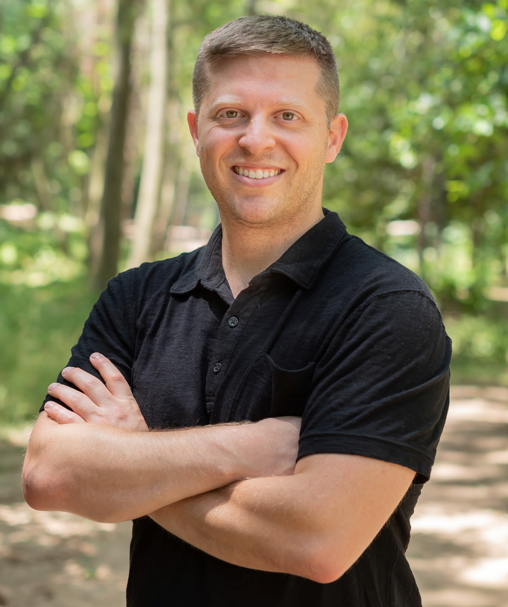
James Mayes
CEO, MindTheProduct
CEO of MindTheProduct, one of the world's largest product management communities with over 200,000 members and meetups in more than 200 cities. Expert in community building, media business models, and the future of professional events.
Chapters


Build Executive Visibility
Press placements on CNBC, Bloomberg, and MSN.com,
guaranteed, from one 30-minute interview.
Extracted into a month of content: press, LinkedIn posts, and video, so investors and buyers find real credibility before the first conversation.
Distribution through a channel with 2M+ real views
Full Transcript
Sean Weisbrot: Today's guest is James Mayes, the CEO and co-founder of a company called Mind The Product, and the world's largest and brightest community of product managers. After 15 years building high-performance technical teams for banks and startups alike, James decided to found his own startup TweetJobs. After exiting tweet jobs, he worked with a few great companies to learn more about the world of products. During this time, he found that there were meetups and conferences for CEOs, HR managers, and many other career paths, but nothing existed for product managers. So, he embarked on creating a small meetup in the city and people from other companies would gather for a beer and chat about their craft and share stories about their work experience. Over time, some of the people from that group decided to band together more seriously and create what is now Mind The Product.
Mind The Product now has five annual conferences, including MTPcon, meetups in over 200 cities and a highly engaged community of over 200,000 product professionals. He is also a jovial British man with such a clean accent that it makes you want to listen carefully to every word he says. So, I hope you enjoy hearing from him as much as I do. Let's give a warm welcome to James Mayes.
Welcome to We Live to Build. My name is Sean Weisbrot, and I'm an entrepreneur, investor, and advisor based in Asia for over 12 years. Join us every week to fast-track your personal growth so you can meet the ever-increasing demands of the company you are passionately building. Time waits for no one, so let's get started now.
Let's get right into it. When we were talking in the first call, you didn't really talk too much about TweetJobs. So, I want to talk a little bit more about it because I think TweetJobs is important to your evolution and how Mind The Product came to be? Would you agree?
James Mayes: Yeah, absolutely. I mean, TweetJobs was me exiting the recruitment world. I've been in it for 15 years and wanted to change, wanted to build a startup. But it became very, very clear during those 18 months, two years that I knew very, very little about the world of product and startups in general. So yeah, it kind of set me on a journey, but it sent me on a journey by demonstrating just exactly how little I knew, which is probably a good thing for most startup founders to get a grip on fairly early on in the journey.
Sean Weisbrot: So, if you had such a successful career, what happened in your life that made you wake up one day and say to yourself, screw it. I just want to do something different. And then what made you think of social media first, with TweetJobs?
James Mayes: The social media side I was exploring anyway, and in my years in the recruiting industry, I always liked to play with the latest tech and see what was out there, see what could be done with it. But after 15 years building teams, I got to the point where with the recruiting side, where I just needed to change, I needed to go do something different. My first exit from the recruiting industry was actually going to work for another software startup XD software. They did basically reporting software for private banks and wealth management firms. And that was one where I got to grips with it from an ops director perspective. They used to be a client of mine and invited me to come work with them and help them out a little bit. It made it very, very clear to me that working in the world of tech and doing something like that was exactly what I did want to be doing.
I needed to be doing something different, but I also knew that most of my knowledge was around the recruiting process, the challenges firms faced. So, I started looking for ways that I could link building a startup to the recruiting industry contacts experience that I had and landed on social media, being the thing that was new, that very few people understood. And that to me seemed like an opportunity.
Sean Weisbrot: But what made you think I need to make a change? Why did you get that feeling?
James Mayes: I get bored. It's really that simple. I think you see it with a number of people that they've gone through a certain amount of time with a particular firm or in a particular industry. And they want to move on. For me, I think a large part of it was at that particular point, I'd spent the previous couple of years working with huge enterprise class firms like Vodafone and Cap Gemini. And while they're awesome at what they do, I'd also had enough of being in that environment where decision is made by committee. You spend the best part of three months discussing something that can be implemented in three weeks. The frustration just got the better of me, so bouncing from there out to work with a startup was a breath of fresh air.
Sean Weisbrot: I was actually having a call earlier today with my COO. And he was talking about how once we've finished raising, maybe not the next round, but the round after, that we may have to do something where the C level talks more about decisions rather than me being the one that always has the final say. And the first thing I thought of was, but I don't want that. I want to be making the decisions. That's why I started a company. So I can understand that feeling and I don't know how to protect myself from that happening, but I think I may lose some control over time.
James Mayes: Yeah. Hopefully that leads to you actually making better decisions. Right? You should be more informed. You should take more points of view. The balance of that is that it takes more time to get it done because you have to involve more people in the discussion. So, there's that trade-off - takes longer, but you should grow stronger as a result.
Sean Weisbrot: Well yeah, definitely from when I brought him on till now, we've made generally much better decisions because I'm this kind of person that says, okay, I have an idea. Let's go. And he's like, wait, let's do an analysis and figure out if that's the best way to do it. And I'm like, but let's go. And he's like, but wait, just wait, please. Okay. Okay.
James Mayes: That sounds pretty familiar.
Sean Weisbrot: Yeah. So, I think without him, I probably would have crashed my company.
James Mayes: Oh, Christ yeah, I mean, there's absolutely no doubt about it. If Mind The Product had been just me, it would have crashed and burned years ago. I get far too excited about shiny new things and run off and distract people. It's very much credit to our managing director Annalisa that that doesn't happen because she's the one that very much applies those controls and tries to lay down a certain amount of common-sense process that allows the rest of the team to actually stay sane and deliver on the things that are important.
Sean Weisbrot: I was looking at your profile, and it seems like when you started TweetJobs, you were in your mid-thirties, is that right?
James Mayes: Yeah. Mid-thirties, something like that.
Sean Weisbrot: Most people that start their first company are in their early twenties these days really. Was it difficult for you to adapt to starting your own company in that stage of your life?
James Mayes: No, not at all. If anything, it was the change that I wanted. I've been through this period of constantly working, particularly with the major firms. I wanted that change. I was also in the position where we just had our first kid. So that gave me the opportunity to be an awful lot more flexible. I'm going to get up at six in the morning and work for an hour and then have breakfast with kids and then do a school run and do all of those cool, flexible things that being a fully distributed startup allows you to do. So, it really suited my life as well as my desires at that time.
Sean Weisbrot: I think that's extremely important. And I do think it's something that a lot of companies are starting to look at now. And I think the virus is really responsible for that because of these long-extended lockdowns. It's something that my company has done since day one. We've got 10 employees and every single one of them is married. And I think four of them have kids. One of them is about to have kids. So, it's also really important for them. And I started a remote company because I wanted to have the flexibility to live and work where I wanted and not be held down because living in China for 10 years, I was always stuck to China because my businesses were there.
James Mayes: I think that depends very much on the company culture, particularly the leadership team behind them. One of the things that's emerged this week in the UK is a massive increase in the usage of those firms who provide homework surveillance software. There was an interview earlier this week with a couple of companies who were saying they've seen their sales grow four or five-fold over the course of 2020. They provide the kind of software where you have an employee work at home, it monitors their keystrokes, or it takes screenshots every 10 minutes. Those kinds of software firms are seeing huge growth right now.
Sean Weisbrot: You know because we've had this remote first policy and we use Slack for our communication. I can see with my Gitlab bot feed that they're actually pushing code. So, I don't need to see what their keystrokes are. I don't need to see if they're online. As long as I see that work's being done, what matters most is the deliverables. You get your work done.
James Mayes: I think it's fundamentally about whether you're interested in output or outcome. Even at the level of call centers, for example, call centers are often staffed by people who are paid by the hour. So, it's like, did you turn up? Did you work your hours? That's monitoring the hours that people work. That's not monitoring the outcome. The interesting outcome is how many customers did we contact? And are they all really happy? Let's look at the customer satisfaction scores. That's way more important than did you do eight hours.
Sean Weisbrot: When you were saying that I was just thinking about the future of work. A lot of people talk about artificial intelligence and automation destroying jobs in the future. I'm curious to know what you think if the way humans work, or the way humans are paid in the future will be different because of AI and automation. Have you been thinking about this?
James Mayes: So go back to the Victorian days, 1900s and look at how much leisure time people had then versus how much leisure time people have now. You have similar levels of employment, but people have far more leisure time. The working patterns have changed. People don't need to work 60, 80 hours a week anymore. They can often work 40 hours a week. If you look at the introduction of tools in the modern workplace, particularly the technology workplaces that you and I inhabit, you can see over the last couple of years the massive rise of low-code and no-code platforms. Do you think that's going to result in engineers and designers the world over going out of work? Of course not. They'll just be working on more and more complex problems. So, I don't think you'll see jobs necessarily disappearing at pace because of it. What you'll see is jobs changing at pace because of it.
Sean Weisbrot: I know that there's no way to really avoid this, especially because everyone probably wants to hear, but how has the pandemic affected Mind The Product?
James Mayes: That's the obvious question for someone at an events business, right? We actually started some conversations back in 2019 about the shape and the model of the business that actually proved to be incredibly valuable when facing up to the threat that the pandemic offered. We started in 2010 with that first meetup, and then went with the first conference in 2012. And it was always the conference tickets, the sponsorship associated, and then the workshops that we started to run - that's what drove the revenue for the company. So, we thought of ourselves as an events business because all of the revenue was attached to running events.
Last year we actually started looking at that fresh and came to the conclusion that we were probably much more aligned with a media and publishing business - great speakers, great content, great videos, great workshop content, great training content. The events just purely happen to be the channel that we monetized the best. So, we started looking at organizations like the Financial Times, where they put out a certain amount of content on the web that's freely accessible and that draws in people and gives them a flavor for what the FT does and build some trust and credibility. And then you hit the pay wall and you want the deep dive stuff, and you have to pay a little bit more.
Then the pandemic hit, and we fundamentally had no choice. We had to accelerate exploring those options. We were in a position around end of February where we had 20 people on the payroll, a year's worth of conferences or workshops planned out. And then March hit, the UK went into lockdown and it became pretty clear that this was going to stretch for a while. Company travel bans started to hit. So, our revenue went pretty much to zero overnight. That's quite a shocker when you got 20 people on the payroll and you're entirely bootstrapped.
So fundamentally we went through first, the position of what have you already taken money for in the way of physical events? Because our reputation is everything to us. We want to make sure that we don't just say, well, sorry, we've had to cancel the event, but we're keeping your money. So, we had to model out what giving that back looked like, what can we afford to do? How can we mitigate that? What can we offer people that they might value instead?
The real bonus that we have is that we're by product managers, for product managers. The heart of the team is a beating heart of product. So, people like Martin and Annalisa really got stuck into saying, we do content. That's the core value that people know and love us for. So how do we re-purpose that? How do we change that? And they started exploring incredibly quickly what we could take to market that people would find value in and pay us for.
Sean Weisbrot: Thank you for sharing that. It's a very interesting story and experience you've been through, but I think it's extremely important. Not only to have those challenges, because it either makes you realize that the business is done or reinvigorates you and challenges you to make your business better.
James Mayes: We will absolutely emerge from this a much, much stronger business because the online stuff that we're building now, the way that we've reformatted the workshops to deliver that training to customers is actually getting better feedback than it did as physical classroom-based workshops. We've got smaller class sizes. We're able to split it into smaller time blocks so people can absorb the material and decompress between sessions. And when the real-world conferences do come back, fantastic, we'll absolutely get back into that, but they then will be the icing on the cake.
Sean Weisbrot: What's the most important thing you've learned in 2020?
James Mayes: I've always trusted my gut feel more than I have data. And this year working alongside product people and seeing what they've really been doing, I'm watching the journey that they've been on as they've proven out this membership model. I now give a lot more weight to the data than I used to. My gut feel has served me well in terms of human interactions and relationship building, which customers we can work with and things like that. But in terms of actually putting a product into the market and launching something on that kind of scale, I have much, much more respect for the data than I ever used to.
Sean Weisbrot: What does the next five years look like for Mind The Product?
James Mayes: In terms of the content stuff that we're doing, particularly in workshops and training, we spent the last six months converting from classrooms to online environments. And I think we've actually just started to scratch the surface of where we can truly go with that. So, I think we're going to be spending an awful lot more time and money building that side of things out. The initial feedback that we're getting is just phenomenal. Those physical conferences will return at some point. That's the thing that I've always been the most excited about. But I think the team as a whole are getting so much better at figuring out where an opportunity lies and how we might test that and go do something interesting with it.
Sean Weisbrot: So, what's the most important piece of advice you could share with everyone listening?
James Mayes: In terms of getting through this pandemic specifically, and just generally building a team, is being incredibly transparent with your team. Everybody on the team could see the events industry collapsing. They all knew that this was going to have an impact on their jobs at some point. So, we came out early, we talked to them, and we said, look, these are the things that we're investigating - the furlough scheme, the government loan scheme. We don't know how we're going to survive, but we're prepared as a management team to dump our salaries. And you guys sit tight. As soon as we figure out our way through this, we'll keep talking to you. We'll do updates every week. That level of transparency built a huge level of trust. And people have repaid that tenfold.
Sean Weisbrot: Well, it's been fun talking with you. How can the audience find you online?
James Mayes: If they care about growth, building great products, then go check out Mind The Product. We've got content, videos, workshops, conferences, all kinds of good things going on. Podcasts of our own. Look up the product experience. If you're a podcast fan, for me personally, I tend to spend most of my time interacting with people on Twitter.
Sean Weisbrot: Thanks a lot for your time. Remember, entrepreneurship is a marathon, not a sprint. So, take care of yourself every day and make sure that you tell everyone in your life that you love them because every day is important.
Build Executive Visibility
Press placements on CNBC, Bloomberg, and MSN.com,
guaranteed, from one 30-minute interview.
Extracted into a month of content: press, LinkedIn posts, and video, so investors and buyers find real credibility before the first conversation.
Distribution through a channel with 2M+ real views
