Talking to the $25/hr Shop Floor Worker Beat Every Spreadsheet
What if the most valuable business intelligence in your company is sitting on the shop floor, earning $25 an hour? In this episode, Sean sits down with Dustin Snyder, a human systems consultant who helps founders and CEOs understand what's actually happening on the ground inside their organizations. Dustin explains how leaders often design broken systems without realizing it, and why the frontlin

Guest
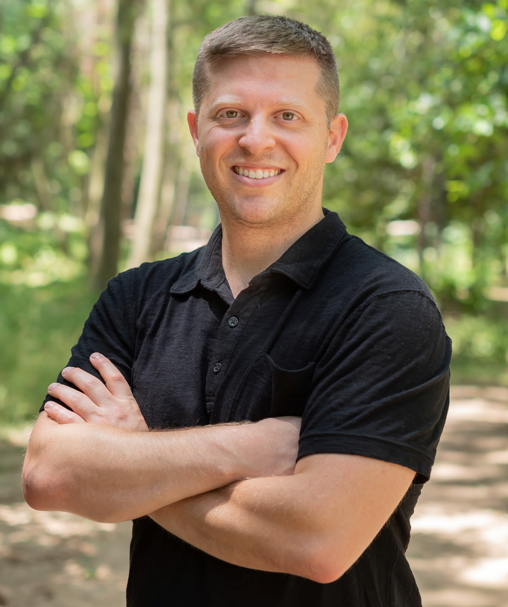
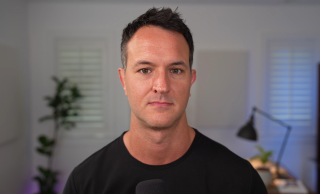
Dustin Snyder
Founder, Wayforward
Dustin Snyder is a human systems consultant who helps founders, CEOs, and business owners understand what is truly happening on the ground within their organizations. He specializes in identifying broken systems and organizational blind spots by gathering insights from frontline workers that traditional data and spreadsheets cannot capture. Dustin is known for delivering difficult truths to leadership, including when a founder's own decisions are contributing to systemic problems, requiring a high degree of emotional intelligence and established trust to do effectively.
Chapters


Just raised, acquired, or launched?
Guaranteed CNBC, Bloomberg, and MSN.com coverage from one 30-minute interview,
timed to your milestone while it's still news.
Raises, acquisitions, product launches, and major hires create a narrow window where third-party press stops being optional. We turn that moment into a month of content.
Distribution through a channel with 2M+ real views
Full Transcript
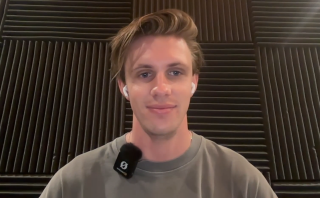
Sean Weisbrot: What's the hardest thing about what you do?
Dustin Snyder: Oh, man. The hardest thing about what I do. I think it's the it's balancing the the relationship piece with CEOs and founders and owners with the the difficulty of the information that I have to give them. When a when a founder or an executive has a hand in why human systems are breaking, and I have to help them connect those dots. It's, it's a pretty delicate dance, and it's one that just doesn't work if we haven't established a trust between us by that
Sean Weisbrot: I could definitely see why that would be difficult.
Dustin Snyder: point.
Sean Weisbrot: Assuming there is that that rapport, though, why is it still difficult?
Dustin Snyder: You know, it's just heavy. Right? You know, somebody puts their blood, sweat, and tears into something for years. Somebody grinds through difficult times with the team. Some maybe their name is on the building. You know? And somebody that's relatively new to the equation, comes in and essentially, you know, tells them that they've designed some systems poorly or made some big mistakes that are that are directly producing the outcomes that they're experiencing. You know, that's not a that's not a fun conversation to have. That's a pretty vulnerable thing that requires exercising a lot of emotional intelligence as a leader.
Sean Weisbrot: I can definitely imagine that being difficult. I know I've had conversations with business owners where they're maybe not coming to me for advice, but but I may see a problem and state it, and and sometimes, you know, people kind of clam up. I do a lot of free mentorship on a platform called Growth Mentor. And oftentimes, they're early founders. That's why they're coming to me because maybe they can't afford someone, and so this is a way for me to give back, because I'm just capable of helping them. And my style is brutally honest. I don't see there to be another way because doing any any differently is a waste of everyone's time. And some people love it. I've definitely had people go, holy crap. I needed to hear that. It's not what I expected. It's, you know, but I it's what I needed.
Dustin Snyder: Yeah. Yeah. Yeah.
Sean Weisbrot: And some people hate it. Like and, you know, my response is, look. I'm telling you what you need to hear, and this is the best free advice you're ever gonna get. And, like, you could pay someone millions of dollars, and they probably still couldn't give you the clarity of advice I'm giving you. So take it take it or leave it. But but, yeah, people either hate me or they they love me based on that. So how how do you balance that? Because I imagine there has to be a little bit of hand holding, but also a little bit of brutality. Like, look. You know, there's a problem. Are we gonna handle this, or are we going to him and about it?
Dustin Snyder: Yeah. Yeah. I mean, I, you know, I certainly have that mentality too. You know, let's you know, we have this information. Now what are we gonna do with it? But, I think that the thing that makes simultaneously makes it challenging and makes it such a liberating moment for, leaders and founders is that, you know, the the human systems window that I'm opening for them is a whole set of information that they didn't have access to before. So it was a vantage point that they just couldn't see from where they were sitting. And so, you know, opening that and I used to phrase connecting the dots for them, showing them from the perspective of the frontline of their team, you know, which is not where they sit because, you know, they're in the they're in the the top seat, showing them that, hey. This is, this is how things are actually happening on the ground. You know, as well intentioned as these decisions might have been, here's here's how we got to the outcome that we're currently experiencing, and here's the variables that we need to change in the design in order to drive a different outcome. So So I think it's, you know, it's just showing them a landscape that they've not seen before. And so that, that allows them to really have a heck of a lot more control than they did a moment ago. And so it just boils down to who they are and how they interpret new information if they have a fixed mindset where they don't want, you know, new data to make their decisions or when they have new data, you know, if they're able to really quickly, turn that into new and better decisions.
Sean Weisbrot: How can someone run a business of any size worth talking to you about and not be capable of using data or not be open to to new data?
Dustin Snyder: I don't think it's I don't think it's so much about new data. I think it's about where the data's coming from. So, like, early companies tend to run on, like, founder proximity. Like, you're in every room. Decisions tend to happen by osmosis. Like, the culture comes from your actual physical presence. And none of that gets designed intentionally because it never had to be. Like, you were the system. And then growth just pulls you out of the rooms so that the thing that breaks just wasn't visible to you in the first place. So, you know, it's, it it's it's funny because it's simultaneously this very flattering thing. Like, hey. When things were working, it was all you. But now you are no longer, you know, directly involved in every facet of the business. You're getting things second and thirdhand. You're getting information through canned reports, or it's being filtered through multiple people. And so, you know, at that point, you're, you're having to trust that people are getting you objective information and people's experience of things, is now different from yours. So you're no longer the one directly interpreting the the data. So you've, you lose that, you lose that direct connection. Did I lose you?
Sean Weisbrot: No.
Dustin Snyder: I can't hear you anymore.
Sean Weisbrot: Some someone someone's trying to call my apartment. And I'm sorry. Give me one second. My wife is supposed to take care of this. Jolene? Like, my wife's downstairs trying to find the person. The person, is calling me and texting me. And, like, I don't know where the hell my wife went. She's
Dustin Snyder: Nope. Lost you again.
Sean Weisbrot: can you hear me now?
Dustin Snyder: Your audio cut out. Yep.
Sean Weisbrot: Yeah. So essentially, this guy was delivering food, and my wife has all the details. And I gave it to her to to go downstairs and get, and the guy is sitting outside calling me and messaging me. And my wife's downstairs, and I don't know where the hell downstairs she is, but somehow, the two of them can't see each other. I have no idea what the hell is going on.
Dustin Snyder: That's alright. You gotta take a break?
Sean Weisbrot: No. If my wife can't figure that out, then I don't know why I married her. I'll let her deal with it. It's just that that he was calling the house. You know, I'm just gonna I think he's just ran away. It looks like he's I don't know what the hell is going on. I'm I'm sorry. Give me a second. I'm gonna just call him real fast, and I'm gonna just say what the hell is going on. I'm sorry about this. The the food was supposed to arrive thirty minutes before we started, and then some guy, like, was screwing around. He didn't pick it up. Hello? Excuse me? Hello? Hello? Hi. Hello? Hi. You you keep messaging me. My wife is downstairs. She's supposed to my my wife Now I now I now I, find this customer. Okay? Did you did you find my wife? No. No. No. No. No. You didn't? Now message give me an inbound for, your order. I'm I'm I'm sorry. My wife is supposed to I give you message. Yes. I know. I know. My I know. My wife went downstairs to meet you. Message. Restriction not go to the permission go to the inside. I But I wait for outside long time. My wife is downstairs to meet you. You have a I think you have a pink soap. Yes. I gave it to my wife. Hey. Can I talk with him? Yeah. What? Hello? Hi. Why does he not give you the food? Hello? Hey. You you are Sean? Yeah. More, some oh, wait. Wait. One second. One second. I don't understand. Okay. They hung up. So I they they found each other, but I ask again, I don't know why it took ten minutes or fifteen minutes for them to find each other. Anyways, I am so sorry about that. That's horrible.
Dustin Snyder: It's alright. It happens.
Sean Weisbrot: Yeah. I know. It's just not professional. Anyways, so the the food I ordered the food at noon because I knew I had an hour. I ordered the food closest to us that would take the fastest to get here, and then some guy drove around for twenty minutes.
Dustin Snyder: All good.
Sean Weisbrot: Before like, he was picking up the order for twenty minutes and then he disappeared and they found another person and then that person instantly wasn't able to bring the food until, like, 01:05. And I was like, okay. Well, I'll just I'll just eat.
Dustin Snyder: Yeah. Do you do you wanna
Sean Weisbrot: No. Well,
Dustin Snyder: do you wanna keep going? Or
Sean Weisbrot: yay. Absolutely. We'll keep going. I'll eat later. Don't worry about it. I just, you know,
Dustin Snyder: okay.
Sean Weisbrot: we're good. Okay. Do you remember the last thing you said so I can pick up from there? Because I totally lost the train of thought. I'm really sorry about that.
Dustin Snyder: Sure. You had asked, you know, why, why somebody in a executive or founder seat, would, have difficulty incorporating new data.
Sean Weisbrot: Right. And you were talking about the source.
Dustin Snyder: And I was talking about how it's yeah.
Sean Weisbrot: Okay. Give me a sec. I'm gonna start on a new train of thought. Why is it that businesses struggle to handle these things as they grow when every founder, especially bootstrap founders, are taught to remove themselves from the business in order to allow the business to grow. So they're doing what they're told, but then everything breaks as they do it.
Dustin Snyder: Mhmm. I think that I think that a lot of times, the founders forget the level of exposure they've had to things that that other people might not necessarily. So, like, there's this dilution math where, like, if you double your headcount in a year, that means most of your company has never worked under the original conditions when you were, you know, bootstrapping things. And so there's this tipping point where the ratio of some people who are, like, acculturated, to newer to the organization just flips. And the culture stops being transmitted and starts getting, like, averaged, which is is good because it forces you to to document and structure things in order to produce the, you know, the behavioral outcomes that you want in your organization. But it's, if you're not doing that, if you're still in this founder mindset where you're, you know, bootstrapping things and you're just running like a startup, you won't have people behaving the way that you want. And then you're sitting there wondering, like, why aren't they behaving like somebody who's been here since day zero? Because they haven't. Because they haven't had the same repetition of environment and information that that you've had. And then you also have this trouble where, a lot of the times, you'll have founders who say, oh, like, my original team can't scale with me, which, you know, sometimes that's correct. But a lot of times, it's just a a misdiagnosis. Like, when when growth starts to break things on the human side, founders tend to reach for this, like, person explanation. Like, oh, my VP, like, topped out, or this person can't operate at this new altitude. But, really, like, the environment mutated underneath that person, and the conditions that they were succeeding in have disappeared. So if you don't put mechanisms in place to bring that team along with you and all the value that they bring from having been around as long as they have, then the the same human looks like an a player at one stage and a liability at the next, and, really, nothing about them changed. But, otherwise, you're gonna end up cycling through your team. You're gonna you're gonna burn people out. You're gonna lose a lot of loyalty because people are gonna recognize that they're, you know, expendable at certain points. So you lose the the continuity of information and history and expertise, as you scale if you don't plan for how do I need to help this person adapt to the new environment.
Sean Weisbrot: How do you help people adapt to the new environment?
Dustin Snyder: You think about how it's gonna change. You think about, what competencies people are going to need. So, we hear a lot about, like, succession planning. Like, okay. If, you know, this person retires or if I lose this key employee, what are the what are the competencies that I need to have developed within the organization for people to continue to contribute and to have that operational continuity to have leadership of of different functions? But you also have to do that with your own people, kind of flip the script and say, okay. With my existing talent, what do I need to plan for? How is the environment around them going to be changing in the next six months, year, you know, three years? And what do I need to make sure is, what competencies do I need to make sure exist on this team so that I don't reach this point where, hey. We need to accomplish x. We need to break into this new market, or we need to make sure that we have deployed this this certain, you know, product type at a certain point. And I'm having somebody who, you know, has served the existing environment phenomenally for three years, and then we reach this point and all of a sudden they're struggling, you know, what did I do to invest in that person or develop them, or coach them into being successful in the new environment? I don't have your audio.
Sean Weisbrot: Sorry. I've been, muting myself when you were talking to make sure I didn't have extra noise.
Dustin Snyder: Yeah. Gotcha.
Sean Weisbrot: Thank you for that. So how could you possibly know the future of every position for the company as you're focusing on trying to grow the company?
Dustin Snyder: Because that's the that's the job is to, you know, you you mentioned earlier founders are told to get out of the day to day, right, to delegate, to hand things off to people. And so you're not you shouldn't only be handing off, the tasks that are beneath you, but you should be handing off the tasks that pull you out of planning for the future. So as you add layers to an organization, what you should be designing for is to keep the top level of the organization as far into the future as possible. So if your if your C suite is focused on day to day execution, then that means that the, you know, the directors or the managers beneath them are also basically doing the same job that the C suite are. So as you add layers, you want to be making sure that each successive layer is working farther into the future and thinking about these things and then helping the layer beneath them execute on something that's closer to the direct time horizon.
Sean Weisbrot: That certainly makes sense. I I guess I I never really thought of it like that. I guess I always thought of it as, yeah, you should add a manager when you need people that need to be managed. I mean, obviously, people are looking at things differently now that, you know, AI and agents are are available. But in a traditional human only structure, you know, system, you know, you start off as yourself doing things, and then you hire someone because you can't do something anymore because you need to focus on something else, and you hand off things so that things get done. And then when you have too many people doing that thing, you hire someone to manage that person. And then when you need someone to strategize over how to do that thing, you hire someone to manage the manager, and that's when, like, you start to have problems.
Dustin Snyder: Yeah. And and that's the trouble is often people are thinking about layers of management as layers of tasks. And, really, you have to think about your organization as, as layers of time horizons. You know, your frontline is working on today, the things the things that are happening today. You know, if you add a supervisory layer above that, they should be thinking about, like, tomorrow and the week.
Sean Weisbrot: Mhmm.
Dustin Snyder: If you add a layer above that, they should be thinking about the month. If you add a layer about that, they above that, they should be thinking about the quarter. If the layer above that should be thinking about the year. And then once you get all the way to, you know, senior executives, they should be thinking in in terms of years, plural. So I think that's the big problem. When people design an organization, they think so much about tasks and the dotted lines between boxes of, you know, seats. What you should be thinking about when you're designing an organization is, is the whole point the organization exists, is to move a dollar from one side of the system to the other. And the whole the whole thing is designed to move money through it, to turn a customer order into a paid invoice. So, you know, that white piece of paper into a green piece of paper. And any point at which that snags in that system, you know, is is the problem of of human systems. So anything that's causing drag on on the dollars movement and slowing it down, is a is a human systems issue. And where the senior executives should be focused is on not on how is that dollar slowing down today, but where where's the threat to that dollar down the road, whether it's six months, a year, five years from now?
Sean Weisbrot: And so your goal is to help the CEO figure out where in the organization that threat lies, what time horizon that threat lies.
Dustin Snyder: Both both where in the organization and on what time horizon. Yeah.
Sean Weisbrot: And so how do you figure that out?
Dustin Snyder: I go into the organization. I use a diagnostic called workforce insight mapping. So that's designed based on all of the science that we have available to us now, which, the the science scientific field of human systems shows us that as much as we like to think we're captains of our own ship, human behavior, especially in group settings, is very much a predictable outcome. It's very much a hard science that can be mapped. You can understand why a group of people is behaving the way that it is, why you're experiencing these outcomes if you look at the variables within the environment. So what I do is I go into an organization, and I identify the root causes of the the behave the undesirable behavioral outcome that the CEO says, hey. We have this problem. We have employee turnover. We have people not showing up to work. We have, you know, disengagement. People aren't buying in on change. Whatever the issue is, I come in and I show the leadership team that I mapped the actual variables in the system that are driving the outcomes that they're they're experiencing, and I identify very surgically and specifically, here's the things we're gonna tweak to produce an entirely different behavioral outcome.
Sean Weisbrot: How much effort on your part does it take to actually surface these these insights?
Dustin Snyder: It's funny. I I just got asked this question yesterday at lunch. I'd say, you know, it's a 500 person organization. That's about two weeks of time on the ground, and then I go back and do an analysis of the of the thousands of data points that have been gathered during that time. And so within within three or four weeks, it goes from the kickoff of the engagement to the executive team having a map of their human behaviors in their organization.
Sean Weisbrot: How heavily reliant is your process on AI? Because I mean, I imagine if you're sitting down with 500 people in you know, doing an hour interview on each person, that's not two weeks. Right? That's five hundred hours. So how how can you manage that process so you can truly reach the edges of the organization so that your information is, deeply accurate.
Dustin Snyder: Sure. So, the nice thing is I don't have to sit down with 500 people because you're right. That that would take, forever, and it it wouldn't produce better data. So I tend to sit down with about one in five employees. So if it's a 500 person organization, I tend to sit down with about a 100 people depending on how homogeneous the organization is. And each interview produces about 50 or 60 data points. And so then the analysis on those, so the the actual, formatting the data and the analysis of those, we do use AI now. So we have a enterprise account through Claude, through Anthropic, and and that has significantly sped it up. I mean, that was about two weeks of manual data formatting and crunching, to accomplish the analysis five years ago. And today, that the formatting happens in minutes. The analysis happens in hours. So we go from this data set of thousands of data points to, a fully categorized and very right for root cause analysis data set, in a day.
Sean Weisbrot: Wow. I was interviewing someone recently who puts together events in cities between government officials and business leaders that are in order to help them figure out together what are the problems plaguing their community that's preventing it from being more successful and and making citizens happier.
Dustin Snyder: That's really cool.
Sean Weisbrot: And he said that he used to have, you know, like, interviews of those people on is it'd be like a one day event, like a whole day event. And they would, you know, record everything. They would interview everyone on top of, like, having them communicate with each other in larger settings, and he would put together all the data. And he said that before AI, it would take sixty days to give them a report, and now it could be done in an hour. So, basically,
Dustin Snyder: Yeah.
Sean Weisbrot: the day after the event, here's your report. Go get to work.
Dustin Snyder: Yeah. It's it's incredible how much, data can be synthesized and and summarized. You know, pulling the the deeper insights, I think that's the the nice thing is that, AI is not quite there yet. That still does, you know, take some some judgment and experience and expertise. But, and and, you know, AI also can't sit down with employees and use the the techniques that we're using to to develop trust and and get the the level of information that they weren't comfortable sharing with, you know, senior leaders, you know, the day before. So, it's definitely revolutionized the analysis piece of what we're doing and, you know, and we invested a lot of money into the the the, the dashboard that we were using before. We worked with, a university to to put that together. But, you know, having had that for a couple years and then recognizing that it was it was essentially obsolete already and just having to make that pivot and say, okay. This is, this is something that we've gotta reinvest in because we're gonna get left behind if we don't fix this part of our business because, you know, you you should be able to get it to clients quickly.
Sean Weisbrot: Yeah. I I love how you talked about the admin dashboard. I when I had my last tech company, I wanted to put together a dashboard with all the analytics. And I had to put a list together of all the analytics for my team. And it took them, like, a month to to put it all together, and then it would take another month to build the dashboard and, you know, the UI and plug everything in together. This was six years ago. And today, I just tell Claude, okay. I wanna put an analytics, and it says, okay. Which software do you wanna use? You know, I recommend Posthog. And, you know, I have 10 different APIs that I'm using for, you know, that I'm paying for for tokens for different, use cases and application and all this. And I said, you know, I really need a dashboard. And it's like, okay. How do you wanna do the dashboard? I said, just make it available inside of my own account. Like, I don't want another another login. I don't want a whole other repository. I just want something simple. It's like, okay. It says, what do you want in the dashboard? I said, I want this, this, this, and this. Right? I wanna see my analytics. I wanna see my in twenty minutes, it put together a dashboard that six years ago would have taken six months to put together, and it's fully functional. It's pulling all of the APIs from all the things. It's showing me trend graphs with number counts of all of the different things, of all the cohort analysis I wanted to put together, of all the life cycle I have you know, I I put together a remarketing system and a feature system and a bug request system and a a deeply intelligent cloud chat that, talks to the users. It knows everything about their Stripe, like, history with us and their account details and their project history details. Like, it knows everything, and you could talk to about everything. And I put all of this stuff together. I did all of this all of these things in, like, three or four hours
Dustin Snyder: Great.
Sean Weisbrot: that in the past would have been months and months and months of development time. So,
Dustin Snyder: Yeah.
Sean Weisbrot: dashboards are amazing. AI is is amazing for helping that. I guess that was a a rant, but also just, like, you know, appreciating AI. With that in mind, you said something interesting I wanna push on. You said, I don't think the AI has the ability to build the trust with the human to find out the information that that they're telling us. And I I think that's wrong. Maybe today, but I think very, very soon, that's not gonna be true because AI is very good at making humans feel comfortable, and humans feel like AI isn't judging it because it's not another human. So I feel like AI will be capable of doing that if it's not already capable now because I've had conversations with AI about things that I I don't really like to talk about with other people, and AI has been extremely helpful for me in making decisions based on that.
Dustin Snyder: Yeah. Yeah. I think I think you're you're right that, you know, it's it's moving in that direction. If it's not there yet, you know, it certainly will be someday. Where the challenge lies is there is still a tremendous amount of, there's still tremendous amount of distrust when it comes to tech platforms that a company is deploying and the anonymity, the confidentiality of the interactions that you're having with that, which I think in in some cases is unfounded and in others is well founded. And it's impossible for employees to know the difference in which environment that they're in. There are still a lot of environments where people just are not tech savvy. We still have, you know, a sizable portion of the workforce that just cannot interact with, computers and especially AI at the at the level that you would need to to get a good information. And then also when you're when you're do making it a self-service model and you're having somebody interact with, you know, an iPad or their their workstation or whatever the case might be, the, you're you're relying on that person to drive the interaction in a lot of ways. So when you when you come in with a preconceived set of information that you're interested in getting, you risk missing out on all the all the good stuff, really. There's this really famous example of of UPS in The United States years ago where they had an employee engagement survey, and they had the best results that they've ever had in the history of the company. And, like, two or three months later, they had a company wide strike because they hadn't asked about the things that were most important to the workforce. And then you also have you also have a lot of industries where people just don't aren't using computers in the ways that a lot of white collar professionals are. So, you know, the the energy sector, infrastructure, construction, manufacturing, fabrication, a lot of these industries, 90% of the workforce, is not really using a computer at that level. And if they are, it's in a very, basic interface that would be considered, you know, pretty ancient by, you know, like, white collar standards. So, the the HMIs that they're interacting with are are very rudimentary. So, and that's that's not their fault. That's just, like, where a lot of the tech is on that side of things. But, it's, so it's I think it's a trust thing as far as not not do I trust, you know, my personal chat GPT account even though, you know, heck, it might be, you know, uploading all that information to learn from and that might you know, if I run for office in ten years, is that all gonna come out publicly? You know? But, so it's it's not just that. It's it's trusting how the company is gonna use it and whether it's getting back to you. And because when I'm doing this, I'm not saying, you know, hey. Sean said x, y, and z because that's not relevant. That might just be Sean's opinion. Even if he's right, it might not be representative of the, you know, the whole workforce. What I'm looking for are the themes and patterns that rise to the top because I'm looking at systemic behaviors. Nobody brings me in because they have one bad Apple employee. They bring me in because 20% of their company are engaging in a behavior that's impacting their financials. You're, you're muted.
Sean Weisbrot: Sorry. What's the most important thing you've learned from doing this?
Dustin Snyder: Oh, man. The most important thing? I think the most important thing is to just for me, you know, I got into this because I kinda self inflicted a version of this on, on myself before I launched WayForward. So I I came up as an operator. I I ran a 600 person manufacturing division as its as its president through a turnaround and an acquisition. So I've I've watched human systems strain under under real pressure from the inside. I've also been in the founder seat, not just in WayForward, but I built and sold, a hospitality chain. So in developing this methodology, it was I I self inflicted it, and I had to I had to kinda get over myself. I had to recognize that, I was not smarter. I was not making better decisions than I could have made if I sat down and talked to the people that were actually doing the thing that the company existed to do. I became a much better executive. I was doing better things at the market level. I was doing better things at the strategic level. When I spent started spending the majority of my time speaking to, you know, the guy that's making $25 an hour on the shop floor whose job is hot, heavy, and dirty. And, I was able to learn more things from him about my own business than I would have been able to do looking at a spreadsheet sitting down with my CFO in the corner office all day.
Just raised, acquired, or launched?
Guaranteed CNBC, Bloomberg, and MSN.com coverage from one 30-minute interview,
timed to your milestone while it's still news.
Raises, acquisitions, product launches, and major hires create a narrow window where third-party press stops being optional. We turn that moment into a month of content.
Distribution through a channel with 2M+ real views
