
His Grandpa Worked Until 90 and Changed How He Sees Aging
What if the key to rethinking aging came from watching one man work joyfully into his nineties? In this episode, Sean sits down with Igor Gurovich, founder building AI-powered support for senior citizens, who shares how his grandfather's vitality well into old age reshaped his entire perspective on what it means to grow older. Igor explains why the global healthcare system is approaching a breaki
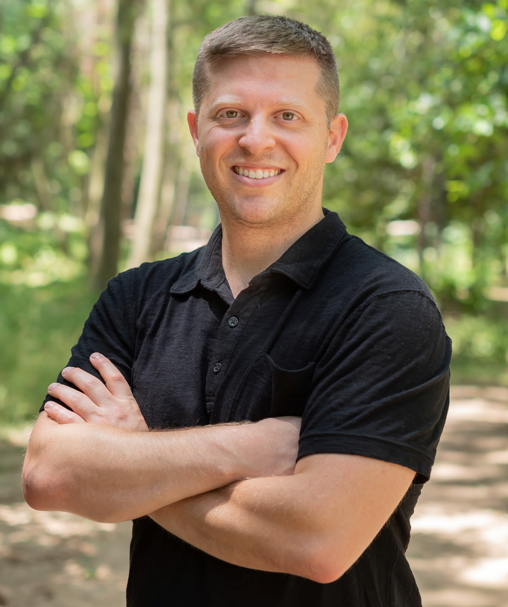

Guest
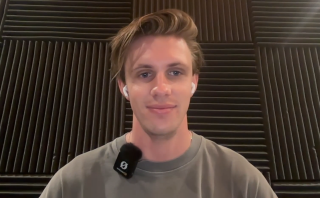
Igor Gurovich
Founder & CPO, Callie Care
Igor Gurovich is a founder building AI-powered support solutions for senior citizens, focused on addressing the growing global eldercare crisis. His approach centers on using simple phone calls as the interface rather than apps, making the technology accessible to elderly users while tackling the dual challenges of caregiver shortages and senior loneliness. His work is driven by the belief that AI can fill critical gaps in healthcare support as the retired population grows faster than the workforce funding traditional care systems.
Chapters


Just raised, acquired, or launched?
Guaranteed CNBC, Bloomberg, and MSN.com coverage from one 30-minute interview,
timed to your milestone while it's still news.
Raises, acquisitions, product launches, and major hires create a narrow window where third-party press stops being optional. We turn that moment into a month of content.
Distribution through a channel with 2M+ real views
Full Transcript
Sean Weisbrot: Why should people care about taking care of senior citizens?
Igor Gurovich: I think that, if we don't care now, the system of health care and care about seniors will be completely broken. I actually think that we don't have much time to, solve this problem. And, actually, I think we're we need to to do it now.
Sean Weisbrot: But aren't there many other things that are really urgent as well?
Igor Gurovich: Absolutely. I think there are plenty of in our current world, but that's one of the biggest problems, I think. Because usually health care system was based on a lot of working people who finance people who got, retired. But currently, the share of a senior population, I think, you know, is growing rapidly. And this system, the previously many years ago built system won't work. So we need to fix it now. In other case, I think it will be like a catastrophe. Yeah. At least in in, countries like United States, in Western Europe.
Sean Weisbrot: How is AI enabling that support for senior citizens?
Igor Gurovich: I, don't I I wouldn't say that AI is the only 1100% solution, but my way of thinking is following. One of usually, I say, following. It's not a question whether to use AI or technology in this space or not. The main problem is the deficit of people, nurses, doctors, other stuff. So, AI could take some of their responsibilities and, and do it with the help of technology. So, again, it's not 100% solution, but at least we we can use, AI for some of their jobs.
Sean Weisbrot: How are senior citizens actually responding to this kind of technology? Because it for me, it seems like simplistic, but, you know, they they're different.
Igor Gurovich: Absolutely. And, actually, when we started, I was really concerned about that, and I didn't think whether it's work will work or not. But I think one of the hacks was to use, ordinary phone call as an interface. Actually, that was our starting point. We don't use any applications, any software, and that was a smart move, because, obviously, phone call is the common routine, for senior population. Secondly, actually, a lot of pro people are so lonely. They don't have any human nearby, sadly, that interacting with AI, actually makes their life little bit easier, little bit more happy. A lot of people share their, memories. I don't know. They have someone to, chat about their hobbies. Again, we don't position the product as a substitution of the humans. It's not our way of thinking. But AI could be there in the moment when there is no human nearby. For example, I had one lady. She got up, like, 4AM, for some reason very frequently, and she didn't have anyone nearby just to to support her to have a chat. So, again, AI is in, like, addition to humans, not a substitution in my opinion.
Sean Weisbrot: I love how you had the idea to kind of remove the UI from the situation. I think that a lot of companies now are racing to do something like that. Not not competing with you. I'm seeing, just in particular, you know, this idea of they call it the SaaS pocalypse, where these UI based monthly subscription websites are dying because people are building agentic versions of those software.
Igor Gurovich: Yeah.
Sean Weisbrot: And so I think it's really great because I've been building several things and I've built them all with the traditional SaaS mindset. But then when I built them, I said, Crap, these need to be agentic. So now I'm going back and going, Okay, How can I make these agentic in a way that we can over time remove the UI from it? So I think starting from a no UI system is a really fantastic way to get something moving.
Igor Gurovich: Yeah. And, actually, it was like, how to say it, natural. We didn't think about that in the beginning. Actually, the company started, when my cofounders, they build an app, not specifically for, elderly adults. The idea was to build an assistant, which could, I don't know, like, book make a reservation in the restaurant, make calls, and other kind of stuff. And, organically, seniors started, to use it, and that was the point where it started. And, like, many years ago, when I had first ten days of building the product here, I tested a lot of things, with my aging grandpa who's very smart professor, but he was not digitalized at all. And the only interface that worked at that time was voice. Of course, there was no time of voice AI, but voice interface worked. That's why that, made us think, okay. Maybe we can use voice. Of course, using, like, ordinary phone calls isn't doesn't sound, like, very innovative, but it works. And I think, like, at this point, it could work. And later, we could be, like, multimodal. I don't know. Implement it in Alexa, implement it in robots when they will be, ready. So it but my strategic bet is on voice AI because it's not just easier for not digitalized people. But for example, when you get you're getting old, you're starting to have some problems, with your eyes, for example, yeah, and other kind of stuff. And actually, here VoiceAI, could be very helpful, I think. For example, I can give you a small example. Recently, we were reached by, like, association of, deaf seniors. There there is one in The United States. And that made me thought that, AI could be very useful with people with different kind of disabilities. And actually, I think frequently, we even don't think about these people, and there there are a lot of them. For example, we had some blind users, and for them, VoiceAI actually is the only interface, that could work for them.
Sean Weisbrot: Yeah. I think the on the dev dev side, it's a lot harder because they need a UI. Right?
Igor Gurovich: Yeah. Yeah. And, actually, that would be an interesting challenge for us that our basic answer was to use SMS, maybe in the beginning, maybe some app. But we we we will think. Yeah. It's again, I don't have an answer now, but it it sounds for me like an interesting challenge on what could be an interface.
Sean Weisbrot: Well,
Igor Gurovich: Maybe yeah.
Sean Weisbrot: essentially, you need a computer vision system that can read the hand movements that they make, assuming they they I mean, if they're deaf, I imagine they're able to sign. So it it has to be able to recognize what kind of sign they're using because there's there's dialectual signature. There's not just American sign language, obviously.
Igor Gurovich: Right.
Sean Weisbrot: And there there's even regional sign language within The US, and then every other country has their own sign language systems. So you have to recognize where the person's from and, therefore, what sign,
Igor Gurovich: I'll do not.
Sean Weisbrot: their what's the version of sign language they're using, and then be able to interpret that into something that where then you have some animated system that's showing that's signing back to them or writing on the the page for them to read. So that's, like, extremely complicated, and that's why a lot of these people are ignored. It's because it's very hard to serve them.
Igor Gurovich: It it's very interesting. We will have a call, soon with them, and, the person on other side is, dev, as well. But she said that she has some special software to make video calls. So I'm looking forward to understand how it works and if our solution, could, help here as well.
Sean Weisbrot: When I was in university, I did salsa classes salsa dancing classes.
Igor Gurovich: Uh-huh.
Sean Weisbrot: And there was a woman who went who was deaf. And you'd think, how can a woman who's deaf learn to dance? Because if she can't hear the calls from the leader or she can't
Igor Gurovich: Yeah.
Sean Weisbrot: communicate with the person who's leading her, right, how is she gonna be able to do that?
Igor Gurovich: Yeah.
Sean Weisbrot: And she taught me how to sign, and I realized that she wasn't listening to the beat because she couldn't. She was feeling
Igor Gurovich: Mhmm.
Sean Weisbrot: the beat from the speakers hit
Igor Gurovich: Wow.
Sean Weisbrot: her body. So she could she could she could feel the the music going through her, and and that's something that, as someone who can hear, you never think to feel that. So I thought it was fascinating the way she interacted with the world.
Igor Gurovich: Interesting. Actually, I think it's it's very close to the problems that elderly adults face because usually with again, before, the period when I spend a lot of time with my aging grandpa, I didn't imagine, how the world is not completely adapted. I I I understand that it depends on the countries, of course. But on general, like, even now, like, applications like Uber or Lyft, they're completely not adapted for elderly adults. I don't know why.
Sean Weisbrot: Because the largest segment of people that pay are us, normal abled people who are young.
Igor Gurovich: Maybe. But there are, like, I think more than 50 or 60,000,000 elderly adults in The United States, big segment of population. And and the biggest thing that I saw, I think it was on the lift, like, bigger fonts or something like that in the application. I don't know why. And, just a small, example. Actually, there are some companies, that work with elder adults, with whom we got tops, and I know they like they have business, like, for five years, ten years. And we ask them, okay. We're doing this stuff. Why don't you use AI? You're just you're more experienced. You have more capital. And they share with us, we would love to, but we have so much legacy. I know we have, like, 600 people in operations. We just can't change it. It's a very complicated task to transfer to transform your business within AI, and I was surprised with that.
Sean Weisbrot: Yeah. And those people are gonna get disrupted by companies that don't have that problem.
Igor Gurovich: Yeah. Absolutely. Absolutely.
Sean Weisbrot: Like in the last month, I've literally created three different softwares that could all be commercialized and they're all agentic. I could literally disrupt several different legacy businesses by myself with agents running everything on my own, on their own. If I really wanted to, if I really had the ability, I could run three businesses simultaneously without much input from myself.
Igor Gurovich: Yeah.
Sean Weisbrot: Just like that.
Igor Gurovich: Amazing. Amazing. I just love the world, in which we live now. It's just you have an idea and you can go and realize it without any, like, developers, any big teams, any capital. That's amazing.
Sean Weisbrot: Yeah. The problem is the builder trap. Right? Because I have an idea, and then I build it. Right? So you gotta commercialize. But I'm solving I'm I'm building things that solve my problem in a way that can also solve other people's problems.
Igor Gurovich: It's the best way, I think. Because, yeah, you you understand
Sean Weisbrot: Yeah.
Igor Gurovich: much better the problem itself. But I think the the best thing is that you can test a lot of hypothesis now. Okay. Maybe something won't work, but maybe something will work. Why not? You just spend, I don't know, one day or week to build something, and you can test
Sean Weisbrot: Exactly. Exactly. Where it used to take years and hundreds of thousands of dollars of guessing.
Igor Gurovich: it. Absolutely. Even now when I I don't know, I'm building, like, decks or landing pages, very simple task. I'm so happy each time that I don't have to spend any time with designers, copywriters, developers. I'm just doing things on my own. That's amazing. Mhmm.
Sean Weisbrot: Just make sure you ban EM dashes because websites have EM dashes on them, and then it's, like, obviously written by an AI.
Igor Gurovich: Mhmm. Yeah.
Sean Weisbrot: What's the hardest thing about what you do?
Igor Gurovich: I think the hardest thing is commercialization, as you mentioned, because major part of companies in this space, they are b to b focused. Obviously, because money are in insurance companies, mainly. So and when you're an early stage company, b to c track requires money for user acquisition, obviously, and it's not easy. And for b two b, you are too early. It's very hard to, reach the right companies and the right people. So I think that is the hardest way here because strategically strategically, we believe that could we could be a good source, for preventive medicine. Because even now, we track a lot of health related things, during conversations. And, we see that health care system in The United States slowly changing its direction to prevention. But imagine how difficult it's for a small company, to reach insurance big insurance, players. It's very hard. But, I yeah. So I think that that is the the hardest, thing here is to to find the right business model. And I I think another point here, which is close, the health care system in The United States is so complicated. Every person whom I'm talking to is specialized in one particular zone, and no one have has the general picture. And it's different between the states, the bills, the finance. It's just it's very complicated.
Sean Weisbrot: I wanna switch gears real fast and ask you a question about product.
Igor Gurovich: Mhmm.
Sean Weisbrot: About fifteen years ago, I interviewed my grandmother. I I took my camera. I sat her down in in her apartment, and I started interviewing her. I did a few videos. They're, like, thirty, forty minutes long each. My goal is to capture her story in the hopes that filling in the gaps that she provides, along with what I know of her life, after she dies, which she's still alive. She's she'll be 93 this year. But after she dies,
Igor Gurovich: Wow.
Sean Weisbrot: there will be a way to kind of recreate her through AI. But at the time, AI didn't exist in a commercially useful way.
Igor Gurovich: Yeah.
Sean Weisbrot: So the idea was like, oh, maybe there's a way to, like, have a website where people could upload information about their deceased loved one, or they could prepare information about the person before they die so that afterwards, there's, like, this this information hub about this person so that, you know, your if your kids are really small or they're you know, when they they have kids, like, that person never gets forgotten. That person can remain relevant in the lives of the family.
Igor Gurovich: Yeah. Yeah.
Sean Weisbrot: Have you considered using the inputs from your customers to simultaneously, in the back end, create a knowledge base about that person that could then fill in gaps and create this artificial persona with the permission of the family later on?
Igor Gurovich: I will start, with the fact that there are companies that are doing like this, I don't know, making digital portraits of if we can save it in the following way. And it's it's a great idea. For us, we think about implementing it. I think it's a great idea, but it's an interesting challenge or, how to say it, ethical question here, where whether there is a burden between privacy and, I don't know, and which information we can use, to keep it. But in general, I I like very much this idea because usually, I I don't know. For example, my example, unfortunately, I didn't spend a lot of time to ask the right questions, to my grandfathers and grandmas. And, being able to make it when they were, with us would would be great. I think it's great feature. It's not like the core part of the product, but it could be done, on the back as as you, mentioned. Because if you have these conversations, we can build stories, behind that and use it in different ways. I saw an interesting idea. It was not like a big company. But, one girl I saw it on Instagram, she used, audio recordings of seniors. Some of them passed away, some some of them not. And she generated with an AI fairy tales for children. Just they were generating fairy tales and in some parts, the recording of the voices, was used. And that was also one of the ways to keep our beloved ones, in our lives as well. But I saw met a lot of people who were sharing their memories with an AI, some veterans, some I think everyone has a lot of stories, interesting stories to share. Their experience, their lives, it's it's very interesting to hear.
Sean Weisbrot: So the way I would imagine it working for your system is that if your AI is conversational and proactively conversational,
Igor Gurovich: Yeah.
Sean Weisbrot: it can say, Hey, tell me about this time. Right? What was it like during this time of your life? What was it like? So it tries to learn about the person, and it can build those stories in the back end by collating the information and the stories and things like that that that they are asked to share.
Igor Gurovich: That's actually something where I spent a lot of hours because there is some science and research behind that. Because I wanted to make this, voice AI be engaging and, know, which conversational topics are more engaging for the elderly, and how to make these conversations interesting. That actually, that's why we have a couple of PhD gerontologists, in the advisory board, and maybe that is something that differentiate us from the products. I don't know if we go the right way, but my idea is to make to provide value for the elderly adults. How we can not just solve practical things like ordering taxi, ordering groceries, but how to make a helpful assistant for them, an engaging assistant. Of course, that that will be not something that will solve all the problems of loneliness and social isolation, but I think it could be helpful in many ways.
Sean Weisbrot: The reason why I suggested why I thought about it is because you you want people to remain social,
Igor Gurovich: Absolutely.
Sean Weisbrot: and people love talking about themselves. And the older someone gets, the less, I believe, the less they feel useful to society and the less they feel valued and the less they believe people wanna listen to what they have to say, even though they're the ones we should be listening to.
Igor Gurovich: Absolutely. And I have, like, I wouldn't say ideas, but dreams. But maybe with the development of the product, we could generate more ideas how we can use this waste wisdom, this knowledge. For example, I have a very basic example. I think there were some projects that were matching elder lonely elderly adults and, like, small children, who need, like, nanny. Yeah. That's the basic example. But I think we could find a lot of, great ideas how we can use this knowledge and this experience,
Sean Weisbrot: Yeah. I mean,
Igor Gurovich: which we currently don't use.
Sean Weisbrot: I I don't see why the AI is not capable of assessing their physical and mental abilities to say, hey. There is an opportunity to volunteer at an elementary school nearby, and this person is mentally fit and physically fit. They're capable of actually doing this, and it would be meaningful to their their daily existence. They are able to actually get to that school and do it.
Igor Gurovich: I I think maybe maybe
Sean Weisbrot: So
Igor Gurovich: apologize, for interrupting. I think maybe, you know, like, in Japan is a great example where elderly adults, are used in many volunteer jobs. For example, when children go to school or go after school, they have to, like, lick on the roads. And I think they're not paid for that, but it it gives them the role in the society and the feel that they're needed by the society.
Sean Weisbrot: across the street. I I think they should be paid for that.
Igor Gurovich: Ideally, yes. I don't know if they're paid in Japan, but but the idea is is cool.
Sean Weisbrot: I mean, there's people that do this in The US, but, generally, it's their job.
Igor Gurovich: I see.
Sean Weisbrot: I don't know what they're getting paid, probably not much, but they're getting paid something. And I think that in itself, you know, is really important because as well, when you get older, if you don't have an ability to earn income, and you don't have that much saved, especially in The US, it's really hard for people to retire these days. So, if you give them something that's meaningful, that's enjoyable, they can build relationships if they're seeing those kids every day, as an example, that's just one thing. You know? And they're able to make you know, they're they're able to spend that time doing something they like and they get paid for that, then
Igor Gurovich: Mhmm.
Sean Weisbrot: it means that there's a little bit less stress in their life as well.
Igor Gurovich: And I think there are a lot of open questions here because, many people say that people live and will live longer, nowadays. So that many people will change many times their careers and, the way what what what they're doing in the world. So there are very interesting open questions. When we get older, what will we do? What will be our role in this society? That is very interesting.
Sean Weisbrot: And we're constantly figuring that out until we're too old to figure it out anymore.
Igor Gurovich: Yeah.
Sean Weisbrot: And the the question is, what do you wanna be when you get older? I'm like, I'll be 40 in a few weeks. I still don't know what I wanna do when I grow up.
Igor Gurovich: I'm 36, and I still don't know frequently.
Sean Weisbrot: Yeah. I just wanna create. I just wanna have ideas and create those ideas and and watch them help people.
Igor Gurovich: Absolutely.
Sean Weisbrot: What is it that drives you?
Igor Gurovich: What what drives me?
Sean Weisbrot: Yeah.
Igor Gurovich: You mean in particularly in this product or in general?
Sean Weisbrot: General.
Igor Gurovich: It's not a good question. I'm from family of doctors, and I actually plan to become a doctor, but changed my decision in high school. So I think I'm the person for whom it's very important to make something, good in the world. And working and helping elderly adults, that was something that still inspires me more than ten years. Because the idea came up to me, like, ten years ago, and I was observing what can I do? And only, like, last year understood that voice AI and AI in general is something that could be used here. And I'm very passionate about adult adults, and I still have this example and memories about my grandpa. And that inspires me. If I can build something that will make lives of adult adults still a little bit easier, a little bit happier, I would be very happy. And I'm very inspired by these people. I for example, this generation of twenties, they're they're completely different, and I respect that.
Sean Weisbrot: What do you mean by this generation of twenties?
Igor Gurovich: I can share with my example of my grandpa. So he was born in late twenties. He went through the war when he was a kid, and he was a professor of psychiatry, and he learned and shared his knowledge during his whole life. And he worked he worked until his late years, I think, until 20 until 90. Like, I think current generation, at least in my example, it's it's different. But they are, like, as as they were stubborn, brave, they worked a lot. He still is great he's a great example for me.
Sean Weisbrot: What's the most important thing you've learned from him?
Igor Gurovich: I think the most important thing is from him was to learn every day. He was very smart and intelligent in all the areas, not just Catherine, Madison. I don't know, like opera, books. So he influenced, a lot, on my education and my, way of
Sean Weisbrot: What do you think the most important thing you've learned in life at in general
Igor Gurovich: life.
Sean Weisbrot: to date?
Igor Gurovich: Do only things that you love. Money is not on the first place.
Sean Weisbrot: Okay.
Just raised, acquired, or launched?
Guaranteed CNBC, Bloomberg, and MSN.com coverage from one 30-minute interview,
timed to your milestone while it's still news.
Raises, acquisitions, product launches, and major hires create a narrow window where third-party press stops being optional. We turn that moment into a month of content.
Distribution through a channel with 2M+ real views
