
Borrowed Trust: Why Strangers Wire Money Before They Know You
Do you do great work but struggle to consistently get referrals? In this episode, Bill Cates breaks down the exact psychology of borrowed trust and why simply doing a good job doesn't automatically make you referable. We discuss the Triangle of Trust, how to actively train your network to recognize your ideal clients, and why using 1-minute case studies is the ultimate follow-up strategy to stay t


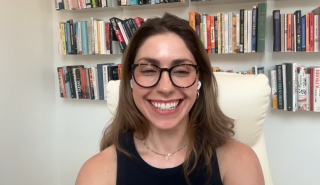
Guest
Bill Cates
Referral Coach & Author of Radical Relevance, Referral Coach International
Bill Cates is a referral growth expert, keynote speaker, and the author of Radical Relevance and Beyond Referrals. He has spent decades helping financial advisors and professional services firms build referral-based businesses by mastering borrowed trust, the idea that a warm introduction lets you skip the skepticism and start from credibility. His framework, the three-legged stool of referability, has been adopted by thousands of professionals who want to grow through relationships rather than cold outreach.
Chapters


Just raised, acquired, or launched?
Guaranteed CNBC, Bloomberg, and MSN.com coverage from one 30-minute interview,
timed to your milestone while it's still news.
Raises, acquisitions, product launches, and major hires create a narrow window where third-party press stops being optional. We turn that moment into a month of content.


Distribution through a channel with 2M+ real views
Full Transcript
Bill Cates: They borrowed a trust in one relationship long enough to earn our own trust, new relationship.
Sean Weisbrot: It went from who are you and how can you help me? To where do I wire you the money? If I bring you someone who can refer you people, then I'm bringing you an engine.
Bill Cates: Just because someone has a sense of what you do doesn't automatically make you referable. Vague intentions produce vague results. Clear intentions produce.
Sean Weisbrot: Why are referrals so important to someone's business?
Bill Cates: Why are they important? Well, it, for a lot of folks, it's actually how their clients or customers prefer to meet them. Uh, different businesses are different, obviously, but particularly in professional services. Um, uh. People want to use this dynamic I call borrowed trust. They borrow the trust in one relationship long enough to earn our own trust in, in the new relationship. And borrowed trust really permeates everything. You've heard the term, uh, social proof, that's, that's a form of borrowed trust. And so referrals is one of the. The highest forms also, uh, you know, we live in a world of, uh, of, you know, over communication. Everybody knows that. Um, and so how do you cut through all the noise? How do you have a relevant message? A message that's relevant to the receiver? Well, the fastest way to that is an introduction. From someone they trust. That's how we become relevant with someone who doesn't know us. So referrals are often looked as kind of the icing on the cake, right? Yeah. I get some referrals. That's part of how I grow my business that I, I recommend for a lot of folks to consider it. It is the cake. Uh, it is how people wanna meet you. So that's kinda my short answer on that.
Sean Weisbrot: So I call it the triangle of trust.
Bill Cates: Okay.
Sean Weisbrot: Or the psychology of trust. I learned this a long time ago when I had my consulting business that did really well. Mm-hmm. Because what I found was when I, I didn't have any social media accounts, I didn't have a website, I had nothing. Nobody knew anything about me, but when someone came to me, it was because someone knew that I was doing a service. And that person trusted me. And so they told them that if there was a problem that they needed to have solved, that I was the only person that was gonna be able to solve it. And so those people, it, it went from, who are you and how can you help me to, where do I wire you the money? It was that much of a difference in my sales pipeline. No joke, a hundred percent of my, my clients were referral because when I tried to do marketing and and whatnot. It just didn't work. So I, I found that this was about, uh, I was in my, uh, you know, mid to late twenties when I discovered this, and I've taken advantage of it since then. And, and the taken advantage, I think is probably the wrong word, that that's a negative connotation, like manipulating people. I genuinely knew, knew people who liked me and trusted me. And so they were willing to, you know, introduce people that they knew. Obviously, the, the commissions were pretty nice as well.
Bill Cates: I call it leveraging, um, borrowed trust. Some people think that, you know, leverage is a negative word. No, it's not a negative word, uh, especially when it comes from this place. You see, we need to think about referrals and introductions. As coming from our, our, our belief and our value. We, we believe our value is worth sharing. It has to come from that. We don't make it about, uh, ourselves. Uh, we can be the beneficiaries of that obviously, but it, it starts with believing our value is worth sharing. And so leveraging it, using it. I, I have a coaching client, uh, who's in the construction industry. And he, he calls, he's, he's manufacturing referrals. That's the word he uses, right? So there's lots of ways to look at it, but if it's all coming from that place of, of just trying to meet the right people for you, the, you know, solving the right people, right problem for them, uh, you're in pretty safe ground here.
Sean Weisbrot: Quick break. I put together a free guide called Network Before you need it. It's six lessons I learned that helped me create over a hundred million dollars in value for my network, generate over $15 million in revenue for my businesses and fundraise over $8 million for my businesses and my clients. If you want to build relationships that work for you before you need them, go get this guide right now. The link is in the show notes. Okay, let's get back. What do you think is more lucrative being the person that has the business people refer to, or being the person who refers with the assumption that they're doing it for like a commission?
Bill Cates: Oh, well, um, I, I guess it just, it depends on the numbers. I mean, generally speaking, the person who's receiving the referrals. Should theoretically, if pricing is right, everything is right, should be the one who's, uh, receiving the, uh, the biggest benefit for that. Uh, with that said, if there is a re is if there's a relationship where the referer, the introducer is compensated, that can be lucrative. Um, it, it depends a lot on business models too, right? Because, so for instance. There are some situations where I have relationships where I am an affiliate. I will refer, I will make an introduction. I receive some compensation for that. Uh, I believe in the product service that I'm referring. So it really, it's not cheapening, uh, the fact that I get some compensation for that. That's something you have to be aware of. I usually am very transparent around that if I'm receiving compensation from this recommendation. But I also say, look, I wouldn't do it had I not vetted them and feel good about, you know, what they, they will deliver, et cetera, et cetera. Um. And then it, a lot of it depends, of course, on the industry. I know the folks that you work with, that that's a very popular model to have, you know, commission to have compensation for that. I just think it should be transparent. I think that's the most important thing. Um, because sometimes when clients or customers, you know, maybe didn't know that you would get compensated and then after the fact they find out you did. It, it can leave a bad taste in their mouth if it's not handled properly. So I don't know if that answers the question. Uh, both parties are able to make good money, but obviously the business is getting the business in should be the one making the most outta the deal, is, that's my opinion.
Sean Weisbrot: The way I look at it is when I was doing this much more frequently, when I was younger, you know, let's say you gimme 20%, right? If your margins are low. You've gotta put a lot of that money back into running the business. But my costs are basically zero because I'm myself, I'm on my own, and so I get to keep all that money. And so if I have enough partners, or if I'm able to bring enough business, it, as you said, can be very lucrative. I mean, I had months that were 50, a hundred, 150 k and it's just profit from commissions. So
Bill Cates: it it, so here. It depends again on the business model, right? Because in, in, in my case, I own a business and I'm trying to promote my own products, my own services, um, I will almost always make more money promoting my own products, my own services than I will someone else's,
Sean Weisbrot: right?
Bill Cates: But that's my model, that's my situation there. You know, there's a lot of, a lot of variation out there in the market, obviously. Um, you're right, if, if I'm recommending someone else that. Does that cost me anything? Well, no. Unless it's, uh, drawing my attention away from what I really wanna sell. Right. If that make, does that make sense?
Sean Weisbrot: Sure.
Bill Cates: Yeah.
Sean Weisbrot: What do you have to do to be someone that other people want to refer clients to you?
Bill Cates: So you have to be referable. Uh, sometimes I say you have to be remarkable, meaning worthy of remark. And just because someone has a sense of what you do doesn't automatically make you referable. They've gotta have a really strong sense of what you do. This is why, you know, usually not always, but usually the best referrals or introductions come from the users of your product or service, right? They've experienced it firsthand. Now, with that said, there can be ev every industry has their influencers, sometimes called centers of influence. Um, and, and these people can also be very powerful in, in, with their borrowed trust, that they're very well respected. With their borrowed trust. So the key is being referable, and usually that takes some time and some effort, right? Uh, what a lot of people will do is they'll break bread together, they'll talk a little bit about their products or service. The other person kind of gets it and says, great, you know, if you can send people my way and I'll pay you 20% or whatever, well, that isn't always enough. People aren't gonna refer most people just for the compensation if they don't believe the product or service is valuable. So that, that's the key, right? You gotta be referable. You gotta be introducible if you will. Now, beyond that, you also have to teach folks how to recognize people who could benefit from your product or service. Uh, you can't assume that people will automatically put two and two together. So that's an education process, what it looks like. Here's the kinds of folks we serve the best. Here's some of the categories. Here are the things that might be changing in their life or in their business. Uh, it's gonna be obviously, you know, geared towards whatever your product or service is. Uh, but there are certain trigger points that will trigger people to be interested in what you offer. So these, these influencers, these referral sources need to know that they need to be able to identify that. And then you wanna talk about what is that introduction gonna actually look like? Word of mouth is nice. If someone says, Hey, you so and so, that's cool, but it doesn't necessarily mean that they're gonna contact you, right? You, you, you need a connection. That's why, by the way, I always, when we're in front of, uh, folks who have the ability to connect with us, uh, with others, whether it's a client or influencer. We wanna use the word introductions. We wanna use the word connections, and you wanna make it as easy as possible and have a very clear path for that. Uh, you could have a special landing page where if you have like a high level influencer or someone who's sending for there, there's a landing page on your website just devoted to them. You're here because Sean West. West Broad, sorry, you know, recommended that we talk, or it could be a little more generic, you know, you're here because someone cared about you and your business. So, um, that, that's another level of, of, of making sure the connection goes through. Very, very important. A lot of people aren't really good at making connections. They, they're okay about talking about us, but they don't necessarily make the connection. And by the way, this, this process, this three-legged stool, if you will, of being more referable and understanding who you serve and how to identify those people and then making good connections. This is a continual conversation. This isnt a conversation you have once with someone. This is renewing that relationship from time to time. And going over those, uh, those things. And, and by the way, um, uh, one of the best ways to stay in touch with these, these influencers, these referral sources, is through case studies, real small mini case studies. I call it one mini case studies 'cause it's something you could read or, or say out loud in about a minute. And the, the anatomy of a case study very quick. Uh, what's the context, right? Who was the person, who was the client? What was their business? Whatever, what's the context? Uh, what was their problem? Or could be aspiration, problem or aspiration. What was the emotion behind that? Then what is, what is your product service, uh, provide? What's the solution? How are you addressing that problem or aspiration? What's the result? And then how do they feel? And notice I'm emphasizing how do they feel about the problem and how they feel about the solution, because that's what anyone can resonate with. Even if your case study is slightly different, if. Then what that person might have experienced, they can identify with the emotions of anxiety, of confusion, um, or whatever. And they can, uh, uh, identify with the, with the emotions of, uh, you know, weight lifted off their shoulders or, uh, problem solved, feeling good about their business or themselves, right? So, uh, one way to stay in touch with these folks is through these little mini case studies. Um. Once a quarter perhaps you drip on these folks, so that way you're staying top of mind, you're educating them, you're bringing their, your value to life so they can see it and they can see how it actually gets applied to the real world. Stories, examples, case studies, very, very important and how you talk about your value and how your influencers or potential referral sources might talk about your value as well and understand your value.
Sean Weisbrot: So I'm, I'm doing something like that, but not exactly. It's something that, what you've said is interesting and it's something that I do wanna get into.
Bill Cates: Okay.
Sean Weisbrot: What I've done is it's like I've rebuilt my entire website from scratch inside of Cursor, which has the Claude ai. I don't know if you dabble with this. Um.
Bill Cates: Not with that specifically, but yeah, go ahead.
Sean Weisbrot: So I used to have a WordPress website for many years, like 15 plus years, and I decided to rebuild my entire website using Claude, and I did so, and it's beautiful. I'm really, really happy with it and I, I constantly maintain it. I'm adding things because the AI is so great and what I've done over time is I. Uh, like every time an interview comes out on YouTube, I have a new post made inside my website. And so what I also have the transcript for every interview inside my website for Google rankings and all that. And basically Claude has access to every word that's ever been said by me or one of my guests on the podcast over the last six years. So now I'm able to say, Hey, find me case studies of this. Find me this, find me that, let me, you know, help me to make a, uh, an email sequence. Help me to make, uh, an a lead magnet for this topic, because I've talked about these, some of these things over and over and over again. With different people. And so what I was able to do was, since my focus is on networking now, I said find me five people that I've interviewed who have fundraised based on networking and, and these are case studies. Make me a web, a page on my website called Networking case Studies. And show me. Now, these are not people that I help to fundraise, but I'm using their success stories for fundraising as a means to talk about networking and show people the value of networking in order to do your fundraise because half the people that watch are, you know, trying to get funds, uh, trying to get funded. So. Uh, so yeah, while they're not my clients, it's still a really cool, I think, way to work with AI that also I can direct people to. They can find the content and go, oh, this is interesting. And then, you know, at the bottom of the page, it's like, oh, by the way, if you wanna do fundraising, you know, book a call with me, even though I didn't do the fundraising for those people.
Bill Cates: Yeah. I mean, so that's, yeah, that it's all, it's all good. It's all valid, right? It's, it's, it's, it's, it's based on your experience. It's based on a relationship with someone. You have any, any kind of content like that, whether it, it's your success story, someone else's success story, your knowledge. Sometimes you, you and I work, we're creators, uh, say. Curators of knowledge and information, right? So we're, we're helping the people in our community by curating and vetting other stories and other information out there. So I, that's all good. And, and some of that, you know, borrowed trust, if you will, rubs off on us. Uh, they, they trust us as a resource. Uh, so I think that's, I think that's a great idea.
Sean Weisbrot: What are things you've seen people do that have made you not wanna work with them?
Bill Cates: Well, I'll tell you, I just, just had one, uh, earlier this week. Uh, for, this is the first one. There's probably a lot of things, but the, what popped in my head right away is I was talking to, uh, a possible vendor, if you will, someone trying to sell me something. Um, and I said, I'm, you know, I need some references. And I will never make any big expenditure without talking to other people, uh, without references. And I, I've, so now here's another thing. I've occasionally had people say to me, well, you know, we, we keep our clients, you know, every very private, you know, we, we don't like to reveal that kind of information out.
Sean Weisbrot: That means I don't have clients.
Bill Cates: Well, well, either that or it doesn't have any good success stories. Look, if you do good work. There's some people out there that are your fans and they're happy to serve as, as references. And so not willing to share references is one of them. Um, now in this particular case, and I'll go back to what was triggered is he starts to, well, let me tell, let me tell you some of the people that I've done some more and he starts naming these big names and I start saying, oh, time out. Time out. I'm not them. I don't have that kind of reach, I don't have that. Gimme references, gimme some people that, that are more like my business. So the mistake is sometimes in communicating our value is, uh, using references, name dropping right, of our clients, uh, that don't relate to the person we're in touch with. So for instance, if I guess someone comes to me and says, Hey, we've, we've done this for Microsoft, we've done this for Google, we've done this for whatever, fine. I'm not them.
Sean Weisbrot: Right?
Bill Cates: And, and so that's, that's an important element in all this, is making sure that our, all of our communication is as, as relevant as possible. So that, that, that's a certainly a, a something.
Sean Weisbrot: How do you know, like how do you know what people or know or don't know? When you're trying to be relevant for them.
Bill Cates: Oh, well, I wrote a book. Um, so what the shame was promotion called radical relevance. And this is, this is about how we talk about our value, how we position our value, et cetera, et cetera. Now, the reason I bring that up is because what radical relevance is. Is being so clear on your target market, your avatar, persona, whatever name you wanna put to it, and you can have more than one, but being so clear and knowing their world so well that the things you say, whether it's a website, whether it's an email, whether it's something, a spoken word, you know their world so well, that the things you say, the questions you ask, and all your products and solutions, uh. They can see themselves in that messaging. They see that you know them.
Sean Weisbrot: Hmm.
Bill Cates: See, we're so clear on our target market. We can ask questions that a generalist couldn't ask, and that person will go, oh, okay, this, this person knows a little bit about me. Or he or she wouldn't have the ability to ask me that question in the first place. Right. So how do you target your, your messaging? How do you It starts with the who. You know, Simon Sinek did a big YouTube. Uh, now YouTube start, you know, start with the why. Well, the why's important. Our why, what motivates it. It is important. True. And what you already know, you're what? You already know what you do. So. When it comes to messaging and when it comes to referrals, and when it comes to all this we're talking about here, it's, it's the who, the who will drive everything. When you're crystal clear on the who, then you know what to say and you know what questions to ask, and you know what products to develop and you know how to charge for them, and you know who to, who are the influencers that can reach that community, et cetera, et cetera, et cetera. So a lot of people don't talk about that enough, I don't think. A lot of the why, why do you do it? Okay, that's good, that's important. Uh, but the who is really primary, and that's what radical relevance does. It helps. I, I cover two types of relevance, strategic relevance, which are kind of the big questions, the big who, the target market. Your differentiation, what makes you different than others, uh, and how that's valuable to people. Not just differentiation for differentiation's sake, but it's gotta matter to people. And then, then the, the tactical relevance, which is how this all plays out, the words you use, the tactical elements that go into that, some of the formulas that I provide. So that's a long answer to your question, but that's how you know what to say and that's how you know what questions to ask. 'cause you know that person so well. Um, in fact, you may even know parts about them and their business that they don't even know yet.
Sean Weisbrot: When I was first starting out with one of the companies I had invested in, they had specifically said, look, I can operate, I can deliver, but my struggle is in getting the word out there about what we're doing. Can you help? And I, I started to bring them referrals, but I wasn't bringing them companies that would be their client. I was bringing people who had, who had a business serving their i uh, potential clients. So if I bring you someone who can refer you people, then I'm bringing you an engine. But if you ask me to bring you a person, that's hard. It's much more easy for me to find people, especially through the podcast, that are an engine of referral, you know, for you. And one of the issues that I had was they weren't clear on who they were serving. They, they knew what they wanted to do and they knew how they wanted to do it, but they weren't clear on who was gonna be the first to start biting and buying. And so I was bringing them every person that I could who served companies that would need this service. Mm-hmm. Then a lot of the referrals broke down and nothing ever happened because they weren't clear which of their clients would be an actual fit and likely to convert. And that was a huge point of contention for us. It took a long time to get through.
Bill Cates: Well, yeah, I mean, VA vague, vague intentions produce vague results. Clear intentions, produce clear results. Um. Yeah. And, and so you were operating in a, in a vague area 'cause they were operating in a vague area. Uh, and sometimes that's okay when you're first getting started, right? Sometimes you wanna see what part of the market responds. Sometimes, uh, you don't always know totally a hundred percent clearly who your, who is from the very beginning. It's nice if you do, but that also morphs that can change, right? I mean, I've, I've, over the years of being in business, I thought my, who was this? But it turned out to be this, right? And, and that's just through trial on our error. But if I'm, if, if, if I'm not clear on who I'm trying to reach, how could I expect anyone else to be clear? Um, and then eventually I do believe that once you are clear on that, then uh, if someone isn't the right match for you, then you don't want to be wasting their time and your time, your, your messaging, whether the messaging is through another human delivering the message to others like a referral source, or whether it's your website or anything else, your messaging needs to attract the right people and repel the wrong people. And I know rappel seems like a strong word, but that's, it's not just in our best interest, it's also in their best interest. The match always should be, right. And if we're creating mismatches out there, then we're gonna sabotage our success over time.
Sean Weisbrot: I find there's companies that say on their website, who is this not for?
Bill Cates: Mm-hmm.
Sean Weisbrot: So people self-select them out from the contact forms and all of that. So they basically say, you know, oh, I'm not a fit for this, so I'm gonna walk away. Um, and then there's other ones that say, this is who it's for. So that you self-select so that you're more likely to enter the funnel.
Bill Cates: Yes. It's a, it, you know, it's a question of, of tactics. And which one's gonna work the, the best for you? Right? Uh, if you, if you, let's say, so the people who are saying this is who it's not for, I suspect, have run into a problem, right? Too many of the, the wrong ma, wrong people are reaching out to them. Right. They describe what they do, they're trying to attract the right people and not attract the wrong people. But maybe the messaging isn't clear enough, or maybe people think there's an exception, whatever. Usually people are who get to that point where say, look, this is not for you. If, if, if that's probably born out of a problem that they've had before. Um, but either one, I think it's all fine. I, I, you know. People wanna be clear, they're making the next step. Now, you can have more than one persona, by the way, you can have two or three. I don't recommend having more than three, but you could have a a splitter page that says, if you're this, click here. If you're this, click here. If you're this, click here. Not necessarily that language, but you get the idea. And then everything else on your site, once they click, is then devoted to them. And so then you're asking the questions, you're telling the stories, you're using the case studies, all the various things. Um, how you talk about your product, service, et cetera, is geared towards that specific person. The challenge is if we have more than one target market or more than one persona, uh, the challenge is how do we create a general message? That'll encompass all three. And what happens is that usually it's very weak.
Sean Weisbrot: Yeah.
Bill Cates: So what we need to usually do pretty quickly is get them to, you know, self-identify, where are they and who we serve, and then, and then give 'em all the information after that. Um, otherwise we run, run the risk of, of just having our message being too watered down, too weak, uh, and it's not attractive to anybody.
Sean Weisbrot: What's another thing you've seen that has made you instantly run away from someone?
Bill Cates: Uh, I'll tell you as someone who's too aggressive, um, in, in the referral introduction process, um, or if they're just generally aggressive with me. Then I know that's good chance, that's how they might be with someone else. And I've gotta be careful about that, right? If, if I, if my nature isn't aggressive and my product service doesn't, doesn't need or want, or, uh, wouldn't benefit from an aggressive approach, then I gotta stay away from someone who's gonna be overly aggressive. 'cause they're, they're representing me in, in some form. Even if they're not an employee, they're still a representative. Uh, and so. Um, usually what I'll do is, we'll, I'll talk through what you know, if you do identify someone, let's talk about how you introduce me. Let's talk about the methodology, let's talk about all of that. Uh, if I, or, or vice versa. If I'm introducing to them, I wanna know what their process of follow up looks like, and if I feel comfortable with their process of follow up, then I'm more likely to do it. So this is all about really that, that sometimes overused word, but important word trust. We, we, we do have to trust the process, uh, their process. And, uh, if we don't, um, then if you know something that feels off, then it probably is off. I, I, uh, I remember a, a wise person once said to me, he says, I won't, I will only do business with people. I would do a business with, I'm not gonna say this very well, but I would do business with them on a handshake. He says, it doesn't mean I'm just gonna rely on the handshake. Right. I will have the agreement, I'll have the details outlined, but if I feel comfortable enough to do it on a handshake, then I know then that's an, that's a relationship worth exploring. So that's always been a, a kind of, a bit of a barometer for me in terms of who I do business with. You know, would I do it on a handshake? I may not, right? It may be too much at stake to do it on it, just a pure handshake. But what about would I be inclined to, okay, that's a relationship worth pursuing. So that's been a nice barometer for me. Yeah.
Sean Weisbrot: I once interviewed a guy who said, I'll only hire people who I wanna have a beer with.
Bill Cates: Well, I don't know if that's a good barometer, right? Because, uh, look, I get, I get where it's coming from, right? I need to feel comfortable, them, I need to be able to have a conversation with, and I get, uh, okay. I, I accept that. And I also know there's a lot of different personalities out there, right? And we need different personalities to fill different roles within our business. And so, uh, just 'cause someone is a little different than us in their personality, just because we might not enjoy an hour over a beer or two with them doesn't mean they couldn't be a great asset for our company. So, I mean, I get the idea, I get the kind of the energy behind that. Uh, but we also have to be careful not to just hire people like us, right? That's a big mistake to hire people like ourselves. We need, we have different roles to fill and we have to respect that.
Sean Weisbrot: So what's the most important thing you've learned in your life so far?
Bill Cates: Ha. I've been around a long time. I've learned quite a bit. Um, gosh, uh, a, a couple of things. Uh, number one, um. This is actually, I, I gave this lesson to my, uh, daughter and, and son-in-law at their wedding when I was doing the wedding toast, the father daughter wedding toast. And I said, uh, only fight honorable battles. And I've, I've learned that when, um, this is interpersonal, this is business, this is with employees, right? When we. Need to be right in certain conversations when we need to quote unquote be right and win the conversational battle, uh, we're usually diminishing the relationships. And so that's a lesson I've learned. Um, I'll tell you another one, and this is from, uh, the younger folks may or may not know who Vince Lombardi is. He was a legendary coach of the Green Bay Packers. Uh. His, his quote that that has stayed with me for most of my life is fatigue, makes cowards of us all. So there was a time in my business where I was just traveling like a maniac. I mean, I was on the road all the time and giving a lot of speeches and consulting, and quite often I'd be on an airplane ride, maybe going home tired, right? And negativity would start to infiltrate and I'd be negative about this, that, the other thing. Uh, and then when I heard that quote, I go, okay, so now. When I find myself in a negative, negative space, it's usually because I'm tired and, and that awareness makes a huge difference, right? It's like, okay, I'm not gonna entertain that negative, I'm just tired. Right? Fatigue makes cowards of us all. So energy, our energy is very important in this business.
Sean Weisbrot: Thanks for watching. If you liked this insight, I've handpicked another video for you right here on the screen. For more actionable strategies that get you real results, hit subscribe.
Just raised, acquired, or launched?
Guaranteed CNBC, Bloomberg, and MSN.com coverage from one 30-minute interview,
timed to your milestone while it's still news.
Raises, acquisitions, product launches, and major hires create a narrow window where third-party press stops being optional. We turn that moment into a month of content.
Distribution through a channel with 2M+ real views