Why Isn't the Recording the Real Deliverable?
Most podcast guests treat the interview as the deliverable. They prep, show up, record an hour of sharp insights, and then share the YouTube link once. That link gets a handful of views from existing followers and disappears, buried within days by whatever else shows up in the same feed.
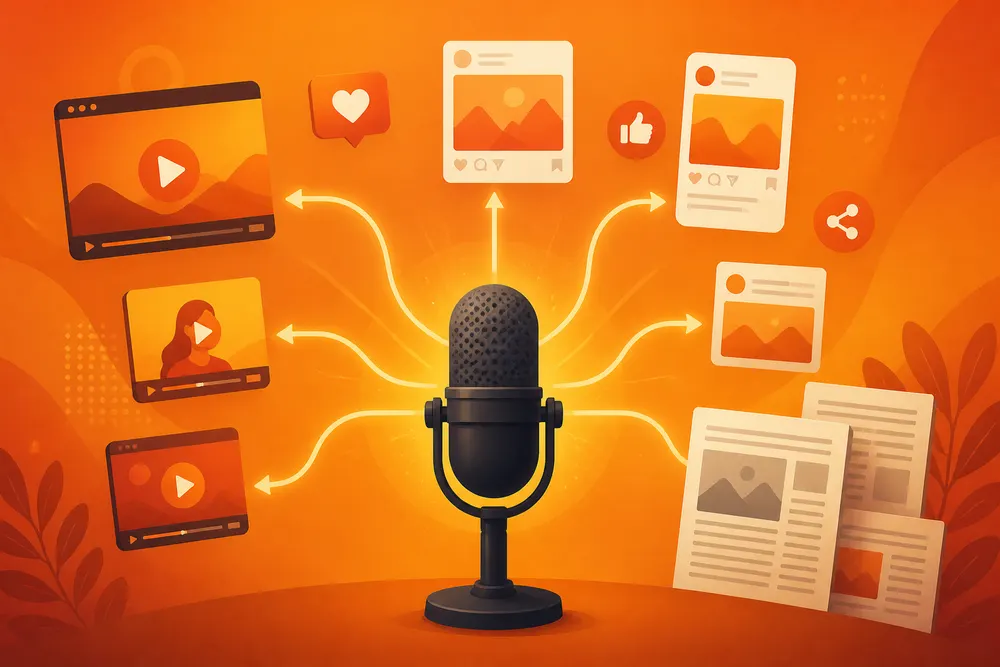
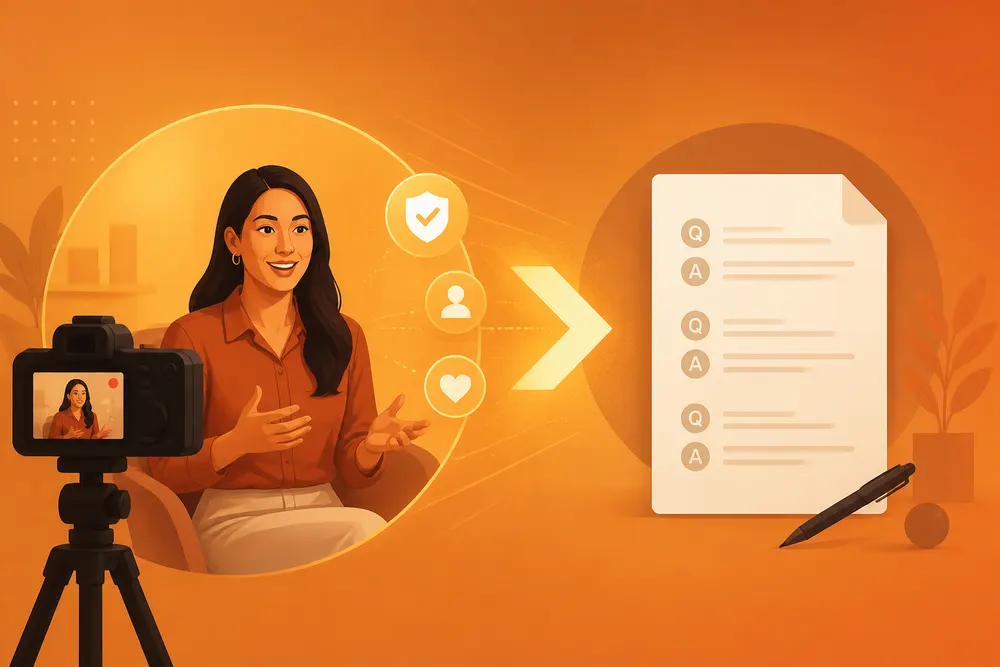
The interview is raw material. A 30-minute conversation contains five strong LinkedIn posts, five short video clips, a written article, and enough insight to fill a month of consistent content. None of that happens automatically, but it can be extracted by someone who knows what they're doing, the way a single interview transcript can be mined for a dozen usable moments if someone actually sits down and reads it that way.
How Much Content Does One Interview Actually Produce?
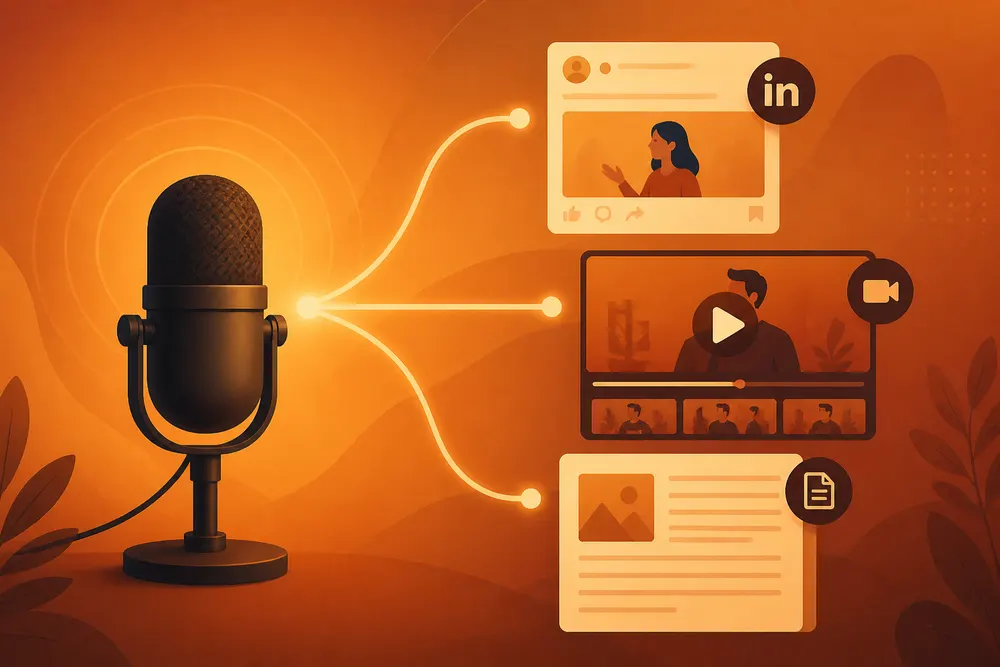
A well-produced interview session generates:
- 5 LinkedIn posts written in your voice, each built from a real moment in the transcript
- 5 short video clips edited for social, captioned, and formatted for reuse
- A written feature article placed on a major platform
- A full recording that can be syndicated, embedded, or sent to prospects
- Raw files, video, audio, transcript, that you own outright
That's a month of content from one sitting. The question isn't whether the value is there. It's whether anyone is doing the work to pull it out, most of the time the transcript just sits in a shared drive untouched after the episode goes live.
Why Do Interview-Based LinkedIn Posts Perform Better?
The best LinkedIn posts don't sound like marketing copy, they sound like someone thinking out loud. When your posts are pulled from a real conversation where you were speaking candidly, they carry that quality automatically. The ideas are sharp because you were actually challenged, not because you wrote something polished for an audience.
Posts written directly from your transcript tend to outperform posts written from scratch because they contain your actual voice, your actual reasoning, and your actual examples, not a cleaned-up version of what you wished you'd said. A stray comment you made in minute eleven about a mistake you made early on often turns into the post that performs best, precisely because nobody would have thought to write it starting from a blank page.
Why Does Distribution Matter as Much as Content?
Even executives who do get their content produced rarely have a plan for getting it in front of the right people. Organic reach on LinkedIn has a ceiling. Podcast subscriber counts matter less than whether the right person in the right industry saw your interview at the right moment.
Paid distribution targeted to your ideal customer profile closes that gap. Ten thousand views from a random audience is noise. Ten thousand views from the people you are actively trying to reach is a pipeline, the difference isn't the number, it's who is on the other end of it.
What Does This Look Like a Month After Recording?
Compare two executives who did the same podcast interview on the same day. One shares the episode link once and moves on. A month later, the other has published five LinkedIn posts, run a handful of short clips across social, placed a written feature, and put paid spend behind the strongest clip to reach a defined audience.
Both spent the same thirty minutes on the recording. Only one of them turned that half hour into a month of visible, compounding proof of what they know, and it's rarely obvious from the outside that the difference came down to what happened after the interview ended, not during it.
But What If You Don't Have Time to Manage All This?
This is the objection that stops most executives from ever extracting value beyond the original episode link. The reasonable fix isn't doing all the editing and posting yourself, it's treating content extraction as a defined deliverable from the interview, something handed off the moment the recording ends rather than a task that lives on your own to-do list.
Once that handoff exists, the time cost to you drops to approving a batch of drafts rather than producing anything from scratch. The thirty minutes you already spent recording remains the only real time investment, everything after that is someone else's job to execute well. Most executives who try this once are surprised by how little of their actual calendar the follow-through requires compared to the interview itself.
Press plus content from one interview
Premium Interview Package
Guaranteed MSN.com feature, LinkedIn posts, video clips, and guaranteed reach, without broadcast weight. Ideal when you need third-party proof fast.