Why Start With the Transcript?
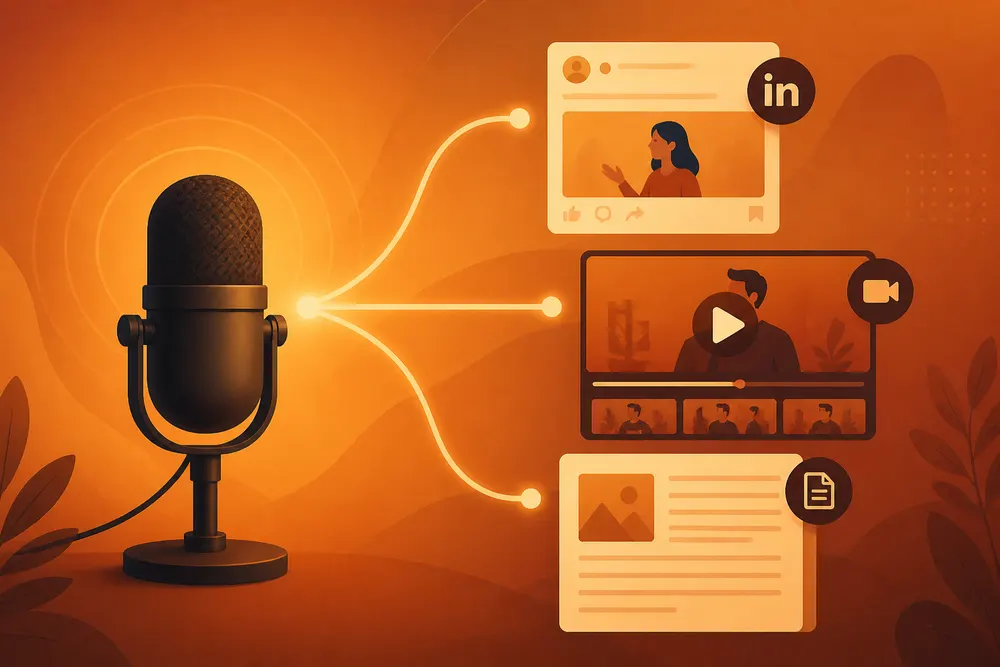
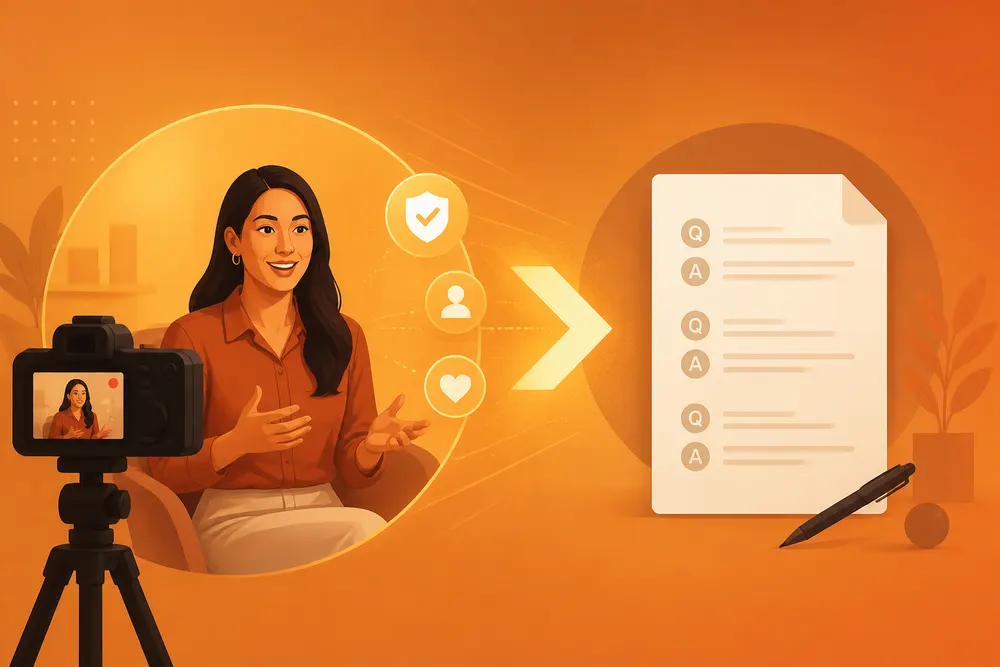
A 30-minute conversation produces roughly 4,000-5,000 words of raw transcript. That's enough material for a press feature, several LinkedIn posts, and a handful of standalone stories, all without a single additional minute of your time. The transcript is the raw material, not the finished product, which is exactly why it's worth treating as an asset instead of a byproduct you forget about the day after the recording.
Most executives never get this far. They do the interview, the episode or feature goes live, and the transcript sits in a folder untouched. The gap between "we did an interview" and "we built a month of content" is almost entirely a matter of someone actually mining the transcript for what's usable, not a matter of needing more raw material.
How Do You Find Clip-Worthy Moments?
Most 30-minute conversations contain 4-6 moments that work as standalone short clips, a sharp answer, a specific number, a story with a clear beginning and end. Those become the short-form video layer, formatted for social and cut to the moment that actually lands. The tell is usually pace: if you notice yourself leaning forward or the host reacts with a follow-up question, that's a signal the moment is worth cutting on its own.
The same transcript also yields written moments that don't need video at all. A single strong paragraph, reworked slightly for a LinkedIn post with a hook line up top, can carry its own reach independent of any clip. One interview can realistically produce three to five of these written posts without repeating the same point twice.
Why Does Distribution Matter as Much as Content?
Content without distribution just sits there. Pairing the clips and posts with paid promotion to your actual ICP is what turns a folder of assets into something that reaches new people, not just the audience you already had. A clip that would otherwise get a few hundred organic views can reach thousands of the right people for a modest ad spend, which is a far better return than producing more content nobody targeted sees.
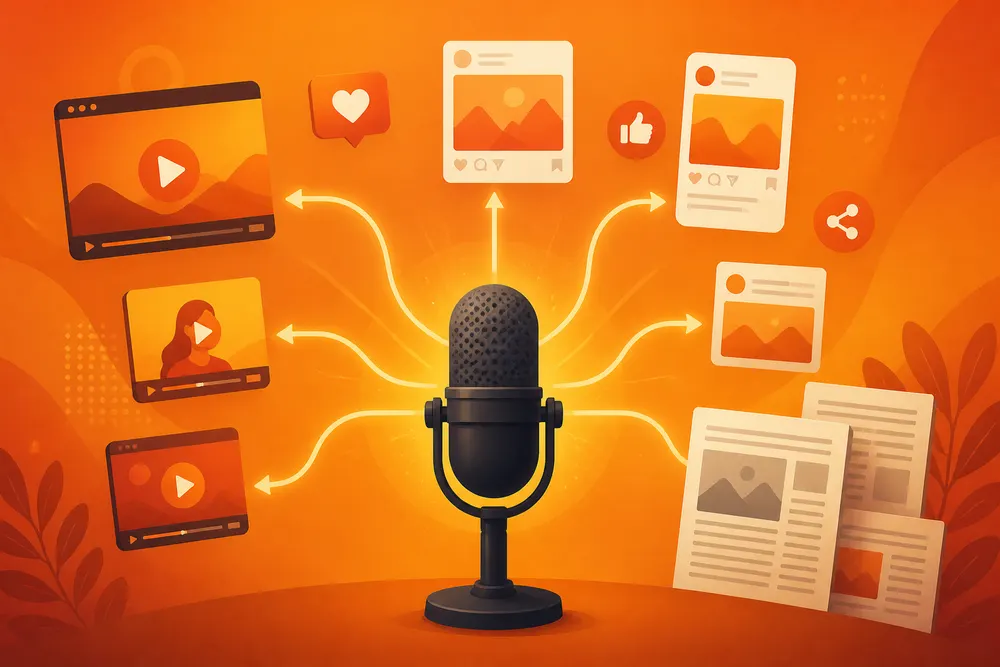
Done well, one conversation produces a press placement, five LinkedIn posts, five video clips, and 10,000+ targeted views, a full month of visibility from thirty minutes of your time. None of that requires a second interview, a new script, or additional time on camera, it requires someone treating the first conversation as the start of the work rather than the whole of it.
What Does a Month of Repurposed Content Actually Look Like Week to Week?
Spread across four weeks, it might look like this: the press feature lands in week one, followed by two LinkedIn posts drawn from different sections of the transcript in weeks one and two, two or three short clips released through weeks two and three, and paid distribution running quietly underneath the entire month. Nothing about that calendar requires you to do anything beyond the original interview.
The sequencing matters too. Leading with the press placement gives the social posts and clips something credible to point back to, "as covered in..." changes how a LinkedIn post reads compared to one with no third-party anchor behind it at all.
How Often Should You Do This?
Once is better than never, but the real value compounds with repetition. A single interview gives you a month of content and one moment of relevance. Doing this quarterly gives you a rolling public record that never goes stale, new press, new posts, new clips, every few months, without a proportional increase in your own time investment.
The interview itself is still just thirty minutes each time. What scales isn't your effort, it's the system extracting value from it, the same thirty minutes on your calendar turning into a predictable, repeatable output every quarter instead of a one-off event you have to remember to plan again from scratch.
What Mistakes Waste the Value of a Good Interview?
The most common mistake is treating the interview as the finish line instead of the starting point. The recording goes live, gets shared once, and then nothing else happens to it. All the repurposing value sits unused in a transcript nobody opens again.
The second mistake is spreading everything out with no plan, one clip here, one post there, six months apart, so nothing ever compounds into a visible body of work. Batching the repurposed content into a defined window, a month, a quarter, is what makes it read as a consistent presence rather than scattered, unrelated posts that happen to reference the same interview.
Press plus content from one interview
Premium Interview Package
Guaranteed MSN.com feature, LinkedIn posts, video clips, and guaranteed reach, without broadcast weight. Ideal when you need third-party proof fast.