
They Come to Him About a Leaf. It Is Never the Leaf.
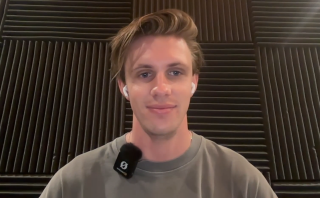
Are you obsessed with self-improvement? Mental performance coach and former Wall Street hedge fund manager Evan Marks argues that constantly trying to "fix" yourself actually takes you further away from who you really are. In this episode, Evan explains why he completely rejects "positive psychology" in favor of "opportunistic reality". He trains high-achievers to treat their negative emotions as data and be ready for chaos like a "jaguar in the brush".
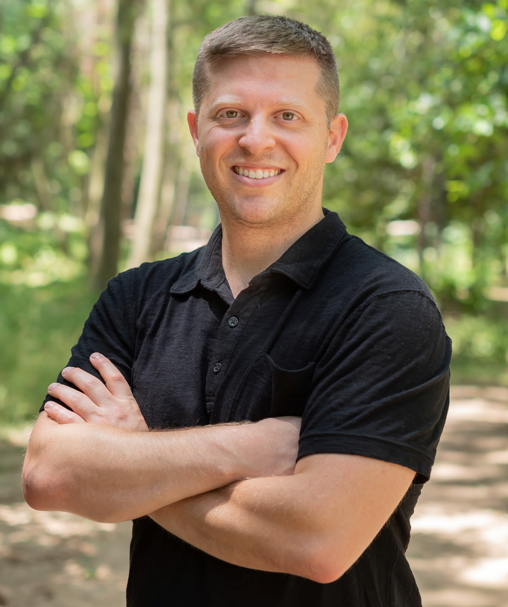

Guest
Evan Marks
Mental Performance Coach, M1 Performance Group
Evan Marks is a Mental Performance Coach at M1 Performance Group and former Wall Street hedge fund manager. He argues that constantly trying to "fix" yourself actually takes you further away from who you really are, completely rejecting "positive psychology" in favor of "opportunistic reality" and training high-achievers to treat their negative emotions as data.
Chapters


Build Executive Visibility
Press placements on CNBC, Bloomberg, and MSN.com,
guaranteed, from one 30-minute interview.
Extracted into a month of content: press, LinkedIn posts, and video, so investors and buyers find real credibility before the first conversation.
Distribution through a channel with 2M+ real views
Full Transcript
Evan Marks: [00:00:00] The fear of failure to me is minimal because the fear of regret is bigger.
Sean Weisbrot: The reality is the world isn't a positive place. A lot of people are just lying to themselves.
Evan Marks: My dad's a crackhead. My mom's a single mother who just literally kept us alive. When you overthink, you never get on the field, ever.
Sean Weisbrot: There comes a certain point where when you make more money than you need, you should think about what you want to give back to people. What's been the hardest thing about being an entrepreneur for you so far?
Evan Marks: I think the hardest thing about being an entrepreneur is you are isolated sometimes, right? So you have to handle all the big decisions. You know, I'm a solopreneur, so all the decisions. I don't have a partner, so I have to make these decisions, and I'm always in uncharted territory. I was a Wall Street guy for 25 years. Now I'm a coach. I don't even know what social media was till two years ago. Now we're doing a TEDx talk, writing a book, [00:01:00] putting a program together, all these things. I've never done it, and I'm 53, so for me it's really balancing being overwhelmed and moving in the right direction.
Sean Weisbrot: So since you're now a solopreneur and you have to rely on yourself, but in your past, I imagine on Wall Street, it's a lot of networking, right? Rubbing shoulders with the right people to, you know, get in on deals. I don't know exactly what your history is, but I'm just making an assumption. How do you maintain your network? Or do you not bother to maintain that network? Or have you tried to rebuild a new, or build a new network? Kind of what's that process been for you?
Evan Marks: You know, it's interesting because a lot of my clients are Wall Street guys, I'd say 50% of my business. But when you, when you're, when you're a hedge fund guy, it's literally how good is your research and how good is your decision making? Are connections important? Somewhat, right? 'cause you want information, but it's very different. You know, I would say, you know, I'm in, when you're a hedge fund, you're on the buy side of the business, right? You're not the Morgans, the Goldmans [00:02:00] of the world. So you are a client, right? But for us, on, on, as a hedge fund guy, you're looking for best information. Best preparation, best decision making. Now, on the other side, as a coach, as you run a business, you're creating something. There are very two different skillset. So being a hedge fund guy for 25 years, I now have to really restart a new business, right? Because, 'cause you know when you ing, you don't need social media, right? You're not speaking on stages, you're not doing any of this stuff. So when I became a coach at 46, I really had to recreate who I was. So it was a complete reinvention of Evan Marks.
Sean Weisbrot: I think that's a really important skill to have at any age because of how fast the world is changing, and I think a lot of people listening to this are just starting out for the first time. They're probably a lot younger than both of us, and so they're probably thinking about how [00:03:00] can I develop the skills to develop skills faster in order to continue to compete? Are there any, is there anything that you've learned in the last few years being a coach, going from that hedge fund career that, that has helped you to develop skills faster that people could learn from?
Evan Marks: Well, you know, it's interesting because my mental performance coach, so we all have fear of something. So I realize that, you know, as I'm, as I get bigger and bigger and try new things, I'm always, I'm gonna fail at certain things. So the fear of failure to me is, is minimal. Because the fear of regret is bigger. So when you think about stacking skills, you have to understand that the possibility of failure is there, but the possibility of success is there as well. So when you're an entrepreneur and you're trying to build things, be curious. You know when, when you overthink, you never get on the [00:04:00] field, ever. So get on the field experiment. See what it is though, because once you start that momentum train, you're in good shape. It's never perfect, Sean. You know that and I know it. You're an entrepreneur. I'm an entrepreneur. It's never perfect. And imagine if it was perfect. Your growth is limited. Then we, I make so many mistakes and failures. I can't even, I, I, I don't have enough paper to write it down on, but I'm moving ahead each day though, so I'm willing. To stretch myself and to see and be curious of what happens, and that's how skills are built.
Sean Weisbrot: Do you think the fear of failure is stronger on Wall Street as a hedge fund manager or as a business owner?
Evan Marks: The feedback loop on Wall Street is massive. It's the quickest feedback loop. Your, your nervous system is getting attacked constantly. So I would have to tip my head to Wall Street [00:05:00] traders and PMs. I think it's a little harder 'cause you are dealing with massive uncertainty at all times. So, you know, as a Wall Street guy, you gotta be comfortable with uncertainty and confident in your behavior because you could have everything right and be massively wrong. So, am I as stressed as I am as I used to be on Wall Street? The answer is no. However, I, I'm still allowed to be overwhelmed 'cause I wanna build something that creates impact. I will knock my Wall Street days. I am much healthier than I've ever been. Being a trainer at PM is not easy. It's a very challenging profession
Sean Weisbrot: in a sea of coaches. How do you stand out? What is different about you and your message and your process that makes people want to work with you over someone else?
Evan Marks: I think a lot of coaches live in the world of positive psychology. And Sean, I am the [00:06:00] opposite. So I believe that we don't have an app that tells us when obstacles, hurdles, challenges, and emergencies happen. So we live in the camp of opportunistic reality. So we prepare when things go bad, right? Because my clients, I call my team, so people that I coach, I call my team are always ready. So for us, emotions are data. We're in the, we're in the camp of behavioral change, right? That's what we're constantly doing. So what makes us different is that we are not always wishing for a beautiful day. We're ready for any moment. So it's, it's almost like, it's almost like a, uh, like a jaguar in the brush, right? We're that aggressive patience. You could feel your heart. So we really marry the why. Why do we do what we do? How, how does the [00:07:00] brain really work? So we put that together. So in moments of chaos, my people are ready to strike, period. The end, but it's science-based. Everything I do is science-based. It's not fluff, it's not positive. Psychology, obviously, positive psychology and positive attitude are different things, but we are always ready to strike. I really believe in times of chaos is what differentiates everybody.
Sean Weisbrot: Do you think it's because of your experience in Wall Street that you, you had so many of those heart pumping experiences when markets are moving really fast and you're trying to get in and out of opportunities, you know, to save yourself or to
Evan Marks: Definitely, you know, but I was a D one athlete, you know, I went to UPenn. I was a lacrosse guy, blew my knees out twice, significantly impaired, you know. Just a student now instead of a student athlete. Then I spent 25 years on Wall [00:08:00] Street where nobody talked about emotions and all this stuff, and I wish they did, right? I've had performance coaches get bigger, do the work, get bigger. That didn't work. So Wall Street definitely had a massive impact on me, and so when I coach people, our experiences are completely different, but the approach is also different. Like, you know, Sean, you are different than John, different than Bob, different than Sally. Everybody comes from a different spot, but a lot of it literally is psychological and then understanding how the brain really works is the added advantage.
Sean Weisbrot: So I, I have long been a fan of positive psychology only because there's too much negativity out there. At the same time I've been. Accused by many people of being a pessimist for which I say I'm an [00:09:00] eternal realist, but the reality is the world isn't a positive place and so there's a lot of negativity in in human species, and so it's difficult to operate on a positive psychology model. As a realist, knowing that a lot of people are just lying to themselves in order to accomplish that, unfortunately. So, uh, I, I also agree with you. I think a lot of people don't talk about their emotions. I think my generation, and I think my, my parents' generation grew up without emotions, like without the conversation on emotions. But my parents were smart enough to talk to me about emotions. That's enabled me to be one of the more open and capable communicators of the people that I know of my generation and [00:10:00] I, I wish more people had the ability to be more open-minded and, and capable of change through the ability to be vulnerable. So do you work with them on their vulnerability in order to build them up to be enabled to be ready for whatever happens? Or how do you get them ready?
Evan Marks: You know, when, when you think about, when, when we talk about these negative emotions, like negative, negative, all it is is an emotion. It's a data point. You know, the body knows that when we feel joy and we feel panic. It's literally nine or 10 seconds you're in that, that emotion. It's how we attach behavior and experience to it. 'cause the body wants to road homeostatically, right? So we always, the body wants to come to this baseline. So when we talk about vulnerability, you're talking about the truth about who you are. So it's so interesting, I think you and I spoke about it when we had a call earlier, when we think about self-improvement. When [00:11:00] people are obsess over self-improvement, they get further and further away from who they actually are. So when we understand who we are internally, what makes us tick, what does our programming look like growing up, all these things, then real improvement begins. But for a lot of people, they're trying to restore something that was taking in this obsession of self-improvement. But if you don't know what you're really improving. You gotta know who you are first, thus answering your question. You gotta be a little vulnerable. So when I, when I have clients, they know it's an, it's an open book. I can't do my job if I don't know everything. So when you build this trust with a client, that's where the magic happens. When you're allowed to be vulnerable, you are allowed to tell your truth. That's where the magic happens. Right, because you're, you're open. Yeah. It's a [00:12:00] wonderful place to be. I mean, listen, for many, it's scary and I get that, but without a doubt, Sean, that is where growth happens.
Sean Weisbrot: How do you build that trust? How, how do you put them in a place that allows them to become vulnerable for you?
Evan Marks: You know, as a coach, my job is to be present. To listen and ask questions, but also, you know, for me growing up and, and they asked me my story, you know, I was raised by a single mother. My dad was a, a homeless, cracked addict, and an older brother was handicapped. You know, I've had my ups and downs also, like life is not linear for anybody. So I think they hear my story like, wow, this guy's successful, but he's had all these obstacles and hurdles in his life. So even though I share my journey a little bit, right? Even though obviously I'm there for the client, you start to build this trust and, and, and quite [00:13:00] frankly, Sean, 'cause I, 'cause I fucking care, they know that their success and their wellbeing is, is a top priority for me. And the reason why they feel it. 'cause they know it's true. You know, it, it's, it's funny like sometimes when you think about it. Obviously coaching is a, is a great profession, right? And it could be very lucrative, but I look at it differently like, I'm here for impact. I, I really, if you were my client, I want the best for you and I'll do whatever it takes.
Sean Weisbrot: Have you heard about Gen Z being this, like lost generation of boys who are, who've been disconnected from masculinity? And they're desperate search to kind of have that inner strength, but don't know how to access it because they didn't have strong fathers in their life.
Evan Marks: Gen Z is what, what, what, what years are those Again?[00:14:00] There's so many, there's so many letters nowadays.
Sean Weisbrot: Gen Z is the one after millennials. So I'm, I'm a millennial. I'm one of the older millennials.
Evan Marks: Millennial, right? Or you're an early millennial. How old are you? 40.
Sean Weisbrot: I'll be 40 in a few months. I'm, I'm one of the older millennials.
Evan Marks: Older millennials, right. And I'm 53, so I am a gen.
Sean Weisbrot: You're in Gen XI think.
Evan Marks: Am I Gen X? Yeah.
Sean Weisbrot: So I would say Gen Z is like 25, like the oldest Gen Zs are probably 25, 20.
Evan Marks: My youngest clients are probably 25 to 31 in that range. But it's interesting, like. I can't answer that question because I only deal with high achievers. So the people I work with come to me who want to get better, who want to talk about their emotions, who want to change their behavior, who want to push the limits. So the people that come to me are [00:15:00] those people that I love coaching. So when we talk about the Gen Zs who, who are not in touch with their emotions, I, the people I deal with want to be coached. If that makes sense. So I, I, I deal with the elite who want to get better.
Sean Weisbrot: Do you think they're high achievers because something was lacking in their early childhood that gave them the ambition to prove them, prove themselves to themselves or to some someone else like a father that wasn't available.
Evan Marks: So the question then is what makes a high achiever right? That, that's kind of the question you're asking.
Sean Weisbrot: Yeah.
Evan Marks: You know, it, it's so interesting. I think you, you, how about this, when you have a phenomenal parents who were just incredible role models that pushed you and you became an incredible, you know, whatever you did. Or you can come from a place of, of, of scarcity and made a decision to be phenomenal. I don't know what [00:16:00] it takes, how somebody becomes a high achiever, but I know what it takes to stay there and to get better. There's so many different makeups. You know, like you, you are, you are a high achiever. You come, you have, you have very strong parents. Let's say I'm a high achiever. My dad's a crack head. My mom's a single mother who just literally kept us alive, but then we both are high achievers, so it's very hard to answer that question. The question is, all high achievers have obstacle and hurdles that they have to go through. How do you get better and stronger, and how do you stay successful?
Sean Weisbrot: Yeah, that's a question I ask myself.
Evan Marks: Mental performance right there.
Sean Weisbrot: I was very fortunate to have two loving and present parents who were very vulnerable and encouraging of me to have emotional intelligence and. And I grew up thinking that that was [00:17:00] the norm. I thought every child had this kind of a life. And then I got to college, you know, I moved away, went to college, and I realized that most people are actually really messed up inside. Mm-hmm. And they didn't have anything close to the love that I experienced. And that was really hard for me. 'cause like, damn, like. I thought I was the, I thought that was normal. And now it seems I'm the weird one. I'm the normal one because I love myself and I believe in myself and other people love me and believe in me and support me and encourage me, and I, I was sad when I realized this at the age of around 1819, because I wish that other people had that. Why is it fair that someone gets ignored or abused, whether that's physical or psychological or sexual, they don't deserve, like they've, they've never done, they've done nothing to deserve that from the people around them. Nobody deserves to be ignored or abandoned or anything like that. And yet it [00:18:00] happens. And, and I, I think that, um, that was really difficult for me in my earlier age with dating because a lot of the women I, I found. Not that I attracted them, but that was just what happened to be what, what I, you know, the kinda women I met came from broken families and it was really hard for me to see a future with them because they struggled to love themselves and therefore they struggled to receive my love and they were struggled to, to give me love. It was like, how can we have a family? How can we have kids together and be happy if you are constantly in this struggle with yourself about, you know, fight or flight. If I give you love and you, you struggle with that, like that's hard.
Evan Marks: Through neuroplasticity we can change, but the only way you change something is acknowledging it and working at it. You know, most
Sean Weisbrot: people don't wanna do that.
Evan Marks: You know what, some people don't, right? But I work with the ones that do nobody, you know, even, you [00:19:00] know, nobody's story is that vanilla. Right. You know, being, having, you know, but everybody, there's a little bit of something in everybody's story, but you have to, you have to be all right with acknowledging it if you want to get better. So when you ask me that question about building trust and honesty, the key to changes, knowing what you want to change and where you want to get better, so. Being in denial. What do they say? Uh, ignorance is bliss, right? Yeah. Ignorance is bliss by the way. If you see nothing and you just keep moving on, but when you're not in denial and you do nothing about it, that is a very hard place to be.
Sean Weisbrot: It's painful.
Evan Marks: It's extremely painful knowing that you can change even though you want to. [00:20:00] That is where coaches come in, therapists come in, all that stuff because you can any, I really, you know, and, and when we talk as we just KB positive psychology, I do believe anything is possible. I do. But I know that it's, you gotta go through a little bit of muck. You have to. And it's not linear, right? I, I coach some amazing people. I mean, flat out amazing, but we all have some struggles sometimes. It's really how do you get your feet? What are we trying to change? Where do I need to be? What's important now? Where am I? Where is my focus right now? These are constant questions you ask yourself if you want to change. What happens is, you know, change doesn't have to be hercule, but you have to be [00:21:00] patient with progress because just like money, behavior compounds, give yourself that time. Give yourself that, that grace to get better, you know, and space, grace, space, whatever, right? But, but give yourself the opportunity. You know, I started M1, two and a half years ago. It's my coaching, uh, group and I've been coaching about eight years, and now we're doing a lot more. We did a TEDx talk in January. We have a book coming out the end of this year, possibly beginning of of 27. We have a course coming out. We got great clients, but as we build the speaking business, I know I'm not jumping on stage at the garden. I gotta start small somewhere. I have to get better as a speaker. I have to work on my stage presence. It, it does take experience in reps, but I know it, [00:22:00] so this is the steps I need in order to get where I need to, in order to go where I want to go. It's important where people are like, ah, I don't wanna do this. It's, it's gonna take too long. You start stacking days, weeks, and months, time becomes an ally and watch how fast things happen. I do believe that.
Sean Weisbrot: Do you get people coming to you that don't know what they need to change, but they, they think something needs to change. They just don't know what it is.
Evan Marks: So people always come to me about a leaf on the tree. They think it's this leaf, and it's never the leaf they think it is. It's always about the roots, right? Because they're unconscious about it. So my job is to bring the unconscious conscious, and that's what I do as a coach. So they think it's something obviously, and it's never that thing that they think it's ever,
Sean Weisbrot: I, I like that you said that because I was doing [00:23:00] a mentoring session. Uh, there's a platform called Growth Mentor that I, I do free mentorship once in a while. And there was a woman that came to me and she said, I wanna launch a certain kind of business and. You know, we started to go through the details of it. I started to give her advice on how to launch it. She had sold a previous business, so she was sitting on some cash. And so I gave her tangentially some financial advice about how to protect that money and not do what I did, which is to put that money into the next business and lose it. And then you're back to, you know, not, not square one for me, but you know, she had made less. So it's more important for her to be careful. And as I was talking to her, I realized actually. The problem wasn't that she wanted advice on how to do do this business, but that she had lost her sense of purpose and ambition after selling the previous business. But she wasn't talking about that. And so we, we got into that and I was like, look, I understand I had a business that I made a lot of money and after that [00:24:00] I also lust my sense of purpose and ambition. And I struggled for years to find it. And finally I did, and now I'm back on a path that I'm happy with. But you know, you have to figure that out. Like you might love the idea of this business, but it might not be the right business for you. So before you put any effort into making this business happen, I think you should take a step back, protect your finances, and figure out what the hell your purpose is and what you want it to be. And I said there comes a certain point where when you make more money than you need. You should think about what you wanna give back to people, and maybe that business ends up being something that you do as a charity. For people who are poor, right? Is like a travel business. Like maybe you, you let poor people experience travel overseas that they can't afford because you have another business that actually is your, your thing that you're passionate about, that's making you millions of dollars and allows you to create this other thing that you just give away for people, that that's your joy, right? But you have to [00:25:00] find what your purpose is. And after you've made so much money, you kind of stop thinking about yourself and you start thinking about others. Not everybody does. Some people do. I've heard of actresses. Have like soup kitchens, they, they put millions of dollars a year into feeding homeless people because that was the thing that called them to action. Um, and they continue to act in order to continue being able to fund that thing. Right. They don't need that money. But
Evan Marks: now you're, you're talking about something very important, motivation, what motivates you, right? So as, as an entrepreneur, as a young entrepreneur, you're motivated by money. Right. And success. Right? That's a possibility. You really have to find, you know, define what you're motivated by. Like, for me now, it's impact, right? I'm motivated by, I'm, I'm motivated by serving others. And that's, you know, my purpose, my meaning, my calm, whatever you want to call it. But like a great question to ask yourself and that young lady, what am I motivated by? Like, like what, what gets me going? Like, where do I [00:26:00] find fulfillment? By the way, fulfillment could be building businesses, giving people the opportunity to create. We, we, we, a lot of people just don't ask themselves these self-explanatory questions. They just don't. So they live in this unconscious state and going back and they're thinking about it's a leaf when it's never the leaf. You know, I always, my clients know, like when we feel that our foundation is a little shaky, take the proverbial step back and ask yourself a question, whatever. It's like for me it's always where do I need to be right now? Right. And that's kind of gets me centered. Have a question that you asking yourself, right? Because for this woman who had success. She has to take that step back and look at the Mount and say, what motivates me now?[00:27:00] I think it's important for anybody.
Sean Weisbrot: Thanks for watching. If you liked this insight, I've handpicked another video for you right here on the screen. For more actionable strategies that get you real results, hit subscribe.
Build Executive Visibility
Press placements on CNBC, Bloomberg, and MSN.com,
guaranteed, from one 30-minute interview.
Extracted into a month of content: press, LinkedIn posts, and video, so investors and buyers find real credibility before the first conversation.
Distribution through a channel with 2M+ real views
