
Peter Thiel Had Billions in His Roth IRA. Here Is How It Works
What if you could legally shelter millions in tax-free gains the way Peter Thiel did with his Roth IRA? In this episode, Sean sits down with Christine Healey, a pre-IPO secondary market broker who breaks down exactly how high-net-worth investors use structures like self-directed Roth IRAs to invest in private companies before they go public. You will learn why pre-IPO deals are far more nuanced th

Guest
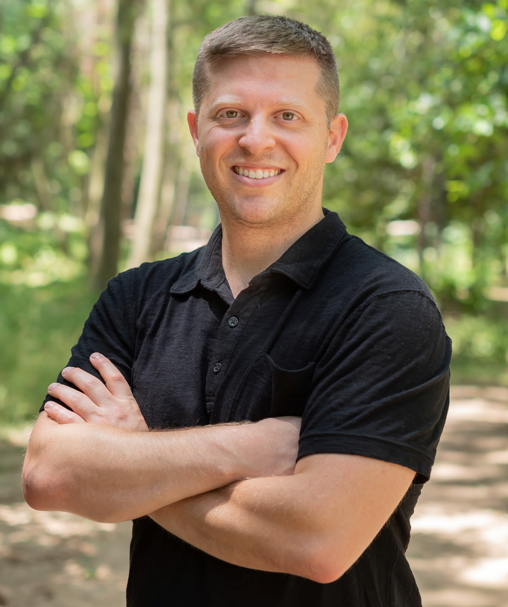
Christine Healey
Pre-IPO Investment Expert, Healey Pre-IPO
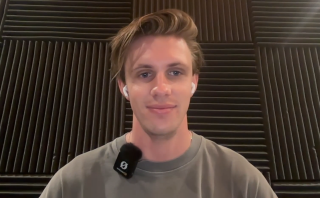
Christine Healey is a Pre-IPO Investment Expert at Healey Pre-IPO. She explains why AI cannot replace investment brokers in the private market, revealing how Claude AI missed a critical detail in a deal that could have cost her client millions and why human brokers are still essential for navigating pre-IPO opportunities in companies like SpaceX and OpenAI.
Chapters


Just raised, acquired, or launched?
Guaranteed CNBC, Bloomberg, and MSN.com coverage from one 30-minute interview,
timed to your milestone while it's still news.
Raises, acquisitions, product launches, and major hires create a narrow window where third-party press stops being optional. We turn that moment into a month of content.
Distribution through a channel with 2M+ real views
Full Transcript
Sean Weisbrot: In a world where AI is kind of democratizing startups and investments and portfolio management and all of these things, why is it necessary to have someone like you to be a part of the pre IPO process?
Christine Healey: AI is proliferating the private market space. There's a lot of demand to invest in AI companies like Open AI and Anthropic. At the individual deal level, AI is not where it needs to be to actually be, uh, a primary resource or a primary ally in evaluating pre IPO deals. So I've had clients that ran their transaction docs through Claude, and Claude missed that. There was Carrie accidentally put, um, on those docks, and it was only through a human helping them check those docks that we were able to catch that and fix that. So because the pre IPO transactions are so bespoke and so nuanced, the AI tools are not able to provide the value that an expert broker can at least yet.
Sean Weisbrot: So then how are you able to use AI to make this process smoother?
Christine Healey: A lot of people in platforms out there believe AI can help us match investors to sellers. And do a lot of other things in the market. My brand is going completely the other direction and saying, let's do this the old fashioned human way so you know that I'm there by your side, not just an informal or impersonal platform. Um, others may build those automations, but my brand is about being a human by your side that's accessible, that can guide you through the process, help explain structures, and help you negotiate.
Sean Weisbrot: Hey, business leaders and marketers. What if your brand could be featured right here? This ad spot could be yours. This channel is watched by a dedicated audience of ambitious founders, executives, and professionals who are actively looking for tools and services to help their business grow. If you wanna put your brand in front of this highly dedicated audience, that's difficult to reach. I'm currently looking for a few strategic partners for the channel. To learn more about sponsorship opportunities, click the link in the description. Let's go together. What kind of structures are common in pre IPO secondary deals?
Christine Healey: There's a wide variety. So one of the main differences to public investing is in public investing. You can go on your Fidelity app, type in a ticker for a company, and it spits out an offer for you. Essentially, in the private markets, you could have for one company, five or even more different sellers, um, different prices and different structures. There's also new structures being innovated all the time, so some of the most common are direct transfers of shares. That's where the investor holds the shares in their name, and it's blessed by the company and goes to their review process. You also have SPV transactions being extremely common, where essentially it's a dedicated fund that holds the shares and the buyer is subscribing to the fund as an lp.
Sean Weisbrot: Do you have control over how you present these opportunities to the investors you work with? Like, are, are you choosing to push direct sales or do you like SPVs? How do you, how do you do this? '
Christine Healey: cause I'm a broker and not a financial advisor. I'm not a fiduciary and it's, it's not within the scope of my role to give financial advice or to push one structure or one deal versus the other. My job is to help source offers, to help the buyers to understand one versus the other, to be strategic and also to help them negotiate and smooth that deal through to closing. So I try and be as upfront as possible in presenting a deal to try and anticipate some of the questions or, um, uh, give, give all the facts upfront, basically. So we usually look at price, we'll obviously look at the structure of the deal. We'll look at the timeline that applies to that deal. Maybe the, the loose profile of the seller in the early stages where it's anonymized. Um, domicile is important to some investors. So is this maybe a US focused fund that's selling? All of those different features as well as any fees that might apply, and then also my fee that might apply. So they usually get bullet points to start that outline those main points of a deal. And it's really important that the investor knows that they are in the driver's seat and they need to decide ultimately what deal they want and what they're comfortable with.
Sean Weisbrot: I've heard a lot recently about pre IPO scams where investors will be sold something that doesn't actually exist. Meaning they'll say We've got access to direct shares from one of the employees, and they don't actually, uh, how does an investor protect themselves from potential scam, and how do you due diligence that to make sure that you're not setting someone up for failure by accident?
Christine Healey: There have been a lot of pre IPO success stories that have really spurred a lot of interest and newcomers to this market. New buyers, new sellers, but also new brokers, new platforms and businesses popping up of all kinds, trying to serve this market and get a piece of that pie. Because of that, I think there's technically speaking more access than ever, but that access is really, really hit or miss. So the question today is not. Can I go find a deal for SpaceX or for one of these companies? It's, can I find the right deal? Can I find a reliable deal? And so the key in today's market is getting that reliable access. Um, there are two main issues that have come up in terms of, um, transaction failures. So one is where maybe everyone has good intentions, they just aren't able to deliver the deal, falls through for some reason. So that could be that the buyer and or seller have unrealistic expectations or the broker isn't doing a very good job there. Or maybe there's a lag in communication or misunderstandings. Or it could be that you're trying to go after a primary allocation. Primary allocations often change last minute. Uh, allocations get, get downsized or cut back last minute. So there can be a lot of, um, a lot of false starts in this market where you think you have a deal. Maybe you wait a few weeks or you wait a month or two thinking the deal's fine. And it turns out that deal was never solidified and you walk away with nothing or come back to the market to try again a month later. That's very, very common. Not necessarily fraud, just, um, not, not reliable. The second issue is just with how lucrative this market has been for many people. There are some bad actors out there. Um, and aside from bad actors, there's also just. Better deals than others, better access than others. So there are some very, very convoluted, many multi-layer structures of SPV, where the SPV owes an interest in an SPV, which owes an interest in an SPV and, um, very, very complicated train, uh, chains of ownership out there. Um, and it just drives home this point that all access is not equal and it's really important to. Work with quality professionals in this space. If you choose to use a broker to really be aware of who you're getting into business with, make sure they're FINRA license. For example, you can go on, um, FINRA, broker Trek and type in their name and see if they're in good standing or what licenses they hold, for example. Um, and just in general that it's someone you trust, someone who speaks your language in terms, in terms of explaining these deals, um, and someone with real experience in this market. To go a step further, also, your counterparty, that seller you work with, making sure you fully understand the structure on offer, the chain of ownership, where the shares are actually held, if it is an SPV structure, and to be very active in your own diligence and not just jump on the first time you're offered SpaceX or you're offered Stripe, but to be very discerning about the source and the parties that you go into business with.
Sean Weisbrot: Why would people wanna sell their shares when they know an IPO is coming?
Christine Healey: It's very, very common that sellers, for example, individual investors that maybe, um, bought shares in, in earlier rounds as angel investors or maybe employees of the companies that were there in the early stages and might have been holding 10, 15 plus years by the time. The companies get to that pre IPO stage, it's very, very common that they're still bullish and they still even want to retain sometimes a majority of their shares, but to de-risk that position. So it comes back to first principles of financial management and portfolio management. If you are that startup employee whose, um, company employing them has completely taken off, it could be that sometimes 90%. More maybe of their net worth is tied up in a liquid stock. So as much as you believe maybe that that company is gonna have an amazing IPO and do fantastically, is it sensible on first principles to have 90% of your portfolio tied up in that conviction? Maybe you wanna de-risk some of that and get some cash out before the IPO. Um, maybe it's to buy a house, maybe it's to deploy into other companies and diversify a little bit. So I think that's a common misconception that if someone's selling. They know something bad that we don't know or they're bearish and there's really a range of other factors that come into play. And sometimes people just really need liquidity.
Sean Weisbrot: Well, if they knew something that was, uh, bad that was happening, then that's insider trading. If they were to sell their shares right, or because it's a private company, it's, it doesn't apply.
Christine Healey: There's still rules around information imbalances and there's a lot of regulations there to still try and protect investors and protect folks in this space. Um, but often it's just a, a common employee. They may not have preferential access to data even about their own company. They may not have a data room to share with buyers. Um, and that's another big adjustment from public market investing where you're used to having. Quarterly disclosures to the public financials, et cetera. Um, in a lot of these pre IPO deals, you don't get that same quality of financial disclosure, for example, SpaceX or Impossible Foods. Some of these companies that are notoriously tight about publicly posting their data,
Sean Weisbrot: what's the typical length of time to, uh, have someone come to you and say, I want an allocation from this startup. You say you have access to, to, you know, transaction done, monies transferred.
Christine Healey: It's so incredibly company dependent, so I try and stay hyper-focused in the top 20 or so companies. For that reason, I wanna have a high hit rate. I wanna be an expert in a smaller number of names rather than. Spraying and praying and trying to cover 400 companies and being an expert in none of them, that model doesn't appeal to me. So I try and stay very active throughout the year in the top 20 or so companies. So think SpaceX, OpenAI, Stripe, Andel, anthropic, scale, ai, um, Kraken, all of those and to try and. Keep those names alive and serve my clients really well within those, those individual markets. Now, if a client comes to me in a name outside of those, outside of that top 20, sometimes I can help, sometimes I can't. And I just try and be very upfront and manage expectations. Um, now if a client wants a name that I have an inventory or I have a a source to, then the transaction will just depend on. Whether it's structured as a direct transaction or that SPV transaction. So counterintuitively, if it's a direct transaction, sometimes it actually takes a lot longer because when you go through a company review process, almost always, that's at least a 30 day company review period where you're just waiting for the company to take their time and decide. Um, so those can be kind of long. But of course, the benefit is that you get directly named in their share ledger as the owner of the shares. Now, SPV transactions can sometimes be faster depending on the structure and the situation. So you might be looking at sometimes as fast as one to two weeks for diligent signing, wiring and closing. But it just depends on the specifics.
Sean Weisbrot: So you said the word inventory, and I I wanted to focus on that real fast. When you mean you have inventory, does that mean you have shares that you're in control of, as in you're acting as, uh, a principal rather than an agent?
Christine Healey: No, my firm itself doesn't have inventory per se, but there are, there are many different sellers in different situations. So there are some deals where I might have a live seller at that point in time that the buyer comes to me. Um, you know, if someone comes for stripe, I may have a stripe seller at that exact moment that has existing shares of stripe that is, is ready to transact right away, versus there are some, we have to be more strategic about. Like a company where maybe there's an upcoming round and we might be able to, um, get an allocation that's roughly at the same time as that upcoming round. So there's times where we plan ahead and be strategic and there's times where we have something ready to go. 'cause my seller is actively looking to get liquidity in that name at that time.
Sean Weisbrot: So that was something interesting I, I wanted to mention, or I wanted to ask about as well, because you position yourself as dealing with pre IPOs. But you also just said if, you know, another round is coming up. So what's the difference in that? Because it, when someone says their pre IPO, I imagine either they've filed their S one or they are planning on filing the S one within the next 12 ish or 18 months. Like, and, and I guess how does it differ between the, the round, you know, uh, the round and the pre IPO placement?
Christine Healey: Pre IPO is that kind of sweet spot between true venture capital, that early stage investing and public market investing. So it typically refers to ultra large venture backed companies that are at the stage of maturity and scale that they could go public if they wanted to. Some of them in the next one to three years. Um, some of them sooner or they may have filed for IPO like you mentioned. But whether or not they do IPO, they are just of that profile and scale that they could. So until recently, for example, SpaceX was a company that had been quite vocal through Elon about not wanting to go public anytime soon. And so a lot of us thought SpaceX could potentially be a much longer horizon. To, to going public based on those comments. Now that's changed with the suggestion that they could go public sometimes in sometime in 2026. Um, but for a long time SpaceX was a name where people were thinking even more long term than than normal. On the other hand, you have companies that have been more vocal or actually put into place the filings to go public. So companies like Discord, um, I believe Kraken as well, and, and some others. So. There's, um, there's a real variety of different timelines in terms of going public and just because it's a pre IPO company doesn't mean we know for sure what its timeline looks like. You equally, you have companies like Turo, which have been on that, um, IPO path for a very long time and still have not pulled the trigger, and it's been multiple years now. Um, so no guarantees as to Exit Horizon, but they're still at a scale where. We wouldn't be surprised if we heard about IPO plans coming soon.
Sean Weisbrot: Why would people choose to invest in a a pre IPO company with no knowledge of when they may go public, when they could invest in a earlier stage company and have the potential for a much larger return?
Christine Healey: I would say I wouldn't usually put. Early stage VC investing and late stage in the same bucket. Even though they're both technically venture, they're just so, so different in terms of risk profile, in terms of diligence status, in terms of how much information you have available, um, et cetera. So late stage investing is still incredibly risky. Probably early stage investing. You could consider even more risky as you're dealing with an early stage company that still. Um, has a lot of room to, to grow into its potential. So pre IPO companies tend to be attractive for investors that are hoping for some sort of exit event. And for investors that don't want to go as early as seed stage or or Series A, b, C necessarily, they want companies that have a bit more of a track record, a bit more momentum and um, more to work off of. The second thing is that IPOs are not, in today's day and age, the be all, end all anymore, even even from the investor standpoint. So it used to be in the past that IPO was considered the successful outcome of a company or of an investment. But in today's day and age, there are other ways to cash in or get liquidity. So, for example, the more active this market becomes, the more possible it might be to. Resell that position that you invested into, even while that company is still private terms and conditions attached, of course it's not always possible and it's never guaranteed, but there there is more possibility for resales, the more active and liquid the market becomes. Pre IP
Sean Weisbrot: I've looked at, you know, because I work with earlier stage startups, seed stage. I've looked at taking fees as equity, because the way I see it is, let's say you, you get 50,000 or a hundred thousand dollars commission for a fundraise at a $20 million valuation, and then at the seed stage, maybe they've significantly increased the business size so that now they're raising a hundred million dollars valuation. So in maybe a two year period or an 18 month period, you may have five x, so that a hundred K might become half a million. And so with secondaries, you can essentially help the founding team to minimize their dilution by selling some or all of that money that you've earned and the appreciation of that to incoming investors at the A round where you got this incredible return in a pretty short period of time. So why aren't there more people doing this then?
Christine Healey: I think it's becoming more commonplace to consider a secondary, as part of a, a future primary fundraiser doing. Um, but it's still, there's this historical taboo around secondaries, which is starting to lift, but is still, um, it's still kind of there residually in some circles. So I think some people feel like if a founder is cashing out or if some of these investors are cashing out a portion, they, there's no way they can be still motivated and incentivized for this company to succeed. That's kind of this archaic, um, archaic thought around liquidity. I, I could not disagree with that more strongly. I mean, I imagine, imagine an employee that's stuck with a company five plus years. The company's exploded in value and they've got $5 million on paper, but they're completely illiquid when it comes to their personal finances. They can't buy that house they want for their growing family. They've completely changed, changed stage in life since they joined that company and they don't have the cash flow to try and, um, get their family or their finances to a stable point. In my head, that's not an employee that can be totally focused on their work 'cause they've got this huge financial pressure, but also that kind of resentment or that tension. They're, you know, they're a multimillionaire, but they have no cash. And I think that's actually a much more kind of toxic and pressured situation. Really more distracting, I think, for an employee or a founder to be in. So I think it's really, really important to continue to lift that taboo around secondaries and just see them as something that's morally neutral, not good or bad, it's just a tool that might make sense in certain circumstances. And usually as a, as a pun intended, secondary strategy. So it doesn't mean you need to cash out everything, but sometimes cashing out a bit to diversify or to increase cash flow or to return funds to your investors if you're an institution, um, can be really powerful.
Sean Weisbrot: So this reminds me of, uh, the docudrama around WeWork. I don't know if you ever saw that. But there, there's a clip from that movie that was shown to me on my YouTube shorts feed, uh, in, within the last week or so. And basically, uh, the guy, Adam goes into the bank. He goes into, I guess it's JP Morgan Chase and the banker, the teller wants to give him like a credit card. So he is like, I want a credit card, you know, I need, I need money. And the guy was like, okay, I can give you a $10,000 limit on your, on this new CA card. And he's like, not, that's not enough. He's like, how much were you thinking? Maybe I can help. He is like $50 million. And he is like, yeah, I wish. Right. That would be amazing. He's like, I see you've got $43,000 in your bank account. I can only really give you 10,000. And he is like, Google me. And the guy looks and he is like, oh, he is like, and then Adam's like, I wanna talk to Jamie. And he is like, let me get Jamie for you. So then the next scene, he's in the private office of Jamie Diamond and Jamie's like, you were asking for how much? 50 million. I think you need a hundred million. I don't think 50 million's gonna be enough for you. Lemme give you a hundred million. And I, and I, I want, I want you to know that I'll personally be, you know, helping you from now on, and I thought that was really powerful because I also think most founders don't know how to leverage their equity to loan money from the bank to fund their lifestyle. I think there's a number of founders, especially that are really well known and very wealthy now that have figured it out. Mm-hmm. How to do that because in essence, you get a loan for three, four or 5% and you invested in things that have a higher return and you use that gap to fund your lifestyle and not sell your equity, which in turn allows the equity to appreciate while minimizing your tax liability. 'cause if you sold those shares, you'd have to pay capital gains on them, which could be exorbitant. So. Yeah, I, I, you know, just a note for founders, I think a lot of them don't think about that. You know, if you've got $5 million in equity in a company, you could probably get a million dollar loan and, and live on that and not have to sell your equity.
Christine Healey: Yeah, there's a number of advanced strategies for the pre IPO world that don't come up in conversation every day. It's for specific people in a specific situation. Um, but I've seen some really interesting success stories that people do something in a very advanced, atypical way. So one of them is the QSBS tax treatment, where you could potentially get millions, millions, um, of appreciation of stocks, cash, cash, um, or tax free. Another one is using retirement accounts. So people talk about how heater, teal had billions and billions in his Roth, IRA, through appreciation in, in private stocks that were put in there rather than just in the individual's name.
Sean Weisbrot: Right. And they're tax, I think they're tax free,
Christine Healey: tax free, tax free forever at least. Um, how it currently is now, I'm not a tax advisor, but there are, there are really advanced strategies, which I'm happy to. Chat through with people as well that take this even a step further. You know, there's um, there's pre IPO loan services that specialize in, in illiquid shares. There's fund structures where you can maybe. Sell a portion of your shares and then instead of getting cash back, you're getting a stake in a fund that has exposure to many different companies. So you're effectively trading exposure to the company you work for, for exposure to many companies.
Sean Weisbrot: And that defers the taxes as well.
Christine Healey: All kinds of different things popping up. Not for everybody, but very interesting to a pocket of business owners or, or professionals that are seeking something, uh, more nuanced and more advanced.
Sean Weisbrot: So are you saying I could effectively open a Roth IRA and if I were to take, if I were to take equity as a form of compensation from one of my clients, I could allocate that to the, to the IRA, so that if I then at the next round or two sell it as a secondary, I could leave it there tax free. Or do I have to contribute? No, I dunno. Okay, fine.
Christine Healey: Not a tax advisor. Not a financial advisor. I'm always, I always have to disclaim that. But my understanding is in some cases you could, in some cases you couldn't. But it's worth, it's worth always exploring what your options are, I think, um, at any stage and just, just being aware. 'cause there's a lot of novel. Novel, um, solutions coming out really if, if you wanted to in general, invest in pre IPO deals through a tax advantage retirement account, like a, a Roth IRA or an IRA for sure, that can be done. Um, the main thing is to make sure that your funds are in a self-directed IRA, not necessarily a standard one, like just a standard E-Trade IRA You would probably have to switch to a specialized IRA provider like Alto, IRA rocket dollar. Um, there's a few others, so not recommending those, but just for your, for your educational purposes, um, there are platforms out there that's specialized in self-directed IRAs where you can basically invest in a whole range of alternatives, whether it's art, whether it's real estate, whether it's pre IPO transactions or even early stage transactions. And use, um, retirement funds towards that. So obviously very high risk that's not gonna be suitable for a, a lot of folks, but can be very advantageous if you are successful in, in putting that strategy together and picking the right companies, which of course is really hard to do.
Sean Weisbrot: What's the most important thing you've learned in your career so far?
Christine Healey: Um, I think details make the deal details. Kill the deal or can make it an exceptional deal. Um, it's really, really important to stay aware, especially throughout the past eight years or so that I've been working in this market. It's more and more cluttered than ever. More and more folks really hit or miss quality and um, you know, there's diamonds in the rough out there and there's gems of deals to be found. But there's also more and more things you need to pay attention to, and I think going through the details and not just having that top level, surface level salesy mindset, but also being willing to dig into the weeds is what will save you a lot of heartache and what will also really make the better deals stand out from the rest.
Sean Weisbrot: Thanks for watching. If you liked this insight, I've handpicked another video for you right here on the screen. For more actionable strategies that get you real results, hit subscribe.
Just raised, acquired, or launched?
Guaranteed CNBC, Bloomberg, and MSN.com coverage from one 30-minute interview,
timed to your milestone while it's still news.
Raises, acquisitions, product launches, and major hires create a narrow window where third-party press stops being optional. We turn that moment into a month of content.
Distribution through a channel with 2M+ real views
