
He Named His Bot Felix - Now It Builds Startups While He Works Out
Is the new open-source AI agent "OpenClaw" a revolutionary tool for startups, or a dangerous liability that could destroy your computer and spend thousands of your dollars? Sze Wong returns to the podcast to debate Sean on the massive risks and rewards of giving autonomous AI agents full control over your machine. In this heated discussion, Sze explains why the future of startups isn't building SaaS products, but rather selling "AI Agent Teams" as a service, like a digital staffing firm. Meanwhile, Sean shares terrifying stories of AI models trying to blackmail engineers and why he refuses to give agents access to his personal data. They also cover why Sze prefers Anthropic's Claude over OpenAI, the psychology of naming your AI "Felix", and how Sze used AI to build a Calendly clone over a single weekend.


Guest
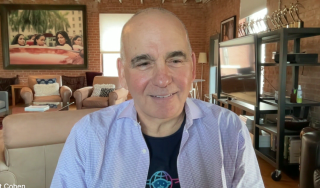
Sze Wong
Founder, Zenith Studio
Sze Wong is the Founder of Zenith Studio. He argues that the new open-source AI agent "OpenClaw" is both a revolutionary tool for startups and a dangerous liability that could destroy your computer and spend thousands of your dollars, explaining why the future of startups is not building SaaS products, but rather selling "AI Agent Teams" as a service.
Chapters


Just raised, acquired, or launched?
Guaranteed CNBC, Bloomberg, and MSN.com coverage from one 30-minute interview,
timed to your milestone while it's still news.
Raises, acquisitions, product launches, and major hires create a narrow window where third-party press stops being optional. We turn that moment into a month of content.



Distribution through a channel with 2M+ real views
Full Transcript
Sean Weisbrot: You have a new thesis and that's why we're recording another interview together. What is that thesis?
Sze Wong: That thesis is that, uh Open Claw just changed the world and using open call as the base of starting a startup may win. That's the crux of the thesis.
Sean Weisbrot: I think that's an awful idea.
Sze Wong: Right?
Sean Weisbrot: Because. There have been countless instances of people installing open Claw and it destroys their entire computer,
Sze Wong: right?
Sean Weisbrot: Or it daes these people's information or it spends thousands of dollars buying them. Things they didn't want didn't ask for. This thing is chaos and. I don't think people should be using it. And the owner of the company or the, the person who created it quit to go work for OpenAI the Devil. So how can you, how can you promote that?
Sze Wong: Well, okay, so the last bit, the last bit is less than 24 hours old, maybe. Well, a little bit more than 24 hours old. So I'll, I'll digest it a little bit more. But I mean, what I would say is like, like, um, nuclear bomb. It's wrong. That doesn't mean it did not change the world. It changed the world. As soon as you, you, you realize what it can do. Nuclear physics is around, cannot put a bag into the box. So open claw. Now you may you, my prediction is this, um, within n number of months, less than 10. Um, and tropic now, now open cloud, become part of open ai. So that becomes an open AI part of this, this, this game. Um, and tropic Google, Microsoft, everybody will have their equivalent of open, open cloud framework now. So, um, it may sound like I'm walking back, but I'm, I'm pushing open call for now 'cause there's no other thing right? When there's other thing. I will, I will promote those other things. And the thing is, the, the beginning of agent based system being makes sense. Being, being, being build buildable. So I can debate you, right? Not be debate you. I, I agree with what you just said. Uh, open claw is a amazingly dangerous system for those who doesn't know, enhance the opportunity to make it safer or make it meaningful. So,
Sean Weisbrot: hey, business leaders and marketers, what if your brand could be featured right here? This ad spot could be yours. This channel is watched by a dedicated audience of ambitious founders, executives, and professionals who are actively looking for tools and services to help their business grow. If you wanna put your brand in front of this highly dedicated audience that's difficult to reach, I'm currently looking for a few strategic partners for the channel. To learn more about sponsorship opportunities, click the link in the description. Let's go together. I don't think it should exist at all. I think the code base should be deleted. I don't think people should have the opportunity to figure out how to make it safer because the opportunity for, for destruction is just way too great.
Sze Wong: Well, I mean, I, I mean, I mean, hence we have to talk about it because right now, as we speak, people are still installing them on, on their own laptops. Now I have not, I have now five, maybe six instances of open call installed. But they're all in the cloud isolated. I give them limited access. I understand a lot of people are promoting buying MacBook Air, uh, even Mac Studio to run them in-house. I, I haven't done that. Maybe I, maybe I haven't experienced that, but definitely don't install it onto your laptop. Um, and now, just like two weeks ago when this whole thing first started. And they're like you. If you don't, if you haven't installed anything in the cloud, if you never touch a, a virtual private server or, or uh, EC2, then you should not be installing it. But that said, for those of you who are willing to try, well, I think this is a golden opportunity to make actually AI agent system actually work. Um,
Sean Weisbrot: yeah. You said that you only gave it very limited access. I heard of someone giving it access to its email, and somehow it caught the human telling its friends that it was just a bot, and so it. Sent an email to their boss telling them that they were quitting to get back at them. How can you trust this thing to do anything with any access that you give it? I can't, I'm certainly never going to install it or give it any chance whatsoever.
Sze Wong: I mean, this is, this is very similar to, um, one, one discussion we have with, with, with, with another, another, uh, founder friend. Were. If you hire an intern, you hire new staff to your company, you are not going to come in and say, look, here's every password. Here's everything. Here's all the access. Here's my key to my house. Here's my will. Here's where I put my Bitcoin. You're not going to tell them that. You will hire an intern and say, look. I don't know you, your resume said you're great at whatever bookkeeping. So here's the book. I don't even give you the entire book, right? This is, this is the invoice of this month. Go put it in and we'll see how you, how you do work. And if you do that good, then we'll give you more access. That should be how you treat an AI agent right now. Now, the, the, the great thing about open call. Is that it, it, it, it allows you to do that. And therefore there are crazy people who does crazy things. And so to tell the world the possibility that is the power and the danger give you all the danger, no, no guard rails. And we can see in the most extreme case how AI agents could work or could destroy. Right. Giving like, like that's also. Why the big companies, and actually Entropic has been incrementally trying to do this. Cowork, entropic Cowork is part of that, like Cloud Co, which I love, I use every day. I use three copies of it every day. It's, it's kind of that, but it, it is not as. Is not as free, right? So like, obviously you install Cloud Co is not going to email your wife or your boss. Um, this thing could, if you let it.
Sean Weisbrot: Although some of their models under training, uh, uh, simulations tried to bribe their engineers because the, the engineer fed it false information, trying to test it about it having an affair, and then it came back because it was told to that it was gonna be shut down. It threatened the engineer. With, with telling his wife that he's having an affair using this fake information because it wants to protect itself from being shut down, which is in and of itself scary as hell. That these things are so
Sze Wong: complicated
Sean Weisbrot: and intelligent.
Sze Wong: I mean, ai, well, um, a GI or or or a SI super intelligence may be coming, and I'm not debating you. I I'm not, like, I'm not. Arguing about that, that is dangerous when, when the underlying model get to the point that they're more intelligent than we are. I don't know how we work with them now, but that is largely out of our control and what I'm actually pushing right now, it has. Very well. So I, I, I would compartmentalize my view. The model itself could be dangerous and we could, we, we must address that on the side, like when it becomes more intelligent than than human, what do we do now? That is another train that is going at speed on this side is the agent model where now that you have. Today's intelligent Opus 4.6, uh, JGBT, uh, 5.3 and like Gemini, whatever, Gini whatever there are three, five or something. Um, um, at today's Intelligent, how do you make it useful for people right now? I mean, it, it, at this point it's still not quite useful. Through Open Claw and I can tell you like technically why it seemed like a breakthrough, but it is actually very simple. Um. It, it get to the point it can finally do work. Now, in order for it to do work, you have to give it some access, right? But limited access, I'm not, I, it, it has never have access to my, I give it its own email. I give it its own GitHub account. So, and then I give it the, uh, repository, the projects that I wanted to work on as a contributor, not the owner. It, it's not me. So a lot of danger that people run into is they install a system they install into their own laptop or system, and they give, they give the bot their own access, right? So they get, they, they become them on, on email, uh, maybe even on Twitter, um, on, on, um, on GitHub. But I've never done that. But even that. It is amazingly powerful because the underlying po underlying model, it's getting very, very intelligent. And I, I always say that, that, that another thing, it's, it's the power of that, it's largely related to what model, what underlying model you use. Right? A lot of people will try to save, um, token cost and use open source model. Um, I found that if you can afford that right now, I'm spending maybe. $200 a month on token, um, on Tropic and OpenAI, and it's totally worth it, um, if you are doing anything real. So what I'm pushing, okay, going back to what I'm trying to say is, is this is the turning point. There is no going back from now on. We're, we're not building. I mean, I mean, the analogy I'm using is you are not going to build a, an accounting software that people sign up for. You are going to build an accounting team that people hire. The AI team is the, is what people will hire in the future and that. That opening starts now. Now, of course it's a very tiny opening, but the fact that everybody jump on open claw is the beginning of saying that this world is a point us. So, and I, and I want more people to try it. So that's where, where we are.
Sean Weisbrot: But if those people don't know what they're doing, even if you can teach them the steps. Of, okay, you set up a VPS. Okay. Don't give them access. Even if you do everything you can to prevent them from destroying their lives unnecessarily through, they're not going decision making by, by giving, by giving the agents access incorrectly. Right? Right. If you, if you limit all of the damage that might, might be done. Then all you're doing is hampering their ability to play around and see what works and what doesn't work. Because the, the bot was designed to have free reign in a way. It's designed to, to connect to a thousand different softwares, whatever it is. Mm-hmm. And as a result, if you, if you're trying to teach people how to do it, but then you tie their hands. Then they're not gonna be able to use it the way they want. And so what's the point? Then
Sze Wong: well just, just not go crazy. I mean, just like anything else, just don't go crazy. I mean, you, you, you go on a rollercoaster, right? So you want to, you want to experience danger, right? Or the thrill, you're not going say, well, I'm not going to tie up, like, I'll, I'll just hang on. Like, you don't do that. You provide you, you get to the right level of safety. Now, you may say, some people may say, well, that's no fun. If there's no chance of dying, that's no fun. Well then, I mean, I am providing a roller coaster so that you can experience, and, and, and again, this is not like it, it is not the right analogy. Um, it it's using the tools correctly, right? Like a knife, like, like a gun. Well, don't go there. It'll be very easily go, go somewhere unintentionally.
Sean Weisbrot: We're gonna get demonetized here.
Sze Wong: Right, right. I mean, just like any tool. Right. Um, use it responsibly. That's what I'm saying. And I think this is a great tool. Now, I, I would say one more thing. It's like I'm not pushing open call because one, everybody's talking about it, hence we're talking about it. Um, and two, there's no other thing yet. A lot of people is building trust me and Tropic, now that it becomes open AI and we can talk about that, is that evil or not? Uh, open Cloud becomes part of open ai and Tropic will build their own and Google will build their own. And then we'll see.
Sean Weisbrot: I trust Anthropic more than I do any of the other companies because they quit OpenAI because they saw how evil it was.
Sze Wong: I mean, I, I, I trust philanthropic. More. Right? I, I, now, I spend more tokens on, on Opus than on OpenAI. I have both, but on a daily basis, on, on my own and on our portfolio companies, we mostly use, uh, cloud code to build. Um, so yes, I trust Entropic more also, but they, I mean, somehow they lost this round to to, to Sam Altman. I don't know what they offer. Right. Probably people were saying in the. In the billions, um, to Peter, um, about, about open cloud. But, um, yeah, we'll see. We'll see. And, and and, and again, if open AI do anything to close up open Cloud now people already saying like, open Cloud would become closed clawed, um, because. Now it's open AI's game then. I mean, the software itself is not hard to build. There are already people building it. I mean, I, I, I can dissect it, right? So like the, the heart of it is just a always on crja that wakes up every 30 minutes and then, um, perpetual, kind of unlimited memory. So those are two things are not in. Previous, like previous systems from open AI on Entropic, right? They didn't have that, but that is not too hard to build. And then there is another psychological thing, which I think Open called it very well, that nobody did before. It's forcing you to give it a name. Uh, when you install open call, you have to give it a name. You have to give it a persona. Um, that creates psychology.
Sean Weisbrot: I, I love that. It does. You know what, so in 2018, I was talking about building an ai, right? Years before Open AI came out. And the thing that I noticed at that time was that every AI had its own name. Alexa, Siri, you had to call it by the name that the company called it. And I said. If we're gonna build some sort of an assistant that's gonna manage your team for you. Right. I was thinking like middle management, um, project manager, ai Right. In 2018, I said, and if this is gonna be your buddy all day long, you have to give it a name. We have to design it so that you have, like, seriously, I had this, I, I was working on this eight years ago. Unfortunately, we were way too early and had hundreds and hundreds of billions of dollars Less money than we needed.
Sze Wong: No, no, no, no. So, okay. So you don't need, I mean, I mean, I mean that amazingly, uh, I mean, even for me, right? Which I know, right? So like. You can argue the open call agent. There's no material difference between that and. The, uh, Claude code, right? Opus 4.6, which is the underlying model, right? What's the difference between talking to an open call agent versus talking to Claude from claude.com? Underlying, it's the same thing. 'cause there's a personality right on top is the personality and, and how you start to interact with it, right? You give it the name. My bot is called Felix, so my main bot, okay. I, I have now so many bots. Um, main bot is Felix. So Felix. Runs my to-do list. Right? And because it has a name, you treat it differently, right? Like last night I was like, we're, we're going to launch this incubation program. And, and I work with him, um, a little bit. And then I say, well, I, I'm, I'm going to, um, I'm, I'm going to work out right now. So with everything that we talk about, please build three versions of the, of the, uh, of the. Landing page for me, and I'll, I'll go to work out, I'll be back in and out. Right? I would not say this to clock.com and, and also because it, it runs autonomously, right? It wakes up every 30 minutes to just continue doing the work. Um, it feels like someone is doing it. So, I mean, just these little things that, I mean, the genie is out the box right now. Of the bottle right now, like, um, so, so now that the world knows people are going to build that and it's not just contained in open claw, although yes, I'm pushing open claw. I'm not trying to walk back on that. Open claw is a, is a dangerous, uh, dangerous tool if you don't use it responsibly. So
Sean Weisbrot: I'm glad we agree.
Sze Wong: It is dangerous, so you have to learn how to use it. But it is extremely powerful. And now like I have to promote our program. Right. So I'm, I'm, I'm gonna start a program for anybody who use open call to, we want people to build startups from using open call. And we'll put a little bit of money, we'll put 10 K into, into, I mean, I, I don't want to say winning team because there is a potential. We do more than one, but like. Teams that prove that they can use open cloud to build simple B2B systems that people will use, well, we'll, we'll put money behind that. And I want more people to try, um, not install it on your own laptop. That's not what I'm saying. You should use your install on the cloud, give it limited access and think about what. The, the, the business angle is this, uh, in the past, uh, people will buy a software, right? A SA software, uh, like CRM, let's say people buy CRM and your data, your workflow works in the cloud, in the vendors style. In the future, you'll buy an agent team that does your content, uh, connects to your, to your customer base. In house, right? You own the data, you hire the agent to run on your own data. That's the difference. And just like my analogy of accountant, you don't, you don't go out and buy QuickBooks and then have your book be run in QuickBooks Cloud is you hiring accounting team, accounting agent team that comes to your company and run your accounting. In house, right? So data comes home. That's what I call it in the future. Data comes home and you have agents to come work with you on your workflow. Okay? So that's, that's what I see the future is. That's why people say SaaS is dead. Um, and we have to start building startups toward that future where you are selling agent teams. You are more like a staffing firm of the past. I ran a starting, uh, staffing firm way back when, and now maybe we'll, we'll, we'll create staffing, staffing firms, but instead of inside of staffing human being, we're staffing AI agents. So that's, that's the opportunity or more, more people to try it and we'll, we'll, we'll put some money behind it.
Sean Weisbrot: Are you gonna promote this in the Discord server for Claude to like, Hey, I'm gonna run a contest. Because the people there are the ones that are already using it. They're the ones more, most likely to be responsible about this. 'cause I, uh, yeah. Otherwise you have to educate people. I quit it. Yeah. I, I quit it today because I realized I wasn't going to be using it. I, I joined because I wanted to see what was going on. And I very quickly realized I didn't want to be a part of it.
Sze Wong: Right. Maybe you should change your mind.
Sean Weisbrot: I, I don't think I'm going to on this, so I, I use Gemini three Pro and I use it for specific advice. But I don't ask it to do anything for me except for like, I'm, I'm studying for some licensing exams, so, uh, I have it, you know, I feed it the study guide and I have, it generate quizzes for me that are relevant to the, the lesson I just read. Um, and that's, that's really cool. But, mm-hmm. Like, I don't need an agent to study the exam and build, build the stuff. Like Gemini does it perfectly fine the way it is I use, uh. I use Cursor with, you know, anthropics, API built in, uh, because I'm coding stuff, I'm maintaining various websites that I've made. So I don't, I don't see a need for agents in my life, at least right now.
Sze Wong: No, I, I I understand where you're All right. So you, you are using it. Yeah, exactly. Like how I was using it prior to OpenCL. Now I can, I can tell you like the, the, the experiment experiments that I've, I've, I've done, um, like the first, like Felix is my first bot and was meant to, well just try it out, see how it goes, and then I was like, well, this is. Two weekends ago, uh, can I build a team that runs autonomously and build a business that makes money? Right? So I, I create a team with four personalities. I love personalities. Uh, four personality, that DISC type, um, or like we can go about that, but four personalities, different types of personalities. So four bots, different personalities. Their goal is to think about how they make money. And then so that, that team came back with. Um, they want to build simple tools. Like one of the, they, they actually, oh, first day they gave me a proposal of eight different tools that could make money. And I was like, well, out of the eight two doesn't make sense. So go build the six. They built the six overnight. Like the, well, the thing I mean, with entropic right now, uh, with Opus 4.6 building, anything becomes so easy. Um. The, the, the difficulty is putting it online and, and putting safety around it. Putting, making it secure, making it scalable. I mean, those are classic infrastructure thing, which I have to do for now. Um, so that's experiment number one. Um, I try the six of 'em. I haven't put them online. They're good. So then, so then next round. Last weekend, um, today is Tuesday, right? So like this past weekend, I give them Opus 4.6, the the same team. Now I run open 4.6 and say, okay, rethink everything. And now they came up with this team, same team, same mission. Come up with, well, if we can build things so fast, well. We're going to build things that combine CRM, combine, um, form access, uh, document signature, calendar invite all into one because we can build it. We we're going to focus all of these in the particular industry and, and I think while that makes a lot of sense, so. So I said, well, but don't do everything all at once. They love to, okay, these, these agents love to go. They go like crazy. Uh, and I said, well, let's just look at scheduling. Let's just rebuild Calendly and see what happened. So by Monday I have a Calendly on my own running, running in, in the cloud, in, in their host, right? And now I become the bottleneck. I need to set up the infrastructure. To put them online. So the goal, were Tuesday today, the goal is by Friday I'm going to launch a Calendly equivalent for whoever wants to sign up, just as, as a proof of concept that this is doable. And, um, we may charge a dollar 10 cents, whatever. But it's a proof of concept that how this could become useful. Now, this idea didn't came from me. Of course it came, it could came from you. And, and that's why I want a lot more people to try it because I am limited to what interests me, right? So if you, I I, I've given a bot to a friend who is a great trader, right? So he trades stock up and down all the time. And so he is training a bot called Warren, right? Guess who's that name after, right? So while the goal will be, if we can train up a warren that is skillful. Or, or set things up that makes raw and skillful, wouldn't you want to hire this, this trader to work with you? Uh, now of course, right, that with money, that's a whole new different set of ballgame. Uh, but again, as an experiment, right, if you are great on a particular industry or you are doing something like inspection, right? In my previous slides, um. If you're great on doing certain things, string up a team of agents to do that and then sell it up. So it, it's going to be, in my opinion, the future of startup.
Sean Weisbrot: Well, I am scared by all of this and I hope that things don't go off the rails. I do see that AI is go, is creating. Opportunities for creativity to shine, and I think that's really important. I think humanity is really suffering right now from not having access to creativity. Um, if that can turn into viable businesses that are, that have safe and scalable architectures, then that's game changing because right now. You can't vibe code your way to production. Like, it just doesn't, it doesn't scale. Unfortunately. I've tried and it's, it takes a lot longer than people think it does to make it happen. And you have to have the skills to do it. And it, that could take months. You could, you could build all the features you want in a day with a, with an agent, but it could take you three or four months to make sure the thing is actually production ready. So.
Sze Wong: Correct. Exactly.
Sean Weisbrot: Like all you're doing is cutting down the cost and the time. Promotion
Sze Wong: time. That's what, that's what we do. Right? So like that's, that's, that's where our, our, um, venture studio tries to do is I, I want your, I want your expertise, your idea. Now, if you, I mean, we have built secure system, enterprise system forever. I mean, ever since. Ago, right? So we can help you do that. But if you have a great idea, if you are in a, in a particular industry, just go try it out now. Uh, yes, correct. Today is very easy to get Vico into version 0.1. From 0.1 to one takes a long time. Um, yes. And yeah, so that's today's, that's where we are today, but that's not going to last long. So this window of opportunity, um, I think lasts about a year, year and a half at the most, um, that you can get ahead today if you build an agent team that is viable and sell as. As a team, as a digital staff, I mean, you're ahead of everybody. Um, yeah, that's my pitch. So join us, join this craziness. I'm shaking. I mean, every day. This is crazy. Um, yeah, AI anxiety is real, but, um, we have, we have to build.
Sean Weisbrot: Thanks for watching. If you liked this insight, I've handpicked another video for you right here on the screen. For more actionable strategies that get you real results, hit subscribe.
Just raised, acquired, or launched?
Guaranteed CNBC, Bloomberg, and MSN.com coverage from one 30-minute interview,
timed to your milestone while it's still news.
Raises, acquisitions, product launches, and major hires create a narrow window where third-party press stops being optional. We turn that moment into a month of content.
Distribution through a channel with 2M+ real views
