
60 Days Down to 60 Minutes Changed How Shelton Thinks About His Own Team
What if the key to unlocking your team's potential wasn't hiring better people, but simply removing the friction slowing them down? Shelton Mercer III joins Sean to share how a shift from a 60-day process to a 60-minute one completely reframed how he thinks about the people around him and what they're truly capable of. You'll hear Shelton break down why power is less about authority and more a
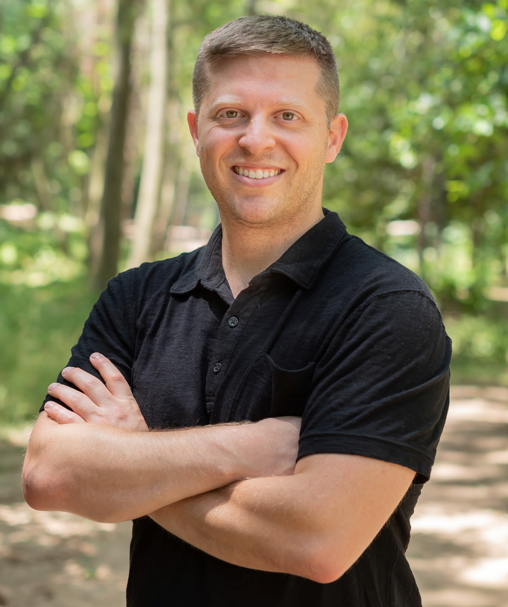

Guest
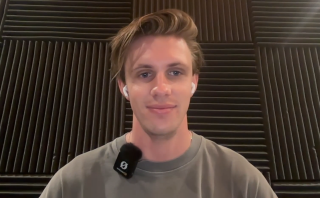
Shelton Mercer III
Leader in Cross-Sector Collaboration and Urban Development, Activate
Shelton Mercer III is a cross-sector strategist who brings together government officials, Fortune 100 executives, capital markets leaders, and philanthropists to drive long-term community outcomes in major cities. He is affiliated with Activate, an organization leveraging AI to streamline complex reporting and collaboration processes. Shelton is known for his work convening high-level leaders around major civic opportunities, such as World Cup host cities, to create lasting impact by aligning diverse institutions around shared geography and common goals.
Chapters


Just raised, acquired, or launched?
Guaranteed CNBC, Bloomberg, and MSN.com coverage from one 30-minute interview,
timed to your milestone while it's still news.
Raises, acquisitions, product launches, and major hires create a narrow window where third-party press stops being optional. We turn that moment into a month of content.
Distribution through a channel with 2M+ real views
Full Transcript
Sean Weisbrot: What's the hardest thing about going around talking to governments and leaders and trying to get them to collaborate in a way that's good for society?
Shelton Mercer III: Well, I I say that the saying I use is that, philanthropy is limited and government is broken. And I say that actually to policy leaders, and and they all look around usually sheepishly at first and maybe a little nervous, but they admit that we have limitations in all of our institutions. What we are doing is bringing a new way of thinking and, some new energy into the room with with leaders of all, genres. So when I have policy and government leaders, they're in the room with, Fortune one hundred, c suite leaders with, some high net families with, leaders in the capital markets, but also leaders throughout, humanitarian efforts and community leaders. Bringing them together in one room kinda levels the playing field. There's a parody that I like to, bring into the rooms that I'm in. There's a power shift. Power is not just about authority and position. It is about influence and the ability to make impact. And so, that that that mindset and my experience in working with those leaders throughout the years allows me to have a real sense of rapport, first of all. We're not here to bash them. We're not here to tear them down. We're just here to tell the truth. And then through that truth telling, we're able to get to some really great, ideas that turn into opportunities. And right now, we've been meeting with leaders in America around the that have host the World Cup, cities where the World Cup is being hosted this summer, and the ideas to to have some permanence. How do we create some real energy, channel the investment that's in those cities, and use that to provide some really, long term outcomes for the good for the people who live, work, and play in those cities? And when I can have top level leaders who are in a city like Philadelphia or New York or Boston or or Seattle or Kansas City even, which are very disparate markets, when they're talking about trying to solve problems in their in their cities, and they're looking at opportunities like the once in a generational opportunity that a World Cup, hosting or an Olympics brings to a city. Then we start to mitigate all of those hurdles and those barriers that are usually there, and we can get past the things that, yeah, we know, again, government is fragmented, philanthropy has limitations. But with the collective power leaders coming together, it doesn't become an us versus them. It becomes a we, and that's the win that I'm looking for all the time.
Sean Weisbrot: I know that American politics is really built on these exact leaders giving money to these exact politicians to put forth their own agendas. How do you get them to be in a forum where they're actually working towards the benefit of the people rather than just themselves?
Shelton Mercer III: Yeah. I'm I'm not a politician. I'm not a political fundraiser. I don't claim a party affiliation. I've been an independent my entire life. And so for me, it's not about the that as much as it's about there is a base base level of humanity that I am pushing for. I talk about the the the virtues that we are trying to push in leadership so that we can get to outcomes have nothing to do with who's got the most wealth and who has the highest position in the land. It is about that that that parity and equity that we can create because of the unique position. There is, of course, a lot of money in politics, but there's a lot of money in every place. There's money in sports. There's outsized wealth in the capital markets, in the corporate spaces. And even when you get to to global philanthropy, I mean, the levels of giving, and dollars that are being spent to try to solve issues in our world are are immense. And so when we can move past some of those and get to the base level of you're a brilliant leader, I'm a brilliant leader, we live, work, and play in the same geographic region, let's do things for this place that we say we we care about that are gonna be meaningful and and have more permanence than, the type of, one time one off types of things. I mean, you look at the the headlines, if you recall some of the things that have happened in the past with the Olympics or with the World Cup, you've had waste, fraud, and abuse. You've had, venues being built that become parking lots and overgrown, places of of of waste in five years, you know, worker human rights abuses, all those things. We wanna mitigate those and get to a place to say, you know, this is a celebration for a region to have these major events. This is a way for us to do things. There's there's there's opportunities. I I recall being, with the the city of Phoenix and the mayor there, some years ago. And when they were able to get the Super Bowl to host that, part of their goals was to get a a light rail line, that is train line from the experts, the the outside of the city into downtown, and and widen their infrastructure for their highways so that they could ease traffic congestion. Those things get caught up in in in politic politics and and and and infighting for years, but something like a pivotal moment like the this city is gonna play host to the world has a wonderful way of of of of motivating leaders to get something done. We try to take advantage of that, harness it in ways that don't just become vanity sessions, and really push forward initiatives that are gonna have meaningful outcomes for the people, for generations to come.
Sean Weisbrot: So when you do these sessions, is your goal to get, like, the government and these companies to come together and spend money on these initiatives? Or is there something where you have other people that you're working with that that say, hey. That's a great initiative. I wanna join you, like, some sort of nonprofit or, like, how do you because, like, you need money to get stuff done, and America is notoriously expensive to get anything done. So,
Shelton Mercer III: Sure.
Sean Weisbrot: like, how do you get it over the line from idea to execution, or is that not part of your actual kind of self stated responsibility with this?
Shelton Mercer III: Well, I've done bunch of these initiatives over my my career, and so I know fully well the entire kind of lifeline or life cycle that these things have. What we decided to do with Activate is not to get into I don't have to be the one to do it. Our role in our team is to be the ones to spark these new ideas, to convene leaders in some new ways of of curated connectivity that are more that are beyond the whole kind of talking head. Let's get a committee together, and let's waste a lot of time pontificating and bloviating. We get one city, one day, 100 leaders, and we lead them through a rapid ideation that we've developed. We've had an entire framework where we can run eight round tables at one time focusing on different issues like a region's economy strength, the talent, the infrastructure, the design, the innovation in a in a region, and have those leaders come together as peers, ideate on initiatives that can be enacted in twenty four months that have the ability to propel us to twenty five year plus outcomes. That becomes the our remit. And so from there, we take and we've built a, AI tech enabled platform that creates outcome intelligence. And so Activate becomes not just that one day and that 100 leaders, we now have some, permanence because we've provided some actual data of the cities that that we've had these ideations in, cross indexing them with things that really work throughout the world. And so we're using the power of of machine learning and generative AI to produce these robust readouts that say, you came up with eight ideas. Here's how they rank, and here's the top three or four that we feel like you should go after. From there, we hand that to those leaders in that city, and it's beyond politics and policy. It's corporate. It's philanthropic. It's community leaders who are coming together to say, we love this place. Are there two or three d's of these that we can take on? And then from there, we say, we'll quarterback that with you, but we're gonna hand that to you and allow you to have a really strong playbook and some, great initiatives that you can launch. And we continue to spread ourselves throughout the world because we believe that I believe that a wider play right now is necessary, and and and we don't get bogged down into all the history and the the the the bureaucracy of a various of a region, but we give them something that's almost turnkey that has really first world thinking tied to it. And it uses my passion about, that that it's more important to get outcomes than to just have outputs and activity.
Sean Weisbrot: What are some of the ideas that this outcome generator gave you that you had to present to someone? You're like, oh, okay. And you presented it to the people and they accepted it.
Shelton Mercer III: Well, you know, right now, there's a there's a couple of several pieces down. I mean, we we spent some time in Atlanta last year, with our partners Greenberg, Troward, and had leaders from the, transportation sector as well as, leaders in the corporate sector. Atlanta's home to a lot of corporate entities. I I will our report list who who was there, but one of the issues was refurbishing their their their light rail line, their MARTA, high speed line. They have a 104 miles of track, and being able to to, enact electric buses. That idea came out of our our ideation. I understand that they have enacted a bunch of that ready for the World Cup coming to them. That is happening in in in, in in this summer. In San Francisco, as we hosted leaders downtown there with JPMorgan, San Francisco has hosted both the the Super Bowl in January or February. They have the World Cup. Last year, they had the NBA All Star. There there's folks that are saying, why shouldn't San Francisco go after an Olympic bid again, as a city that has shown that can host major events? And so I think that those things become some of the wins. And, of course, again, as I said, there's a lot of those, ideas that are on our in our Activate site. Our focus now is how do we get more leaders around the world coming together here? And as these those these ideas can get spun up into initiatives, that is empowering for them. What I wanna do is be able to collect create that collective and give the energy of a of a really world class platform that says, this is the feasibility of of this idea, and we can turn that into an initiative, but it takes the willpower and the resources of the folks in that region. And we're at those stages where we we're able to get the folks together, come up with the really great ideas, have that energy, and we're moving into that phase where we now can launch initiatives with some of these cities and see the impact. I think post World Cup, we're gonna be able to see how many of these get adopted, and, we'll be tracking all the way and reporting out, and hopefully, locking arms with leaders there to help them push these ideas into, bona fide initiatives.
Sean Weisbrot: Have you ever had your outcome generator suggest, like, moving people out of the city to make the city better? You know, like, some of the weirder things that people, are afraid of that AI is gonna suggest. Like, oh, you don't want homeless people? Just dump them in San Francisco.
Shelton Mercer III: Yeah.
Sean Weisbrot: You know?
Shelton Mercer III: Well, the good thing is that I'm a proponent that AI has to be, mitigated with HI. Artificial intelligence meets human ingenuity. So we don't leave the machines to do all the the the thinking and the learning for us. We actually have an amazing team. I have several amazing folks. My team, Rose Cameron, my chief brand and anthropologist is brilliant at this. She's worked with corporations all around the world in governments. And so we take all the stuff that we get from the machine, and then we filter it through some of the experts that we have, on our team, making sure that we're not just going to have that kind of a hallucinations that you see in the Gen AI world. But here's where the AI stuff is so important. It used to take us sixty days to get all of the data. We record all of the pitches from our leaders, and then we would take them, and and our group would listen to them and pull out all the highlights and try to do some, actual cross referencing through things that are working. We now take that sixty days that is down to sixty minutes where we can use the power of technology to get all of that that coalescing, all of that, stare and compare together. And now our team can take over and say, how do we rank these? Are these accurate? And so something like that, dystopian things that don't have humanity involved, we're gonna outright reject that. That's not my values at all. I am about people. The machines and computers and technology are used are should be used to help improve the lives and enhance the lives of folks, not to put misery into the world. And so, anti the Terminator dystopian, we become the gatekeepers. And it's important and incumbent on me and my team that we don't get so wedded to a technology tool, which is great, but that we are, are buffeting that with the human ingenuity, with the empathy, to make sure that we're providing equitable solutions, not just things that are gonna increase someone's bottom line or enhance wealth for a certain group of individuals.
Sean Weisbrot: Yeah. I can't say that I trust Deloitte or, you know, those other big four to follow the same kind of, path to be trusted with, like, not implementing things that are clearly bad for humanity. So I'm glad that someone is thinking about this. And something that I've been really worried about like, I use AI every day, and I've been automating a lot of what I do. And I absolutely love what automations are are enabling me to do. But I often worry about the impact because, for example, I had a designer, and the AI is able to produce better work than the designer faster and cheaper. Like,
Shelton Mercer III: Yeah. Yeah. Yeah.
Sean Weisbrot: you know, it used to cost it used to take three days to get a thumbnail back. The AI can do it in a minute, and it's better quality. And so I had to let the designer go.
Shelton Mercer III: Yeah.
Sean Weisbrot: And, like, now I see people making videos about how to
Shelton Mercer III: Yeah.
Sean Weisbrot: automate your video editing pipeline. And I've got a person I'm working with to do my video editing, and I'm like, how much longer that does this guy have an opportunity to work? Like, I just feel bad. There's like, I don't wanna let people go, but, like,
Shelton Mercer III: Sure.
Sean Weisbrot: capitalism dictates that I need to do the thing that saves me the most amount of money and produces, you know, the same quality or better. And I know that this is gonna impact everybody, you know, even the wealthiest of us. So I know you said that you have this human ingenuity to protect people from the AI's potential dumb ideas. But how do you make sure that the implementation doesn't hurt humans in the process of being implemented to serve the greater city or region because automations are going to hurt humans, and AI is going to hurt humans.
Shelton Mercer III: Sure. No. I I think you've raised some really valid points. I mean, I'm dealing with a issue like that now as well around my social media. Right? We having a full time social media manager is no longer necessary. It's it becomes an expense, on your in your burn that you're looking at saying when when we have so many tools that can do this, faster and sometimes better, more efficiently, and definitely more affordable, I you know, there's a part of this that I think this is where I love being involved in the work that I do now, and frankly, across my entire timeline, every one of the companies that I've started, we have sought to to meet a issue or to solve a problem or a challenge, but to do it in a way that I call virtuous and equitable. And I've been at times, I've had both advisors and investors question, what why we wouldn't take the path of least resistance or to take the path of more wealth and and and more greed. It's a personal, value that I have. I I believe we can that proverbial do well while doing good, it it's beyond that. It's about an ethic. It's about an ethos that says, I don't have to live in a zero sum world. My world is definitely something that is, it it is multiplicative. I wanna be an additive to every single person I I I touch. And what I have the ability to do now in my positions is to be infectious with leaders of some of the largest corporations in the world, some of the wealthiest families in the world. I just spent, some time with a a grandson of a very wealthy family yesterday, talking through some things that we're working on on the and and and, and getting to hear the zeal and the passion in him about doing something that was beyond trying to make a few more bucks, was just so refreshing. And so we take that to scale where it is, again, yes, there are some realities. And efficiency is and technology is something we all wanted. Right? I mean, there there's no way that we wanna go back to the time when you had to have a pager, a PalmPilot, a big old Dell laptop, or one of those brick Toshibas I used to have back in the day, plus my home computer. I mean, I do everything on a small phone that that that my life becomes better. Here's where I think the the the the that we need leaders like you and I. If we are building in this world, the humanity of it all matters. And so what what I'm doing with some of my team is saying, we're gonna upskill you or we're going to cross skill you. You have amazing talents and and skills in these areas. We can automate some functions of your role. I mentioned my anthropologist. I don't need her spending sixty days trying to get a report done when she can get it done in sixty minutes. What I do need, though, is the expertise of her twenty plus years of experience being able to take it to new levels, have time to think for she and I and the team to have time to ideate around these things and not spend copious amounts of hours trying to generate things when we can use the human ingenuity that we need. So I think you're right. Of course, we see the headlines. I mean, we saw Meta's laying off 10% of their workforce yesterday. We're gonna see more layoffs. Amazon's just been doing some more cuts. All of these big firms are gonna continue to try to find ways to cut corners. I think there's some of us who can say, well, you know what? I don't have a a workforce of 10,000 people. I got I got a core team of 10. How do I ensure that those 10 folks can take their efforts to the to the next level and that everybody we work with has the type of ethos and shares our value. So, you know, I don't wanna be pollyannish about it or just kind of like, hey. I'm the eternal optimist. But I do know that, you know, my world, has vestiges of success based on me looking forward to outcomes that I can produce. And if I can't do that with a way that's going to be additive to humanity, I'm gonna reject it outright.
Sean Weisbrot: Have you ever considered starting an initiative to upscale people? Because I've thought about this for the last five years, and I've known that all of this stuff is coming. I'm sure you have as well. And I know that most people don't understand. Like, I have conversations
Shelton Mercer III: Yeah.
Sean Weisbrot: every day with people. You know, some of my friends work for other people. Some of my friends own companies. Some of my friends invest in companies. And everybody has a different view. The problem I see is my friends that work for other people aren't really using AI. They're not really talking about it, and they're not really thinking about it. So when I bring it up and I ask them, are you using AI? And they say no. I get worried for them. And I I legitimately think they're all gonna lose their jobs in the next few years. And so I feel like there needs to be something. I don't know how to do it, but I feel like someone who has a lot more a lot more of an ability or a network or, means, I I think, like, I think that's where philanthropy should be right now. It's like, how do we prevent people from losing their jobs, or how do we find a way to help them learn the skills that they need so that they don't need those jobs?
Shelton Mercer III: No. I I you you nailed it. I part of I spent a lot of time in that direct hands on, human type of work. You know, when I was in working in community organizations and faith organizations and my hometown Philly and other places in The US, Spent a lot of time directly with people, running programs, ideating programs, funding programs that would help people directly with whether it was upskilling or, quality of life. What I find what is effective for me now is that while I do have some some causes in places where I am serving on boards and helping with that, here's where the superpower happens. I launched my first innovation hub with the University of Pennsylvania in 2036, and that place is a thriving hub, 23 acres. It's robotics and life sciences and biotech startups that are now going into scale up mode, and it's a launchpad for a lot of really great, ideas that turn into, companies and enterprises. What I do is I build in that type of equity, if you will, into the things I do. So when I take on a project like that, I'm gonna tell an Ivy League, institution, I will lead this, and I have a turnkey system. The Mercer Innovation Outcomes System is a playbook. It does everything from design to of the space to design of the ecosystem to financial solvency and profitability, in a few years. I'm gonna, license that to you, and our team will run it, but you've gotta agree to some things. So that that, center itself is adjacent to a neighborhood that is called the Forgotten Bottom. And I didn't name the neighborhood. I hate that on the on the Google map, it's called that. And what we did is say, we're gonna make sure that we can not that that that neighborhood should not be forgotten. It should be not just discovered. It should be uplifted. And so young kids who are in who have interest in STEM, kids in in that are, whether they're high school, college, or even early grade school, are given access to that center to learn about robotics, to learn about AI, to learn coding. We host, adult coding classes in that same space where some of the big companies that are launching with money from Qualcomm and from, Johnson and Johnson that someone who maybe used to be a, a machine operator is now learning the code and is now learning the vibe code because we know that even now, the coding world has started to shrink where AI has taken over that. So there's a there's an ability to do this in a way that I think is scalable rather than the kind of, the the hands on model. There are a lot of hands on operators. We're funding and, coaching and and and, accelerating organizations that are helping folks that live and work in communities learn how to use the Gen AI tools, folks that are in middle management. And there's an wonderful initiative that, I've been a part of that, I'll be meeting that leader later today. They're working with corporate leaders, those in a c suite to say, you have an entire, level of management that don't you have college degrees. I mean, if you're in a place like a a a a company and, you know, a major company in the world, there are a lot of these trade companies like the UPSs of the world and the FedExs and some of the airlines where folks have skills, but they didn't have college degrees and so or an advanced degree, and so they're locked out of the management track. What if we have some, programs that are gonna help those folks that don't have the credentialing, but certainly have the skill set, certainly have the expertise, get in a place where they can learn management skills, and be considered, by the leadership to be on the track to go to the next rung rung of power, despite not having those credentials. There's a lot of programs like that around the world, and certainly right now, we need more leaders. I think for me, it's about I wanna be able to to operate at that level of decision makers, as I found that having an alternate voice in the room of power is a way to help us ensure that power is not abused and that we're not locked out of the future, because there's a small group of elite folks who are making all the decisions and have no connection to what real folks are going to, and, people get left out. I can't change everyone. I can't solve every problem. But I can do one thing about some of the issues that are in front of me, and that's what we try to do every day, man.
Sean Weisbrot: I certainly appreciate that. I didn't know that about you, and I I like that a lot that you've got that initiative going. And I wish more people would be involved in that. I would love to be a part of something like that if I found something. You know, I've been an educator my whole life. I was actually a teacher in China for a number of years teaching kids. And it was a very beautiful experience even though it was extremely underappreciated and extremely underpaid. But the point is I had that experience, and I would never change that for the world. And even now today, I'm changing what I do to be more of an education style business because I just I feel like I suffer if I'm not educating. I feel like if I if I'm not using my knowledge and experience to help people, then, like, what the hell am I doing and why am I doing it? Because I've done consulting, and I've made a lot of money doing it. But so many times, I just feel like they don't appreciate it, and they they don't intend to implement it. They just wanna be seen as if they're trying to make change. And I feel like when you educate, you're actually making change for people.
Shelton Mercer III: Yeah. I think I mean, listen. I I love your your your you have the type of mindset I wish more leaders had. You know, it goes back to I spent so much of my life, and I still do. I mean, I'm to me, having the type of duality or sometimes triality, if that's a word, where we're focusing not just on profits, but people matter. I spent a lot of my early years traveling the world helping to solve problems. I mean, we we were we did so much stuff for Haiti earthquake. I went to Haiti a dozen times before you couldn't go there anymore after the Haiti earthquake,
Sean Weisbrot: Right.
Shelton Mercer III: taking people there, helping with clean water and and reconstruction and and hunger and all those things. And so there's a passion around that. Like, for me, it's more than just can you write a check. Are you willing to get on a flight and go? And are you willing to be in a place where it's hot and the water's un un potable, and you've gotta figure out how to get, you know, the dust out of your throat at the end of the day? That type of experience, the visceral nature of that, it makes it it takes it from that kind of mythical or mystical place for me, and it's real. And so I bring that into every boardroom and every c suite that I go into. It is a competence for sure about being a a a high level leader who has run and built companies that are on par with anyone, but also someone who has rallied thousands of people in a city, millions of people worldwide to do something about a major issue, whether it was the Haiti earthquake or the tsunami in Japan or hurricane Katrina or just the fact that we've got this real issue where American cities are hovering with high rates of poverty, that kids are not gonna have a a future a chance at a future. I can bring that into in an authentic way, while we look at the the the bottom line that corporations wanna solve or even that, some of the large philanthropic groups that have major, major overhead. How do you channel those resources into something that's better? I'm I'm really about that, and I think, you know, the the the balance between how much we wanna make change and how realistic we have to be about the way it happens is something that I'm fascinated and obsessed with, and I'm still always experimenting with ways. How can I compel a group of leaders to see the value in going a little bit farther beyond their, bottom line and considering humanity and equity in ways that are gonna be beneficial to all of us? Because the fact of the matter is when we talk about equity in business, you and I, if I were gonna invest in your company, you're gonna write me a a a a a a, shares, and you're gonna say, I'm going to give you a certain portion, grant you shares in my company because you are investing in me. We never talk about human equity that way. We talk about it as a taking that people who are at a different strata of society, if they are being invested in, we don't think about how much they can invest in our society if they have viable lifestyles, if they have a future that they can envision. Their contributions can be so much more outsized when we look at and flip that mindset. We're not just taking and giving. I hate these things where people talk about, well, we don't wanna do welfare for these folks and and all these set aside programs. You know, you and I both know that corporations are the biggest recipients of welfare, And, all my corporate leaders know that, and they might try to you know, we may argue with it, but we know it's true. I just wanna treat humans the way that we treat corporations.
Sean Weisbrot: Well, corporations are are are people after all.
Shelton Mercer III: Well, yeah. A poorly. Right?
Sean Weisbrot: I I've been getting more involved with a nonprofit called Pencils of Promise. They build schools in a number of countries, and
Shelton Mercer III: Mhmm. Very familiar.
Sean Weisbrot: I've I've been making it more of my mission to donate to them, and it costs about 50,000 to build a school. It takes about eight or nine months to build a school. And I've been talking to them about how I can build a larger campaign and and donate some of the profit from my business as well as, hopefully, get the people in my network to support that and to make schools happen as well. And, when I was talking to them a few days ago, they're like, so, there's an option to, like, go on the ground and see the school. Like, you may not see your school, but, like, maybe you'll see another school. But, like, is that something you'd be interested in? I'm like, hell, yeah. Why do you think I'm doing this? I wanna go there. I wanna see the kids. I wanna see the community because something that's so special about Pencils of Promise that people obviously wouldn't know because probably most people haven't heard about them is that
Shelton Mercer III: Alright.
Sean Weisbrot: they have this really unique system where they require the government to the government of that region, that country, whatever, to supply the teachers and the books and and the curriculum and all of that. And then they require the parents of the community that the school is gonna be built in to build the school with their bare hands. And then Pencils of Promise brings in the money and some of the architectural knowledge. And and so, essentially,
Shelton Mercer III: Mhmm.
Sean Weisbrot: they're trying to only invest in a community that's willing to invest in their future and commit to that school being successful and only in an area where the government is also willing to support the school's success as well.
Shelton Mercer III: Yeah.
Sean Weisbrot: And I I think it's a really beautiful thing because I think a lot of people don't have that sense, and they're just like, oh, here's money. Build a school. Or, you know, I built a school. Don't let me disappear.
Shelton Mercer III: Yeah. I mean, they're they're a great organization. I've I spent time. I know I know them very well. And then I and some years ago, I was, advisory board chair and actually was interim COO of a of a organization called Rise Against Hunger. Very similarly, we work with literally tens of thousands of organizations on the ground in countries all over the world. And to that point, if and so it's all about hunger. Volunteer labor in Western, you know, societies, US and Europe, where people have a lot of resources, volunteer your time to package meals. We control the entire supply chain from sourcing all the way to the delivery to the last mile. And a strategy that was used that in some societies, girls do not go to school. The boys go to school and girls go and do chores. Well, if we we realize that in local communities all over the world and and third in, developing nations, if we said to parents, your daughters are gonna eat today, something as very similar simple as that, they would send their daughters to school with the boys just so they could get a meal, and then you see that very simple, solving that very simple issue of hunger allowed us to create literacy and opportunity to so many of these young girls. And so, you know, I just I think there's a lot of ways you can do that. I've taken, celebrities on excursions to other nations. I have had, where I've had events in in a town, and I've shown people a package. I go to the actual warehouse on in the country, show them the boxes in the pallets with their dates and their signatures, and then show them those meals being prepared and served to children, in those nations. And so I think there is something special about touching it, seeing it, and frankly, leading by example. I'm not afraid, as I mentioned, to get my hands dirty and to roll up my sleeves and, to to to try to help get more malaria shots and and and, make sure I don't brush my teeth with the water so I I I I end up with dysentery. You know, all those things that you you don't realize if you just stroke that check. There's a there's a doing that I love about it, and it keeps me grounded to the world.
Sean Weisbrot: What's the most important thing you've learned in your life so far?
Shelton Mercer III: Wow. Most important thing. I I, you know, I I I those questions are always fun, right, because you're thinking through your head through okay. You know? So so I'll give you this. There there are, I'm gonna give you two quick things. One is, I had a mentor. I do have a mentor. He's an amazing gentleman. Wayne Walker, lives in The UK now. And I have admired this man for many years, And, he's a he's a board whisperer. The man is on so many boards, public and private, and, he has been preparing me for years. And I remember right around 2014 or '15. This is before AutoJent launched and before, and I had just, signed actually, it was about 2036 rather. We had just launched the Pennovation Center with UPenn, and now I was launching this this startup. And he said to me, he's like, Shelton, you are brilliant. You are charismatic. Everybody, you gravitates towards you. You've done so many amazing things. You've traveled the world. You do all that. And and he said, I can I wanna put you in positions where your your leadership rises, your influence rises? He says, you are you are doing so many things, and you've done so many things. You've done them with other causes and other organizations. And he said to me and I'll I'll use the PG version. He said, I need you to finish some ish. And and what he meant by that is not just get ish done. You know, people use that term. He said, I need you to finish something. And and he said it emphatically, because his words was, you can found it, you can create it, you can produce it, but if you can't get it to the finish line, it shows a, it can show a potential, lack of focus or maybe, the inability to get something fully done. And so I had decided, well, you know what? I'm gonna finish some ish. We launched multi acres of innovation centers around the world and then take a company from zero seed stage to all the way through to, a a fantastic exit. And so I remember that when we I'm 24 when we finished the deal for, we sold, Otogen to Experian, a wonderful deal for everyone involved. And, and the press release came out probably about a half an hour after we finished our closing documents. I sent the press release to Wayne, and I said to him in that text message, here you go. How's this for finishing some ish? And so that becomes some of the the things that stick out to me, because it is about finishing. The other side is is something I share that, that I learned even from my dad, growing up is that there's a way that we've gotta be in the world, and so I give leaders three things. They say, look, you you gotta be curious. If you're not curious about the world I mean, our conversation now, because we're two curious people who have not just traveled and and you now live abroad, but have experienced it and got into it, not just because we wanted to make more money, but because we wanted to experience humanity. And so being curious, reading, exploring, experiencing is huge. But curiosity is not the only thing because if you're just curious, you have to become competent. You have to be competent in what you do. You have to become an expert at something, because if you're not you you I'm a generalist, but I'm an expert at being a generalist. I'm a I feel like I'm an expert at being a visionary and and and being not just a visionary, but someone that takes vision into fruition and to and to to completion. And the last part is you've got to be absolutely courageous. There's the it says favor force favor what is it? Fortune favors the bold rather. I believe that I am take but it's not just taking risk. It's really about the courage to stand up against the tide, the courage to go against, the status quo, the courage to take those types of of risk and to make those investments that are gonna pay off. For me, those have become things that have been guiding lines for me, man. And, you know, we haven't always you sometimes you'd be courageous and you jump off that bridge and you've like, woah my goodness. Is my chute gonna open? But it's always about the journey, and I'm still enjoying it. And I live by a lot of those mantras every day.
Just raised, acquired, or launched?
Guaranteed CNBC, Bloomberg, and MSN.com coverage from one 30-minute interview,
timed to your milestone while it's still news.
Raises, acquisitions, product launches, and major hires create a narrow window where third-party press stops being optional. We turn that moment into a month of content.
Distribution through a channel with 2M+ real views
