
Why Does a Launch Announcement Disappear in 48 Hours?
A product launch post on your own channels reaches people who already follow you, or people an algorithm briefly decides to show it to. Neither group treats a self-published announcement as proof that anything meaningful happened. It reads as marketing, because it is marketing, and marketing has a half-life measured in hours on most platforms.
Third-party coverage changes the physics. When an outlet publishes a story about your launch, it enters search results, gets forwarded in Slack channels you don't control, and shows up when a prospect or partner Googles your company before responding to your outreach. That shelf life is measured in months and years, not hours.
What Do Enterprise Buyers Look for After a Launch?
Enterprise procurement rarely moves on launch day. What happens instead is a slow internal evaluation: someone on the buying team hears about you, searches your leadership, and decides whether you're worth a call. A launch press feature on a recognized outlet answers a question your website can't: did anyone outside your company think this was worth covering?
That question matters especially for B2B founders launching into crowded categories. Your product page explains what you built. A press placement explains why an editor thought your angle was newsworthy, which is a proxy for "this isn't just another me-too pitch."
How Long Is the Launch Window Actually Open?
Roughly two to four weeks after a launch, the story stops being news. Competitors have responded, the feed has moved on, and your announcement email is buried. Press placed inside that window rides the momentum of the launch itself. Press attempted two months later has to manufacture a new hook, because "we launched" is no longer a reason for anyone to care.
This is why founders who wait until "the product is perfect" often miss the window entirely. The launch moment is the hook. The product can still improve after coverage runs, but the newsworthy angle is tied to the fact that you're entering the market now, not six months from now when the story is old.
What Should You Say in a Launch Interview vs a Press Release?
A press release lists features. A good launch interview explains the bet: what problem you saw, why existing solutions failed, and what you're willing to be wrong about. Editors and syndication partners run stories with tension and a point of view, not bullet lists.
Founders who show up with a rehearsed product demo pitch usually produce forgettable coverage. Founders who talk like they're explaining the decision to a smart friend produce segments and features that partners actually want to place, because the story has a spine.
Can One Launch Conversation Become a Month of Content?
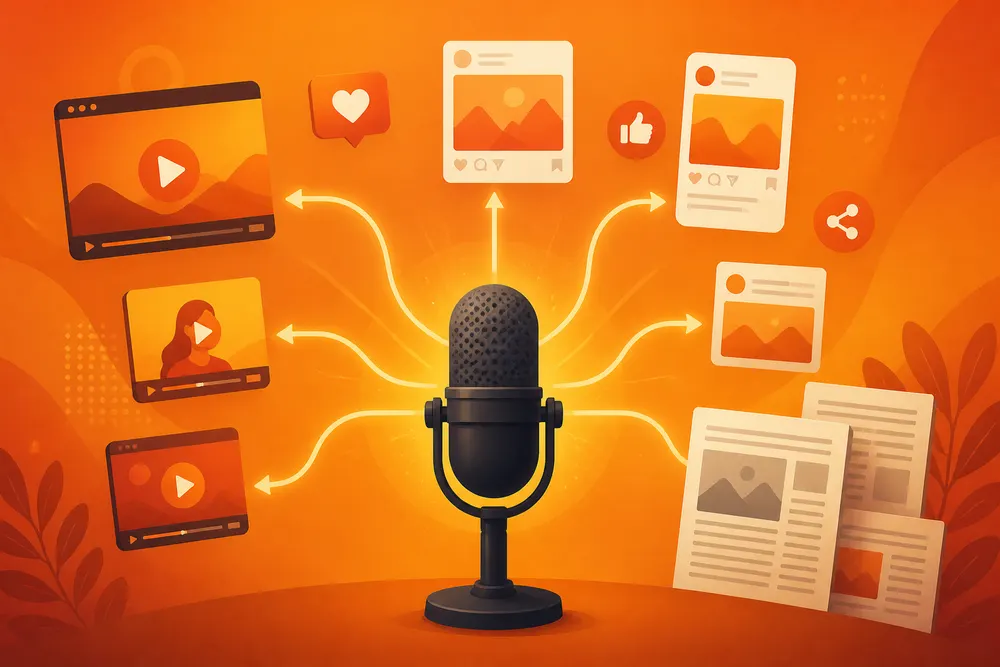
Yes, and that's the practical reason to treat launch press as more than a single article. One 30-minute conversation can become an MSN.com feature, broadcast segments, LinkedIn posts in your voice, and short clips, all anchored to the same launch narrative. Your sales team gets third-party proof. Your marketing team gets assets. You stop re-explaining the launch from scratch in every channel.
Launch day is the trigger. The content system you build from that conversation is what keeps working after launch day is over.
Act while the milestone is news
Executive Visibility Package
Guaranteed CNBC, Bloomberg, and MSN.com coverage plus a month of content from one 30-minute interview, built for raises, launches, acquisitions, and major hires.