We Live to Build Logo
    23:472024-08-17

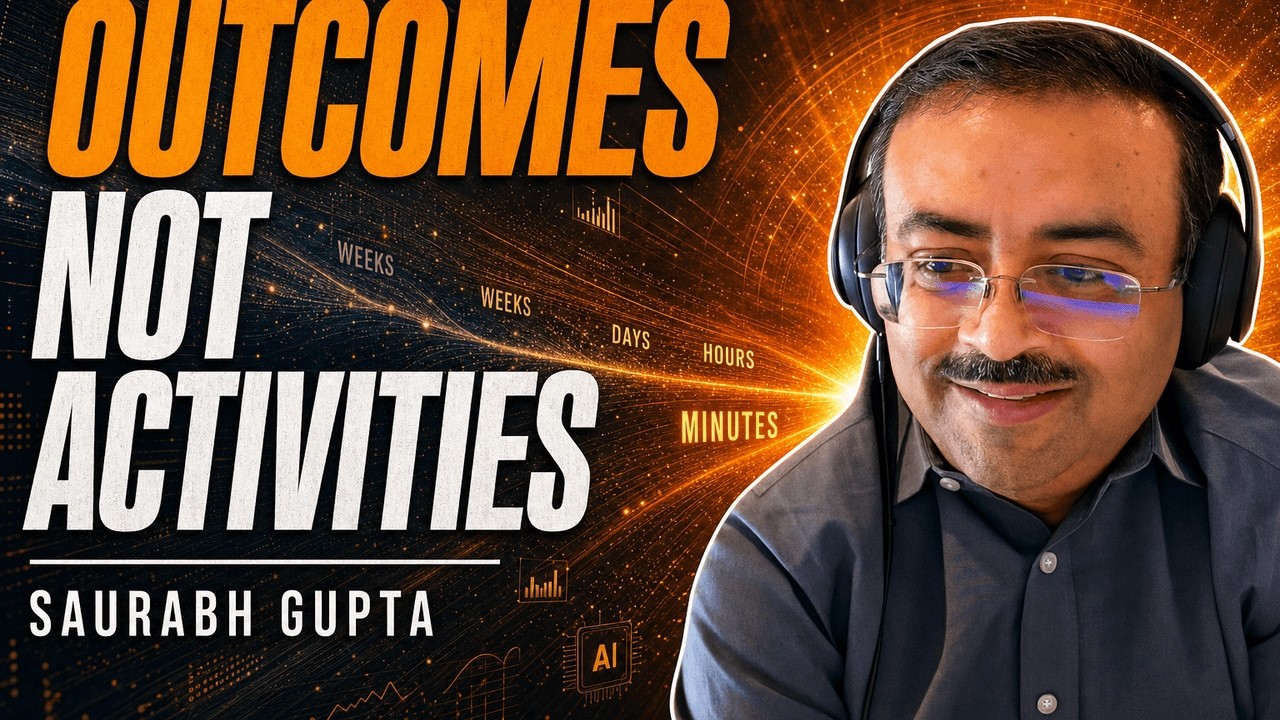
    Your Company's Data Is Garbage (And It Will Kill Your AI)

    Your Company's Data Is Garbage (And It Will Kill Your AI). In this interview, Pipeliner CRM's Chief Strategy & Marketing Officer, John Golden, gives a stark warning to founders: the biggest challenge for companies implementing AI is data integrity. He argues that "most companies' data is not clean, not organized, and not usable," making it impossible for AI to deliver meaningful results. John explains why using Excel as a CRM means you've already failed, how AI is coming for "mid-range" salespeople, and why the future of software is voice, not clicks. He also discusses the #1 mistake founders make in sales (focusing too much on the product), the "build it and they shall come" fallacy, and strategies for escaping the "feast or famine" cycle that plagues many businesses. This conversation offers practical advice for founders on sales strategy, data management, and avoiding the liquidity trap that kills young businesses.

    Data ManagementAI ImplementationSales Strategy

    Guest

    John Golden

    Chief Strategy & Marketing Officer, Pipeliner CRM

    Chapters

    00:00-The #1 Mistake Founders Make in Sales
    02:45-If You Use Excel as a CRM, You've Already Failed
    05:10-The "Build It and They Shall Come" Fallacy
    07:30-AI Is Coming For "Mid-Range" Salespeople
    11:15-The Future of Software Is Voice, Not Clicks
    14:05-Your Company's Data Is Garbage (And It Will Kill Your AI)
    18:20-How to Escape the "Feast or Famine" Cycle
    21:00-The Liquidity Trap That Kills Young Businesses

    Full Transcript

    Sean Weisbrot: John Golden is the Chief Strategy and marketing officer at Pipeline CRM. In this episode, we talk about sales, a little bit of marketing, a lot about ai. And things that first time founders may struggle with when it comes to putting together a sales process and conducting research. So I hope you enjoy this episode. Let's get to it. What do you think is the thing that most founders struggle to do or just outright fail to do? When they're starting to do sales.

    John Golden: Yeah. I think Sean, one of the biggest things is that they approach it, and this is a natural thing to do because they're enthusiastic, you know, they got into, you know, their business because they're, uh, because they're passionate about something or they wanna start their business. And they are probably used to building things just based on relationships and outreach and all that. So they start to, uh, approach sales in. And I would say in a kind of, not in a casual way, but in a, in a, in a slightly chaotic way, I would say, to be honest. Uh, and try to bring that, bring that over instead of taking the first step, which is looking at really setting the foundations in place. And the foundations you need to do is, is your ideal target customer and then your. What is your sales process going to be? Right? And you need to figure out your sales process in relation to who you're trying to sell to. And then you need technology to keep you on track. And that's where CRM comes in. And I think that oftentimes, you know, founders and people who start businesses, they will like invest in a marketing automation system. Or they'll invest in a, you know, in a, in QuickBooks or something for accounting, which is all necessary stuff. But they won't invest in, in sales technology like CRM because they think, yeah, I can just do this and I can, you know, track things on an Excel sheet. And I, that's something that can come later. But if you do it upfront, you're setting yourself up for success because it's like, if you don't, it's like, it's like that old saying. Um, if you don't know where you're going, any path will take you there, right? So the point is to really define your, your ideal target customer and figure out what their buying process is and how they like to buy, and then develop your sales process based off of that. Be disciplined about setting up your sales process, and that will be your friend, because that will allow you to be a little bit more discerning about the opportunities you go after. It'll be, it'll help you to better forecast because you'll, you'll, you'll be more accurate in what you're doing. 'cause you're gonna be focused. So I, I think that's the biggest mistake is to not do, not do the process work and not, uh, en engage the technology at the very beginning for sales. You said

    Sean Weisbrot: that A CRM is a sales tool. I think if done correctly, it's a marketing tool that can funnel leads to the sales team. Correct me if I'm wrong.

    John Golden: CRM has marketing elements in it. But at the end of the day, your CRM should be where you build relationships with your customers. 'cause you build knowledge. It should be the repository of all of that knowledge, of all of those interactions and, and therefore you're able to build better relationships, longer relationships, you're able to see opportunities with your customers, you know, maybe to upsell, cross sell, et cetera. And, um. And it really keeps you on track on that level. So it becomes a repository of all that information. But then also over time, uh, it should, you should be able to use it to actually improve how you sell, to see where the gaps in your, in your process are, the gaps in how you engage. Uh, if you have a team, you should be able to start to see what they're good at and what they're not good at. So for me, it is the, it is kind of the hub. And, and at the end of the day, it's, it's all around the customer and understanding the customer and gathering as much information as you can about the customer so that you can have intelligent, you can engage intelligently, um, with that customer or prospect. And then you can focus on the things that technology doesn't do well, which is the relationship, the real kind of human to human relationship building stuff, which is probably why. You got into doing what you're doing in the first place. 'cause that's what you wanna do. You wanna, you want to talk to people, you want to build relationships. You want to get them excited about your product or service. And the best way of doing that is if you are an informed and intelligent seller and CRM should make you that.

    Sean Weisbrot: You'd be surprised how many first time founders I've come across. Who've said, I have an idea and I built it. I wanna make rake money now. And he was like, okay, well did you validate the idea? Did you talk with customers? No. Why'd you build it? I don't know. I, I really am passionate about it. Okay. Well, good luck. Go talk to people

    John Golden: before you're gonna go out on your own. I mean, the thing is, you do need to validate whether what you're doing is of interest to anybody. Right. And to find or to find the people that it's interest to and, and to validate your idea. Like I, like you said, and, and I do think that sometimes the excitement of. Going out on your own or setting up your own business, you know, it's, it's intoxicating in some ways and, and you feel like maybe I'm that person who has this great idea that nobody's ever thought of. And yes, nobody's been buying. Nobody has told me they want it, but once they see it. And I think that's the, that's always the danger. It's that idea of, you know, you know, build it and they shall come. Right. You know, there's plenty of, uh, there's plenty of examples of people who built things and then it just, nobody ever came. And so I think you're a hundred percent correct. I think you have to temper your enthusiasm with a little bit of realism.

    Sean Weisbrot: What do you think of ai? In sales?

    John Golden: Yeah, I mean, we're big advocates of ai. Um, uh, we have already started, we actually, we actually were a bit of ahead of the curve. We, you know, three or four, about four or five years ago, we started using kind of rudimentary AI in our mobile app. And then obviously with the latest wave of ai, we have integrated a lot of AI into the platform and we're gonna be bringing agents into it, uh, into it this year. Um, in the next few months, indeed, we'll have our first agents in the CRM platform. But again, I would go back to we see AI as supportive. We see it as fantastic, supportive, but it, it, it, it's going to, in the way we look at it, allow. Really good salespeople to be even better and to focus on the things that they're good at. Like I said, the relationship building part, being creative, thinking outside of the box, understanding, uh, you know, helping the customer, uh, uncover, uh, uncover opportunities that they didn't even know, um, existed for them. All of the stuff that really good salespeople want to do. But unfortunately haven't been able to do because they've had to do all of this other work. So now you know, AI can take care of. You know, you can, all your communications, I weave it in, in our system, all of your communications, you can quickly have it summarized. You can have the sentiment, uh, uh, you can, you know, gauge the sentiment. Um, it can, you know, set up Yeah. And basically do all of the tasks and, and, but make you more intelligent in your outreach. And so I believe that AI is going to be fantastic. For salespeople who either are really good now or are willing to upskill themselves and really work on that relationship piece, the creative piece, if you are one of those. Let's say, I think mid-range or, or low range kinda salespeople, I think you're gonna, you're in trouble. I think AI is gonna do it better than what you're doing right now, probably. So I think you, I think as salespeople, you have a fantastic opportunity now is to upskill yourself and make you, and, and have AI as this supportive tool that's going to allow you to do the things that really great salespeople do. And, and that's so and so. I think AI is gonna be a fantastic, uh, it's gonna be a fantastic, uh, help to salespeople who want to be the best that they can be. Um, but it has to be used properly.

    Sean Weisbrot: I wish I had an AI agent that could do all of my sales calls for me. Have you heard of ai? It's connected through LinkedIn. The this, so this, this bot. Connected to LinkedIn and then people can reach out to it and book calls with it. And then have conversations with it live on the phone and tell them who they are and what they want and what they're looking for. And then based on the other people that the AI has talked to, it'll recommend other humans for you to be connected to by it. So it removes the, the untrusted human in the middle and has a trusted AI because the AI is only going to do introductions that they think are going to be really good. And the AI ended up raising eight, an $8 million seed round for the company on its own.

    John Golden: In that instance there, it's only connecting you to the right people. Right there. It's so, it's focused, so you're getting rid of all the noise and, and I think that's a great thing, and I think this is gonna do the same thing for sales, is remove a lot of the noise and allow you to focus on, ultimately we wanna buy, and especially in B2B sales, I mean, ultimately we want to buy from humans we trust, right? Uh, um, but to get to that point of building that trust with the other human, uh, again, you need to be connected to the right person. You need to be intelligent in how you engage with that person. And I think AI is great for getting rid of the noise, focusing you and making sure that you are a lot more intelligent when you engage.

    Sean Weisbrot: So in terms of CRM use, I know this is maybe off topic slightly, but also relative to ai. I find myself sometimes clicking around a website going, I wish I could just talk to the damn website and it would just do what I want. So like CRMs have a ton of features, and if I have to go and I have to click on this specific person that I know I just spoke to, and then I have to add a note and then change the status. Like, I wish I could just go, Hey, you know, pipeline or ai, whatever. I don't know. Uh, can you open Elizabeth Horton's? Uh, profile, add this note, move her to the status. Just like tell it what to do and it'll just do it because you, I know that you can use like Zapier to have, oh, if a call was booked, then it automatically drags it. But like that's a lot of work to, to set up the, the connections and it's expensive to manage those, those API connections. Surely n AI can do that stuff like better.

    John Golden: Candidly, that's where I see all software going at the end of the day is where we don't. Is where we don't, we don't learn the clicks and the this and the that or whatever, but we just ask it. The onus would be on you to learn how to communicate. And, and that's a lot and that's certainly a lot easier than learning the clicks. You know, learning how to prompt properly how to communicate. Here's a really good example. We always admire the Excel whizzes, right? It's already happening is when, uh, you know, AI and, and with natural language. To be able to say to Xcel, I want you to do this, and I want the to this formula, and I want all of this stuff, and it just goes and does it and build me this table.

    Sean Weisbrot: Hey, just gimme 10 seconds of your time. I really appreciate you listening to the episode so far, and I hope you're loving it. And if you are. I would love to ask you to subscribe to the channel because what we do is a lot of work, and every week we bring you a new guest and a new story, and what we do requires so much love so that we can bring you something amazing. And every week we're trying really hard to get better guests. That have better stories and improve our ability to tell their stories. So your subscription lets the algorithm know that what we're doing is fantastic and no commitment. It's free to do. And if you don't like what we're doing later on, you can always unsubscribe. And either way, we would love a, like if you don't feel like subscribing at this time. Thank you very much and we'll take you back. It's

    John Golden: the same with CRM and I think with all software within Pipeline and we've got a fantastic reporting engine. It's a really deep, and it's really robust reporting engine, but you need to know how to use it, right? To get to the really robust part of it. You know, we're building an agent and uh, and that agent will. Be exactly what you're talking about, where you will say, I want this report. I want to know, I want to know about Sean and his team. I want to know last year versus this year, I wanna know the mar all of this. And it goes and creates the report for you. Text or voice, initially text, but it will be voice. We will be enabling voice. I mean, we already have some voice elements in there, but, but to be honest, like I said. I think everything is going to be voice eventually, or it'll be a choice whether you want to do it by text or by voice, but I think voice is gonna take over and I think that's it. We, I think the days of us learning clicks and dropdowns and all of that are will be gone because like why

    Sean Weisbrot: would you want to do that? So designers and product managers and ui UX designers, they're all screwed.

    John Golden: I still think there'll be a role for them, you know, uh, because, you know, we like to engage with, you know, visual systems and stuff. I think there'll be a role for that. But yeah, the, a lot of, a lot of those roles that are there currently in software development, I think a lot of those will go away for sure.

    Sean Weisbrot: You can just have an AI generate those visuals. Why do you need a human to, to make them?

    John Golden: This all sounds fantastic. Uh, but there is one big caveat and that is data. Data integrity, and this is something that I don't think a lot of people have realized yet. Because, you know, AI came out first, uh, or the, the latest wave of it. And, you know, people were doing their, you know, uh, using the AI tools and it's going on those big, um, those large language models and all of that, and they're just typing in stuff and it's great. And then they were like, oh yeah, but that's not very secure. And everything's out on the, out in the, in the ether. And then they say, oh look, but we can bring AI in and we can use it with our own data sets inside, which is. To be honest, where the power really is, I think, uh, especially when it comes to tools. However, if your data's garbage right. And to be honest, most companies' data is not clean. It's garbage. You can, you can have the, the greatest ai, AI agent in the world is only going to be le able to leverage the data as it is, right? It's not going to clean your data for you, so you're going to get. Gar, you'll garbage in, garbage out. So the big challenge I think, facing organizations is data integrity. We actually put a, uh, we put a data, uh, a deduplicate and a data checker into pipeline and to help our customers to make sure that they could, you know, get the best out of, out of the, the tools we're using. But this is a massive challenge for organizations. You know, as they get really excited about implementing AI internally, they're gonna bump up against this issue of, yeah. You gotta clean your data and you gotta keep your data clean. And, uh, you know, I work, uh, companies, I, I, I, as I said, I ran a few companies a few years ago and I had to, you know, twice a year to pay somebody, say, pay this consulting company to come in and clean the data. 'cause it's so much data and it was, uh, and it was impossible to keep it clean. And, and so I think that's the, that's going to be where a lot of people come undone. And they're not considering that right now.

    Sean Weisbrot: Do you mind telling me what they charged? Just so I can think about the numbers.

    John Golden: I can't remember. But it, it was a lot because the, um, I'm very, I'm very bottom line conscious, so, uh, expenses for me. So this was one of those expenses that I, I signed off on very reluctantly. So it was a lot of money. Uh, it was a lot of money at the time. So I dunno what data cleansing services charged nowadays, but at the time it was a lot of money. Was the service valuable after the fact? Yeah, it, it was valuable, but the fact that I had to bring it in twice a year will tell you that it's, it's like, uh, it's like cleaning your house, isn't it? You know? It's like they come in clean everything, you know, couple of weeks later the house needs cleaning again. Right? Because wouldn't it be cheaper to have someone in

    Sean Weisbrot: house for something like this then?

    John Golden: Yeah, maybe. But I mean, it kind of, it's, it, it accumulates right? You know, it accumulates over time. And I think the thing at the end of the day is, is to fix the inputs, right? And how the inputs, and that's what I think is AI is gonna help with, you know, it will, will help with that, with the inputs. But, uh, yeah, it's, uh, it's an on, it's an ongoing challenge and, uh. But, but if you don't have processes or you don't have, uh, data integrity kind of processes set up, you're, you're always gonna be chasing your tail.

    Sean Weisbrot: I feel like this is an interesting conversation, but maybe a little high level for early founders,

    John Golden: what I would say is even with early founders is, um, pay attention to your data, even if it's simple. Even if you say, well, I only have. Yeah. Five customers right now, I'd say. Yeah, just to make sure whatever information you're capturing about that, keep it up to date and keep it clean and, and, and be mindful of it because one day you're, hopefully you're gonna grow, right? 'cause that's why you're doing what you're doing. You probably wanna grow, maybe sell your business. Um. Growing will be much easier if you, if you have that mindset from the out outset to, I'm going to keep my data clean. Regardless of how little or rudimentary your data is today,

    Sean Weisbrot: can you define what clean means?

    John Golden: Say you're capturing information about you, Sean, make sure I've got your, I've got the correct first now I've got the correct last name, I've got the correct email, I've got the correct phone number, I've got the correct address. Any of those things that are wrong. Or maybe put in wrong, or maybe you changed you, maybe you, you know, your address changed or something and I never bothered updating it, or things like that. Those are the kind of things, you know, especially when, when you're in a, in a, in a startup or you're a founder, those are things that are very easy to lose track of. And then as you gain more customers, suddenly, like, you know, you have. 10% of the wrong address, 5% of the wrong email, you know, that kind of thing. And it, and, and it accumulates very quickly.

    Sean Weisbrot: My dad's a dentist and every time someone would come into the office for an appointment, just wanna make sure has anything changed. But it depends on how the employee is trained as well, because if the employee is trained to ask the question. They will ask, but the, the patient may not be aware if they told them the last time. So like, let's say they moved, they may have forgotten to tell them the address, the change and been a year. So no, nothing's changed. So you may still have gaps, even if you still train them to clean the data.

    John Golden: It's better to try and train them and than not. And, uh, and hopefully, uh, yeah, and, and, and, you know, and then the other thing is you could always, uh, every so often you could set up an automated process where, you know, every, maybe every six months, you know, you send something out to that person to say, is this day, are, is all of this still correct? It makes it very easy because if you say to me, did you change your address? I might forget. But if I'm, if I'm presented with something that has my old address, I'll go, oh, that's my old address.

    Sean Weisbrot: Is there anything I haven't asked you that you feel. We'd be remiss to not mention, uh, in terms of trying to educate founders here.

    John Golden: I think the, you know, validating what you're doing is, you know, is, is super, IM, is super important. I think the other thing too is, is Sean, and we've all been guilty of this when we've, uh, ever gone out and done our own thing, you know, whether it's for a long time or a short time or whatever, is that. Is going too broad and thinking, you know, I, I'm, 'cause I'm starting up, you know, this isn't, you're not my ideal target customer that I was thinking about, but it seems like I could probably do something for you and I'm desperate for the revenue, so I'm gonna do that. And before you know it, you are, you are straying. Outside of what you should be doing and focus is, you know, focus is your friend. Even though it may be difficult, and it may mean that you're gonna say no to stuff when you, when you really don't want to, when you see those dollar signs and you just think, oh, I, I could just do this as a one-off. The problem is you end up doing a lot of one-offs and ultimately, I, I've seen this before, where you end up doing more one-offs than you do. Of what you actually set out to do, and now you've, you've set yourself up as kind of being a custom. Everything is customized and therefore that becomes expensive. It, it's not scalable and, and you end up in that, as you know, you end up in that feast or famine because you go after chasing, you're chasing business. So you're prospecting like crazy. Then you land some business, then you're implementing like crazy. You finish your implementation, you go, oh, I got a prospect again. So you're in this kind of, in this feast or family or peak and valley or whatever your, whatever, uh, analogy you want to use. So I think the biggest thing is focus is like understand what you do best, who you do it for, and, and you know what results you can generate and stick with that. Even if it's hard at the beginning, even it means you, you have to say no to. Business that, and you say no to money. And, and therefore I would also say everything always takes longer than you would like. So make sure you have, when you do your financials, make sure you have liquidity and capital to last you long enough. And then add some and, and always be conscious. Always be conscious of liquidity. 'cause that's the other thing, you know, you know, as a, as a, as a founder or an entrepreneur is. Sometimes you make people make that mistake. You know, they have, uh, maybe they get three customers and they think, fantastic. I've got this revenue and blah, blah, blah. Um, but you don't because they haven't paid you yet. Right. And maybe one of them pays you 30 days. Maybe once you, you get a deal with the big company and the big company goes, oh yeah, you're just a little person. I'm going to, I'm not even gonna pay you in 30 days. I'll pay you in 60 or 90 days. I don't care. And suddenly you're looking at your revenue and you think, oh, things are going well. But then you, you look at your, you look at your cash and you go, shoot, I can't even make payroll. So it's, it's those kind of, it's those kind of simple things that can undo you very quickly.

    Network
    Before
    You Need It

    How I generated $15M for my businesses and $100M+ in value for my network.

    Sean Weisbrot
    Sean Weisbrot
    We Live To Build

    Network Before You Need It

    How I created $100M+ in value for my network
    and earned $15M for my own businesses.

    Delivered as 6 lessons I learned from experience as an entrepreneur.

    Subscriber 1
    Subscriber 2
    Subscriber 3
    Subscriber 4

    Join 235,000+ founders