Stop Wasting Money on Big AI Models (Do This Instead)
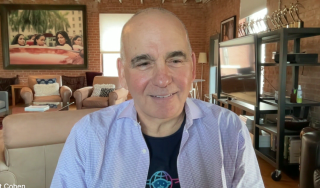
Are your AI inference costs starting to eat into your startup's budget? In this episode, I sit down with Rob May to discuss the impending shift in the AI industry: moving from massive, expensive frontier models to optimized, task-specific workflows. Rob explains why using a massive model for a simple task is like paying an astrophysicist to balance your checkbook, and how routing requests to smaller models can significantly cut down on your token spend. We also dive into the realities of startup hiring, including why executives must network for talent months in advance and how "experienced" corporate hires can completely derail your early-stage systems. Finally, Rob shares his ultimate advice for founders: why cozying up to massive markets is the best way to de-risk your business.

Guest
Rob May
CEO, Neuromatic
Key Takeaways
- 1Network for talent before you need it, great executives maintain a running shortlist of people they'd hire immediately, so when a position opens, you're recruiting from a pool of warm relationships instead of cold job listings.
- 2Experienced corporate hires can destroy early-stage systems, someone who scaled a 500-person org often imports heavyweight processes that crush the scrappy workflows that made your startup work, costing you months and tens of thousands of dollars.
- 3Match your AI model to the task, not the other way around, using a frontier model to summarize an email is like paying an astrophysicist to balance your checkbook; routing simple tasks to smaller, cheaper models can cut inference costs by 90%.
- 4Think in tasks, not models, the future of AI infrastructure mirrors the evolution from monolithic codebases to microservices: start with one big frontier model to prove your use case, then parse off individual tasks to optimized specialist models as costs grow.
- 5Cozy up to massive markets to de-risk your startup, in a huge market you can make mistakes and still win big; in a small market, one dominant player takes everything and everyone else struggles.
Chapters
Full Transcript
Sean Weisbrot: She brought her corporate nonsense and ruined the system we had.
Sean Weisbrot: Took six months and wasted 20 or $30,000.
Rob May: You have to network in advance of job openings to identify and have great talent ready.
Rob May: Finally interviewed this guy, and he goes, "Oh, good question. How does your buyer buy?"
Sean Weisbrot: Claude has access to every word from every interview I've ever had.
Rob May: The best way to be successful as an entrepreneur is to-
Sean Weisbrot: What's the most valuable thing that you think about in terms of networking that founders should be thinking about that they may not be thinking about right now?
Rob May: I think you have to network in advance of job openings to identify and have great talent ready, because otherwise you're gonna, you know, you're gonna, you're gonna open a job listing, and you're gonna get a bunch of applications, and it's gonna take some time.
Rob May: And, and I think as an entrepreneur, and also I expect this of the executives that work for me, that they should constantly be cultivating talent, you know, a couple times a month, like, you know, going to events or taking people out to dinner or having coffees with talented up-and-comers so that when I ask you, "Hey, if I gave you, you know, the budget to hire two more people tomorrow, who would they be?"
Rob May: I think a good executive should know that off the top of their head, at least who they would go after and who they could call immediately that's sort of like, you know, clo-clo-close enough to them to know what they're doing and, and all that and, and could make a reasonably fast decision.
Rob May: And I, I... So I think your good executives network to, um, y-you know, to have the, the capability to bring in the best talent, and they're constantly thinking about, you, you know, when they meet people, making mental bookmarks of who's good at what and why and who they would hire if they had openings.
Sean Weisbrot: So that's amazing advice, and it's something I didn't really think about when I was starting my first tech company.
Sean Weisbrot: Let's assume that you're not, like, a well-funded company, you know, whether you're a bootstrap company or you're a VC firm or, you know, you're a Series A company where you've got a bunch of money that you can start to look to hire people.
Sean Weisbrot: What if you're much earlier in the game?
Sean Weisbrot: How can you do that if you don't know when the money's gonna be available to hire that next person?
Rob May: Yeah. It's, it's a good question. I... You know, I think, um, one of the things you have to think about a-as startup founders too is, like, um, a lot of people think it's risky, and the best way to de-risk it is for them to see your progress.
Rob May: And so, you know, for example, if you reach out to somebody that you don't know or who maybe is a friend of a friend, and you just wanna kinda get to know them, and you're like, "Hey, I just wanna..." You know, maybe you talk to them about, like, "I'm building an advisory board, and I, I'm, I'm looking for contacts. I just wanna talk to you."
Rob May: And, and what you can see is most people who work at big companies will definitely be like, "Oh, you're three people starting a company. No way I'm coming to work for you or with you."
Rob May: But if they like your idea and they like you, there's a good chance they'll meet you every four months for coffee, right?
Rob May: And, and so if you can do that and nurture that relationship, and over a year and a half they see the process of you, uh, you know, making progress, raising a little money, making another hire, winning that first customer, it gives them a lot of that, that traction and momentum, slow as it may be in the early days, gives them some belief that you're onto something and, and can help.
Rob May: And so, you know, I, I think at that phase of the company, I think you're just casting a wide net and trying to figure out people that you think, uh, will share your vision and, um, and could be potential recruits.
Sean Weisbrot: And so when you're looking at these people to hire, what I've heard was, but I didn't do, uh, when I was running the company, was look for people...
Sean Weisbrot: Uh, like, so I was looking at people that I thought would be a good fit, but what I've heard is a better way to do it is look for the person who's already done the thing that you wanna do.
Sean Weisbrot: So if you need a marketing person who's taken a company from launch to, to a million ARR, you should find someone that's done that to help you to do it.
Sean Weisbrot: Rather than look for someone that's done 10 million to 100 million when you're zero because they just may not know how to start something.
Rob May: Yeah. That's great advice. Uh, s- just sometimes you don't have access to those people or there's not enough in the market that you're in. So that, that is ideal, uh, if you can find those people.
Rob May: Um, but, you know, sometimes you can't, and you just have to give somebody who's really intelligent, like, a shot at it.
Sean Weisbrot: Yeah, I tried that as well, and that, like, it doesn't always work. Didn't go
Rob May: either way.
Sean Weisbrot: Yeah. I... Like, I had hired a woman who was the QR manager.
Sean Weisbrot: Sorry, the, the, the quality insurance manager.
Sean Weisbrot: And she had 20 engineers working with her doing quality assurance testing on the software product, and we had two, and we wanted to hire her because we figured she would help us to build something that was scalable.
Sean Weisbrot: And she brought her corporate nonsense and ruined the system we had.
Sean Weisbrot: When we hired her with a specific task to build something different that...
Sean Weisbrot: Because what we had was working, but it wasn't good enough.
Sean Weisbrot: We wanted something- Yeah ... better that could then accommodate post, post-fund, uh, post-fundraising to hiring more people and, and have it, you know, more scalable.
Sean Weisbrot: And she didn't do anything that we asked, and she took the way that the corporation did it, which is completely opposite of what we wanted, 'cause they were, like, using Excel and we were trying to get onto Jira.
Sean Weisbrot: From Excel. And so she, like, took us backwards and, oh, it was a freaking mess, and it took six months and wasted 20 or $30,000.
Sean Weisbrot: Um, it's just stuff like that as a, a first-time founder you don't know is gonna happen, and you can't afford to let happen.
Sean Weisbrot: Do you have any sorts of things like that happen to the companies you, you're working with?
Rob May: Yeah. I think one of the things you have to learn, and that you have to remember, particularly when you hire executives, is these people are very senior.
Rob May: They know what to say in an interview to get hired.
Rob May: Uh, whether they're actually good or not is much more difficult to tease out.
Rob May: And, um, you know, a lot of people that have climbed really high in their career are just great imitators.
Rob May: They just take a playbook that they saw somewhere, they don't always fully understand it, they don't always know how to change it for changing circumstances, but they know how to implement it.
Rob May: And if they get lucky and they go implement it in a couple places where it works, then, you know, they think they're brilliant.
Rob May: Um, I'll give you an example. At, at one of my startups, um, I went through three heads of sales, and I was like, "Okay," I just like, I can't find the right person. 806
Rob May: And everybody when you would ask them, you know, we, we had sort of like two or three salespeople, and I'm like, "Okay, I've gotta go to 10 salespeople, how would you parse out leads?"
Rob May: And they would typically give you an answer like, "Well, my last company blah, blah, blah, blah, blah," and this was how they wanted to do it
Rob May: And I finally interviewed this guy, and he goes, "Oh, good question. How does your buyer buy?"
Rob May: And I'm like, "What do you mean?" And he went between, he's like, "Well," we were selling an IT product, and he's like, "Well, uh, if it's a highly referenceable sale and your buyers are likely to know or talk to each other, then you wanna split the reps up by geo, because then when you call into Chicago and you're talking to this customer, you can be like, 'Oh, do you know Fred over at this other place? 810
Rob May: Oh, you do. Yeah, he's... You go to the IT meetups. Yeah, he's a customer, right?
Rob May: You should ask him about us,' or whatever." He's like, um, he's like, "Or if you're, if the needs of the buyer are different for, like, SMB and enterprise," 'cause we had a horizontal product, he's like, "then you shift it out by, um, you know, by, by those groups so that you can have SMB reps who learn the value prop for that and the enterprise reps who, you know, learn the value prop for that, and you do that."
Rob May: And he's like, um, so, so that is maybe you do geo, right?
Rob May: And then, and then, and he walked me through, like, three or four cases of, like, oh, if your buyer buys this way, or like, like if, you know, if you have price-sensitive buyers and non-price-sensitive buyers, then you might, you might do it this way.
Rob May: Like, if other ways you would round robin them and whatever.
Rob May: But he walked me through, like, here's how you structure a sales org to match the things you've learned about how your customer buys, and I was like, "Nobody's ever told me this before."
Rob May: Yeah. And I just realized that he understood sales at a level that other people didn't, right?
Rob May: It's like, it's like you have people that are like, "I'm a channel salesperson, channel sales manager," or, "I'm a direct sales manager." 818
Rob May: Not many people can tell you looking at your product and how your buyer buys, like, "Oh, you should do this one or that one," right? 819
Rob May: People tend to either, like, they're, like, philosophically opposed to channel sales, or they love channel sales. 820
Rob May: I mean, this hap- this happened with the company that bought my company. 821
Rob May: They were very channel sales centric I didn't think it would work, work well for our product, and they tried to move us over, and after a year they had to switch back to direct. 822
Rob May: Mm. But, like, their philosophy was channel. Right? And it... But it, it, it matches the buying behavior, and it matches the, the product characteristics, and that's how you have to think about it, and just very few people, regardless of seniority, have the kind of thinking pattern that allows them... 823
Rob May: Like, they're not actually problem solvers. They're not actually able to match business tactics to the market situation that they find themselves in. And that, that's a really hard thing to find. 824
Sean Weisbrot: Is this person making content on YouTube? 'Cause I think that would be really valuable. 825
Sean Weisbrot: It's, it reminds me- ... of, like, Alex Hormozi almost. 826
Rob May: I don't know who that is, but, um, yeah, this guy's not making content on YouTube, 827
Sean Weisbrot: no. So Alex Hormozi is a guy who has, uh... He's k- kind of, like, developed a portfolio that's like private equity, and he started off with a gym company he built and sold, uh, like 50% of it or 60% of it for, like, $50 million. 828
Sean Weisbrot: And then he started, like, consulting and advising other companies and investing in other companies and, and now his portfolio I think does, like, 250 million a year in, in revenue combined, and he has several million followers and he is... 829
Sean Weisbrot: Basically his goal is, "When I make this content, it's to help you reach $3 million a year, a year in revenue so that you're at a size that I'm gonna be interested in wanting to invest at." 830
Rob May: Yeah. 831
Sean Weisbrot: So basically the content is free. H- I want you to learn. 832
Sean Weisbrot: So he does a lot of stuff, um, and he, he had a, a book launch that they did, like, 100 million in sales in the week- over the weekend. 833
Sean Weisbrot: Wow. Over the first weekend. Yeah. Um, definitely helped by the fact that, you know, he has millions of subscribers. 834
Sean Weisbrot: But he doesn't... He's not doing it for the money. 835
Sean Weisbrot: He's doing it because he knows if he gives it to you for free, you're not gonna value it. 836
Rob May: Yeah. 837
Sean Weisbrot: So but yeah, really, really smart guy. I love watching his content. 838
Sean Weisbrot: He does a lot of videos where he's talking, uh, with entrepreneurs and, like, helping to find, like, one thing that's preventing their business from, from, like, growing. 839
Sean Weisbrot: Um, and, like, sometimes that one fix could add a million or two million a year in revenue to, to it. 840
Rob May: Yeah. There's a perfect example, right? One of the things I've learned having built companies that sold to, like, sales and marketing people and companies that sold to IT people is, like, your comment on, we can't give things away for free for people don't value it. 841
Rob May: Um, very true in the marketing and sales world, very not true in the IT world. 842
Rob May: Like, when you're selling to IT people, the best thing to do is actually give your core value prop away for free, open source it, then they... 'Cause they- they're so reactive to, like, "You're trying to scam me. You're trying to sell me something I don't wanna be sold to." 843
Rob May: I- tech people don't like that. But if you can give them for something for free, and then they come and they complain about it, and they go, "Oh, it doesn't have good analytics," whatever. 844
Rob May: You go, "Oh, that's 50 bucks a month," right? Or whatever. 845
Rob May: So those, like, freemium and open source models work really well there, but, like, you would never do that for marketing and sales tools because if you give people away for free, they, they... 846
Rob May: it's very similar. They're like, "Well, this is crap," right? 847
Rob May: I, I even do that, like, when I, when I put on events and conferences. 848
Rob May: You don't charge the tech people Um, generally, but like sales and marketing stuff you do, because then they'll, they'll buy the ticket. 849
Rob May: They'll feel like it's valuable, they'll show up. 850
Rob May: Um, so it's, it's, you know, it's, again, it's one of those different mindsets that you have to learn for your different markets. 851
Sean Weisbrot: For sure. So I wanna shift the conversation to inference costs, because I've been seeing a lot of people talk on LinkedIn about how, like, investors are basically funding token spend. 852
Rob May: Yeah. 853
Sean Weisbrot: And so if a company is trying to raise money from investors, and one of their largest spends are token usage, how can companies kind of cut that cost without losing the value that it's bringing to them in order to allow the company to run? 854
Rob May: It's a great question, and there's-- we're seeing more and more companies, because we, we play tangentially in this space and see a lot more companies that, uh, actually have that as a line item, right? 855
Rob May: It's like trying to reduce LLM COGS for the year. 856
Rob May: And, um, what's interesting about it, there's a lot of ways to do it, right? 857
Rob May: There's simple ways like moving hoster- hosting providers, right? Depending on the models that you use, um, and what you're doing, uh, you know, moving to a different, uh, either, you know, frontier lab for your use cases, different types of models within a frontier lab. 858
Rob May: Um, if you're hosting your own models, moving between fireworks and together and whatever they're optimized for, like, those can do things. 859
Rob May: Um, you could opti- also optimize your model usage. This is what we help with. 860
Rob May: So sometimes, excuse me, sometimes figuring out that, well, you don't need Opus Four six to summarize an email. 861
Rob May: So if you can build out your infrastructure so that the simple tasks go to small language models or open source language models, maybe that you self-host. 862
Rob May: Um, and then your, your frontier tasks go to frontier models. 863
Rob May: So the complex stuff, the orchestration stuff, go to these more complicated models. That's, um, that's possible. 864
Rob May: Uh, and then, and then sometimes if you just rewrite your prompts, you can be a lot more efficient with token usage. 865
Rob May: Uh, a lot of prompts, there's a tool, I'm, I'm blanking on the name of it, but when you, when you do a lot of automated coding, like with Cloud Code, it passes a lot of context on every prompt, and this tool just strips out all like the s- terminal system gibberish and passes the prompt on, and it's like, you know, it saves you twenty percent on token costs, um, just to do that. 866
Rob May: So there's a lot of... The- there's a lot of ways to do it. 867
Rob May: Um, I think it's gonna get worse before it gets better because my guess is as OpenAI and Anthropic IPO, Wall Street's gonna scrutinize their unit economics, and it's probably gonna ask them to raise prices, push them to raise prices, uh, on inference. 868
Rob May: But I, I think you're starting to see some counter trends that we just saw an article in late February from AT&T, where AT&T was doing eight billion tokens per month through their core AI systems, and it was costing them too much money, and they rewrote their entire architecture to take advantage of small task-specific language models and, um, were able to cut those costs by ninety percent. 869
Rob May: So I, uh, yeah, I, I think it's gonna be-- I think it's an emerging issue. 870
Rob May: It's not a problem for a lot of people yet. 871
Rob May: But depending on the size of your company, somewhere when you hit that sort of like twenty to fifty thousand dollars per month in inference spend, and you realize it's growing at ten, twelve, twenty percent per year, whatever it is, that's when you start to go, "Oh, we should do something about this." 872
Sean Weisbrot: Yeah. So I, I have, uh, Cursor I pay twenty dollars a month for. 873
Sean Weisbrot: But this month I spent a hundred and thirty. Yeah. 874
Sean Weisbrot: I just-- I went over because I, I decided to build a lead magnet and an e-book that I wanna sell, that, you know, as an upsell. 875
Sean Weisbrot: And I-- at first, I used the model... So b- let me just take a step back. 876
Sean Weisbrot: I've created a system within my website, and I've created my entire website inside of Cursor and Claude. 877
Sean Weisbrot: Um, before I used WordPress for like twelve or thirteen years. 878
Sean Weisbrot: But- Yeah ... what I decided to do was, every time I have a new interview go live on YouTube, it creates a new blog post. 879
Sean Weisbrot: And so it gives us its own page, pulls in the video embed, pulls in the title and, and the description, and the chapters, and, and everything. 880
Sean Weisbrot: But also, I then use Gemini to create a transcript, and I pull the text of the transcript into the page. 881
Sean Weisbrot: And in doing so, Claude has access to every word from every interview I've ever had. Mm. 882
Sean Weisbrot: And so I was able to say, "Hey, look, Claude, I've done three hundred interviews now. Let's make an e-book about three hundred lessons that I've learned from talking to three hundred founders." 883
Sean Weisbrot: And Claude's like, "Great." And it spent like ten minutes, and it, it created an e-book for me. 884
Sean Weisbrot: And I didn't really look into the details of it yet. 885
Sean Weisbrot: Obviously, I'm not stupid enough to know that I can just publish it. 886
Sean Weisbrot: I have like a lot to work, a lot of work to do inside. 887
Sean Weisbrot: But I was like, "Hey, uh, I probably need like a lead magnet for this, something that will get people to sign up for the newsletter that later on I can then push them to this other thing. 888
Sean Weisbrot: So like, let's also make a shorter one. 889
Sean Weisbrot: Let's make it six lessons." And I go, "Pull out everything related to networking from the original book, and let's make it this other thing," and it makes this other thing. And so I go through and I, I start editing it, and I realize I have to rewrite it all. And of course, I, I'm probably more proficient than a lot of other people. 890
Sean Weisbrot: I can actually go into the, the file inside of the repository, inside of Cursor, and make changes to a lot of the things without having to use the prompt, so I'm able to save on inference costs there. 891
Sean Weisbrot: Um, but what took a lot of time and energy from the AI was I originally was gonna release it as a, a Word doc. 892
Sean Weisbrot: And then I was like, "Ah, this thing is ugly." 893
Sean Weisbrot: Like, I can't- I, I don't feel good even though it's free, releasing it without any designs or anything like that. 894
Sean Weisbrot: Like, there's just more I have to do. So I sent the doc back to Claude and I said, "Hey, turn this into an HTML file with CSS, and let's turn this into a PDF that we can generate and have the brand, the colors embedded into this entire thing, and let's make some designs on some of these things." 895
Sean Weisbrot: And so the-- a lot of my cost this month was on all of this because it-- I'm using, uh, Sonnet 4.6. 896
Sean Weisbrot: Maybe I'm using the wrong... May-you know, maybe I should be using 4.5 or 4.0, I don't know. 897
Sean Weisbrot: Um, but a lot of my energy has gone into that and, and so, um, it's produced incredible, wonderful results, but it has to, like, create the, the script, and they're-- part of the script, like, wants to generate the PDF every time, so I have to stop it so it doesn't generate a PDF and waste more tokens. 898
Sean Weisbrot: So like- Yeah ... I'm thinking about how to keep the token cost down. 899
Sean Weisbrot: Um, so I guess in very basically, what do you think the model I should be using for something like that? 900
Rob May: Yeah. I mean, at the, at the lower end, sometimes it's harder to figure out if you don't have enough scale on your inference to measure stuff. 901
Rob May: But the, um, you know, sort of what we do for enterprises is, uh, we just have a drop-in where whatever you're using to call your, you know, Claude or OpenAI or whatever, um, you call us instead. 902
Rob May: We still call your model, but we siphon off some of that traffic, and we run it through a bunch of other models. 903
Rob May: We add various configurations, like changing the temperature, which is a variable of how the model runs, um, adding some thinking algorithms, whi-which the industry calls, like, test time compute tactics on top of it. 904
Rob May: So this might be like adding chain of thought or something like that. 905
Rob May: And then we look at the net system impact of that, because sometimes when you try to use, like, one of these reasoning models where you add chain of thought or, or, or one of these tactics, it'll actually use more tokens. 906
Rob May: About twenty percent of the time, it'll be more expensive. 907
Rob May: Um, and, uh, anyway, so we sort of, you know, cha... You know, tw-tweak all those knobs. 908
Rob May: I think, um, I think what's gonna happen to the industry is I think you're gonna start to see people think about tasks more than models. 909
Rob May: And you're gonna-- when you have tasks that are done, you're gonna have agentic workflows, and the agents can call tasks, and those tasks will hit varying levels of sophisticated task models that just say, like, "This model is really good at making e-book designs." 910
Rob May: Um, because if you think about it, there's a base level of knowledge that you have to have. 911
Rob May: So, so compare it to humans. There's a base level of education you have to understand to even be able to interpret a command. 912
Rob May: But beyond that, like, you know, we, we talk about these smaller models, but, like, why do you need a person that's got seven PhDs when you're like, "I need you to do an e-book design"? 913
Rob May: You're like, "Your astrophysics PhD is just wasted knowledge that I'm paying for." 914
Rob May: And the models are the same way. Like, you have this model where you're like, "Oh, it can solve You know, it can develop new cancer drugs. You're like, "That's amazing." I just need it to reconcile my bank statements, right? Like, so you're gonna pay for these big models that run slow that have all this knowledge in them, and what you really need to figure out is, what's the base level of knowledge I need to get this task done? 915
Rob May: Um, and, uh, and I, I shouldn't pay for more than that, right? 916
Rob May: Um, you don't need to pay a rocket scientist's salary for somebody who's doing a bookkeeping task. 917
Rob May: And I think you're gonna see the industry move to this. 918
Rob May: I think the r- the only... W-we're seeing the early stages of it. 919
Rob May: The only reason it's not bigger yet, well, there's two. 920
Rob May: I- the, the industry has been, first of all, people getting started with AI, and they're trying to figure out what's capable, what it can do. 921
Rob May: And when you're getting started, you don't wanna try to optimize your models 'cause you don't really know what you're gonna be doing, right? 922
Rob May: Um, so you don't wanna be like, "I'm gonna use these eight different models out of the gate when I design my system." 923
Rob May: Like, no, no, you start on, start on one big frontier model, prove your use case. 924
Rob May: Once you do that, you're usually fine with that for a while, and then y- you start to see your inference spend go up, and then that's when you start to look for optimization tools. 925
Rob May: Um, it's similar to how you, you design a code base, right? 926
Rob May: Most companies start with a monolithic code base, everything in one repo and one giant thing, and then they start to parse off the pieces that need to be optimized and make them microservices, and I mean, it's just, that's, that's how businesses are gonna go with AI as well. 927
Sean Weisbrot: I, I think that's a lot more complicated than a lot of people would expect to hear. 928
Sean Weisbrot: I, I think, I, the, I'm just thinking, like, you said the word microservice. 929
Sean Weisbrot: I'm like, I didn't hear about microservices until my CTO was like, "Yeah, our, our stuff is way too monolithic, and, like, it's getting much bigger. Like, we need to break things off into microservice." 930
Sean Weisbrot: I'm like, "I don't know what you're talking about. 931
Sean Weisbrot: Just do it." 932
Rob May: And that's what needs to happen to the AI tools, right? 933
Rob May: Which is the AI tools just need to take care of this for you. 934
Rob May: They need to select the models automatically. They need to route this for you automatically. 935
Rob May: You know, there's, I, I think you're gonna see... Y-you know, we have a more enterprisey tool, but I think you're gonna see tools like this for consumer usage and everything else that are just like, um, you know, we, we, we optimize your, your coding token usage. 936
Rob May: Um, I mean, if you can say, you know, there's millions of people that code with these tools. 937
Rob May: I mean, if you can save everybody, you know, ten bucks a month on that, it's a lot of money on the table. 938
Sean Weisbrot: Ten thousand dollars a month. 939
Rob May: No, e- t-ten bucks a month per person, right? Okay, okay. 940
Rob May: And then there's, you know, you can, you can, you can do that for millions of people. 941
Sean Weisbrot: Okay. Well, 'cause you had said, you, you were talking before, like, if someone was spending fifty thousand a month, so I, I thought when you- 942
Rob May: Well, but, but a lot of individual developers who are spending hundreds of dollars a month would rather spend tens of dollars per month, right? 943
Rob May: It's, um- Sure. Yeah. 944
Sean Weisbrot: Yeah. 945
Sean Weisbrot: 'Cause a lot of people that are using these tools, even though they're not really talked about, they're people that wanna start a business, and they don't have funding, and they may not have any, you know, savings to work from. 946
Sean Weisbrot: And so they might just be spending from their credit card, but they've never known money before, and so they're scared, right? 947
Sean Weisbrot: The, I think the thing that's really great about these kinds of tools is that they The word democratize is probably overused, but they make it something that, you know, a guy in the Philippines can compete with a guy in Silicon Valley because AI allows the cost to be low enough that you can just do it. 948
Rob May: Yeah. And they also open up capabilities to people... Like, I don't know your technical background, but, like, I was an engineer for a while, and then I, you know, got into the management side of things and got to the point where I couldn't write code because there would be pieces I would get hung up on and couldn't solve, and, uh, a lot of times, like, IT pieces, right? 949
Rob May: I don't have the right Python package installed or something like that. 950
Rob May: And these tools hit a threshold where they can solve that for you now, right? 951
Rob May: Which means I can write code again, um, I can build apps again because I know enough about it to do it, and the pieces I don't know, the tools can fill in for me. 952
Rob May: Uh, so I, so I also think it's opening up a new... You know, and obviously there's higher level tools like Lovable and Vercel that'll let, let you build a, whole apps without knowing anything. 953
Rob May: Um, but yeah, it's, it's a very cool time. 954
Sean Weisbrot: So I started off on Lovable, and then, like, a month or two after that, I moved to Cursor, and I still use Lovable, like, if I wanna just start a website, and then I'll just move it to Cursor and keep building it, 'cause Lovable can do it a lot faster than Cursor, and it c- it has the Veet package, like, just different packages, so I don't wanna bore people with the technical details. 955
Sean Weisbrot: But I don't have a technical background. 956
Sean Weisbrot: I've been fortunate that I learn whatever I need to learn pretty fast, and usually I'm self-taught. 957
Sean Weisbrot: Um, although I did learn a lot from my team for that last tech company. 958
Sean Weisbrot: And I think it's because of that experience with that company, working with the front end team and the back end team and the architecture, you know, my CTO, and the, the product manager and the quality assurance team, that I'm able to use these tools much more proficiently than anyone else, even though I never used them in the past. 959
Sean Weisbrot: Um, so yeah, I, I'm thankful for that knowledge and experience. 960
Sean Weisbrot: So, uh, yeah, I, I know a lot of people don't know how to vibe code to production because they just don't understand the architecture, and it's something that I've fortunately been, uh, spent many, many, many hours hitting my head against a wall as to why we can't do something right now. 961
Rob May: Yeah. 962
Sean Weisbrot: Or, or why it's gonna take a lot longer than I thought. Yeah. 963
Sean Weisbrot: But, but now AI makes it so that you can. 964
Sean Weisbrot: And what would I-- what my team hated was that I would change my mind sometimes and be like, "Oh, okay, but like, uh, what if we did it like that instead?" 965
Sean Weisbrot: And with AI, you don't have to worry about design, you don't have to worry about feature sets, 'cause you just go, "Hey, look, actually, that thing didn't work. 966
Sean Weisbrot: Let's revert that." And you can just do it locally, so you don't have to push something to, uh, uh, like a test, um, a test branch, right? So you could do everything locally, and then when you're ready, you can just push it And so you may do may have a bunch of changes happen, but you can test the thing you wanna change before you push it. 967
Sean Weisbrot: So like managing branches and managing features and making sure you don't push broken things to production are, are a lot of things I think a lot of founders aren't aware of. 968
Sean Weisbrot: So yeah, thankful for those experiences. 969
Rob May: Yeah. That's great. 970
Sean Weisbrot: So what's the most important thing that you've learned so far? 971
Sean Weisbrot: It seems like you've had a lot of experiences. 972
Rob May: Um, wow. Well, I think the best way to be successful as an entrepreneur is to cozy up to big markets. 973
Rob May: And, um, and sometimes, you know, you don't know if a market's gonna be big or not because it's nascent, but you have to believe that it's gonna be really big. 974
Rob May: Um, or you have to be doing something in a market that is really big, uh, you know, payments, insurance. 975
Rob May: You know, I, I, I think inference is gonna be a really big market. 976
Rob May: The reason you wanna do that is because when you're in a big market, you know, you can make a lot of mistakes and still come out on head. 977
Rob May: You could be the seventh biggest player in the industry and still do really well, you know. 978
Rob May: Um, whereas in, in, in, you know, in markets that are hundreds of millions of dollars or maybe a billion dollars, like a lot of times it's like one company takes most of it and everybody else is kind of struggles or, um, uh, you know, or, or, or things like that. 979
Rob May: And so I, I think these really, really big markets are things I would encourage people to, to work on for that reason. 980
Sean Weisbrot: Thanks for watching. If you liked this insight, I've handpicked another video for you right here on the screen. 981
Sean Weisbrot: For more actionable strategies that get you real results, hit Subscribe. 982