
People Learn What They Think When They Hear Themselves Speak
What if the biggest barrier to change isn't resistance, but the fact that most people don't actually know what they think until they hear themselves say it out loud? In this episode, Sean sits down with Jeff Wetherhold, founder and principal of MI for Health, to explore the real dynamics behind why change is so hard and what it takes to make it stick. Jeff breaks down how motivational interviewing


Guest
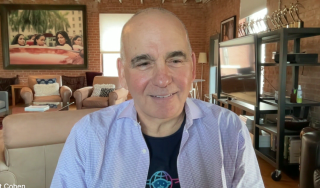
Jeff Wetherhold
Leadership Coach, MI for Health
Jeff Wetherhold is a Leadership Coach and master of Motivational Interviewing who helps leaders navigate change. He argues that change is relational, not technical, and explains how unrecognized assumptions are sabotaging leadership effectiveness by preventing teams from making meaningful progress.
Chapters


Build Executive Visibility
Press placements on CNBC, Bloomberg, and MSN.com,
guaranteed, from one 30-minute interview.
Extracted into a month of content: press, LinkedIn posts, and video, so investors and buyers find real credibility before the first conversation.
Distribution through a channel with 2M+ real views
Full Transcript
Sean Weisbrot: Why is it so hard to get people to change, especially when they say they want to? Today I am speaking with Jeff Weather Hold founder and principle of MI for Health about the real dynamics for change. From tactics and tools to motivation, self-awareness, and communication. We unpack how assumptions, misaligned expectations, and discomfort can derail progress. And while using reflections instead of questions often leads to deeper, more meaningful conversations. Whether you're leading others or. Trying to grow yourself. This episode will reframe how you think and talk about change. I often wake up and wonder to myself, why is it that there's so many problems in the world that I think could be solved if people were just willing to change? Why is it so hard to get people to change?
Jeff Wetherhold: I think it's hard to get people to change because we think about change as a technical activity and not a relational one. We think about how we plan for and prepare for change. We may overinvest in thinking about that, but we don't think about how we're going to work with and support one another in an intentional way, and that sabotages a lot of the good work we do around how we want change to go.
Sean Weisbrot: So you think people don't feel like someone cares enough about them to help them to go through that change? And that's what's preventing them from doing it, that they, they need someone to hold their hand through it.
Jeff Wetherhold: I am a practitioner of an approach known as motivational interviewing or mi, and one of the core tenets of MI is that people learn what they think when they hear themselves speak. We often approach changes if people already have fixed attitudes toward it. Right. They're for it or against it. They're onboard or they're not onboard. When in reality, we're all ambivalent about change. We have reasons we're willing to consider it, and we have reasons that we're not willing to consider it, and we learn how to reconcile those through hearing ourselves speak and through having an opportunity to work through that in our own language. I think people need that opportunity. And one of the benefits of being trained in engaging people intentionally. Around change adoption is providing them with them benefits of engaging people intentionally. In conversations about change adoption, it's providing them with the opportunity to understand their own motivation. They're bringing motivation to change to a conversation. But if you as a boss, as um, you know, a supervisor, as a manager, feel like you have to provide all the motivation you're leaving. Tremendously valuable resources on the table. They could be doing the work instead of you doing it all.
Sean Weisbrot: What percent could be attributed to maybe a general lack of self-awareness in the population?
Jeff Wetherhold: Oh my, um. I would say a pretty high one, and I would include myself in that. I don't wanna be perceived as pointing the finger at other people and saying, wow, most people are are not very self-aware. I am not very self-aware. I am no exception to the methods that I try to help others use. I don't understand my own motivations around change. A lot of the time I teach and coach. This stuff on a daily basis. And there are still parts of my life where I fail to apply it and I wanna bounce my head off the wall sometimes that I'm so bad at practicing something that, you know, I present myself as expert at and in many contexts stem. So I'm not immune to this. I think we all have challenges with perceiving and. You know what our own attitudes are toward change and reconciling those and that we all deserve help, myself included. You sound pretty self-aware to me. I am thrilled that I present that way in this context. I do not think that that is who I am in every aspect of my life, and I don't think that's a reasonable expectation for anyone to have for themselves. We, we need support. In change. Change is hard. We all recognize that we deserve support, and I have seen teams and groups be much more effective. When they pursue that support intentionally, I often see teams just assume, well, if we get the plan right, this'll happen. We'll just, people will figure out how to talk to one another and support one another. Of course, they're not, of course they don't this. This is not something that people get good at by accident, but it is something that anyone I firmly believe can get better at with intention, skills, and tools.
Sean Weisbrot: Do you think there's a gender component or a generational component for change and people's ability to change or be better at communicating about change?
Jeff Wetherhold: I have never considered, um, willingness to change from the perspective of gender. Um, it's honestly never crossed my mind. I know that there are psychological traits that are measurable. Um, around comfort with ambiguity or comfort with uncertainty, and that we can measure those and understand something about people's attitudes toward change. Um, I know nothing about whether that may cor, that may, um, correlate to gender or any other identifying characteristics. Uh, as far as generational differences go. You know, I'm on the bandwagon of feeling like generational differences are real, but we probably spend too much time focusing on them. Um, I talk to a lot of people who I feel like really resent being pigeonholed as like a generational stereotype. Uh, so while there's something to that and I don't wanna dismiss it, I feel like generational differences. Approach. That's a perspective that is overrepresented out there and that it's not one that serves, that serves me well.
Sean Weisbrot: I guess I was curious about it from your personal experience in working with teams. Did you see, for example, someone who was a millennial is more open to change than someone who's Gen X? Like, do you see these changes even if there's no communication about it or, or any thought about it?
Jeff Wetherhold: I see people respond to different kinds of engagement. I see them want to communicate differently and have different habits around communication, and I think that one of the benefits of teaching tools and skills to do this well is that I give the people who are facilitating these conversations the opportunity to learn that you don't have to go in with assumptions. You may do that, but if you do, you'll learn about those. You can go in open and you can learn. And so I, I do think that there are communications differences, uh, across generations in terms of how people prefer to be communicated with, communicated with, or what they respond to. But I also feel like if we go in open and if we go in skilled to these conversations, we're gonna learn about those. We're gonna be able to prove or disprove any hypothesis that we might have. Uh, so. I don't want anyone to come away from this thinking, you know, if I can just type someone appropriately, that's the secret, right? That's gonna make this easier. I don't think that it is. I think it really comes down to approach and an ability to hear in their own words, how they feel about change, what motivates them, but also to learn about the assumptions that you as a facilitator. May have brought into a conversation that are not helpful and we all have them.
Sean Weisbrot: Something that's interesting, I was reflecting on just now while you were saying that was when I was studying for my psychology degree, they taught us that you can generalize people into groups, into patterns, into thoughts, into behaviors, and I've spent my whole adult life. Using that to my advantage, but then also trying to not allow it to inform me too much because as someone who. Is American, but has spent 18 years or half of their life outside of the US I get stereotyped by other people from other cultures as being American. And I go, yeah, but if you actually knew me well you would know that the 10 years living in China made me feel more Chinese than American in a lot of ways because I spent all of my twenties and some of my thirties there. Mm-hmm. And people, you know, they're like shocked that I, you know. Have traveled so much, they're shocked that I can speak more than just English. So they're, they're shocked at these things. It's as if I'm an outlier to what their conception of an American is, how I understand the histories and the cultures and the economies of different places. And I can point to them on the maps that they, they assume Americans can't do these things. And you know, I don't wanna push back too much on those ideas because my experience has shown that a lot of Americans are not there, but. But yeah, it, it's taught me to try to focus on individuals as much as possible while using understanding, general understanding to inform myself, I dunno if you do anything like that, or,
Jeff Wetherhold: I think that most people are very good at picking up on attempts to put them in a box. If you come in and you assume that someone is a type, they're gonna pick up on that more often than not. We're pretty well attuned to that, by and large, and most people don't respond to that well. Right? That's not a positive for them. That's not how they wanna be thought of. Uh, so I do think that, you know, it's smart on your part to avoid bringing that to conversations. I also think it's really important for anyone who's practicing this to acknowledge and accept their imperfection. Uh, when I'm talking, I do a lot of work in, in healthcare and community health and public services, and so this topic of making assumptions about people comes up all the time. We have such baggage with this word, assumptions. We think of these as just terrible and awful things to be avoided at all costs. That's impossible. We make thousands of assumptions every day just to navigate the world, and we make assumptions whether we like it or not, in every conversation that we have. Assumptions are, are part of being human. They're part of preparing to communicate assumptions. Don't do unrecognized assumptions, do damage to conversations about change. And so if we put ourselves in a place. To test and expose those assumptions. One of the challenges of that is it can lead to discomfort in the moment, right? You may learn that you've brought in an assumption about someone. Let's say you've made an assumption about their knowledge on a specific topic based on their role in the organization, and you found out actually they know way more than you thought they did. That's not gonna be a comfortable moment. You're gonna have to speak to the fact that this person has a greater level of knowledge than you anticipated. But what happens then is that you keep that assumption from polluting the rest of the conversation. You keep it from continuing to do damage. So as uncomfortable as it is in the moment, we're really well served. By being fluent in the kind of tools and skills that can expose those assumptions and navigating those before they have a chance to do a lot of harm. Uh, for me, it's something that I often see people avoid and I understand why, because we all avoid short-term discomfort. But if we can learn to recognize that for what it is and navigate it well, we can have much more productive conversations and we can grow. As people, as facilitators through those conversations in ways that otherwise we couldn't.
Sean Weisbrot: If you see an opportunity for this kind of discomfort to appear, do you nudge people towards that in order to give them an opportunity to learn or do you steer the conversation away from that? Like, how, how, how do you navigate this? Or, or are you not aware of there being potential discomfort unless until it happens and then you, you handle it from there? Like, how do you.
Jeff Wetherhold: I think both can happen. I think you can be in a conversation where you start to feel like you're on uncertain footing. Perhaps you've made an assumption that you didn't recognize coming in, but now you do. Uh, I think you can also, and I've certainly been in situations where you're surprised by which you get back, and that's tough because you know, when we're surprised, we often have an emotional reaction. It's often much clearer. To read and now that's something that you're gonna have to manage, right? Much different to consider. Hmm. I may need to be or more open-minded about what this staff member knows on this topic than it is to say out loud, well, this must be new to you and to be corrected, no, actually I know quite a bit about this and here's why. That's a tough moment to navigate. I do believe if you're trained in techniques for managing these conversations well. The most responsible thing that you can do is own that and address it in the moment. That is the best way to minimize the damage that that assumption is going to cause. It's the best way to build rapport, whatever rapport is available with the person on the other end of that conversation. So the longer an assumption like that goes unaddressed. From my perspective, the more opportunity it has to cause damage. But I also have to factor in skill level. And if someone is just learning how to have conversations in an intentional and skill driven way, I wanna help them learn their way into that. I wanna help them build comfort.
Sean Weisbrot: How can someone teach themselves if they don't have the benefit of someone like you working with them?
Jeff Wetherhold: I think one of the most fundamental changes that I talk to people about in having conversations about change at the level of tools and skills is to ask fewer questions and offer more reflections. And sometimes people hear reflections and they're like, well, you just want me to repeat what someone said? And that is a kind of reflection. We call that a simple reflection. In mi, you can also repeat back the meaning that you think you've heard. You can reflect the emotions that you feel like they're experiencing, values that they've communicated to you. If you've heard both change and sustained talk, which is our terminology for language toward change and language away from change, you can reflect both of those back, reflect that tension. Yep. Once you get more comfortable with offering reflections instead of questions. What ends up happening is that you provide the person on the other side of that conversation with more power. You also provide them with an opportunity to speak to things that they likely were not prepared to speak to, to share stories, to go into specific examples. And I learn particularly in organizational settings, so much more from those stories and those sort of efforts to expound. On what someone has planned to say, then I learn from their planned responses. That's what really helps you dig in and help someone learn about how to reconcile their often conflicting feelings toward change. So I think the first step is, in a lot of cases, is how can you become more comfortable with reflection? How can you use that to ask fewer questions? 'cause we're often taught questions good. Right, if we just rely, if we ask the right questions, we're in good shape. And I do want to clarify like my work is helping people have better conversations about change. If you're an interviewer, of course you're gonna ask questions. I don't coach interviewers. That's not my job. I coach people on how to engage others around change. So in the context of helping others make change that you cannot make for them, shifting away from questions, not totally. But relying more on reflections is a great way to be able to prompt those conversations. So if you've had, you know, to follow the example that I gave earlier, you've, you've underestimated someone's skill level on something and they've corrected you or they've said something that, that makes it very clear, wow, they're way more knowledgeable. You can say that out loud. You're really knowledgeable about this. You don't like. You're not comfortable having the knowledge, having your knowledge on this unrecognized, right? You're really frustrated that I didn't understand how capable you are in this. All of those are gonna get to a far more productive and informative conversation than a question might in that moment.
Sean Weisbrot: Aren't those assumptions though? Uh, so I, I, I learned a different way of communication. Not to say yours is wrong, but just, uh, and this is kind of from my own experience from relationships and my own teams, was that it's better to be curious. So something like, I feel like you. Would like to be more recognized for the knowledge you have, and maybe you don't feel like you're getting that recognition. Is that what I'm hearing? And then they can go, no. Or yes, and if it's no, then you have the chance to go, wait a minute, then I'm, I'm misreading something here. Help me to understand. Understand what, what do you know? What am I misreading? What you know? I wanna understand you better.
Jeff Wetherhold: Often when I first teach people to begin using reflection more, they will get to this place where they have very long reflections and then chase them with a question to make themselves feel more comfortable. Right? Sometimes we call these spoiled reflections because there's really good reflection in there, and then you follow it with a question. What would be lost in that conversation if you simply said, you wanna be more recognized for your knowledge in this area?
Sean Weisbrot: Maybe that that's not what that person wants.
Jeff Wetherhold: Mm-hmm. And if that isn't what they want, what's likely to happen next?
Sean Weisbrot: Well, it depends on the person. That person might go, no, that's not what I want. Or they might, you're not even listening to me. Why am I having this conversation with you? And they'll shut down.
Jeff Wetherhold: These are great examples. The assumption you, you mentioned earlier that these reflections feel like assumptions. They are, they're reflections of the assumptions that you're already making. The choice is not to assume or not to assume. The choice is, am I open about the assumptions I'm making? Am I willing to learn whether or not I'm correct or am I not? So giving voice. To these feelings, to these assumptions is different from making them. You've already made them. They're there. When we give voice to it, when we give people an opportunity to respond, then we become able to learn and we open the door to have a conversation that is not grounded in those assumptions. You are right to point out that people will have different reactions. Some people will correct you right away. And that's easier in a lot of respects because now you can apologize and you can own that and you can build on that and learn. And in the process, you're also demonstrating to them, you know, you're trying to have a conversation with them about changing their behavior. You're changing yours.
Sean Weisbrot: Yeah. Show don't tell.
Jeff Wetherhold: Yeah. To change for them. What a powerful example. Right. I presumably in a position of power, because I'm often working with leaders and managers or facilitators. Willing to change and am willing to own being wrong. You're making it much more likely that they may be willing to change and willing to be wrong as well. There will be times where people have a more emotional reaction, right? We think of this as discord or rupture in the context of motivational interviewing, and those are more challenging, but they're also manageable, right? There's, there's different skills required for engaging with that, the emotional. Reaction that someone has at that point is paramount, and we're gonna have to acknowledge and address that before we come back. Maybe what we thought the substance of that conversation was gonna be, but again, in my experience, the damage and the discomfort that this can cause in the moment pales in comparison to the damage that carrying these assumptions forward will do. Moving forward confident that this person knows very little about this topic, when in fact they have a lot of knowledge over time, will do exponentially more damage than a challenging moment in a conversation.
Sean Weisbrot: I experienced this, something in my personal life about two years ago or a, a year ago. I can't remember. It was last year or two. I, so in Lisbon there's this community of people who play board games, and one of the games we play is very divisive. There's a lot of people yelling and accusing and all of that. And I, I stopped playing the game recently because I. Just work is stressful. Why do I wanna add more stress to my life By screaming at people, but I'm still very close with these people. They came to my birthday celebration last week, just uh, great people. But there was this one woman who I'm very good friends with now. She thought for I don't know how long that I hated her. I didn't hate her. We were playing a game and we only saw each other inside the context of the game where we were sometimes adversaries. So it wasn't until she came to me and she was like, do you hate me? I feel like there's something between us. And I was like, no. Why would you think I hate you? Like it's, it takes a lot for me to hate someone. There's very few people that I can say I feel like I have hatred towards. I may be someone who's not great at like showing emotions on my face, but I'm amazing at communication. And, and telling people how I feel and asking how they're feeling. I mean, that's why I do this. And once we cleared that, we became really good friends. But there was just this weird thing that I wasn't even aware that she felt that way. She didn't tell anybody else. She didn't tell me. She was just holding onto this perception or this assumption of my emotions towards her.
Jeff Wetherhold: Mm-hmm.
Sean Weisbrot: And so I was, I was just thinking about that when you were talking about it. I was like, yeah, I don't know how many people are afraid of change because maybe they're afraid of the reality of what they're gonna find out if they confront it or what they're gonna find out about themselves if that that tension goes away or who they'll become on the other side of that change. And I feel like a lot of people are comfortable. With how they feel right now, which sometimes is they're depressed, right? A lot of people are depressed. A lot of Americans are on antidepressants, unfortunately, and I think a lot of them are on antidepressants because it's easier than not being on antidepressants. It's easier to numb yourself than to. Be part of reality and to accept that things are not always as easy as you want them to be. And I think a lot of people stick to these fears and prevent themselves from changing because they're afraid that they will never be happy or they're afraid of experiencing happiness. They're afraid of what it would be like to feel good about themselves.
Jeff Wetherhold: Mm-hmm. That could be, uh, in my experience, it doesn't help. To not have any tools or skills to rely on. One of the things, particularly in professional context that makes this hard is not only have people never been taught how to do this well, they've never even been taught to recognize that as a problem, whereas something that they could improve at, right? It's one thing not to know what the solution said is it's another thing to not perceive it as a problem worth addressing, and I run into. To that emotion, even if it's unvoiced all of the time. Our feelings about change, whether it's personal or professional, they're complex. Right? We, I said earlier that we have this tendency to reduce people's attitudes toward change to, for or against, right? This is a really well-known psychological phenomenon called the binary bias. We all have a tendency to take rich spectrums of things and reduce them to two options, and this shows up across. An amazing array of contexts. I almost never have to provide examples for people when I teach this because everybody in an audience recognizes it in multiple aspects of their lives pretty quickly. But we do this with change as well, when in reality people are gonna have reasons they want to consider it and reasons they don't. And one of the. Tremendous benefits of approaching change that way is that when we approach change as a binary, we have to convince someone they have to think the way you think. We have to disabuse them of all of their feelings against change so that they share our feelings for change. This is wholly unrealistic. It's also unnecessary. Right? This is not going to happen. There are not moments of conversion where somebody tells you, wow, I was totally wrong about this and you were right. These don't happen.
Sean Weisbrot: Yeah.
Jeff Wetherhold: And they don't need to happen. But when we approach change through the lens of ambivalence that people have conflicting feelings about change, that opens up multiple pathways to work with them, we can strengthen. Any number of reasons that they may have about making change, or we can try to weaken any number of reasons that they may have about avoiding change. There are multiple ways to do that, so we go from an unrealistic and narrow approach to helping someone create change to one where. There are options and where if somebody isn't willing to consider rethinking one of their reasons, then we can pivot and we can go to others. It makes this work much more attainable and much more realistic, and once you get used to approaching change, that way when you look back on sort of this egotistical like approach that you're gonna have to win hearts and minds completely, or you're not gonna do it at all. It's hard not to shake your head and wonder like, how did I ever think that was gonna work?
Sean Weisbrot: What's the most important thing you've learned from doing all of this work?
Jeff Wetherhold: That most people don't even recognize this as a need. That when we talk about change, particularly in organizational contexts, we teach people how to think about change, but we don't teach them how to speak to it. We don't even teach them that that is important. I I often, it's not even about teaching tools and skills. I have to help people recognize this is an actual thing. This is a thing that is worthy of your time. This is a thing that you can get better at.
Build Executive Visibility
Press placements on CNBC, Bloomberg, and MSN.com,
guaranteed, from one 30-minute interview.
Extracted into a month of content: press, LinkedIn posts, and video, so investors and buyers find real credibility before the first conversation.
Distribution through a channel with 2M+ real views
