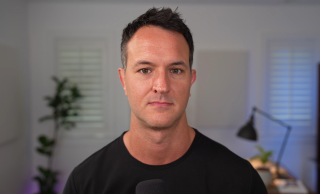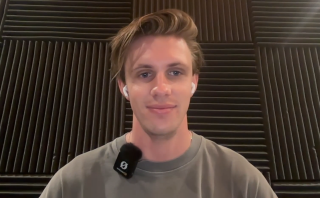
AI Is a Disaster... Why Lawyers Are Panicking
Is AI about to replace lawyers, or is it a "disaster" waiting to happen? Omeed Tabiei, a startup lawyer, breaks down the viral story of Fred Wilson replacing a $50k legal bill with AI and why it has the legal industry panicking. However, he also shares cautionary tales of founders who used AI templates (like Rocket Lawyer) and ended up with messy, expensive legal battles. In this interview, Omeed and Sean discuss the critical legal mistakes that destroy startups: from choosing an LLC instead of a Delaware C-Corp, to 50/50 co-founder equity splits without vesting. He also reveals a unique strategy one client used to raise $600k in 30 days directly from their customers on social media.
Guest
Omeed Tabiei
Startup Lawyer, Optimist Legal
Chapters
Full Transcript
Sean Weisbrot: In a world where AI is providing all of the templates and advice that startups can need, how are you continuing to add value?
Omeed Tabiei: Yeah, I think, uh, this is a super. Relevant question.
Omeed Tabiei: So Fred Wilson from USV, which is a pretty popular VC fund, he's a legendary investor, has been there, you know, since the beginning of, of tech.
Omeed Tabiei: Um, as an investor. He just did a blog post yesterday that has, uh.
Omeed Tabiei: Lawyers a a bit worried and scared. He essentially took all of his closing binders and uploaded them into Google Notebook, lm, and essentially had the AI advise on a series seed, um, without lawyers.
Omeed Tabiei: Essentially what happened is he went and, you know, he would, he, uh, asked his lawyers to help him with this, this deal.
Omeed Tabiei: The lawyers quoted him $50,000 and he was like, I think you should do it for less than five.
Omeed Tabiei: And when they said no, he took his entire history of his closing binders, uploaded them into his, uh, you know, ai, um, knowledge base and had the AI essentially flag, uh, the deal issues.
Omeed Tabiei: And this. Has made quite a storm in the, in, in, in the legal space.
Omeed Tabiei: Um, a number of lawyers like Chris Harvey, pretty also legendary lawyer, mostly for emerging funds.
Omeed Tabiei: He did a post on LinkedIn, um, you know, asking the legal community, Hey, what do you think about this?
Omeed Tabiei: And lawyers across the board. Are worried in terms of, you know, the impact that AI will have.
Omeed Tabiei: I think the current state of ai, um, isn't up to the up to par.
Omeed Tabiei: It still advises, um, in misdirected ways. For example, we were just advising a client on a buyout yesterday.
Omeed Tabiei: The AI is just like feeding him completely wrong information about qualified small business stock and how to structure the deal, which is actually like a huge pain as a lawyer when people, you know, bring AI responses.
Omeed Tabiei: So I guess to answer your question, how am I, um, adding value to my clients?
Omeed Tabiei: I think that the, the state of AI's responses isn't up to par and for me, actually.
Omeed Tabiei: Uh, I, I put a lot of faith and trust in the human value, which I think that AI won't be able to replicate.
Omeed Tabiei: Um, there, there's one area that I think that AI won't really be able to help with respect to.
Omeed Tabiei: Um, I think another area, and I think lawyers across the board in this conversation.
Omeed Tabiei: In this, uh, you know, in, in the conversation around the impact of AI on the legal industry is, listen, someone like Fred, he's been doing these deals since the nineties, so he's seen everything under the sun.
Omeed Tabiei: He's worked with all the major law firms.
Omeed Tabiei: You know, he's done hundreds and hundreds of these deals.
Omeed Tabiei: So someone like Fred, he probably doesn't even need the AI to advise him as to what the issues are in the deal.
Omeed Tabiei: And so. For him. He probably at this point could do the deal without the AI and without a lawyer, but for most founders, most founders only raise a handful of times in their lifetime, and so their experience with raising funds is going to be quite limited, and so those more novice.
Omeed Tabiei: Founders are always going to need guidance and handholding and direction, even where AI can do the job of a lawyer.
Omeed Tabiei: That's one area where lawyers I think will always add value is maybe with more inexperienced founders.
Omeed Tabiei: The other area, as I mentioned, is the human element.
Omeed Tabiei: So as fundraisers get more complex, uh, usually there might be more investors involved or more parties involved, and there are complex multi-party negotiations.
Omeed Tabiei: And it's actually in those places that I think that lawyers like myself will continue to be able to add value is in the human kind of, uh.
Omeed Tabiei: Contact, connection, negotiation, um, those areas where I think AI won't really be able to fill those gaps.
Sean Weisbrot: So it sounds to me like you feel, and lawyers are gonna be more useful as you get to series A, B, C, and beyond, but a lot of the work that lawyers typically do now for pre-seed and seed is gonna go away.
Omeed Tabiei: I think that lawyers have been removed from the Angels precede, uh, you know, since quite a, quite a long time now.
Omeed Tabiei: Um, you know, for those $250,000, $500,000 rounds. Most founders, when I talk to 'em, they're like, I don't think I need a lawyer.
Omeed Tabiei: I just use this Y Combinator. Template. All I need to do is plug in what the post money valuation is and the investment amount, and that's it.
Omeed Tabiei: Um, now, you know, my advice and guidance to those founders is it's usually not that easy.
Omeed Tabiei: You have to, you know, there are steps, there's a process. You have to make sure investors are accredited.
Omeed Tabiei: You have to file Form D, but, um, with the SEC.
Omeed Tabiei: But yeah, I mean, I think lawyers have for sure.
Omeed Tabiei: For the most part, been removed from Angel pre-seed for, for quite some time.
Sean Weisbrot: Hey, business leaders and marketers. What if your brand could be featured right here?
Sean Weisbrot: This ad spot could be yours. This channel is watched by a dedicated audience of ambitious founders, executives, and professionals who are actively looking for tools and services to help their business grow.
Sean Weisbrot: If you wanna put your brand in front of this highly dedicated audience, that's difficult to reach.
Sean Weisbrot: I'm currently looking for a few strategic partners for the channel.
Sean Weisbrot: To learn more about sponsorship opportunities, click the link in the description. Let's go
Omeed Tabiei: together.
Sean Weisbrot: I think what a lot of founders, especially first time founders don't realize is that there's a lot more than, than just the fundraise itself.
Sean Weisbrot: Because when you're early on, you don't know what you don't know.
Sean Weisbrot: And so there are legal things around partnerships and operating agreements and you know, those are things that are not just.
Sean Weisbrot: In a bootstrap to profit type business, those are also in a startup. It's, you know, an incorporated entity.
Sean Weisbrot: As an incorporated entity.
Sean Weisbrot: It doesn't matter how you choose to fundraise. The, the law is still the law.
Sean Weisbrot: And they're missing a lot of those things. And so they make a lot of mistakes around structuring their partnership or structuring their share option plan or not filing the Form D or uh, you know, how they set up the banking system or.
Sean Weisbrot: Uh, just a, a number of things could go awry.
Sean Weisbrot: Um, I've heard of instances of founders where one of the partners got divorced from their wife, and the wife is now claiming this person shares or some of the person shares, which would put them in a situation that that wife has now a lot of power to make decisions in the business, um, because there was nothing prepared.
Sean Weisbrot: Uh, so what are some of the. Bad or ugly things you've seen from people not knowing or I guess trusting ai, uh, and, and not having a human to, to tell them the reality that got them in trouble.
Omeed Tabiei: Yeah. I think, um. For example, one case that we're actively working on right now, um, super smart founder, you know, X Fang has worked at, you know, all the major tech companies, um, has, uh, profitable company.
Omeed Tabiei: Um, it's not an AI company, but to, to, to the surprise of the times. But, um, he.
Omeed Tabiei: Essentially, founders can really tie themselves in knots, even if it doesn't have necessarily legal implications.
Omeed Tabiei: His fundraise has been held up and the investor is actually seriously considering not investing because as he was building his company.
Omeed Tabiei: Um, you know, he thought, I don't need to use a lawyer.
Omeed Tabiei: I often hear from people as well, like, oh, like my whole family are lawyers.
Omeed Tabiei: As if like, you know, uh, you can download legal knowledge by like osmosis or something like, um, and so you know, that.
Omeed Tabiei: That thinking, that mental model made him tie himself in Knot.
Omeed Tabiei: So what he ended up doing was he had a company, there was some special licenses that he got for that company.
Omeed Tabiei: He wanted to change the name of the company, but instead of, you know, shutting the company down, he realized that the licenses could transfer with the business.
Omeed Tabiei: That there, you know, that he could potentially make some money off of selling that entity that had those licenses.
Omeed Tabiei: And so he found a buyer for that entity, but he used some template off of Rocket Lawyer.
Omeed Tabiei: That template was, he had started a corporation. The template that he used was for an LLC for membership units, which are a completely different ki type of, uh, equity.
Omeed Tabiei: Stock, which is what a corporation has. So he ended up selling this entity, used the wrong, uh, the wrong agreement type that he found on, on, on, uh, rocket Lawyer.
Omeed Tabiei: Didn't think about the potential IP issues in that. The name, the two names of the companies are incredibly similar and.
Omeed Tabiei: Went ahead, sold the company and now wants to get investment.
Omeed Tabiei: As I mentioned, his investment has been held up for the last few weeks, and even the investor's lawyer is like, this is probably one of the biggest messes.
Omeed Tabiei: That I've ever seen. This is like beyond, uh, the typical standard mess that, you know, founders have where you go in and they haven't documented their IP assignments, for example, or their, you know, their cap table equity hasn't been properly issued, or, you know, those are the typical founder messes.
Omeed Tabiei: But this, this guy has like really tied himself up.
Omeed Tabiei: In, and it just so happened that it's going to work out for him because him and the buyer's relationship is really strong.
Omeed Tabiei: But let's say the buyer and his relationship was not strong and he wasn't able to fix these issues, that would've been a big problem for him.
Omeed Tabiei: So that's one example. Another example is founders.
Omeed Tabiei: Uh, there, there was a, a really big case on Twitter actually, um, last year where.
Omeed Tabiei: There were these founders that had been admitted to Y Combinator. It was like these two 18-year-old kids.
Omeed Tabiei: Um, and essentially they had forked some technology, some AI wrapper essentially, and they didn't read the source licensing for the code, and essentially they commercialized.
Omeed Tabiei: Source code that was supposed to be open source and they got absolutely destroyed on Twitter.
Omeed Tabiei: And these two kids, um, were like so brash and bravado and I will never forget this line.
Omeed Tabiei: This line will forever be burned into my memory there. Getting like totally flamed on Twitter.
Omeed Tabiei: Like Twitter was a blaze with people being like, you guys have no idea what you're doing.
Omeed Tabiei: You know this. This has like serious legal implications. And the founder had the audacity, which by the way, he deleted this tweet after the fact.
Omeed Tabiei: But he had the audacity to say, to respond to all these people, tearing him to pieces by saying something like, we busy building right now.
Omeed Tabiei: Can't be bothered with legal.
Omeed Tabiei: And that was like. That response, just the internet completely tore him to shreds. So it's these sorts of things.
Omeed Tabiei: I mean, you lose credibility, you lose credibility with the community, you lose credibility with your investors.
Omeed Tabiei: Um, a lot of times legal can have implications quite far down the road that you aren't aware of until it becomes an issue.
Omeed Tabiei: So I can give you two more kind of nightmare examples.
Omeed Tabiei: There was a founder, um, ex Microsoft, um, and he was building this marketplace, and this is a super typical story.
Omeed Tabiei: This happens time and time again, and the fix is easy. The fix is easy.
Omeed Tabiei: It's like 2,500 bucks to a lawyer. You never have to deal with this issue.
Omeed Tabiei: But again, you know, these tools like Stripe Atlas, so on and so forth, make it.
Omeed Tabiei: Make it accessible and accessible. Feels safe. So, you know, false sense of safety.
Omeed Tabiei: Anyway, two founders, um, he was the developer, the other guy was the business guy.
Omeed Tabiei: He left his job at Microsoft. Other guy kept his full-time job.
Omeed Tabiei: Um, and when they would talk, there was a lot of excitement around this company that they were building that was getting traction.
Omeed Tabiei: But what the guy found was he was spending 40, 60, 80 hours a week, whereas the other guy would skip meetings.
Omeed Tabiei: Would not do any of the things that he said that he would do in terms of, you know, generating the business and the sales and so on and so forth.
Omeed Tabiei: But when they would have conversations, the g the guy who was doing nothing would be like, I'm fully invested, I'm putting in the work, blah, blah, blah.
Omeed Tabiei: But as I mentioned, when the, the other guy would, would look, he would be like.
Omeed Tabiei: He's not showing up to any meetings. He's not hitting any of the KPIs we said that he was gonna hit.
Omeed Tabiei: I don't see literally any effort, but he, they both had split the equity 50 50 outright, no vesting.
Omeed Tabiei: So what ended up happening was.
Omeed Tabiei: He had to go get a valuation of the company because the founder wouldn't give up the equity.
Omeed Tabiei: He's like, no, this, this equity is mine. I own 50% of this company.
Omeed Tabiei: And when they would talk, he would actually, uh, get super angry.
Omeed Tabiei: He'd be like, what do you mean I'm not doing anything? I'm like, super into this company.
Omeed Tabiei: I'm like, giving it all I have. And it's like, where's the results? There's no results.
Omeed Tabiei: Uh, anyway, what ended up happening was he had to go get a valuation of the company and he had to end up, he ended up paying him something like a hundred thousand dollars to buy this guy's equity for doing nothing.
Omeed Tabiei: And that's a typical story.
Omeed Tabiei: This happens frequently, and it's, the fix is super simple. When you start your entity, you get an IP assignment.
Omeed Tabiei: You issue the founder's sock with a four year vest and a one year cliff. Super simple.
Sean Weisbrot: Yeah.
Omeed Tabiei: 2,500 bucks. That's what it costs to get it from a lawyer.
Omeed Tabiei: Or you could go to Clerky and get it for like 800.
Sean Weisbrot: I remember talking about these things. Internally in my startup, I was the only person who started the company and put money into it.
Sean Weisbrot: And so I was naturally a hundred percent owner. And then it was up to me to decide, you know, who would get equity and how that would work.
Sean Weisbrot: And I was aware of this vesting schedule, so I didn't have those issues.
Sean Weisbrot: Um, I also was aware of the licensing issues because my CTO was like.
Sean Weisbrot: He constantly had this spreadsheet updated and my COL also insisted on having it.
Sean Weisbrot: Um, because we had, you know, when we were fundraising, we had investors asking us, you know, for everything.
Sean Weisbrot: And so we were able to present all of the third party libraries we were using.
Sean Weisbrot: And what their licenses were. So we knew if there was anything that was gonna prevent us from commercialization or, or things like that.
Sean Weisbrot: And we had to decide, you know, do we wanna outsource, uh, um, open source anything or keep it all closed source?
Sean Weisbrot: And, uh, you know, we had different discussions around that because like my CTO wanted us to open source some things and I was like, no, why the hell would I do that?
Sean Weisbrot: That doesn't make any sense. Um, so definitely had those discussions. Thankfully, none of them impacted us.
Sean Weisbrot: The only, uh, annoying thing that impacted us that ended up killing us was that one of our investors signed an agreement and then didn't pay us all of the money he promised.
Omeed Tabiei: Yep. That happened.
Sean Weisbrot: And so we had planned for, you know, 18 months with a month by month breakdown of how we were gonna spend that money.
Sean Weisbrot: We started to hire people and implement that plan with the promise that the rest of the money was coming any minute, only to have drips and drabs over the next year, but never even close to the full amount.
Sean Weisbrot: And we couldn't get new investors to come on board because we hadn't launched and we didn't have customers or revenue, even though we had a waiting list of 5,000 of two, 200 companies with about 5,000 employees.
Sean Weisbrot: So we had 5,000 seats waiting to do trials. We could have easily gotten to a, you know, seven or eight figure a RR status through those seats had, you know, assuming they all converted and yet we weren't able to serve them.
Sean Weisbrot: And we weren't able to, you know, stay alive because of that.
Sean Weisbrot: And that was really, really frustrating because even today, years later, I talk to people, they're like, what?
Sean Weisbrot: You know, what were you doing? And I told them, and they're like, that's awesome.
Sean Weisbrot: Like, that's still extremely relevant right now. Um, we just didn't have the money to do it.
Sean Weisbrot: And to start over now would be insane. Um, so.
Sean Weisbrot: That's why I don't, uh, I don't, I don't, uh, run companies anymore. I just, I just advise and consult.
Sean Weisbrot: It's way easier than being a founder. I think whoever does it has to be insane to do it.
Sean Weisbrot: Um, you know, in a good way, kind of. Uh, so, so what are some good examples you've seen?
Omeed Tabiei: I mean the, uh, good examples are, um, okay, so we had, we had a, a founder, um, actually this is a super interesting case in that like they, I always say that they're one of my favorite clients.
Omeed Tabiei: Um, very rare, but. Incredibly profitable. They do almost, uh, 3 million a year in a RR.
Omeed Tabiei: And at the time they went to go fundraise, they were already doing a million a RR.
Omeed Tabiei: Um, they had worked with us from the very beginning.
Omeed Tabiei: Originally they came to us as an LLC, but we had to convert them over into a corporation.
Omeed Tabiei: But then they realized that a lot of their customers were high net worth individuals because they operate in the agency, you know, marketing agencies and that sort of thing, digital agencies.
Omeed Tabiei: And uh, they essentially, you know, did a fundraise where they went out to their customer base and they were like, Hey, we're opening our fundraising round.
Omeed Tabiei: And they were able to raise over $600,000 in like 30 days. Um. Super fast.
Omeed Tabiei: Their customers already loved the product so much, so they were like happy to invest and uh, we had set them up properly.
Omeed Tabiei: As I mentioned, they had originally incorporated as an LLC.
Omeed Tabiei: This is another thing that I think a lot of startup founders do is.
Omeed Tabiei: They listen to, you know, maybe some accountant or something like that, and the accountant is like, oh, you know, avoid double taxation.
Omeed Tabiei: Just start as an LLC. But LLCs are not investible entities in the startup space.
Omeed Tabiei: VCs will not invest in LLCs. They will only invest in Delaware C corporations, and there are reasons for that.
Omeed Tabiei: The two primary reasons are most VC funds have pension funds, and those pension funds have tax liabilities that LLCs impact.
Omeed Tabiei: And so VC funds cannot, uh, risk impacting their VC fund LPs. So that's one reason.
Omeed Tabiei: Another reason is LLCs don't issue stock. They have equity.
Omeed Tabiei: Which are in the form of units, but LLCs are not equipped to issue stock or different classes of stock.
Omeed Tabiei: So that's another reason why VCs will not invest in LLCs.
Omeed Tabiei: LLCs are not equipped to issue equity the same way that, uh, C corps are.
Omeed Tabiei: So that's why founders, um, startup founders specifically should always incorporate as Delaware C Corp. But anyway, so we had this client.
Omeed Tabiei: They were, I call them as close to a perfect client as possible.
Omeed Tabiei: They understood what they had to do. They had to convert from an LLC to a C corp.
Omeed Tabiei: I think oftentimes a lot of founders feel a certain way about that.
Omeed Tabiei: For them, it was a simple conversation like, Hey, this isn't gonna work.
Omeed Tabiei: So we converted them over, which is a fairly standard process.
Omeed Tabiei: There's a con, there's a, uh, a state side conversion process.
Omeed Tabiei: Essentially, you file a document with the, with the state of Delaware, you file a document with the incorporation state, and then essentially the LLC ceases to exist and it.
Omeed Tabiei: Transforms into a Delaware C Corp. From there, they post it on social media.
Omeed Tabiei: Hey, um, we're opening up our fundraising round, which, and for the SEC, this is a 5 0 6 C fundraise, which is a, a general solicitation.
Omeed Tabiei: They got a huge amount of interest. They filled up their pipeline.
Omeed Tabiei: Um, and then the founder went through systematically, um, had pitches with each of those, uh, people that indicated that they were interested in investing.
Omeed Tabiei: Then they were handed off to us. We provided them with the accredited investor questionnaire.
Omeed Tabiei: We verified that they're accredited investors. You can also use a platform like Invest Ready, which is an online platform that verifies accreditation.
Omeed Tabiei: And then we sent them the safe. Once they raise the total 600 K, we filed the Form D. Actually we filed the Form D within 15 days of the first safe being signed for the total of fundraise amount.
Omeed Tabiei: But um, but yeah, that was last year. As I mentioned, they were doing about, uh, a million in a RR.
Omeed Tabiei: They're now doing 3 million in a RR and they're actually going to raise their, they're going on to raise their 2 million seed.
Omeed Tabiei: They're in the process of that right now. So that's an example of, you know, a near perfect fundraise.
Omeed Tabiei: Um, and I can give you, you know, some more examples.
Sean Weisbrot: I've never heard of anyone going to social media to do that.
Sean Weisbrot: Normally startups don't have a network and so they have to build it from scratch or, uh, find people that have it and, and have them be part of the process.
Sean Weisbrot: Um, so it's. It's kind of like a crowdfunding, except crowdfunding is, doesn't have to be accredited investors.
Sean Weisbrot: So it's, it's interesting. What, what service were they providing?
Omeed Tabiei: They build an AI agent, it's a qualification tool.
Sean Weisbrot: Okay. So they made their clients, their investors.
Sean Weisbrot: It's, it's interesting because for a business like that, like you just use money from, you just use revenue to generate more revenue.
Sean Weisbrot: You don't.
Sean Weisbrot: Typically need to raise money and sell equity. So it's a bit weird for me that they would go and do that.
Sean Weisbrot: I mean, I, I know a number of companies that are like, yeah, we're gonna raise money.
Sean Weisbrot: And I'm like, why? You're profitable and like you're growing fast.
Sean Weisbrot: Why do you need, like, why can't you just go and get, you know, a, a small business association loan?
Sean Weisbrot: Or like, why don't you get, uh, you know, venture debt or working capital?
Sean Weisbrot: Like, why do you need to sell equity? And they do. I don't know why.
Omeed Tabiei: I think, um, venture debt or any sort of debt works really well when you figured out your unit economics around customer acquisition.
Omeed Tabiei: Um, if you haven't necessarily figured out your unit economics around customer acquisition, I think it can be a bit daunting for a startup founder to go and essentially have to be responsible for repayment of the loan.
Omeed Tabiei: Um, whereas like if, you know for every dollar that you put towards acquiring a customer, you're gonna get 10 back.
Omeed Tabiei: Like, yeah. Why, why would you go raise equity? But I think equity makes more sense when you still have a lack of clarity around your growth metrics.
Omeed Tabiei: Hmm.
Sean Weisbrot: What's the most important thing you've learned in your career?
Omeed Tabiei: Uh, most important thing I've learned in my career. That's quite a broad question. Let me see.
Omeed Tabiei: Interesting. Um, I think, oh.
Omeed Tabiei: I think it's so important, and this is kind of cliche and it's gonna make me cringe a little bit to say it, but um, I think like being open to learning from as many different sources and places and, uh, and, and, and uh, areas of knowledge is incredibly important because you never know how you're going to utilize all the different.
Omeed Tabiei: Um, yeah, different types of, of knowledge. So I, you know, I study psychology, I study marketing, I study business.
Omeed Tabiei: I study economics. I study, um, you know, design, I study fashion. I look at pop culture.
Omeed Tabiei: I'm always looking to, you know, every area because. Somehow it's all going to interconnect for me, and that like voracious desire for learning is where my continual growth and expansion comes from.
Omeed Tabiei: So I think that is probably the most important lesson that I've learned in my career.
Sean Weisbrot: Thanks for watching. If you liked this insight, I've handpicked another video for you right here on the screen.
Sean Weisbrot: For more actionable strategies that get you real results, hit subscribe.