He Built LLMs in 2016 and Still Trusts Gut Over AI
What if the key to smarter business decisions isn't more data, but knowing when to trust yourself over the algorithm? In this episode, Sean sits down with Robert Indries, a builder and investor who was working with large language models back in 2016, long before AI became a boardroom buzzword. Robert shares why, despite his deep technical background, he still believes human intuition catches what
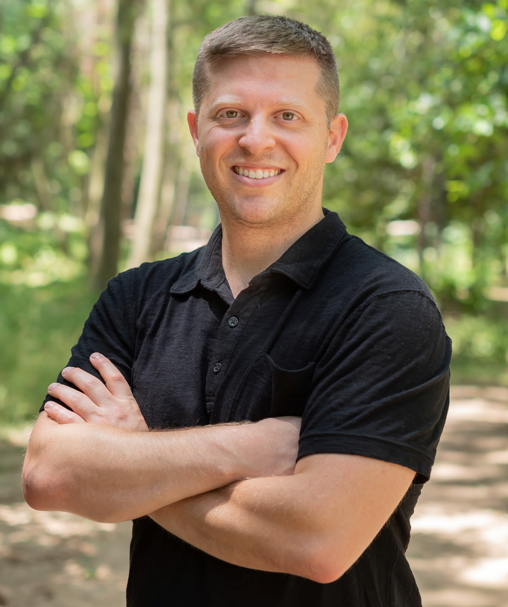

Guest
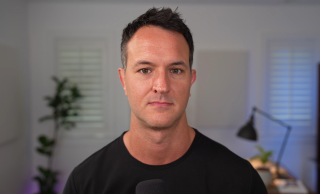
Robert Indries
Builder and Investor, Elkridge Advisors
Robert Indries is a builder and investor with a deep technical background who was working with large language models as early as 2016, well before AI entered mainstream business conversations. He specializes in company acquisitions and has developed a rigorous due diligence process comprising up to 170 questions, refined through years of hands-on experience buying and growing businesses. Robert is known for his nuanced view on the limits of AI in M&A, particularly his belief that human intuition remains essential for detecting deception during the acquisition process.
Key Takeaways
- 1When acquiring or investing in a company, develop a deep due diligence framework by cataloging every surprise you encounter post-deal and converting those into upfront questions for future transactions.
- 2Treat due diligence like a massage therapist finding knots — start with a standard set of core questions, but whenever something doesn't add up, keep pressing deeper until you get clarity.
- 3Sellers are inherently biased toward maximizing their multiple, so assume information will be incomplete or withheld and build your process around uncovering what isn't being said, not just verifying what is.
- 4When market forces beyond your control threaten an acquired business, act quickly to pivot away from direct competition with better-resourced players rather than fighting a battle you cannot win on price or scale.
Key Terms Defined
New to some of the jargon in this episode? Here are plain-English definitions for the terms that came up.
- 7-Figure Business
- A business generating at least $1,000,000 (one million dollars) in annual revenue, referring to the number of digits in the dollar amount. Often used as a milestone benchmark in entrepreneurship communities.
- Financials
- A collective term for a company's financial statements and data, including revenue, expenses, budgets, and profit/loss reports. These documents are used by leaders to make key business decisions.
- Private Equity (PE)
- Investment firms that buy established (often profitable) companies using a mix of their own capital and debt, then improve operations and sell for a profit.
- Equity
- Ownership shares in a company. Giving equity to investors or employees trades a slice of ownership for capital or talent.
- Pivot
- A deliberate, structured change in product, target customer, or business model, made in response to what you've learned from the market.
Chapters
Full Transcript
Sean Weisbrot: What is the hardest thing about acquiring companies with a goal to grow them?
Robert Indries: I think the the hardest part is, getting people to tell you the truth
Robert Indries: because at the end of the day, you know, their goal is to get the highest multiple possible, you know, most bang for their effort in the last few years.
Robert Indries: So they're obviously biased.
Robert Indries: We we are lucky sometimes.
Robert Indries: We we meet amazing individuals that are very upfront, very honest.
Robert Indries: You know, they tell us how it is.
Robert Indries: But many people hide things or intentionally don't say certain details that then end up becoming headaches, you know, months after the acquisition.
Sean Weisbrot: How do you find those before they become a problem?
Robert Indries: Acquisition.
Robert Indries: Well, the main way you do that is by,
Robert Indries: it's like when you I don't know if you've ever had a massage, and, you know, the
Robert Indries: massage therapist, you know, just works their thing on your back, and then they feel something.
Robert Indries: And the moment they feel something, it's like they insist in that area.
Robert Indries: So we do pretty much the same.
Robert Indries: Like, we go through we have a standard of 21 questions and, you know, we analyze stuff.
Robert Indries: And wherever we feel that something isn't adding up, we go deeper and then we go deeper.
Robert Indries: Just, you know, for the sake of, the audience, we have almost a 170,
Robert Indries: questions total, you know, that we go into.
Robert Indries: And for large companies, we ask all of them every time.
Robert Indries: For small companies, we just ask follow-up questions
Robert Indries: in the areas where we feel that we need to know more.
Robert Indries: And so the simplest answer
Robert Indries: I can give you is with experience.
Robert Indries: Because the moment you buy one if you buy a company and then
Robert Indries: you start running it, you realize, oh, I should have asked about this.
Robert Indries: Oh, I should have asked about that.
Robert Indries: So because we've done it already
Robert Indries: many, many times, we already have, like, a backlog of I should have asked, and so we just ask that upfront.
Sean Weisbrot: Yeah.
Sean Weisbrot: That's happened to me a few times.
Sean Weisbrot: I I haven't acquired a company, but I've invested in companies.
Sean Weisbrot: And every single time, I'm like, damn, I wish I knew that before I got involved.
Sean Weisbrot: And it was something that killed the company I just wasn't aware of or, you know.
Sean Weisbrot: Yeah.
Sean Weisbrot: So it's it's extremely painful for anyone that wants to get involved with acquisitions or investments.
Robert Indries: Yeah.
Sean Weisbrot: Do you have a tolerance threshold for failure?
Robert Indries: Well, the way we buy, and manage typically is that, so far,
Robert Indries: in in no cases have we been poor
Robert Indries: at managing a company than the previous owners.
Robert Indries: We've at least matched the previous owner,
Robert Indries: right, in how well the company's was run.
Robert Indries: Typically, we manage the company better.
Sean Weisbrot: Mhmm.
Robert Indries: So in what can happen in terms of failure is the market can change.
Robert Indries: So let's say we invest in a company, that does whatever
Robert Indries: I don't know.
Robert Indries: I'm making stuff up. Maybe they do
Robert Indries: maybe they're a grocery store.
Robert Indries: Right?
Robert Indries: And then you buy that, and then, you know, Amazon just opens up next door or whatever.
Robert Indries: And so you can't really do much after that.
Robert Indries: Like, you,
Robert Indries: prices are better, customer service is better, etcetera, etcetera.
Robert Indries: Right?
Robert Indries: So it then becomes very difficult
Robert Indries: to to sustain that business.
Robert Indries: So what you do, you need to, change and pivot
Robert Indries: into something else, to do something else that is not directly competing with someone that has a budget,
Robert Indries: you know, literally a million times bigger than yours.
Robert Indries: And so what you do, is
Robert Indries: you take the time to pivot.
Robert Indries: And if you pivot into something that you don't want to keep, then you sell.
Robert Indries: You don't sell something that's dying.
Robert Indries: I don't agree with that.
Robert Indries: You you should always sell something that has value.
Robert Indries: If it's dying, it has to be at significant discount.
Robert Indries: However, again, because so let's say you buy a company now, you buy it for 5,000,000,
Robert Indries: then you grow to 7 or 8,000,000, and then a black swan event happens, which basically makes your company less valuable.
Robert Indries: So let's say now you have to sell at the 30% discount.
Robert Indries: But because you raised the bar to, you know, $78,000,000,
Robert Indries: the 30% discount basically gives you all of your money back, right, one, two years later or whenever that happens.
Robert Indries: So
Robert Indries: so far, we haven't lost our clients' money not even once,
Robert Indries: which is, you know, not easy, but, we always try to at least make their money back, and or our money, you know, because we co invest most of the time.
Sean Weisbrot: How much are you relying on artificial intelligence to make your investment decisions?
Robert Indries: Very little.
Robert Indries: Almost at all.
Sean Weisbrot: Why is that?
Robert Indries: So people
Robert Indries: started talking about AI maybe a couple years ago.
Robert Indries: And, you know, people that I know, they know I'm an engineer.
Robert Indries: They know I'm very geeky.
Robert Indries: You know?
Robert Indries: They come to me, Robert, did you see what AI can do? And so on and so forth.
Robert Indries: I was like, guys, what are you talking about?
Robert Indries: Right?
Robert Indries: Number one, this isn't real AI. It's just generative.
Robert Indries: It you just feed it text and it spews out text based on what it knows.
Robert Indries: Right?
Robert Indries: And then number two, we've been building AI since, you know, 2016.
Robert Indries: Right?
Robert Indries: So ten years ago, a decade ago, we were building it, like, actual AI, smart, computer, let's say, we call them
Robert Indries: language models.
Robert Indries: Right?
Robert Indries: So we would build these language models way, way before
Robert Indries: AI became cool.
Robert Indries: So AI became cool, let's say, in 2022, 2023,
Robert Indries: something like that.
Robert Indries: You know, again, seven years before that, we're already building LLMs. And
Robert Indries: in that world where we were building artificial intelligence for banks within The US, for the US Athletics Corporation, for, you know, various different entities
Robert Indries: that really wanted to, you know, be innovative.
Robert Indries: I can tell you that real AI is nothing like chat GPT, right, or whatever.
Robert Indries: So
Robert Indries: it feeds off of information that it has.
Robert Indries: And because it does that, it it can be only as helpful
Robert Indries: as the information it has.
Robert Indries: It can't be more helpful than the information.
Robert Indries: So,
Robert Indries: what we do so for example, let's say you ask it to write a script, an email script, right, for outreach, b to b, whatever your market is, you tell it what you need, and it writes a script. 90% of the time, AI generated scripts, underperform
Robert Indries: the scripts we have in our marketing agency.
Robert Indries: A marketing agency that has been, you know, conducting business since, you know, maybe twelve years ago.
Robert Indries: Right?
Robert Indries: We have millions of data points on what scripts actually work and which scripts actually fail.
Robert Indries: So AI looks online, looks at blogs, looks at wherever it looks at. Right?
Robert Indries: And then pull scripts like what you should write and then gives you that as an option.
Robert Indries: But it's inferior to an actual agency that will not tell you its exact scripts and how it gets, you know,
Robert Indries: 60% open rate, you know, and a seven to 8% reply rate.
Robert Indries: You know, we have huge, let's say, advantages because of what we have internally.
Robert Indries: Likewise, with m and a, it's all deal by deal.
Robert Indries: You have to look at every deal.
Robert Indries: And, there are patterns, I will admit.
Robert Indries: Right?
Robert Indries: However,
Robert Indries: AI does not know to look through lies yet.
Robert Indries: Right?
Robert Indries: So people tell you stuff and you you
Robert Indries: know it's a lie, but the AI will not know.
Robert Indries: It will not be able to figure out the lie.
Robert Indries: So right now, it can be helpful, but it it would take more to figure out
Robert Indries: if the AI is true or not in its assumption than it would take to just,
Robert Indries: get to your own conclusions yourself.
Robert Indries: Again, within the world of m and a, I'm talking.
Robert Indries: It you can easily give it, you know, a a balance sheet or a p and l report, and it can give you evaluation based on comparables, blah blah.
Robert Indries: So that stuff is easy.
Robert Indries: Right?
Robert Indries: But when you actually analyze a deal,
Robert Indries: at that part, maybe by the end of twenty twenty six, we'll have some AI or maybe in 2027,
Robert Indries: but right now, that's not the case yet.
Sean Weisbrot: I'm still discovering
Sean Weisbrot: what AI can and can't do, and I recently built myself
Sean Weisbrot: a podcast guest operating system where, like, I've got one that I've built to manage the people that I interview,
Sean Weisbrot: but I also built one to help me manage being a guest on other people's podcasts.
Sean Weisbrot: And I wanted to automate the pitch part as well.
Sean Weisbrot: So it it surfaces the, you know, potential podcast that I should reach out to. And then if I,
Sean Weisbrot: approve it on the spreadsheet, it'll enrich it with data and then draft a pitch and send it. So,
Sean Weisbrot: originally, I was like, well, I have this this template pitch.
Sean Weisbrot: It's kind of about me. It's it's very short.
Sean Weisbrot: It's brief.
Sean Weisbrot: It's something that would tell me if I'd wanna interview someone or not.
Sean Weisbrot: So let me send that.
Sean Weisbrot: And I sent it to a podcast that I quite liked, and their immediate response was, sorry, but we don't think you're a good fit.
Sean Weisbrot: And I was like, okay.
Sean Weisbrot: There's a problem here.
Sean Weisbrot: My pitch turned them off.
Sean Weisbrot: Let me start again.
Sean Weisbrot: Let me actually read their description
Sean Weisbrot: because the AI wasn't doing that.
Sean Weisbrot: Let me read the description, and let me write something that's from me, purely from me. A few sentences at most.
Sean Weisbrot: And
Sean Weisbrot: I did that because it's about productivity.
Sean Weisbrot: And so I talked about in in my my new message to them how I,
Sean Weisbrot: had a company that was really successful, and then I took money to start another business, and that business failed.
Sean Weisbrot: And part of the reason was I was too busy being productive about the wrong things and pissing off my employees and all sorts of things.
Sean Weisbrot: And so I wanted to share about that.
Sean Weisbrot: Their response to that was,
Sean Weisbrot: well, we're currently busy for the next few months.
Sean Weisbrot: Reach out
Sean Weisbrot: in September, and we can talk about it at that time.
Sean Weisbrot: But right now, we're, like, really full.
Sean Weisbrot: So it went from a flat rejection to well, actually, that sounds interesting.
Sean Weisbrot: And it's because I was willing to instead of saying, thank you for your time, going, no. I'm the problem.
Sean Weisbrot: I trusted the AI to do something I shouldn't have trusted the AI to do.
Robert Indries: Exactly.
Sean Weisbrot: And so now I've had to remove that part, and so I can still automate the surfacing,
Robert Indries: Exactly.
Sean Weisbrot: but I have to manually research.
Sean Weisbrot: Do I actually like them?
Sean Weisbrot: Do I feel good about what they do? And what is going to get them to wanna respond to me? Because
Sean Weisbrot: when people pitch me, I don't really get,
Sean Weisbrot: why this is a good fit for your audience some of the times.
Sean Weisbrot: It's more like this is who they are and what they've accomplished, and sometimes it's exciting, and sometimes I don't really care.
Sean Weisbrot: And so
Sean Weisbrot: I guess I I was ignoring my own feeling about
Sean Weisbrot: that and doing the same thing to them that other people do to me. So
Robert Indries: Exactly.
Sean Weisbrot: so, yeah, I'm I'm learning, and I think it's important for people to be able to understand
Sean Weisbrot: what AI can and can't be trusted with.
Sean Weisbrot: And so
Sean Weisbrot: I think it's great that you're aware enough that the AI can handle calculations,
Sean Weisbrot: but that it can't be trusted to surface lies yet.
Sean Weisbrot: But I think
Sean Weisbrot: you have the potential to train a model to understand lies based on
Robert Indries: Yes.
Sean Weisbrot: the pitches you get for
Robert Indries: Yeah.
Sean Weisbrot: people to to work with you.
Sean Weisbrot: So how can despite AI's advances,
Sean Weisbrot: we keep m and a human because at the end of the day, probably a lot of the people you're talking to are probably middle age or retirement age,
Sean Weisbrot: I'm imagining, or they they've got kids that aren't interested in the business.
Sean Weisbrot: I've heard this is a a huge problem right now, and so maybe there's a lot of opportunities, for those kinds of acquisitions
Sean Weisbrot: where they've probably never used AI. They probably don't know how to use AI. They probably haven't implemented AI in their business.
Sean Weisbrot: There's probably massive opportunity to automate.
Sean Weisbrot: But at the end of the day,
Sean Weisbrot: you have to have a human relationship with them to get the deal done.
Sean Weisbrot: Right?
Sean Weisbrot: So how how do we keep m and a human as time goes on?
Robert Indries: Correct.
Robert Indries: Well, I think,
Robert Indries: this the the answer might surprise you, but I think that AI will become more human.
Robert Indries: Because if you look at cars and the way they are designed, they are not designed for optimal efficiency.
Robert Indries: They are designed for optimal comfort.
Robert Indries: Right?
Robert Indries: Like, the you have the pedals where you, as a human, have legs.
Robert Indries: They have the gear shift is where you have your right hand, right, or left hand.
Robert Indries: Depends.
Robert Indries: Right?
Robert Indries: The steering wheel is right here.
Robert Indries: The you know, everything is designed for you.
Robert Indries: And you can look at the chair, look at the table, look at everything
Robert Indries: that you use is designed for you, the headphones, everything.
Robert Indries: So we don't design things that are optimal.
Robert Indries: We design things that are optimal for us from our perspective.
Robert Indries: Right?
Robert Indries: And so we will slowly but surely create AI that is extraordinary for us. So
Robert Indries: in you know, give it, you know, ten, twenty years, whatever, you'll have a robot around your house, you know, that cleans
Robert Indries: and feels like they're a human, you know, like Terminator style.
Robert Indries: Like, you won't be able to tell, you know, that be because you will feel more comfortable.
Robert Indries: You're not gonna look at the, you know,
Robert Indries: stainless steel metal walking around the house, you know, looking all, incredibly,
Robert Indries: fierce, you know, and it can kill you in any moment, you know, type of deal, and then they're just picking up, you know, dirt from the ground.
Robert Indries: Like, you're not gonna do that.
Robert Indries: They're gonna have the exact body
Robert Indries: that you wish for your butler or maid or whatever to have.
Robert Indries: Right?
Robert Indries: And that's that's gonna be it. Not because that's optimal,
Robert Indries: but because that's what we are comfortable with.
Robert Indries: So the exact same thing will happen with AI. Give it maybe one to two years, and digitally, I will be able to create
Robert Indries: a digital avatar of myself that looks exactly like me, sounds exactly like me. You will not be able to tell.
Robert Indries: I could have this podcast delegated two years from now.
Robert Indries: Right?
Robert Indries: And you can delegate yourself
Robert Indries: on the podcast.
Robert Indries: Oh, I wanna have, you know, 10 podcasts today, but you know what?
Robert Indries: I don't feel like waking up today.
Robert Indries: No problem.
Robert Indries: The AI will handle it. Right?
Robert Indries: And so
Robert Indries: I'm not saying that's a good future.
Robert Indries: I'm just saying it is what is going to happen.
Robert Indries: Like, don't tell me, you know, video AI and voice AI and all of these virtual versions of AI will not evolve so much that they will be indistinguishable from us. So
Robert Indries: you won't care.
Robert Indries: That's my answer.
Robert Indries: Right?
Robert Indries: Two, three, four, five years from now, AI will just like you use a smartphone now, and twenty years ago, smartphones weren't a thing.
Robert Indries: But now everyone uses one.
Robert Indries: Twenty years from now, everyone will be using AI and no one will care.
Robert Indries: Right?
Robert Indries: You you won't
Robert Indries: you won't even think, like, those conversations of what should we eat tonight won't happen.
Robert Indries: You know, your maid already ordered, you know, pasta because they know that's what you will crave tonight.
Robert Indries: Because, you know, in the morning, you ate I don't know what and that by default will give you a craving for something else.
Robert Indries: Right?
Robert Indries: Those things will already be figured out by the AI, and the only reason we're building AI is to have better lives for us all.
Robert Indries: It's very selfish.
Robert Indries: Everything we do is selfish for for humanity.
Robert Indries: You know, the cars, the everything is just so we have a better life.
Robert Indries: The the the poorest person,
Robert Indries: you know, or some of the poorest people in The US right now
Robert Indries: live better than the richest kings from a couple hundred years ago.
Robert Indries: Right?
Robert Indries: They have access to more stuff, you know, like to books, to knowledge, to foods, to shout, to whatever,
Robert Indries: to warmth, you know, to to comfortable beds and so on. Right?
Robert Indries: And the richest kings from two hundred years ago, they they didn't have heating.
Robert Indries: You know, they they couldn't eat in the winter, just maybe grains because that's the only thing they had left over, you know, if they had any,
Robert Indries: etcetera, etcetera.
Robert Indries: So maybe two hundred, no. But five hundred years ago, definitely.
Robert Indries: Two hundred years ago, you already had the the agricultural revolution.
Robert Indries: But, my point is every decade or so, especially now, the the amount of comfort is insane that that,
Robert Indries: we get, and AI is just part of that comfort.
Sean Weisbrot: Is this part of the thesis that you execute on with the companies you're acquiring?
Sean Weisbrot: Or because I I've spoken to a private equity person who
Sean Weisbrot: only invests in businesses that AI won't touch.
Robert Indries: Yeah.
Robert Indries: So
Robert Indries: businesses that AI won't touch, some someone that says that is someone that's not an engineer.
Robert Indries: Any engineer will tell you that all industries will change 100%. You why would I put in jeopardy
Robert Indries: the lives of 100 construction workers when a when a a robot can do that?
Robert Indries: And they it it doesn't need time off.
Robert Indries: It's not gonna ask for a salary.
Robert Indries: It's not gonna eat.
Robert Indries: It just needs electricity.
Robert Indries: So I literally just power up. I put I put in some high-tech, imagine, you know, 20 from now, super high-tech, solar panels,
Robert Indries: you know, that power my entire workforce of 20 robots, and they'll build the house or the building, whatever.
Robert Indries: Yeah.
Robert Indries: And and by the way, they'll do it perfectly.
Robert Indries: No mistakes.
Robert Indries: Every
Robert Indries: cube, every electrical wiring, everything will be done perfectly.
Robert Indries: Right?
Robert Indries: They will not, you know, jeopardize your material.
Robert Indries: It was gonna actually be more cost effective.
Robert Indries: I don't tell me there'll be people driving buses twenty years from now because that's just false.
Robert Indries: There won't be. You know, the bus will drive itself.
Robert Indries: Don't tell me that there'll be accountants twenty years from now.
Robert Indries: Why would you have an accountant when it's just math?
Robert Indries: Sincerely, like, what what was the point?
Robert Indries: Why would you have a lawyer
Robert Indries: where where all laws are very clear?
Robert Indries: You know, they're very cut and dry.
Robert Indries: Right?
Robert Indries: You'll have, you know, AI just building the most amazing contract and the AI negotiating with other AI, you know, making compromises
Robert Indries: on each side, you know, just so that they can, you know, reach settlement or whatever.
Robert Indries: Right?
Robert Indries: When you will sue someone twenty years from now, you will just tell the AI to sue them.
Robert Indries: Right?
Robert Indries: And then, you know, a few days later, you'll just either get money or you realize you lost the lawsuit and you'll have to, you know, give them money or whatever.
Robert Indries: You know?
Robert Indries: All industries will change.
Robert Indries: There isn't a single industry that won't change.
Robert Indries: Why would you have cleaning lasers?
Robert Indries: Why would you have anything that you have today, you know, if AI can do it, in the future?
Robert Indries: The only difference is that they don't see the future.
Robert Indries: They don't see enough in advance.
Robert Indries: So they say, well, in the next five to ten years, you'll still use electricians.
Robert Indries: Okay.
Robert Indries: Fine.
Robert Indries: You will.
Robert Indries: But twenty years from now, you won't. Right?
Robert Indries: So just because it's valid for ten years doesn't mean it will be valid in twenty.
Sean Weisbrot: Do you have a utilitarian view or,
Sean Weisbrot: like, a positive view of the future for this, or do you think this is a a negative thing?
Robert Indries: The the the only problem of humanity is, is the ego.
Robert Indries: We have ego.
Robert Indries: Right?
Robert Indries: If you look at, you know, certain presidents that I'm not going to name, you know, today that get elected
Robert Indries: and you look at, you know, other individuals,
Robert Indries: and how they how they deal with stuff,
Robert Indries: Ego really is the enemy.
Robert Indries: You know, there's a book on it, and that's the title.
Robert Indries: You know, ego is the enemy.
Robert Indries: But,
Robert Indries: if if we get to a level of consciousness as as a society where we somehow manage to put love, above everything else, then we will be fine.
Robert Indries: If we don't manage to do that, then, you know, psychopath
Robert Indries: will still be a thing because psychopaths is like the mental illness, right, that you have.
Robert Indries: And you can
Robert Indries: it's literally I'm sure they'll figure out what parts of the brain make you be a psycho.
Robert Indries: Right?
Robert Indries: And so if they will be able if we will be able to remove that gene or or that defect from humanity because I really think it's like a defect.
Robert Indries: Right?
Robert Indries: Why wouldn't we just, you know, be good and kind to one another?
Robert Indries: So the ultimate pause
Sean Weisbrot: I could tell you why.
Robert Indries: so
Sean Weisbrot: The the people that run the biggest companies in the world are have psychopathic tendencies.
Robert Indries: yes.
Robert Indries: Yes. I know.
Robert Indries: But but you don't need to run the biggest companies in the world.
Robert Indries: You you don't need that.
Robert Indries: Like, so I have you ever played games, you know, like StarCraft, for example?
Sean Weisbrot: Yeah.
Sean Weisbrot: I played Counter Strike.
Robert Indries: Counter Strike.
Robert Indries: Yeah.
Robert Indries: So so there's,
Robert Indries: there's a game called StarCraft.
Robert Indries: In StarCraft, you have three,
Robert Indries: let's say, main entities.
Robert Indries: You have the Terrans, obviously, us. And you have the Protoss, which is basically a very highly evolved species, and then you have the Zerg.
Robert Indries: So the Terran,
Robert Indries: and fast forward, you know, five hundred years into the future, you know, whatever, you know, technology and so on and so forth, AI, etcetera.
Robert Indries: So the Terrans are basically
Robert Indries: incredibly corrupt.
Robert Indries: It's a dominion.
Robert Indries: It's called the Terrans dominion.
Robert Indries: Right?
Robert Indries: It's,
Robert Indries: it's a form of democracy, but it's actually, you know, closer to Russia at peace, let's say.
Robert Indries: You know, you can't really say, you know, whatever, have propaganda, etcetera.
Robert Indries: So people feel okay, but the reality is that the government controls everything.
Robert Indries: Right?
Sean Weisbrot: Right.
Robert Indries: And so
Robert Indries: that's that's the the the humans.
Robert Indries: Then you have the Zerg.
Robert Indries: They're like,
Robert Indries: they're like insects of highly evolved, whatever.
Robert Indries: They're they're like ants.
Robert Indries: You know, the the ultimate form of
Robert Indries: what's what's that populism or or whatever, where, you know, everyone has one goal and this is what like, it's like no one's unhappy
Robert Indries: because I understand I was born to do this and you were born to do that.
Robert Indries: And, you know, and everyone just has one brain they share and, you know, they they take everything for.
Robert Indries: So that's a a perfectly reasonable,
Robert Indries: outcome.
Robert Indries: And then you have the protos.
Robert Indries: The protos, who are my favorite,
Robert Indries: they're humanoid in nature.
Robert Indries: Like, that's how they look.
Robert Indries: They look like us.
Robert Indries: But the difference is that they are all connected,
Sean Weisbrot: A
Robert Indries: through
Sean Weisbrot: hive mind.
Robert Indries: I can't remember how it's like a hive mind, but it's like,
Robert Indries: telepathy.
Robert Indries: They they all share a brain.
Robert Indries: They all share thoughts.
Robert Indries: You cannot lie as a protoss to one another because I can hear your thoughts even if you're on the other side of the galaxy.
Robert Indries: Right?
Robert Indries: I cannot hear your thoughts and so on. And so that leads to the
Robert Indries: highest form of civilization, at least the way I see it. Right?
Robert Indries: Because then
Robert Indries: there is no corruption.
Robert Indries: You know?
Robert Indries: There there are no negative thoughts.
Robert Indries: There's just, you know, how can we do good together?
Robert Indries: You know, some people will naturally be gifted towards being warriors.
Robert Indries: Some people will naturally be gifted to be scientists or researchers.
Robert Indries: Other people will be teachers in schools or whatever.
Robert Indries: Right?
Robert Indries: And so you have those talents, you know, or or as a society and, you know, everyone has the role based on, you know, what they're naturally gifted to do, and they that will make them happy.
Robert Indries: You know?
Robert Indries: And so
Robert Indries: but but they can choose, you know, to do whatever.
Robert Indries: So you have freedom of of choice and so on. So that's the ultimate positive form.
Robert Indries: The ultimate negative form is, you know, what you have on the terrains where psychopathic people, you know,
Robert Indries: rule the world basically, you know, and it's a it's a not, totalitarian
Robert Indries: regime, you know, and you feel you have some rights, but the reality is you have none, you know, just because you're not interesting enough to the government, you know, they leave you alone, etcetera.
Robert Indries: So
Robert Indries: though those two things can both happen.
Robert Indries: I don't know which one will happen.
Robert Indries: I can be hopeful, you know, and optimistic.
Robert Indries: I I hope we go more towards the pro talk then.
Sean Weisbrot: I would
Sean Weisbrot: I would say the Zerg would happen if Neuralink wins.
Robert Indries: Yeah.
Robert Indries: The the thing is that, you would have to have
Sean Weisbrot: Elon
Robert Indries: a commanding chief.
Robert Indries: Right?
Sean Weisbrot: Musk, obviously.
Robert Indries: That so so, Elon Musk will die,
Robert Indries: probably.
Robert Indries: And I'm not not sure because, you know, it's just he's relatively old.
Robert Indries: You and I might not die because we're, like, in our thirties, so
Robert Indries: we will evolve enough, you know, so that you can live to be a few 100 years old.
Robert Indries: And then if you live to be a few 100 years old, we might invent something, you know, that, makes you basically live forever.
Robert Indries: But I don't know if Elon Musk will get that.
Robert Indries: I think he's, like, 60 something.
Robert Indries: Maybe.
Robert Indries: Maybe.
Robert Indries: He he might he might, live forever as well.
Robert Indries: But, the the point is that,
Robert Indries: he he is not all knowing.
Robert Indries: He makes mistakes.
Robert Indries: Probably makes a lot of them.
Robert Indries: I don't know because, I I don't know the guy too much, but I I do know
Sean Weisbrot: Yeah.
Robert Indries: that someone in insulting people outright is not the wisest
Robert Indries: of them all.
Robert Indries: Right?
Robert Indries: It's just yeah.
Robert Indries: That can't be true.
Robert Indries: Right?
Robert Indries: So the the reality
Robert Indries: is that I don't know that there are people that would be able to
Robert Indries: to run with wisdom.
Robert Indries: I don't know if AI can.
Robert Indries: AI probably can.
Robert Indries: I've seen some very grim,
Robert Indries: movies about the future, you know, that are together with AI. One of them is Upgrade.
Robert Indries: It's
Robert Indries: I haven't slept well for three days after I saw I've seen that.
Sean Weisbrot: Mhmm.
Robert Indries: But, it's it was it was crazy.
Robert Indries: I I recommend you see it. It's it's a perspective of the future that's not so bright with AI.
Sean Weisbrot: What's the most important thing you've learned in your life so far?
Robert Indries: I think it's probably to, you know, to be loving, towards everyone and towards myself.
Robert Indries: Not easy all the time because you you have your own trauma that you deal with and, you know, your your own shortcomings.
Robert Indries: I see the thing that affects,
Robert Indries: us most or at least in my case, it's, tiredness.
Robert Indries: You know?
Robert Indries: You wanna do so many things and, you know, you wanna be a good father and a good husband and a good entrepreneur and, and someone that takes care of their health and someone that talks to their mother and father, you know, and spends time with them and blah blah blah.
Robert Indries: And their list is never ending, you know, of the the things that you wanna do at the same time.
Sean Weisbrot: Right.
Robert Indries: And so you you make compromises or you strategize.
Robert Indries: Right?
Robert Indries: And so you get to a point where you're tired,
Robert Indries: and you're less loving, you know, because you're tired.
Robert Indries: It does come naturally at one point.
Robert Indries: It's like you're you're just
Robert Indries: you you don't insult people or you're not that angry or whatever.
Robert Indries: But I think that if
Robert Indries: if humans learn to love themselves and others more and and, like, make it not like a woo woo thing.
Robert Indries: Like, add conscious effort towards becoming
Robert Indries: better.
Robert Indries: Just like you would add conscious effort, let's say, if you go to the gym and you want bigger muscles, it's like a conscious dedicated effort.
Robert Indries: Or let's say you wanna learn a language or you wanna learn piano.
Robert Indries: It's like a skill.
Robert Indries: So learning to love is a skill.
Robert Indries: And so people, if we would dedicate
Robert Indries: time daily to reflect and to, you know, become more loving,
Robert Indries: if everyone would do it. Even even psychopathic people, if they would realize, like, that it's a priority, and if if they would learn,
Robert Indries: their ego would make them want to become, you know, the most loving person on the planet to to some extent.
Robert Indries: Right?
Robert Indries: So it would work in their favor to, to a big,
Robert Indries: a big regard.
Robert Indries: And that's that's what I think is the thing I've learned.
Robert Indries: That's, like, the most important thing I've learned so far.