Rom Raised $15M Before Writing a Single Line of Product Code
How do you take a company from a simple concept to a massive exit? Serial entrepreneur Rom Lakritz (with a $250M exit and $150M IPO) has a simple framework that explains The 4 Stages of a Startup (From Idea to IPO). In this masterclass, he breaks down the goals, obstacles, and the CEO's evolving role at each stage of the startup journey.
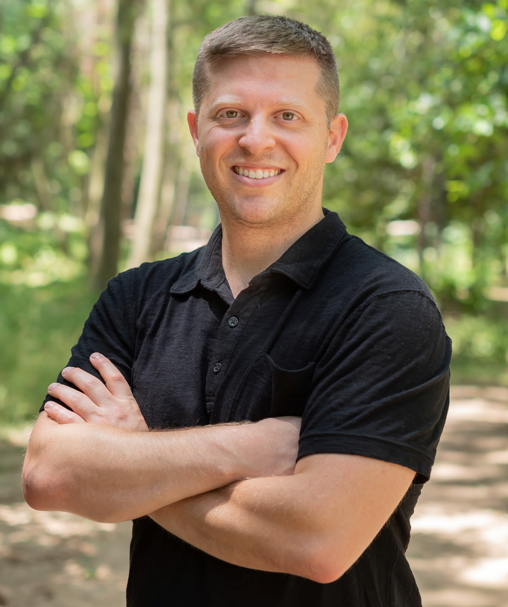

Guest
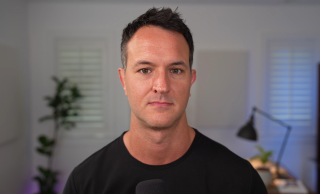
Rom Lakritz
Co-Founder & CEO, Anchor
Rom Lakritz is the Co-founder & CEO of Anchor, a company that makes your entire billing & collections cycle run autonomously, so that you can get paid, on time, effortlessly. He has experience with both a $250M exit and a $150M IPO, giving him unique insights into the four stages of startup development from idea to public offering.
Chapters


Build Executive Visibility
Press placements on CNBC, Bloomberg, and MSN.com,
guaranteed, from one 30-minute interview.
Extracted into a month of content: press, LinkedIn posts, and video, so investors and buyers find real credibility before the first conversation.
Distribution through a channel with 2M+ real views
Full Transcript
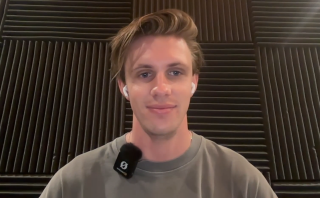
Sean Weisbrot: Welcome back to another episode of the We Live To Build podcast. This is episode 96 and our guest today is Rom Lakritz, an Israeli entrepreneur who co-founded Tapingo Fireglass, Omnis Medical and now Anchor. He has started multiple companies. He has exited multiple companies very successfully, and his current company Anchor, they're working on billing and things that prevent companies from being successful. In this episode, we talk about the different stages of building a company and how your role as CEO evolves as your company grows and scales. This was a fantastic conversation, laid out very nicely. I. And I hope this helps you understand where your company falls, in the timeline of these stages, and hopefully give you a better sense of if you're on track for what people would consider to be a successful company based on his experience with four different companies. Why don't you tell everyone a little bit about yourself and what it is that you do?
Rom Lakritz: I've been an entrepreneur for the past. I guess, 20 plus years from a very early stage, I started opening businesses for the past 10 years. I've taken it, professionally, started, by working in a venture capital fund. Then for the past nine years, I've been opening startups in Israel. Had five startups, one acquisition. by Symantec, for $250 million. one IPO in the London Stock Exchange, for $150 million. Another startup in the antibiotic sector that raised about $40 million up to date. My latest venture is Anchor, which we raised $50 million. And we're building an autonomous building and collection platform to help small businesses literally automate their billing collection and payments, efforts all around the board.
Sean Weisbrot: It sounds like a storied career in a short amount of time.
Rom Lakritz: The first rule for entrepreneurs is persistence and, um. And keep at it, working hard.
Sean Weisbrot: Fair enough. Well, it seems like you're seeing success from that, and that's awesome to hear. I love to talk with people who are able to do great things like that. You wanted to talk with me today about the different stages of a company. So why don't we start there? What are the stages of running a company and then we'll go deeper into each of them.
Rom Lakritz: I work with a lot of entrepreneurs actually in Israel, but also in the US and, and Europe, and. You see that it's, at the end of the day, it's always the same, or you know, there is a fine line that goes through all startups. It starts with an idea. I have an idea, I know how to fix this problem that I have or, or someone else has. And when you look at this stage, the first stage, going from an idea to some kind of a solution to that problem, I always say that there are four things you have to keep in mind. The first thing is that the problem is a challenge that someone will face. Be able to pay money for you to solve. That's the first rule. And the second rule is that this someone is actually a big group so you can scale and that the business can be big. The third thing that I look at is that this solution has to be 10 weeks better than what exists today. So if you look at. Startups that you see working and, and succeeding and look at what there was before their solution, you'll always see a big leap forward. And the last thing, which is, which is super important in this stage, but, but you go into it more in two stages, is, is actually a clear go to market. How am I a person with an idea? I'm going to sell this idea to the people that have these challenges, if you like, I can also take anchor as a, as a case study. That's actually how Anchor started. It started from my problem as a service provider and the challenges that I had with billing and collection, being manual errors over, risk of fraud and, and reputation, and actually late payments, and that feeling of getting paid late and, you know, reminding my clients to pay me, which I had to solve it for the next stage. I would fly back and forth to the US meeting. All types of businesses try to understand how they work, how they do their billing, where their challenges are. And I've seen that actually every meeting I had, the person had that challenge and he would pay for me to solve it part of the time even more. he would pay even more than what I, I thought, they would, which made me go to the next stage and. Prepare that solution that actually solves that challenge and connects all the different moving parts in billing and collection. And just before I started to, to raise money, which we'll get to in a second, is the thoughts of my strategy on our go to market and starting not with all businesses, you know, big and small products and services, but going to, service providers and without, within the service providers industry, concentrating on bookkeepers and financial consultants who are. The trusted advisor of their clients, which would make it easier for them or for us, for the initial go to market.
Sean Weisbrot: Before we go into the second stage, why don't we talk a little bit more about the idea, so, while it's good to have a high level, there might be some pieces in there that help you to get to the next stage. So if we talk about the next stage without having those pieces that connect it. Then it may not make sense to even think about that yet. So what are some things that can trip you up in the idea stage?
Rom Lakritz: most companies actually don't succeed because of the first step in the idea phase. I have a problem, I wanna solve it for myself 'cause I know it's a problem. But when I go out and I start building a solution, nobody else really. Feels that challenge. And then there is no, no real market. So the first challenge, with having an idea and, and trying to see if it's, you know, in the research phase is, is first of all understanding the challenge itself until the end. Most of the companies start without understanding everything. And then there is actually an interesting graph with two axes that you see when an entrepreneur starts. Challenging or, or trying to solve a, a, a challenge or a problem. He knows, he thinks, he understands. He's somewhere around the 70% understanding of that market and that problem. But when he starts diving in, he's starting to learn all the problems around the specific problem and all the tools that exist and. It takes a few months and you actually feel that you know less and less about the specific issue that you started with. But with time, when you learn all the different solutions and how people use them and you know how people work and how people see and, and look at that problem, then you start to learning, the real challenges behind that, the problem that you're trying to solve. And, and that takes a few months, and then you understand how the solution works into the problem. And if it even solves it for yourself. So then what are some opportunities
Sean Weisbrot: in the idea stage? an opportunity in my mind could be like, oh, well we discovered this thing isn't right, so before we go too far, too far, we can fix it and try to improve on an exertion. So like, what are some other opportunities in this stage that might present a solution?
Rom Lakritz: So usually when you start the deep dive into a problem, you learn and see a lot of challenges that come with that problem, and you usually see. Is actually. Better than what you thought and that you solve other things. Again, I'll go back to Anchor, but with Anchor, like I alluded to in the beginning, we wanted to solve late payments and all the hassle and the fees of different tools, and we learned from our customers that actually one of their biggest challenges is called revenue leakage and that they forget to ask for payments for things they have been doing and already did. And, you know, with a small button within my solution, we fixed that problem, which was bigger than what we set out in the beginning. So while you learn better and better, the challenges and the issues. You can actually solve more and more of them. And that's a big opportunity when, when you start, your entrepreneur journey.
Sean Weisbrot: Is there anything else about the idea stage that you want to touch on before we go to the next one?
Rom Lakritz: I can't stress enough that the problem has to be something someone else would be willing to pay decent money to solve. That group has to be a big group so you can scale. 'cause you're not gonna get the whole market and that the solution has to be. 10 weeks better because sometimes you know the good enough is good enough. And if your solution doesn't bring a lot of, a lot of movement and a lot of change in the market, it might not be accepted.
Sean Weisbrot: So let's assume you can get through the obstacles of the idea stage and come out the other end. What is the next stage of running a company?
Rom Lakritz: So the next stage, we're at a place where we have a problem that we can prove that someone would pay money for. It's a big group, it's tenix better, and we know where we are going. And the next stage is actually customer discovery. sometimes, or if we'll go two, three to five years back, this would be called a pre-seed investment. Usually between a hundred and $500,000 before the pandemic today may be a bit higher. Maybe between 500 to five mil, for the customer discovery stage. And in this stage, we better understand the customer needs. We're already coming up with a minimum viable product that they can work with. We see the group behavior, we see the solution properties, how they use things, and why they use things and what they need to integrate with. Between six to 12 months. Our goal is actually to get to a point where we know that, that we're in a problem solution fit, that our solution actually solves the problem. We can see the initial customers starting to use the product, wanting more of the product, and at this stage we will go again to raise funds for the seed round in order to start that customer validation phase, which is the next phase.
Sean Weisbrot: So I have to say that my company is in a very strange position because we. Haven't launched and we don't have users yet, but we've already raised a lot more than the pre-seed stage. We're technically raising our seed now, but because of our industry, we have to raise a lot more. 'cause we're, we're going into enterprise collaboration that has a metaverse component. We're in between stage one and stage two, but we're raising over stage two already.
Rom Lakritz: So, you know, you, you, you look at us. At Anchor, we raised $15 million in the pre-seed, with customer discovery. That's why I said two, three years back 'cause the pandemic changed a few things in, in the numbers. And there are also companies that actually do, something different that's called market product fit. Which means that they come from the market. The market asked for this product, and then the development of the product in accordance with the market just raises or decreases the risk of not accepting the product when it's launched.
Sean Weisbrot: You said you raised 15 million in a pre-seed.
Rom Lakritz: We were somewhere in the customer discovery.
Sean Weisbrot: But you already had a series of other companies with success, so it was a lot easier to show investors, Hey, let's not waste our time. Let's just do this right from the beginning. Let's go fast.
Rom Lakritz: Yeah, we, we also had that, we're the, the three founders are our second, third, fourth timers. But also we had great traction from our customer discovery stage. And our customers just used the product, although it was not ready, you know, when we went through due diligence and investors. Spoke with our customers or, allow us to meet, you know, their contacts, and everybody said, yeah, we want this. You understand that the potential is there and the risk is low. Now the risk is only developing the product fast enough, which takes us to the, to the next stage of, of customer validation, where you raise the seed amount, where what you're talking about, around half and, and $5 million, before COVID. And today it can be somewhere between five and, and, and 50. I've even seen a seed investment and in this phase you go to the customers using the product. You understand how they use it, specifically, which specific features, what are the workflows that they need, how you wanna develop it, and, and in this stage. You need to crack or, or solve in general, it's called product market fit. But product market fit is actually a few things, right? It's the feature set market fit and the UX market fit, and the marketing market fit and messaging market fit and pricing market fit, and everything has to work together. So you'll be able to start selling the product and go to the next phase, which would be customer creation.
Sean Weisbrot: Let's go back to the customer discovery, 'cause we were talking about obstacles there and opportunities and all of that. So let's, let's cover those and then we'll get into the next one you had said was customer validation, right? So why don't you go back there real fast and, and talk a little bit about the obstacles and obser opportunities.
Rom Lakritz: For customer discovery, you start working usually with a few different industries or businesses that are built differently, and what you see is that every business uses your product a bit differently and is looking, has different challenges. So it solves different things and they have different needs. And you start learning, you know what's, what's that one product that would solve everyone's. Problems that use the system today, on your MVP, there are a lot of obstacles in this phase because every new user that comes on the system understands it a bit differently, understands the benefits a bit differently. His workflow today. It's a bit different. So when he comes into the product and uses it, he uses different features and pays attention to different things. And through these, you know, weekly or biweekly discussions with design partners and customers, you start drawing a line of, of how the product is gonna look like and what are the features that are super important that you need to develop. With limited amounts of funds and time, the opportunities here remain the same actually as, as the idea stage. You start seeing that you can solve more things or solve things together, maybe integrate to different products that exist today and help you solve a specific challenge that you're going after.
Sean Weisbrot: Are there any other pieces of wisdom about the customer discovery stage you want to share before we go onto the third one? Not that I can think of. Do you have anything, Sean? I have not been in a startup that has gotten to customer discovery. This is my first startup. All of the businesses I ran before were just me with some other people who were providing services that I contracted out to for specific things. So my client was my customer, and I already knew who they were. It was a very specific industry, so I didn't have any. The opportunity to expand beyond that because we were only built for that industry. So it was a very different thought process that went into running that kind of a company. And, that's one of the reasons why I wanted to do a startup because I knew that it would be a very different challenge. And, like I said, we're in between the idea stage and the customer discovery stage, customer discovery stage. We know who our customers are. We're pretty sure we know who our customers are going to be. My thought process about who our potential customers are differs from my COOs and differs from CTOs and differs from the product managers and different from the marketing directors. So we all have our own ideas, so we have to agree upon who we're going to target first while knowing that my podcast is an additive thing. Where, like for example, I get to talk to people like you that are CEOs. So my thinking is our customers, the people we should be going after are CEOs. However, I also understand that even though the CEOs are probably gonna be the one who says, yes, let's try it, it's their employees that are gonna be the ones that are managing the process and using it for their own daily needs. So. My hope is that I can convince CEOs to bring their teams on to try while my team's goal is to make sure that the teams want to stay and use it. So, we all have our own kind of theory about how that's gonna play out and we really won't know for probably another year.
Rom Lakritz: Yeah. So you, you actually, it's, it's super cool 'cause you actually touch that, another obstacle and, and, um. An opportunity here. 'cause what you always see from the idea stage and the customer discovery, it's, it's not that only your customers look at your product differently and you know the different challenges, but also your team within Anchor. We do this, a job to be done, exercise every couple of months that we're looking at the product and saying, okay everyone, let's see what you think is the job to be done as an anchor for our clients. You know, customer success, talk to different industries, our product. People talk to different functions within our customers organizations and you see that there is still a variation. Even though we're at the end of the customer validation stage, you still see a big, very big variation about how. Each team member is looking at the product and at the solution. and, and again, it's a, it's an obstacle 'cause you want everyone to be super focused and super aligned. But on the other hand, you want everyone to keep their minds open and give their feedback because you might overlook a solution or opportunity that you have. During this journey. So it's interesting that you brought it up.
Sean Weisbrot: Yeah, and that's one of the reasons why I love doing this podcast because I get to, again, I get to talk to people who are in different stages and different industries. So, you know, while our experiences, because we're doing something different, vary, we may have similar thought processes or experiences about the individual stages in which we're growing our company based on, you know, what we do with our teams on a daily basis. Yeah. So the third stage of running a company, you said, was. Customer validation. So why don't you talk about what that looks like and then, we will talk about the obstacles and opportunities.
Rom Lakritz: Perfect. So, in the discovery stage, we try to discover with an MVP, but in the validation stage, we went a few months and we developed everything we learned in the customer discovery stage. And we're coming up with a product, with pricing, with some marketing and messaging, and we're trying to conge everything to one, one unit that works together. And you always have with time, you know, patches in the product that don't exactly look the same and, and you talk to your customers and you validate that the product actually serves the pro. This solves their problem. And the way or the best way to validate a customer is for him to pay for your product. And you know, you see him grow, see that he keeps on using the product and then you understand that, you know that you're okay to go. And, and for every industry and for every customer I. He pays attention to different things, but he accounts for things like a, the pricing and how you present the pricing. 'cause you can say $5 or you can say, $5 per something. Or you can say, you know, 1%, which is actually the same. But the framing was different and the messaging was different. And the benefits the customer sees are different and how he uses the product or what he understands and how he uses your customer success and everything there needs to work. For the first time since you started this journey, probably between 12 and 18 months ago, for the first time, you're, you're taking someone outside the organization and you see how he understands everything that you tried to put in place. The workflows, the user experience, the messaging, your own wording on, or things you invented that didn't exist before. And, it's super interesting and, and challenging. Phase, which at the end of this phase, the success of the company that succeeded with this phase is the companies you, you learn of, you know, with their, with their round day when they start to scale. This is the last step before you have a product to sell and you start growth in the market. So what are some obstacles and opportunities in this stage? Once a customer moves to be a paying customer, another design partner, like he's in the customer discovery, you know, there is less patience. They look for the perfect product, which in the customer discovery stage, the whole setup with your customers and the discussions are a bit different and they are more accustomed to, you know, to bugs, and they're okay with it. They're innovators by heart and usually with customer validation. You get to a point where you start to talk to early adopters and the early majority, and not only innovators that understand technology and understand how to do everything, and, and, and you see that, you know, that you need to move really fast and be really here. Everything that happens in your, in your system to make sure that, that all the flows are, are perfect. You can learn a lot again in, in this process, from your customers. How much they're willing to pay. A lot of AB testing in this phase, trying to understand, you know, different terms, different framing for the pricing, and you see, you know, what sticks and what doesn't stick. with the marketing, it's the first time that the marketing actually gets to the product. So a lead doesn't talk to the CEO or the COO or the product guy, but actually goes from a commercial or something that he reads into the product and starts using it.
Sean Weisbrot: I think I'm excited most for customer validation because I've been thinking about and working on this for several years. So when we get there, I'll be able to really shine because I have a background in psychology, so I love thinking about how things are. Can affect people. Now, I took an oath when I was in college that I would never use psychology to hurt people because you can very easily do that. And I think we see that with social media now where platforms like Facebook have been designed to manipulate people and to get them to use it for longer periods of time. And actually it's been proven that their algorithm tends towards making people angry in order to get them to keep scrolling. Which I think is just disgusting on a very deep level, but I think that you can use psychology in a way that actually makes the person like what you're doing and wanna use your product without hurting them. And through this appreciation, they wanna stick, stick around, and they want to pay you, and they're willing to pay for more because they appreciate the sincerity that you put into it. Making them feel good because, you know, Facebook's model is the more you scroll, the more we can get data about you, the more we can sell to people. But our model is we're not selling anything to anyone except for, you know, charging you to use our product. So you are not the product, the software is the product. You are our customer. You are a human being, you're a user, and we care about you, and we want you to know that you know what? You need is what we're going to build, and we'll build it in a way that is flexible for what you need to do, rather than forcing you to adapt your own processes and operations to do what we allow you to do. Therefore, we don't want our software to limit you. So I think there's a lot of flexibility in the customer validation stage for showing that off. And I think that every founder should be thinking about it. How can I build something that's great but doesn't hurt my customer's psychology in the process? And I think if you could do that, especially now in the 2020s post COVID and this kind of post, people waking up to being manipulated and realizing that they don't wanna be manipulated, I think it's a good opportunity for businesses to shine, to outshine their competition. I think in that regard.
Rom Lakritz: Yeah, you, you nailed it. That that's exactly what customer validation is, is about. You'll see when you, when you start working on that. That, you know, you're speaking about flexibility, but people also want simplicity. So you'll see part of your customers that it's too much for them, and they'll tell you, no, it's too much flexibility. And then you move and say, okay, I'll do these defaults and I'll move it to advanced and that's how I'm gonna solve it. But then you see that it's too much simplicity, then you open it again and you take flexi. It's a whole game of how you present the product and what. The other side understands from it, and there are a lot of tensions. You know, just like I mentioned with flexibility and simplicity. You have one button like Apple, it's easy. you want Android, it's more flexible, but it's harder to work with. So this stage is really about solving a lot of challenges that also have to be solved together. You can't, you know, only solve the product, but not solve it. Marketing and messaging, everything has to work together and it's a real challenge and it's really fun for the team that, you know, you, you see that there is a lot of brainstorming. 'cause once the marketing understands something and it comes back to the product and they say, okay, we need to move this and that, then the product understood in the same week, exactly the opposite. So it's really interesting, um. Process that the company goes through.
Sean Weisbrot: I look at a company like Clickup for a lot of my inspiration. My team absolutely loves Clickup, and what I think they do really well is that there's a tremendous amount of flexibility. But it feels really easy to get involved in having a flexible experience with it. We use click up for the, for the hiring funnel that we use for our team members. When I first got Clickup for the team, I had no idea you could do it, but my COO figured out how to use it and it's automated and it's beautiful. I have no idea how he did it, but it works really, really well. So it's a great experience and I look at them. For inspiration for how we can develop our product so that everything we develop, every, every high level view of something we're doing is an, an engine or a framework that is very flexible but requires no coding and, and just requires a few clicks or a few, you know, dropdowns to customize what you need it to be. And then from there your team can build out the details of it.
Rom Lakritz: Yeah. So it's, it's funny you say that 'cause we do the same with monday.com. We also have that product throughout the organization, working with it for development and HR and, you know, operations and, and everything that we do. And, we also look at how they did the user experience and how well it worked. It's thought of and how easy it is to understand. And even if you don't completely understand alone, you can always go and get templates and, and, we're, we're also taking ideas from different products that we see and use.
Sean Weisbrot: So are there any other pieces of wisdom about the customer validation stage?
Rom Lakritz: Persistence, you see that AB testing, you know, it's, it's another test and another test and another test. It takes time, but in the end, once you're there, it's worth it. And, and once, once you're there, you move to customer creation, which is actually the round A of your company. And that's now at a phase where you have that product market feed, you know, the features, the product works. you have paying customers, probably in the dozens. And now you're starting to learn how to sell it. You know, now you are talking about customer acquisition cost, cac and LTV lifetime value and how you do the growth and how the product is self-service or not self-service, and, but how you maximize the value and become efficient in every stage in the product. And, and actually start getting repeatable sales where you know exactly how you get your leads, how you do your sales, how you retain your, our, the customers. The game is different. It's more like, you said that you are concentrated on, and the CEOs and the decision makers. That's where the customer creation is. Now. The product is there. It's validated with your customers and you're starting to sell it. So
Sean Weisbrot: Why don't you talk about the obstacles and opportunities of customer creation?
Rom Lakritz: It really depends on what kind of product you have and how you do your sales. But at the end of the day, this is the stage where you learn how. You do sales, if it's through social marketing, if it's through LinkedIn, if you use Facebook, if you take leads, if it's through conferences, how do you find the top of the funnel? How do you get as many leads as you can? And then you learn how to talk to them, how to bring them to the product, how if it's product led growth or if it's enterprise sales, how the sales rep. What's the playbook? You write your playbook and how you bring them in and how they start using the system and see the value and grow on the system. And the opportunity here is everything. 'cause you already have a product and you're learning how to sell it. And once you know how to sell it, it's a company. Now you're building a company and, and you're building sales and, and you're growing. And during the customer creation, you're learning how to sell that product after you've been building it for the past 18 to 24 months.
Sean Weisbrot: Do you have any other pieces of wisdom about this? Because after this I've got a very important question that I think will take up the rest of our time.
Rom Lakritz: Okay. So there is one rule in the customer creation market that, that I, I assume that. A lot of people know, but I'll, I'll give it anyway, is that in theory for products between zero to $10,000, in a RR, you have to find a way to funnel everything automatically, and the product has to be self-service. If you have a product that you sell for 5,000, $10,000 yearly, you cannot sell it with sales reps and you have to find a way for the product to be self-service. And if you can't, your customer acquisition costs would be so high in relation to your revenue from the same customer that it probably won't work. and it happens to startups that have, you know, have been going through this for 24 months and, and, at the end of the day when they come to sell the product, they see that they didn't build it self service. Because from the beginning, they built the product. Throughout the, the customer validation and the customer discovery with sales. And then they have hurdles here. 'cause you know, usually you have investors by this stage and investors want you to move faster. And, that's an important point to remember.
Sean Weisbrot: I've heard that the CEO's role evolves as the company is changing and growing, but since I haven't been there. I don't know how I'm supposed to evolve my own role. What I seem to understand is the overarching goal is to make it so that your team basically doesn't need you, and that they can kind of handle everything without you, but that you are focusing on the vision of it so that everyone else can then make it happen. Can you go a little bit deeper and talk about what you saw? As being the most important thing that you, as the CEO could do in each of these stages to, to not only stay relevant, but keep the company moving forward.
Rom Lakritz: That's exactly what you said. The way I look at it is that the CEO builds machines. Okay, so these machines are actually teams. So you get a manager for marketing, for product, for r and d, for backend, for front end, for operations, for finance, for whatever. And then this person, this manager, builds. Machine, a team that you know needs to do the marketing and the funnel and the PR and everything. And once you as the CEO, that's, so in the first stage, I have an idea, your goal is to raise funds and you know, be the entrepreneur. The second stage, the customer discovery, the customer validation, you're actually building these teams and. That's most of what you're doing is building those teams, teaching them, you're usually still the product market expert, so it takes time until you are not doing that anymore. Once these machines are working, all you have to do is repair them when needed. So if you see something that's not working, you come in, ask you, you help the manager build that machine and, and make it work again. And, so that's on one hand. And on the other hand, it is raising funds, working on the vision, casting the vision, making sure that everyone in the team is engaged and understands what you're doing and why you're doing it. As far as you go through this journey, the more you move forward, the more your managers become self-reliant and they need you less and less. And then you start working on vision and usually a little bit of partnerships and raising funds, and that's where. Most of your role will be around in, in a year or two.
Sean Weisbrot: So it's interesting because I have a COO, which I think was probably early for most people. I, I don't know what, did you start off with a COO or did you hire someone, or was one of your founders a COO in the past? What does that look like for you?
Rom Lakritz: It took us time. We just. Hired someone, which I feel really good about. It took us time, but I'm, I'm actually, I always push entrepreneurs that don't do these things to be the COO. I'm, I'm just, you know, I've been the C-F-O C-O-O entrepreneur for the past company, so I knew exactly what I needed. So I brought someone a, a, a manager instead of a COO to do the work.
Sean Weisbrot: I started off without a COO and I started doing all of that myself. And then after about a year, I hired someone 'cause he was a close friend of mine and I knew that he could do it and I knew that we'd work well together and we do. And he is great and I don't regret hiring him. I sometimes think that maybe like for other teams it might be too early, but I knew that I couldn't handle it because I was being the product manager, the project manager, the UI ui designer, and trying to deal with investors and I couldn't handle it all. I'm not a technical founder, so I do, the first person I hired was a lead developer who's now our CTO, and he developed our architecture. But when my COO came on, he looked at what I built and he, he's like, it was a good effort, but it's trash. So he spent the last two years basically like. Fixing everything I did and building them into proper systems and preparing for us to scale the team up. So it's good that we did it because if I had persisted, we probably would have absolutely just nothing usable and we'd be raising millions of dollars that would then go towards fixing all of our internal systems rather than growing the team. So I think it was a good decision to hire him, but at the same time, a lot of this, like team building and things like that, he has taken over a lot of that. Responsibility. So like he's talking with the CTO, he's talking with the product manager, he's talking with the marketing director for the things that he needs in order to make sure that the systems he's developing support their functions and they can help them work internally with each other and all of that. And I kind of like it. The product manager also took over my project management. So mostly what I do is deal with the investors and make sure that they have what they need. And you know, if that means there's a conversation about the product roadmap or if there's a conversation about ui ux, like I jump into those things. But mostly I'm kind of like the cheerleader already. They take over pretty much everything. There's not really much that I have to do, so sometimes I feel. I don't wanna say the word bored, but I feel guilty as if there's more I could be doing. And yet everyone's like, no, you're good. Just like keep doing what you're doing. It's like, but I don't feel like I'm doing anything.
Rom Lakritz: Yeah. But if your team is happy and everyone is engaged and everyone is doing a great job, that means that you brought the right people, that build the right machines and that the machines are working and you don't have to fix them. And once you would need to fix them or something would happen, you'll be the first one to jump in and help, I assume.
Sean Weisbrot: Well, yeah. That's where we're heading next because we're in the middle of a raise and that raise will probably see us hiring a hundred people in the next 18 months, so, I feel like the majority of my time will be working with. the hiring process to make sure that the next hundred people we hire continue to fit our culture and, and understand our vision and all of that. So I would be doing a lot of the hiring and onboarding with them, alongside the operations team. That'll be like doing the actual process of putting out the job ads and, and fielding people and all that. So, yeah, I see myself evolving into more of like making sure we're hiring the right people. And that they get slotted into the right teams. That my operation, that my COO has determined those teams need to exist and all of that. So he's done a lot of the prep on understanding the market rates for hiring people and the job description. So knowing, you know, why do we need this person? When do we need this person? How much do we need to pay this person? Things like that. So he's been just absolutely fantastic in so many ways.
Rom Lakritz: Sounds, sounds perfect.
Sean Weisbrot: So is there anything we haven't covered that you'd like to discuss to help close this out?
Rom Lakritz: In order to be a successful entrepreneur, you have to decide that that's what you wanna do. The journey itself is challenging, has a lot of obstacles, but also has a lot of opportunities and you can learn a lot about yourself and your team members and the product and the market and everything you're doing. And persistence is, you know, is for, for me, it's the name of the game. All right, great. How can people follow up with you? People can follow up with me through LinkedIn, my email. I'll be happy to help.
Build Executive Visibility
Press placements on CNBC, Bloomberg, and MSN.com,
guaranteed, from one 30-minute interview.
Extracted into a month of content: press, LinkedIn posts, and video, so investors and buyers find real credibility before the first conversation.
Distribution through a channel with 2M+ real views
