A Mompreneur's Confession: Postpartum is a Form of War
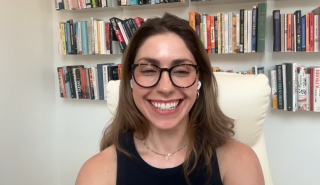
This is the conversation about new motherhood that you won't hear in a parenting book. It's A Mompreneur's Confession: Postpartum is a Form of War. In this deeply personal interview, author and Kahlmi CEO Elina Furman gets brutally honest about her experience with postpartum depression, where the sense of loss and identity crisis can be as challenging as building a business.
Guest
Elina Furman
Author & CEO, Kahlmi
Chapters
Full Transcript
Sean Weisbrot: Welcome back to another episode of the We Live To Build podcast. I'm here today with Alina Furman. She is the founder and CEO of call me a wellness brand focused on babies and children whose mission it is to demystify and educate families about the importance of regular massage practice. The reason why I'm bringing Alina onto is because.
Sean Weisbrot: While I have had a number of female entrepreneurs on as guests, I haven't really had the opportunity to talk about what it's like to be a mother and an entrepreneur. Um, but even more so, she went through postpartum depression, which I think is probably a lot more common than, uh, a lot of people realize, especially men who never have to go through it.
Sean Weisbrot: So, uh, I thought this would be a good opportunity to not just give, uh, male entrepreneurs an opportunity to better understand, uh, what their spouses might be going through or their business partners, um, but also for female entrepreneurs to realize that, you know, you're not alone and other people are also probably going through it too.
Sean Weisbrot: So, uh, why don't you tell everyone a little bit more about Call me and, uh, your journey to getting there, and we'll go from there.
Elina Furman: When I decided to launch Calm Me, um, this was already after a series of other businesses that I had, um, launched and scaled for some people. And then also, this is my first product based business on my own.
Elina Furman: But, uh, when I did have my kids about 15, 14 years ago, my kids are 10 and 14 now. I, it was really hard to figure out. I was an author. I had already published 20 books from mainstream publishers. I was, you know, on the all the morning shows and doing, I was pretty successful already. But then when I had kids, I felt like kind of my life had, um, I.
Elina Furman: It, it stopped in a way and also began, and there was this weird period of transition where all of a sudden you're just, um, responsible for another being. And I was still working full-time and doing, uh, other projects and it was really super hard and I always. You know, think back to that time, and I really would never have been able to launch anything at, um, while going through that initial period because, you know, my, my baby was my launch and there was so much to get adjusted to.
Elina Furman: So I had to kind of scale back my career at that point. And even though I had launched other businesses, I could never really, um. I always felt that I would have to compromise or have a partner or somehow scale, create a business that was a more service based or, um, and I could never grow to the extent that I would really want to if I was like a male or single female.
Elina Furman: And I could work kind of just like nonstop. Um, so I really always tempered my ambitions because I had to, and I had to balance it with having two kids.
Sean Weisbrot: Was your expectation of motherhood, the reality, or, or was there a gap in, what was that gap?
Elina Furman: When I was pregnant, I thought it was going to be super easy to manage everything.
Elina Furman: I was like, well, I'm gonna be working at home and I'm going to be, um, taking care of my baby and everything's gonna be working out perfectly and just. He's gonna sleep and, and a schedule. And none of that happened. Um, I did, you know, when I did have my first son, I was working at the hospital and like the day, that day, that same day.
Elina Furman: 'cause I had, um, I was an editor in chief of a magazine at that time and I remember just never having that break. And some women have that break because maybe they work for a corporation. But if you're working for your own business, um, you really. Are like the last, you know, stop. And so if there's a situation or a problem, um, you are the one, they're, they're, they're gonna be going to.
Elina Furman: And you can't just take a break because you having a baby, like literally having a baby. Emailing and texting. And so this kind of became, you know how I did everything? I was feeding the baby, I was writing emails, and it was, and women do it every day and they are having small babies and, and running their businesses.
Elina Furman: And honestly, um, I couldn't imagine, and I know many of them, and I work with many of them, um, and they're scaling their businesses and. Unless really you have some help, it's just, I, I don't know how they're doing it, honestly, because it's just all in and you're like, wow. And the shock of it, the shock of having a baby of all of a sudden not having your schedule, um, being so out of control.
Elina Furman: I think, I think as, you know, a type A person and an ambitious person, and you know, I'm sure all the. Uh, guys and women out there who are like, that can identify, you know, you are used to just like, oh, okay. You are your own, you know, obstacle. So you are the only obstacle. Like if, if you have enough energy, you can work all day.
Elina Furman: And I used to do that, but then all of a sudden you have no control over anything in your life. And you don't know when your baby's gonna wake up. You don't know when they're gonna need you. You don't have any, um, control over your schedule anymore. You are at the beck and call of another human. Um.
Elina Furman: Basically all, every single minute of your day and your nights as well. So it's just like, it's almost like all of a sudden I found myself in this. Like, um, you know, when you're in Vegas and you have no idea what time it is, um, it could be night, it could be day. Like, you're just like, I am, like my whole reality has shifted and I'm in this other universe and it's completely different than what I thought it was gonna be.
Sean Weisbrot: Did you have any support? Like, did you have your parents nearby or siblings or anyone that could help you or?
Elina Furman: So my sister, she always, you know, we laugh. She's a year older than me and she always, you know, never wanted kids. And so, you know, she's like, thank God you did. And so she was not involved because she just, you know, we weren't like, oh, we love babies. We weren't like that kind of, uh. People at the time. And um, so she just kind of ran when she saw, like, and my son had colic and he had, um, he was crying all the time, so she was like, this is not for me. I'm so glad I don't have kids. So that was it. And she's still like that. So she, she comes over and she's exactly the same.
Elina Furman: Um, my mom was living close by and, uh, but she was working full-time. So, um, what I did, um, have. And my husband had left after, uh, after a week at home. And I was like, where are you going? Like, don't leave me alone with this baby. You know, I have to work and, and have this baby. And like, I'm like, are you serious?
Elina Furman: Like, how am I supposed to do this? But because he had to work in an office, he had to leave and he got to leave. And I was very jealous and mad at him. And, um. Then my mom, finally, I started a, I launched a, a startup. Um, one of my startups was a, a Lego, Lego subscription company, and it was, my partner was in Silicon Valley at the time, and it was, I was more like it.
Elina Furman: Kind of all in and one and a half. He was, my son was one and a half at the time, and I'm like, I can't do this unless you, my mom had to quit her job and come and help me because I was never going to be able to scale that business unless she had done that.
Sean Weisbrot: You say that you experienced postpartum depression.
Sean Weisbrot: What exactly does that mean? What does that feel like and when did you. Come to understand that that's what you were experiencing.
Elina Furman: People say postpartum depression, postpartum anxiety, and I had probably, you know, I had a lot of different emotions all the time. Um, like go from crying and to happy, to elated, to like, oh, I'm so, you know, and I think that's because your hormones as a woman are just so out of whack.
Elina Furman: You literally just, you know, like produced, you know, it's a science experiment, like you made another life like. I You still are like, what is that? Like, how did, like, I'm not, it, it wasn't like natural, like it, it felt like almost sci-fi, you know? Um, that I had this. Person and I produced it. So, so it, so for me it was more just about like, I, and I wasn't sleeping, so that's the other thing.
Elina Furman: So I don't, I mean, everyone says postpartum depression, anxiety, um, when you are not, when you're sleeping in two, three hour increments, that's a, um, form of war torture, um, that people use. Still to this day, uh, sleep deprivation is a very common, uh, form of. Uh, uh, torture and, um, it's just, it's just that simple.
Elina Furman: And, um, and so people put a lot of labels on it and it's like, well, give me any guy who's like, or you know, who can do that for seven months or eight months straight, where you're up every three hours. Uh, for whatever reason, and you have no idea when you can go back to bed, or if you do go fall asleep for like 10 minutes, then you're woken up again in another, you don't know if you're gonna sleep for three hours or, you know, uh, 30 minutes.
Elina Furman: Um, so, so yeah. So it was a combination of like. Um, just not functioning well in those kinds of insane conditions that we just take for granted. And, you know, and, and until you go through, go through it, you kind of don't believe people, like you're ki people told me like, it's hard. I'm like, oh, it's just, they're not, they don't know they're babies. Difficult or, you know, it's there, it's, it's not gonna be like that for me. But until you go through the hormones, the sleep deprivation, the. Balancing the work with the everyday responsibilities. You don't know how you're going to feel. Um, and usually, and I, I think a lot of women just under report all the things that they go through because, um, you know, we, for me it was like I was still going, I was still highly functioning.
Elina Furman: I still had a full-time job, but, you know, I was struggling and I just couldn't even. Realize that because I was like, it was like the, uh, frog in the boiling water. Like until you're like at the, like at a point where you're like, I'm just going nuts here. You don't really realize it.
Sean Weisbrot: And you said your, your partner was working in an office?
Elina Furman: Uh, my husband. Yeah. He was a, he, yeah. He was, uh, working in a traditional, more traditional setting,
Sean Weisbrot: but outside of work he was with you. And they're And supportive and in it.
Elina Furman: Well, yeah, but I mean the evolutionary speaking, you know, we all talk about, you know, one of my big things is like household responsibilities and how to split everything up, but I feel like a little bit of women are.
Elina Furman: From an evolutionary standpoint set up to be the main caretaker, unfortunately, because if you are nursing, you know, if you're, if you have formula feeding, then yes, and that's great. You know, your partner can come in at night and feed the baby, but say what if you're nursing? Um, so the whole cycle of the biological, um.
Elina Furman: Cycle is set up so that you are the one getting up at night. And yes, you can pump milk, but you really have to be up. Um, and you know, unless you have a night nurse there who's like just taking the baby from you, as soon as you finish feeding them, you know, you have to settle them back to bed. So while my husband tried to be helpful, and there were many times where he was up maybe, and I was like, I just can't deal with this right now, at like five in the morning.
Elina Furman: And I'm like, you take this shift. I was the one who was. Primarily up and dealing with. Um, you know, he, I definitely think he got way more long, longer stretches of sleep, but when he would come home, of course, you know, he would take the baby, but because you're nursing the baby, you're always on. So it's like that's how it's set up that um, no matter even now, my kids, um, my boys, um.
Elina Furman: The youngest still prefers me to put him to bed because I'm like the mom and I'm, he's used to that nurturing for me. So it just becomes like by default that you become the, um, the primary caretaker, even though you make an effort to be equitable. And, you know, I'm a feminist and I was like, my husband's gonna do 50%.
Elina Furman: It is just, oh, it's very hard to get to that 50%. Um, when it comes to children,
Sean Weisbrot: why was it at one and a half that you felt. When, when your son was one and a half, why, why did you feel at that time it was okay to start the next thing, to start a company?
Elina Furman: I feel like the first year are just like, you are li literally just surviving.
Elina Furman: Um, you're, you're just, am I gonna, you're just trying to keep everybody alive and you're like figuring everything out. And then as like the six months, when you hit six months, they become a little more, um, you know, uh. Mobile and a little more animated and a real person rather than like, just, you know, someone you're just caretaking like a plant that you're feeding and growing every day.
Elina Furman: And then, um, at a one, at one year, you kind of catch your breath a little bit. I feel there's like that mark where you made it to one year. Like, and so you begin to, oh, okay, I kind of got this. Like, you know, you've, you've also evolved enough. To, I also evolved enough to not need to control every single moment of my day and understand how to go with the flow more.
Elina Furman: Because again, that's the biggest shock is I think, um, the lack of control over your schedule. And so when you learn how to deal with emotions and ride those waves of like, okay, I can't answer this email now, but I'll answer it like maybe in three hours or. You just begin to be more flowy and fluid and, um, I think you, that's when you start evolving and into a parent.
Elina Furman: And, uh, because I mean, that's the main thing I see with people who don't have kids like my sister and and other people, is that, that they become very rigid over time because they're used to. This happens at this time. I can have a schedule and, and I love schedules, but you just can't do that. So you learn to be less rigid and that, I think ultimately that's what parenthood is fluidity.
Sean Weisbrot: I have a number of friends and family that have kids, and almost universally, they're like, kids are great, but I can't remember the last time I slept. And, uh. Yeah, so one of my, uh, closest friends, his daughters just turned two and he took her on holiday and she was screaming and yelling and rolling around on the floor, making a scene, and that was like eight days straight.
Sean Weisbrot: And he was like, what the hell is going on? He's like, welcome to the terrible twos.
Elina Furman: It's intense. It's intense because yeah, you just, again, you never know what's gonna happen and like, how do you plan a business? How do you, you know, have goals? Uh, like what? Like, you know, when you have a business, you're thinking about it like, you know, kind of 24 7. Like, it's always in the back of your mind. You're planning, you're strategizing. When you have a baby, all of a sudden it is like. And you're a mom And I, again, I have to say, you know, there, the, the guy, the, the men who, it's hard for them 'cause they feel, you know, guilty as well 'cause they wanna be with their kids or, but you know, with women it is like, you are literally thinking about your kid like 24 hours a day too, because, so you have to somehow figure out how to have those two parallels going at the same time.
Elina Furman: And it's just, you don't have the brain, the brain width to really make that happen.
Sean Weisbrot: So I, I know when I was. Young, there was like mommy and me. There's things like after birth that you could do to kind of facilitate bonding and, and these kinds of things. Do you feel like there was any kind of support before giving birth enough that would help you to understand?
Sean Weisbrot: Just how difficult it was going to be.
Elina Furman: I never had that because my mom, like she blocked it all out. 'cause I, I'm sure she was traumatized from all, all her early years. And then my sister never had kids, so I never grew up where, in a household where I held a baby or prepared for that in any way. I didn't even notice babies, honestly.
Elina Furman: I was just like, oh. Oh, that's, that's, that's someone. So I never had that support and never had that education. And I should have read a book, I think. But I was so smug thinking that I was gonna be like this, such a, you know, expert mother. For some reason it was all gonna come naturally to me. 'cause that's the messaging that a lot of parents get that, you know, women are somehow more.
Elina Furman: Equipped to be nurturing and raise kids. And, um, and I just thought it came naturally and I, I had no idea. And I was just like, when I had it, I should have been more prepared, but at the hospital as well, you know, I don't, I remember like, they just gave me the baby and they're like, okay here. And I'm like, what do you mean?
Elina Furman: You know, like. Well, well, why? No, I'm like, don't leave. And then, um, so yeah, I was just, no, I was not prepared. And then I was, as a result, I had a, but I don't think you could ever be prepared because I talked to, uh, practitioners, uh, NICU nurses, um, doctors every day who delivered, you know, babies and, um, doulas.
Elina Furman: They said that a student, they thought they knew what they, what they were doing with babies. And then nothing prepares you for your having your own.
Sean Weisbrot: I have not had my own, uh, consider this research for me.
Elina Furman: Yeah,
Sean Weisbrot: I, I was married at one point. We never got far enough to consider kids, but I am at this weird, so I'm 36 and I'm at this weird stage in my life where like, I'd like to have a family.
Sean Weisbrot: I, I'd like to give it another shot, but I also see everyone around me absolutely miserable. And I know how much I love my sleep and my freedom to travel, and that really concerns me that like I'm gonna lose all of that.
Elina Furman: One of my last books was called Kiss and Run, and it was the first book about women's f female commitment phobia.
Elina Furman: And I was wrote that because, um, one, you know, people talk about women as always wanting to have babies and marriage and, and you know, now that's changing. Uh, but that was, you know, I wrote my book in 2007 and I was terrified. I'm terrified of having children and getting married and, I mean, I was more terrified of getting married.
Elina Furman: I don't know why. 'cause I also come from, you know, a divorced family. But, um, but I just, I was so terrified of commitment and, and I think that's, that's fair. Like, that's true. Like, you would be like people, you would be giving up all those things and you know, and everyone assumes that everyone should have children and that's.
Elina Furman: Just not the case. And um. It's important. It's a very hard decision. It's a very personal decision and it's never a decision that you can have all the information in the world and still, you know, not know whether you want to have kids, uh, or not. Um, it's very hard and I just feel like sometimes used to be more so we are just, we have this whole culture.
Elina Furman: Everyone has to have babies and everyone has like four or five, and I just, and it's just so much pressure. You, you know, you feel some pressure and you don't know if it's you who's pressuring yourself or society or the cultural norms that you're reacting to. So it's very hard to know what you really want.
Sean Weisbrot: I think it's hardest because. We are also, evolutionarily speaking, biologically programmed to exist purposely for, or specifically for the purpose of procreation, just to keep the species going. And so in a modern society, we're not only fighting against what we want or may not want, we're fighting against our biological programming as well as religion.
Sean Weisbrot: Um, which is like the biggest driver of, I think a lot of it Western organized religion. Um, so yeah, I think some people get stuck. Um, and, and I, I've heard that, so my background's in psychology. I've heard that, and I, I've kind of studied some instances of this where, as you alluded to, when you have a child, your thoughts are on the child all day long, which means, from what I understand, that you stop really thinking about your partner.
Sean Weisbrot: And that makes the relationship kind of fall apart in some instances. A lot of instances, at least half of them, I would say, because of the fact that where before you were focused on each other, you're now focused on the kids. You don't really have time or energy for each other. And so things fall apart.
Sean Weisbrot: And that's another reason why I'm afraid of kids, because if I'm marrying someone, it's because I wanna be with them. And. And I think some people think that kids will save that flagging marriage where like, probably not
Elina Furman: a lot of couples struggle with, um, you know, being intimate and having time for each other and even liking each other after they have kids.
Elina Furman: Um, and. You know, but it's interesting. So it depends on how what for what, almost like why, why are you going into the relationship? When I met my husband, I was just coming off, um, a really, I was living in the city. I was like a dating expert. I was very commitment phobic and, um. When I met him, I was like, wow, you know, for some reason, like I'm like he, he would make like the perfect partner to have a family with.
Elina Furman: So like he wasn't the necessarily the he, I was, you know, he was great and I was attracted to him, but he wasn't necessarily the guy, like the guys I was picking at the time, who maybe I would love to travel with the rest of my life. You know what I mean? He wasn't that guy. He was the guy who I would like to have a family with.
Elina Furman: So I guess it was also like. That you make different choices, um, when you're all of a sudden, and I didn't even know that I was thinking about everything. 'cause having a ba a family at some point, but I realized like I was getting tired of maybe being on the scene. Um, and so when I met him, he just, that energy that he had was very different than the other types of people I would naturally be attracted to.
Elina Furman: So it didn't impact us that much because I had already chosen him, because I knew he would be a good. Partner for family, having a family with,
Sean Weisbrot: but then he left you all alone at home. That man him.
Elina Furman: I was fortunate because a lot of my businesses, I was able to not make an, you know, you know, you don't always pulling an income right away and so he, someone had to be, you know. Making the bigger income at the time. And there were other times when I was making a very big income, um, during our marriage. So, but him being a stable, you know, source of income and having to go off and do that, um, was, gave me more freedom when it came to then having all my other businesses. Um, and so it's.
Elina Furman: It's one of those catch 20 twos too, that, you know, someone has to go and be the stable provider too.
Sean Weisbrot: If you could go back and do it again, what would you change?
Elina Furman: I would love to have, um, prepared myself a little more in the beginning, like, and set up more, um. Support networks from the beginning because I really thought I could do everything myself.
Elina Furman: I could work full time at home, take care of a baby, and not, and be sane. And that's, you know, is not always the case. So I would've set up, I would've demanded more help, um, and somehow figured it out.
Sean Weisbrot: I think things are different now where I. There's social media, there's, uh, meetup.com. I think there's, I could be wrong, but I know just as a single guy traveling around, whenever I go to different places, I see different groups, different kinds of social groups, and often there's like mom, yoga and you know, like, mom breakfast, bring your baby.
Sean Weisbrot: There's like, also, it seems like wherever I go around the world, there's these kinds of groups coming up for, for moms to be able to have a support network.
Elina Furman: It's very important to maintain friendships and I always, uh, encourage people to, you know, make friends, um, with other, uh, and just maintain their friendships.
Elina Furman: But it's another thing to have like a built in support network of, of like someone who's gonna take your baby. And lets you work for three, four hours so you can concentrate. Um, or you know, I mean, having a runway, you know, you take advantage. I mean, take for granted that you might have eight hours of work runway every day.
Elina Furman: Like my husband goes to work and he, sometimes he has his own business so he can be at home too, but he has eight. Clean hours of unpolluted time, and even though my kids are 10 and 14 now, you know, I still have all my days are like, okay, you have set up your appointments and you have to make sure that the teachers are communicated with and this and that and pickups.
Elina Furman: And so I don't, I maybe now, now they're older. I have five hours of runway of work, runway a day, but that's not. A lot when you're scaling a business, when you're doing a launch. Um, and when it comes to mom friends, I, it was very hard for me because I was actually writing a book about mom friends, and. It's very hard to just meet new people when you're like, oh, I have a baby.
Elina Furman: You have a baby. Let's be best friends. And so I actually, you know, it was hard for me with mom friends and mom groups and, and, and I just didn't like that making friends based on the fact that we all have a uterus, you know, I'm like. That's, that's great. But I'm like, you know, we, uh, we have to have more things in common than, and I just can't talk about babies.
Elina Furman: I still can't talk about, I mean, I do this for a living now all day long, but in my personal life, like. You know, I want, I'll, I'll help anyone who needs help, but please, let's not talk about the children, you know, like all day. Because my identity is so much more like, I feel like it's so important to maintain your identity.
Elina Furman: That was the big thing, is I just felt what I had my baby, like my identity was like, and I know a lot of mothers struggle with that. My identity as a person out in the world, ambitious, successful, was just all stripped for me in a way.
Sean Weisbrot: I think everyone. It does that they build up this identity for themselves and it's usually about their work and like that's who they are.
Sean Weisbrot: And I, I think that may be an American problem where it's like, who are you? I'm an entrepreneur. Who are you? I'm, I'm the CEO. It's like, okay, but you only work some of the day. Who are you the rest of that day? Uh. I don't know.
Elina Furman: Oh, yeah. We associate with our work, like in the, in the us so much more, um, than in other cultures.
Sean Weisbrot: I've enjoyed traveling and living in other places because I get to see that, for example, in Portugal, they don't really work that much and for, for them, you know, their happiness is a beer or a wine or a coffee at the kiosk next to the park watching their kids play. They don't like when and, and in fact, it's actually now illegal in Portugal to receive messages from your coworkers or your bosses when you're not working.
Elina Furman: I think that's amazing. And I think work-life balance is just something we're beginning to talk about and you know, and just beginning to kind of like. Improve on a bit. And I think it took the pandemic and a lot of parents and people just saying, this is not sustainable to like, not to, to work like we and pretend we don't have kids.
Elina Furman: You know, like you have to work like you don't have kids and, and, and parent, like you don't have to work. You know, and that's not sustainable. And, and I think now the conversations about, you know, mental health and all parents and dealing and, and. If you're, you know, if you have to have your kid on a zoom, that's more normal. But that was never the case before. Um, and people are just beginning to really accept the realities of modern parenthood. Um, but balance is, you know, so elusive here.
Sean Weisbrot: What are the things that you talk about within your, your business?
Elina Furman: It's all informed by the fact that I had such a hard time in the beginning and I wish I had.
Elina Furman: Been taught certain things. Uh, being from Ukraine, I was born in Kiev, Ukraine. Um, I never mentioned that before, but, um, I moved to the US when I was seven. I always, um, I. See things from different points of view. So when I started like looking at being a baby products expert, I started looking into different modalities, uh, from other cultures and, you know, baby massage and all these holistic practices are, are, some are very easily adopted in Europe and other places, but here we're very slow in the west to adopt, uh, different modalities and um, more integrative types of, uh, practices.
Elina Furman: And, um. I just started, really started really doing this education online and showing people this is something that's so important and there's a lot of science behind it, and it just started growing. Um, and then I have a product that's associated with Baby Massage. That's the first of its kind and it's, um, patented and um, now that's my main, uh.
Elina Furman: Product and I'm just building out a product lineup all around holistic wellness. So you can, so I wanted to create a better, more, um. Calming environment for the family because there's so much distraction and there's so much stress between working and taking care of your baby. You know, baby massages at one time.
Elina Furman: You have to really connect with the baby and yourself and really focus on mental health and wellness for both parents and the baby and the children. Um, even though, you know, I always say in the li in the world of anxiety, you know, we need to connect with each other more than ever.
Sean Weisbrot: It's weird for me that people need to be educated, that they should be massaging their baby.
Sean Weisbrot: It just seems like something so natural for me to like, wanna do. It's like, oh, like for example, I was just taking my dog out the other day, uh, this morning. Yeah. He was really freaked out by fireworks the other night. He's never had a problem in the past. He's almost eight years old today. He refused to go to that side of the neighborhood.
Sean Weisbrot: He stopped. He like. He let me pull on his neck like so hard because he was just like, no, I'm not gonna go anywhere. To a point where I was like, okay, well let me like get down face level. Let me look him in the eye. Let me try to soothe him, tell him everything's fine, even though he is a dog, you know, it's a little bit more difficult to to reason, um, without that, that communicative ability.
Sean Weisbrot: And I just kind of put my arm around him and I'm like, dude, you're fine. Everything's fine. There's no fireworks. Yeah, but like I was petting him like we, we know intuitively when our pets are
Elina Furman: Yep.
Sean Weisbrot: Stress, under stress. We massage them, we pet them.
Elina Furman: I think there was a statistic, 60% of parents didn't know that ba uh, baby massage helps with also brain development and other, uh, development, social emotional.
Elina Furman: And in our culture, no one taught me, you know, at the hospital that you should massage your baby. You have so much ability to calm yourself, calm the baby, and even your pet. So now there's. Your dog. There's all these new products now be a pet massage and is a huge thing as well. And it's actually, there's a, when I had my dog, there was something called the Tellington Touch and we would do little massages on uh, 'cause my dog was.
Elina Furman: Are all anxious 'cause I think I'm an anxious person. And I think in general, like we convey our anxiety to our children. So when, what's wonderful about massage and connecting with your pet or your baby or child, um, is that you are forced to calm yourself first. And through massaging them, you are also, uh, releasing oxytocin within them and then also within yourself.
Elina Furman: So it's the one practice that is as good for the giver as it is for the person getting it. And so that's why I always say, you know, it's just one of those we're all like, especially, you know, um, working moms or any mom who's just for the first time doing this and they're all anxious, um, it's important to calm yourself and, and realize it's part of your practice as well as their practice of, you know, connecting and calming yourself.
Elina Furman: And then, um, really. Creating a strong bond.
Sean Weisbrot: Now, is this something that your mother did with you, or did you see her doing it with your kids? When they were really young, that kind of was like, oh. Hey, we should be actually thinking about this more.
Elina Furman: No, I mean, even though in Ukraine and um, and in the Soviet region, um, actually massage is something that is really recommended from birth.
Elina Furman: And everybody there is like, oh, okay. Everybody massages their kids. Um, and yes, I think that I had remember having some massage, uh, but it wasn't, uh, until. It really hit me when I started, uh, I went online. I started seeing all these videos of babies being massaged in Asia and other eastern, uh, India. Um, and I was like, wow, look at these babies.
Elina Furman: They're all being massaged. And I started researching how important massages, and, and that's when I started. I had a resurgence and I'm like, and my son. The oldest son now has clinical anxiety and he's just a high strung kid. And I wondered like, what if I had massaged him when he was younger? Like what if I had instead of just, you know.
Elina Furman: Like just cried along with him, massaged him, and we would've both been like much better at that time. Would he have had anxiety today? And so I just looking back, I'm like, I wish someone would have taught me baby massage in the hospital. And that's, you know, we're a mission-based business because our goal is all about education.
Elina Furman: And while we have a baby massager and it's a really cool gadget, um, it's really about education and. Um, teaching parents and getting into those hospital programs early on so we could really teach them.
Sean Weisbrot: You were mentioning that your son has, uh, clinical anxiety. Is that the 10-year-old or the 14-year-old?
Elina Furman: 14.
Sean Weisbrot: So my father started teaching me how to meditate when I was 18. I, I think at 14 it might be good and that that might be something. It, it's been life changing for me. I, I never had anxiety. I have, I have a DD and so. It, it was really difficult for me to focus and and manage my daily existence and. I was pushed onto pills by doctors for a very long time.
Sean Weisbrot: And finally I said, you know, at, at the age of 18, I'm done. I'm, I refuse to take it one more time and I'm gonna just find another way to do it. And my dad said, look, I learned how to meditate when I was 18, and it was life changing for me. So since you're so insistent on not, you know, remaining on these pills, like don't blame you whatsoever.
Sean Weisbrot: So I'm gonna teach you how to meditate, and you taught me, and I've been doing it for 19 years now.
Elina Furman: That's such a gift. And, and that's another, um, so I am, uh, definitely moving into the category of, uh, um, uh, meditation devices for kids as well. So because, you know, it's not just babies that need massage, but it's also, it's colony is all about that state of calm, teaching mental health and mental wellness and meditation to kids, and, um, setting up those, uh.
Elina Furman: Those behaviors early on. So then, so then eventually they have all the tools they need. So we do a lot of breathing. I do a lot of breathing with the kids and when they have big emotions, which is a lot. Um, and then we do, um, so yeah, so my next, uh, one of my next products is a, actually a medi, a breathing, uh, meditation device for, um.
Elina Furman: Older kids and toddlers and, and you know, just so you can teach 'em that mindfulness early on that piece.
Sean Weisbrot: I think one of the reasons why, you know, you're. Children's generation has so many issues in that regard, is probably 'cause they were raised around so much tech
Elina Furman: and parents are distracted. So it's like we, we look at our kids and my husband's always like, oh, they have too much screen time.
Elina Furman: And I'm like, screen time. Like you've been on your phone staring at your phone for the past, you know, nine hours. I'm like, so this is the new reality. And as much I fought it. For so long when they were younger and I, I kept them off as much as I could to the, to my own detriment because I would have to play games with them, which is like trains and like, oh my gosh.
Elina Furman: And, you know, you're like, I have so many deadlines and I'm playing trains. And like, and that's, that's the day of your life, but. You know, I tried, but then after a certain point you're like, wow, you know, this is a Pandora's box. At some point you just give up because you're like, as long as they're doing what they need to do, you know, you can't fight all the time and create, and with your kids about screen time.
Elina Furman: But the parents are distracted. That's the other thing. You raising your child, I am on my phone, I'm nursing him, I'm answering emails. So like right away, our family lives are so fractured, you know, in a way that maybe they weren't as before, and yes. I mean, our parents ignored us for many reasons, because that was the, you know, parents always in the seventies and eighties, you know, nobody knew you had to spend all your days staring at your kids and telling them what to do, and we had a lot of benign neglect, which was great, you know, because I think we need more of that.
Elina Furman: Um, but now everyone's so hyper parenting and like they're on their kids, yet the kids are always on screens and we're always on screens. So it's like this cauldron of anxiety that the, the family is part of. Um, so anything. So that's why I just wanted to start calling me as the first family wellness brand, um, designed to bring calm and connection.
Elina Furman: To the family because, you know, we're all missing it. We're all suffering from this collective anxiety right now. And it's crazy.
Sean Weisbrot: I think there's nothing wrong with benign neglect.
Elina Furman: No, it's great.
Sean Weisbrot: Only because your kid learns to become independent.
Elina Furman: My last book was like, um, I wanted to be, they're writing how to parent like You like the seventies, like you're living in the seventies because.
Elina Furman: That, that, I mean, we remember those golden age, you know, that golden age where you didn't worry about every little thing and there wasn't like a million organic, you know, um, or dangers that you perceive as more dangerous than they are. And, and it just, parents are just. So much more stress because of all the information that they receive, uh, and the barrage of conflicting information.
Elina Furman: Everybody's like the ma everyone's stressed.
Sean Weisbrot: What would be your most important piece of advice for people? Think either people thinking about having kids or people who've just had kids.
Elina Furman: Make sure you have your support network. Uh, set up before the baby comes in a way. So whether it's, um, getting help from friends, uh, family or, uh, or bringing in outside help, you really need more help than you think you do.
Elina Furman: So set up those systems early on. Um, also try to, uh, streamline all the other. Uh, aspects of your life that you can, so whether, you know, I haven't been to a grocery store in like 20 years. Um, you know, like I cannot, there's no ROI in grocery shopping for me, you know, so I just have like, you know, my delivery services, I have my, everything is, you know, whether it's your auto automate as much as possible.
Elina Furman: So whether it's your bills, your shopping, anything you can do to outsource, outsource it, and, um. Just simplify your life to those most basic essentials if you're launching, whether it's your business, so it's your business and your children and your partner. Um, make time for your partner as well. And remember that, you know, your marriage is the, your marriage is the, um.
Elina Furman: Is the foundation for your family life and your mental health is also super important for it because it's the foundation for everything else. So, um, also just be aware that when you know when things are getting too much, be aware of, uh, asking for help and make sure you do ask for help. And because we tend to wanna take everything on as, um.
Elina Furman: As women, as entrepreneurs, and we think we can do everything. And I, it's the same issue I have with my businesses. I never delegate. So delegate as much as you can. Um. Just learn to be more successful at delegation. That's the big one.
Sean Weisbrot: How can people follow up?
Elina Furman: People can find me@callme.com. It's K-A-H-L-M i.com and at get, call me on, uh, social media if they want more information.
Elina Furman: And, um, just happy to impart some, uh, my hard one wisdom when it comes to parenting and business.
Sean Weisbrot: All right. Thank you very much, Alina. I appreciate your time and your energy. Don't forget that entrepreneurship is a marathon, not a sprint. So take care of yourself every day, and if you're expecting to have a child soon, your life is about to get a lot harder.
Sean Weisbrot: But that doesn't mean that you're alone and that you can't rely on other people to help you get through it so that you can take care of your family, yourself, and your business.